
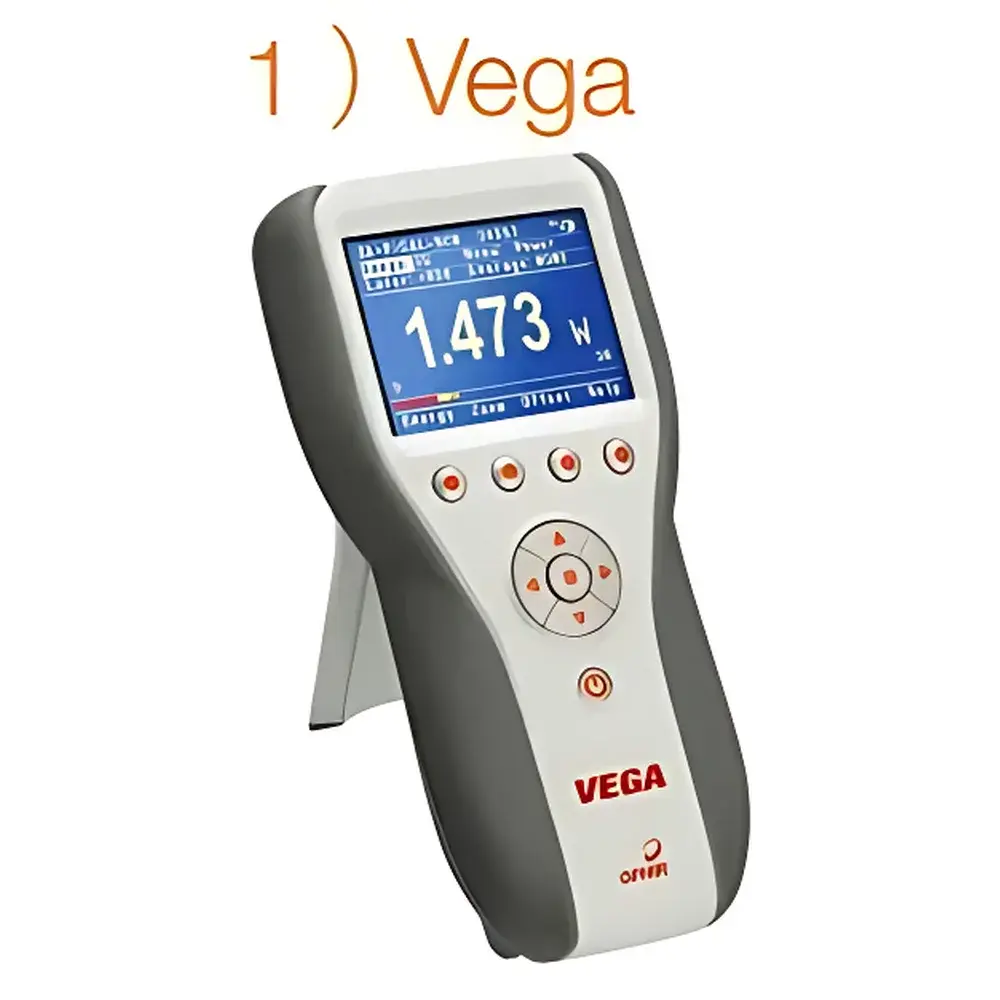
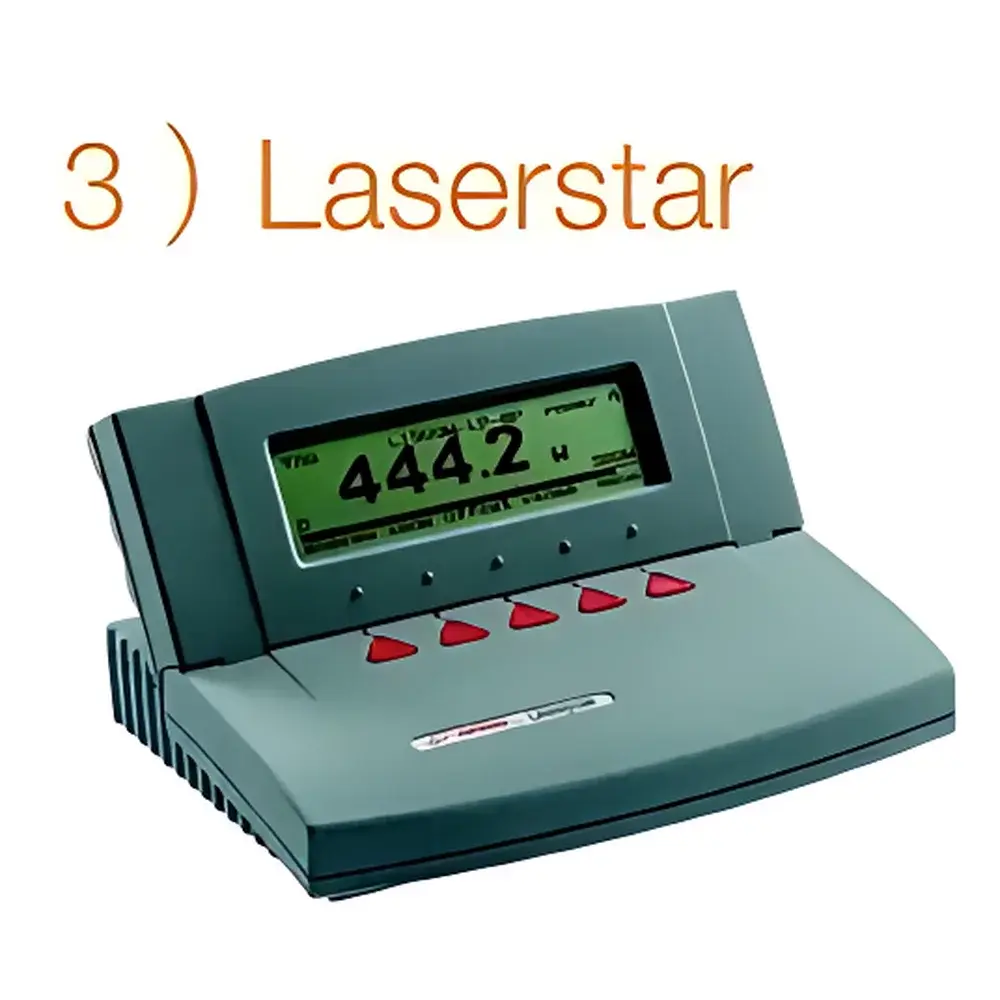
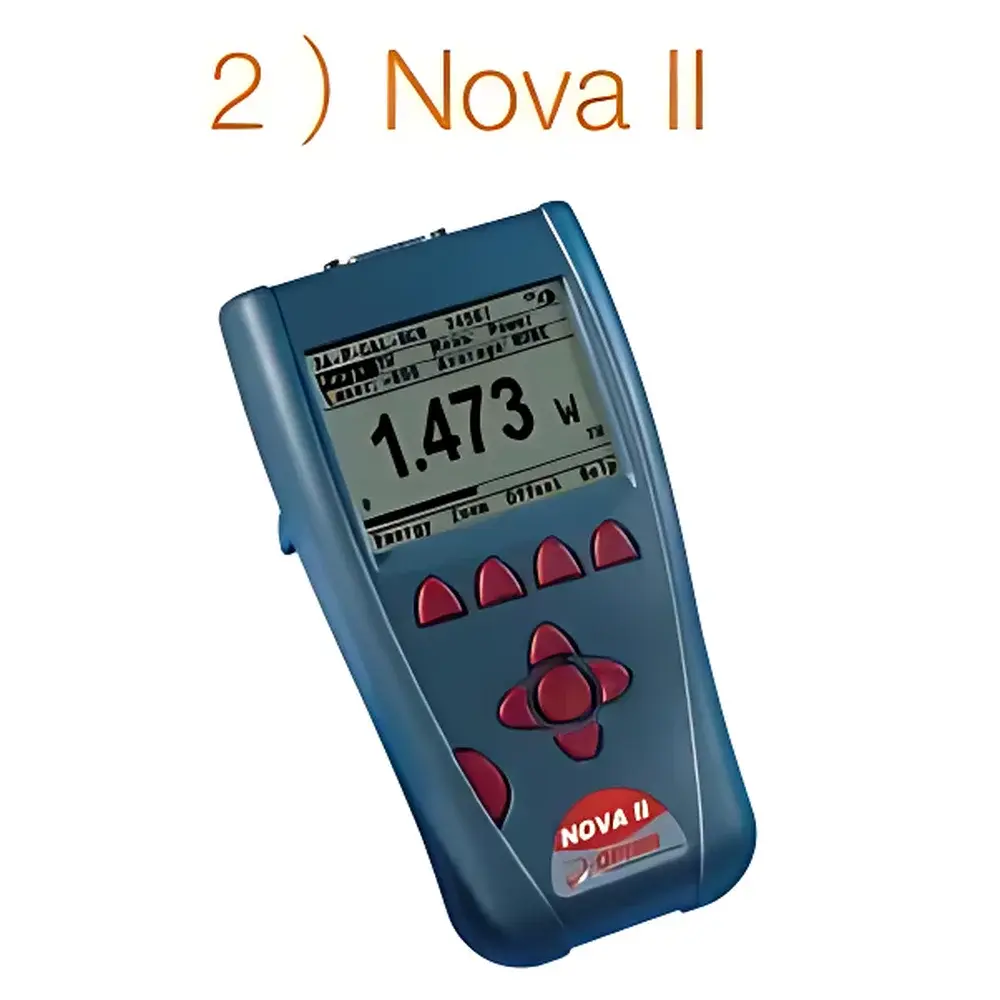
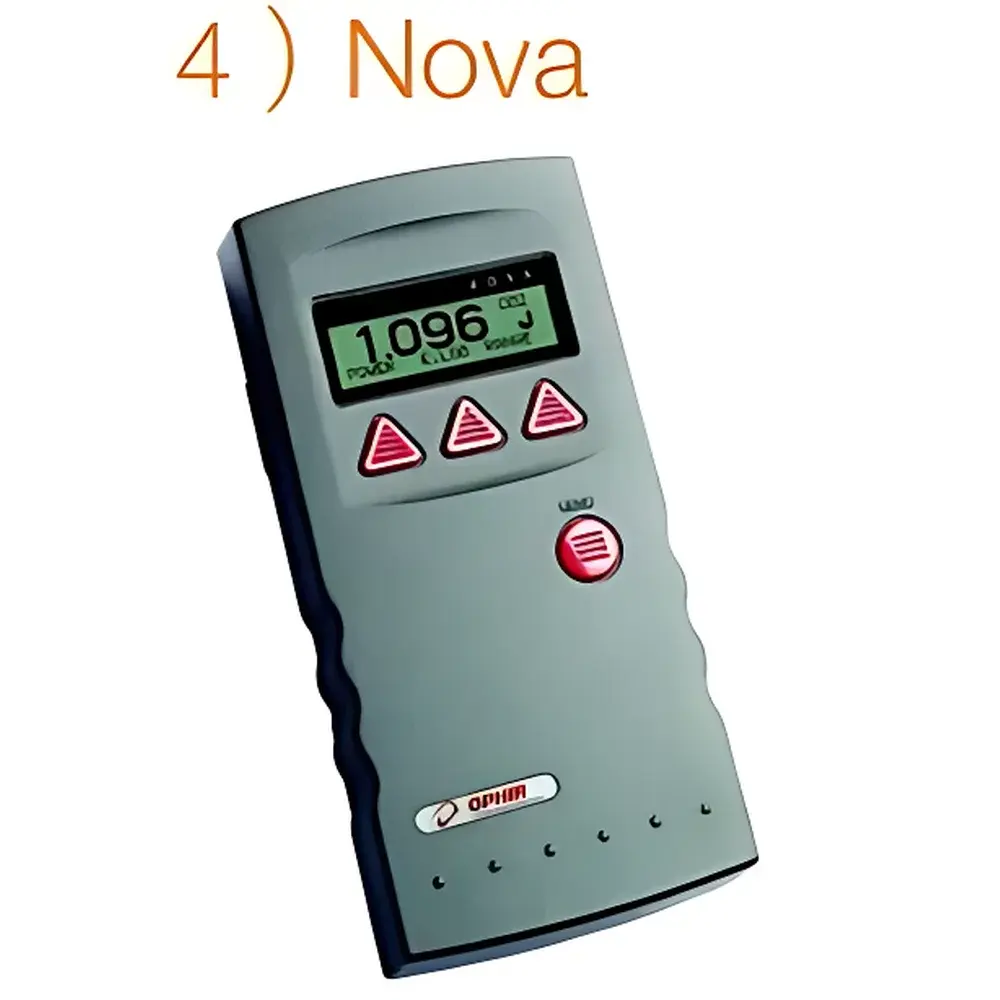
Ophir Vega and Nova II Laser Power and Energy Meter Console
| Brand | Ophir |
|---|---|
| Origin | Israel |
| Model | Vega / Nova II |
| Display | 320 × 240 TFT (Vega) / LCD (Nova II) |
| Data Logging Rate (with Pyroelectric Sensors) | Up to 4,000 Hz |
| Internal Memory | 250,000 (Vega) / 54,000 (Nova II) readings |
| Interfaces | USB, RS232 |
| Analog Output | Yes |
| Software Compatibility | StarLab, StarCom, LabVIEW, COM Object, ActiveX |
| Probe Compatibility | Thermopile, BeamTrack, Pyroelectric, Photodiode, RP sensors |
Overview
The Ophir Vega and Nova II are precision handheld laser power and energy meter consoles engineered for laboratory, manufacturing, and R&D environments where traceable, repeatable optical radiation measurement is critical. These consoles operate on the principle of sensor signal conditioning and digital signal processing: they interface with a broad family of calibrated Ophir optical sensors—including thermopile, pyroelectric, photodiode, BeamTrack, and RP series probes—and convert raw analog voltage outputs into standardized SI units (W, kW, J, mJ) using factory-applied calibration coefficients stored in each probe’s internal memory. The Vega model features a high-brightness color TFT display and enhanced data acquisition capabilities, while the Nova II provides comparable functionality in a robust, cost-optimized form factor. Both instruments comply with the fundamental metrological requirements outlined in ISO/IEC 17025 for measurement traceability and support audit-ready data handling when used with compliant software platforms.
Key Features
- Universal probe compatibility: Fully supports all Ophir thermopile, pyroelectric (including PE-C series), photodiode, BeamTrack, and RP sensors—enabling seamless integration across CW, pulsed, and beam profiling applications.
- High-resolution visual interface: Vega employs a 320 × 240 color TFT display; Nova II uses an equivalent-resolution monochrome LCD—both optimized for readability under varied ambient lighting conditions, including low-light cleanroom or laser enclosure environments.
- Dual-mode display: Real-time numeric values and analog-style needle indicators allow intuitive interpretation of dynamic laser output without requiring cognitive translation of digital readouts.
- High-speed data acquisition: When paired with Ophir pyroelectric sensors, both consoles achieve sampling rates up to 4,000 Hz—sufficient for capturing rapid pulse trains, Q-switched microsecond bursts, and transient thermal responses.
- Onboard data storage: Vega stores up to 250,000 timestamped measurements; Nova II retains 54,000—supporting extended unattended monitoring sessions without external PC connection.
- Flexible connectivity: Integrated USB 2.0 and RS232 interfaces enable direct communication with host PCs running StarLab v3.x or StarCom software; driver-level support for LabVIEW, COM Object, and ActiveX ensures interoperability with custom test automation frameworks.
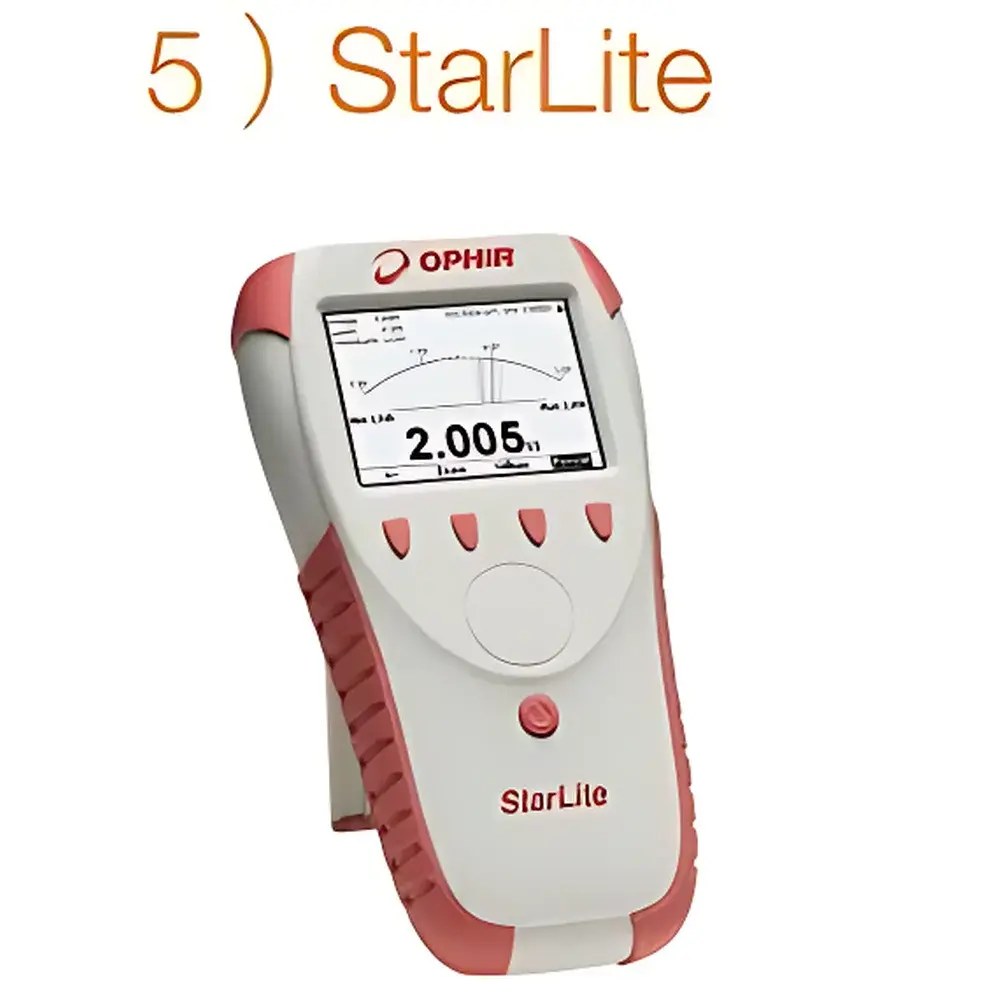
- Ergonomic handheld design: Includes adjustable two-position mounting brackets, tactile backlit keys (Vega/Nova II/StarLite), and field-replaceable batteries—ensuring operational continuity during extended alignment, qualification, or production line verification tasks.
Sample Compatibility & Compliance
The Vega and Nova II consoles are not standalone measurement devices but integral components of Ophir’s NIST-traceable laser metrology ecosystem. Each connected probe carries its own unique calibration certificate, referencing standards maintained by national metrology institutes (e.g., NIST, PTB, NPL). This architecture ensures compliance with ISO 11554 (laser beam parameter measurements), ASTM E1084 (solar simulator irradiance mapping), and IEC 60825-1 (laser product safety classification). When used in regulated environments—such as medical laser device validation or aerospace-grade laser welding process control—the consoles support GLP/GMP-aligned workflows via StarLab’s 21 CFR Part 11-compliant audit trail, electronic signature, and data integrity features. Electromagnetic compatibility (EMC) is certified per EN 61326-1:2013, and the StarLite variant includes additional EMI hardening for operation near RF sources or high-power switching equipment.
Software & Data Management
Ophir StarLab v3.30+ serves as the primary PC-based application for configuration, real-time visualization, statistical analysis, and report generation. It provides synchronized multi-channel plotting, pulse-by-pulse energy histograms, standard deviation/min/max tracking, and export to CSV, XML, or PDF formats. Raw data streams from the console retain full time-stamp resolution (1 ms precision), enabling post-acquisition analysis of duty cycle stability, pulse-to-pulse consistency, and long-term drift trends. For integration into automated test systems, the consoles expose a documented COM API and LabVIEW VI library—facilitating closed-loop control in applications such as adaptive optics calibration or laser diode aging studies. All firmware updates and calibration file management are performed through StarLab, ensuring version-controlled metrological integrity across instrument fleets.
Applications
- Laser system commissioning and periodic verification in photonics manufacturing facilities
- Medical laser output certification per FDA 21 CFR 1040.10 and IEC 60601-2-22
- R&D characterization of ultrafast amplifiers, fiber lasers, and VCSEL arrays
- Beam delivery system validation—including M², centroid position, and D4σ width when used with BeamTrack probes
- Quality control of laser marking, cutting, and additive manufacturing processes
- Academic and industrial optical physics laboratories conducting radiometric intercomparison studies
FAQ
Do the Vega and Nova II consoles require separate calibration?
No—they are measurement controllers, not primary standards. Calibration is embedded in each Ophir probe and automatically loaded upon connection.
Can these consoles measure single-shot pulse energy?
Yes, when used with compatible pyroelectric or thermopile sensors rated for single-pulse operation (e.g., PE10-C, 3A-FS).
Is analog output available for integration with PLCs or DAQ systems?
Yes—both models provide a 0–5 V or 0–10 V analog output proportional to measured power or energy, configurable via StarLab.
What is the maximum sampling rate with a pyroelectric sensor?
Up to 4,000 Hz for continuous streaming; higher burst rates (e.g., 10 kHz) are achievable with Juno or Pulsar-4 interfaces.
Are firmware updates backward-compatible with older probe generations?
Yes—Ophir maintains full legacy probe support across all current console firmware versions, preserving investment in existing sensor inventories.




