
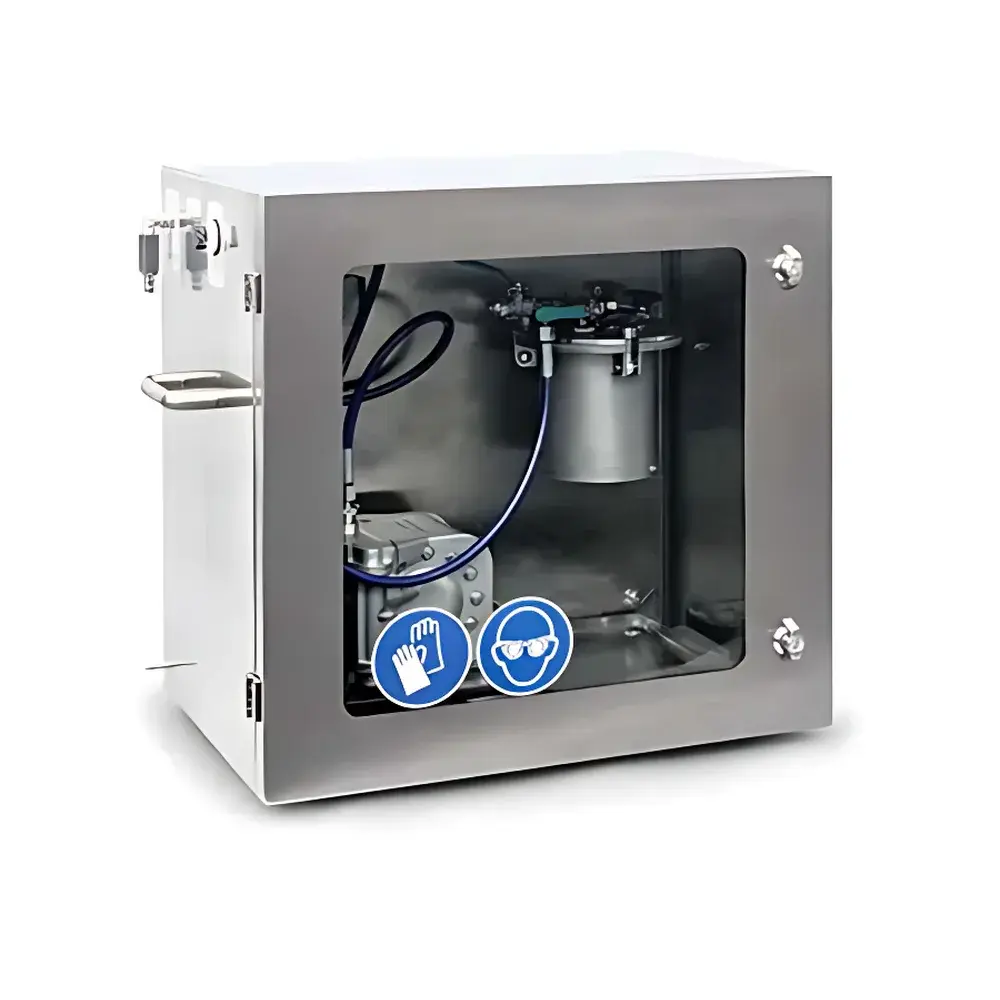
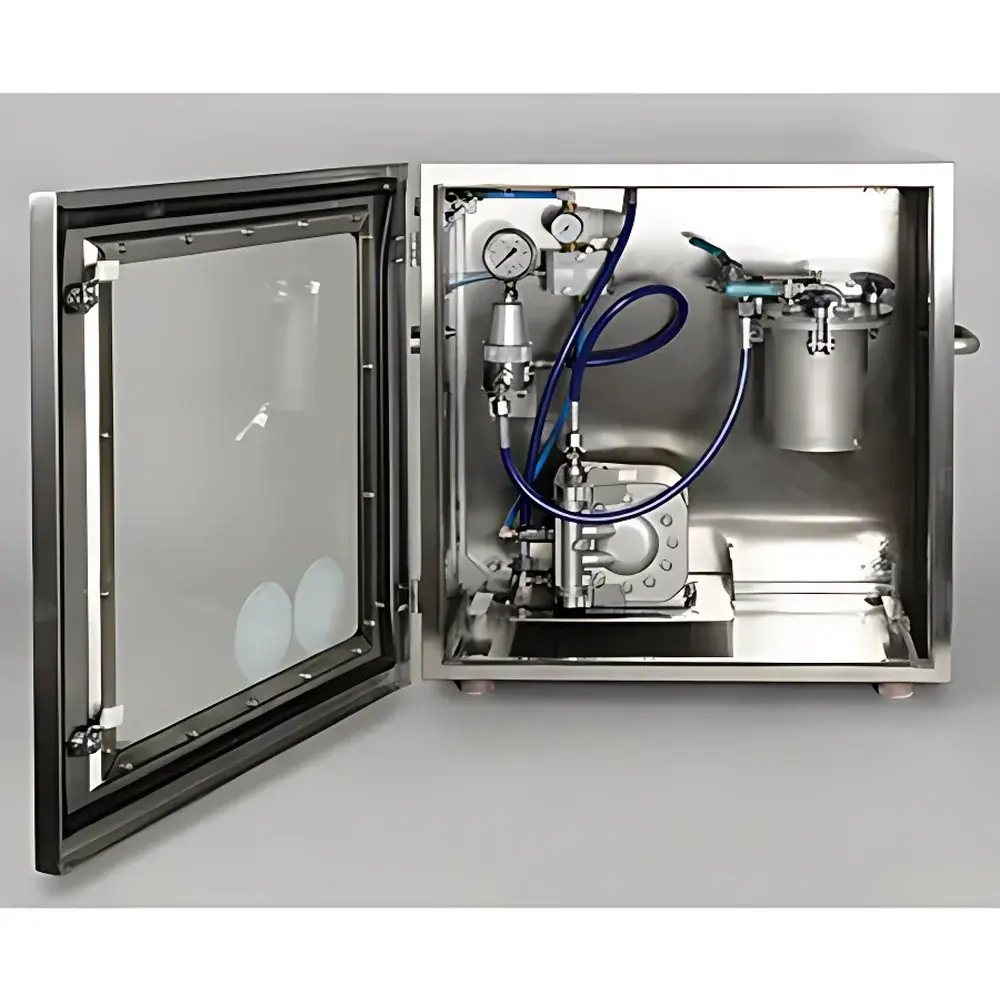
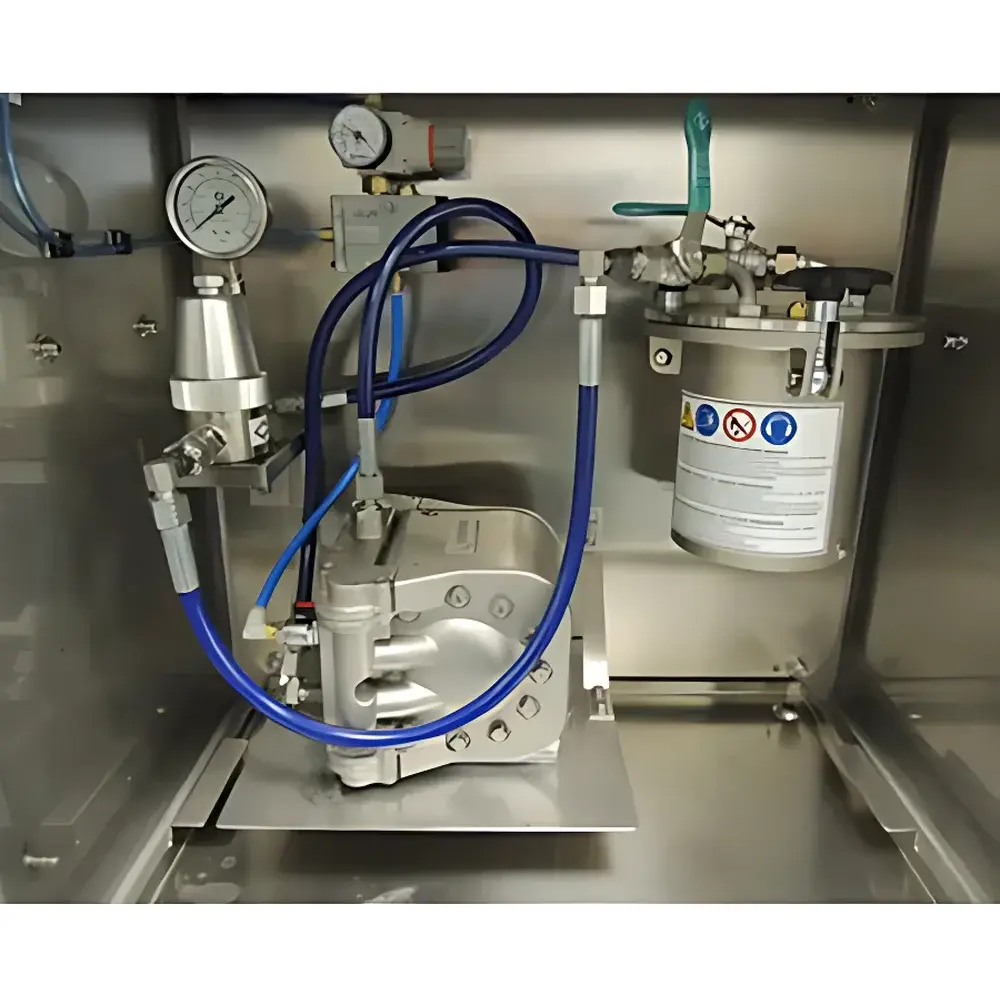
ORONTEC PolyShear® Shear Stress Simulator
| Brand | ORONTEC |
|---|---|
| Origin | Germany |
| Model | PolyShear® |
| Volume Capacity | 1 L (standard), optional 5 L configuration |
| Power Supply | 6-bar compressed air line |
| Compliance | Designed for ASTM D7193, ISO 25899, and automotive OEM process validation protocols |
| Software Interface | RS-485 / Modbus RTU, compatible with LCM wet-film colorimetric systems |
| Sensor Expansion | Optional inline viscosity, pressure, and temperature modules |
Overview
The ORONTEC PolyShear® Shear Stress Simulator is an engineered laboratory-scale instrument designed to replicate the hydrodynamic shear conditions experienced by liquid coatings—particularly automotive OEM basecoats, clearcoats, and electrodeposition paints—during extended circulation in industrial paint supply lines. It operates on the principle of controlled, repeatable laminar flow through a precision-calibrated shear element, generating defined wall shear stress (τw) profiles consistent with those observed in real-world piping systems (e.g., 1/2″–1″ stainless steel conduits at 2–8 m/s flow velocity). Unlike rotational rheometers that measure bulk viscosity under idealized geometries, the PolyShear® subjects samples to transient, time-resolved shear histories representative of actual process exposure—enabling accelerated assessment of shear-induced degradation mechanisms including polymer chain scission, pigment deagglomeration, rheology modifier breakdown, and chromophore destabilization. Its design originates from patented research conducted at Fraunhofer IFAM Bremen, ensuring traceability to industrial fluid dynamics models validated against OEM paint shop operational data.
Key Features
- Compact, benchtop footprint (W × D × H: 420 × 360 × 480 mm) with integrated air-driven diaphragm pump and recirculation loop
- Standard 1 L test volume—sufficient for statistically robust replicate testing while minimizing material consumption and waste disposal burden
- Patented shear element geometry delivering precise, reproducible wall shear stress profiles (range: 10–500 Pa) with <±1.5% inter-run coefficient of variation
- Modular architecture supporting optional add-ons: inline viscometer (capillary or vibrating-wire type), pressure transducer (0–10 bar), and PT100 temperature sensor (±0.2 °C accuracy)
- Configurable cycle programming—users define total circulation time (1 min to 72 h), flow rate (5–30 L/h), and rest intervals to emulate intermittent pumping scenarios
- Direct digital interface (RS-485/Modbus RTU) enabling synchronization with external analytical platforms, including LCM wet-film spectrophotometric systems for real-time color shift and haze tracking
Sample Compatibility & Compliance
The PolyShear® accommodates solvent-borne, water-borne, and high-solids automotive coatings—including cathodic electrocoat (CED), 2K polyurethane basecoats, and UV-curable clearcoats—with no modification to fluid path materials (all-wetted parts: PTFE, EPDM, 316L stainless steel). It meets requirements for method validation under ISO/IEC 17025:2017 for coating stability testing laboratories. Test protocols generated using this system align with OEM technical specifications (e.g., BMW GS 90001, VW TL-226, Ford WSS-M2P177-A2) and support compliance with IATF 16949 process control clauses. Data integrity is maintained via audit-trail-capable logging (optional firmware upgrade supports FDA 21 CFR Part 11 electronic record requirements when paired with compliant host software).
Software & Data Management
Control and monitoring are executed via ORONTEC’s PolyShear Control Suite (v3.2+), a Windows-based application providing real-time display of flow rate, cumulative cycles, and optional sensor outputs. All parameters—including start/stop timestamps, setpoints, and alarm events—are logged in CSV and SQLite formats for traceability. The software includes built-in statistical analysis tools for comparing pre- and post-shear viscosity (via Brookfield or Anton Paar viscometer import), ΔE00 color shift (CIEDE2000), and gloss retention (60° ASTM D523). Exported datasets integrate natively with LIMS platforms via ODBC drivers and support automated report generation compliant with GLP documentation standards.
Applications
- Pre-qualification of new formulations for compatibility with existing paint circulation infrastructure
- Root-cause analysis of field complaints related to color drift, settling, or spray atomization defects
- Accelerated shelf-life evaluation of rheology-modified systems under dynamic shear exposure
- Validation of filter media performance and particle breakage thresholds in recirculating loops
- Supporting Design of Experiments (DoE) studies linking shear history to final film properties (e.g., DOI, distinctness of image per ISO 2813)
- Training tool for process engineers to visualize impact of pump selection, pipe diameter reduction, or flow rate adjustments on coating integrity
FAQ
What shear stress range does the PolyShear® generate, and how is it calibrated?
The device delivers wall shear stress between 10 Pa and 500 Pa, calibrated using NIST-traceable flow calibration rigs and verified via computational fluid dynamics (CFD) modeling of the shear element geometry.
Can it simulate non-Newtonian behavior during long-term circulation?
Yes—the time-dependent flow profile enables observation of thixotropic recovery, structural breakdown kinetics, and hysteresis effects when coupled with post-test rheological characterization.
Is the 5 L version suitable for pilot-line correlation studies?
The mobile 5 L variant (PolyShear® Mobile) is explicitly intended for on-site validation at production facilities; its cart-mounted design allows direct connection to robotic spray booths or mixing stations for real-time feedback.
Does ORONTEC provide method development support for internal SOPs?
Yes—application engineers offer protocol customization, uncertainty budgeting per GUM guidelines, and IQ/OQ documentation packages aligned with ISO 17025 accreditation requirements.






