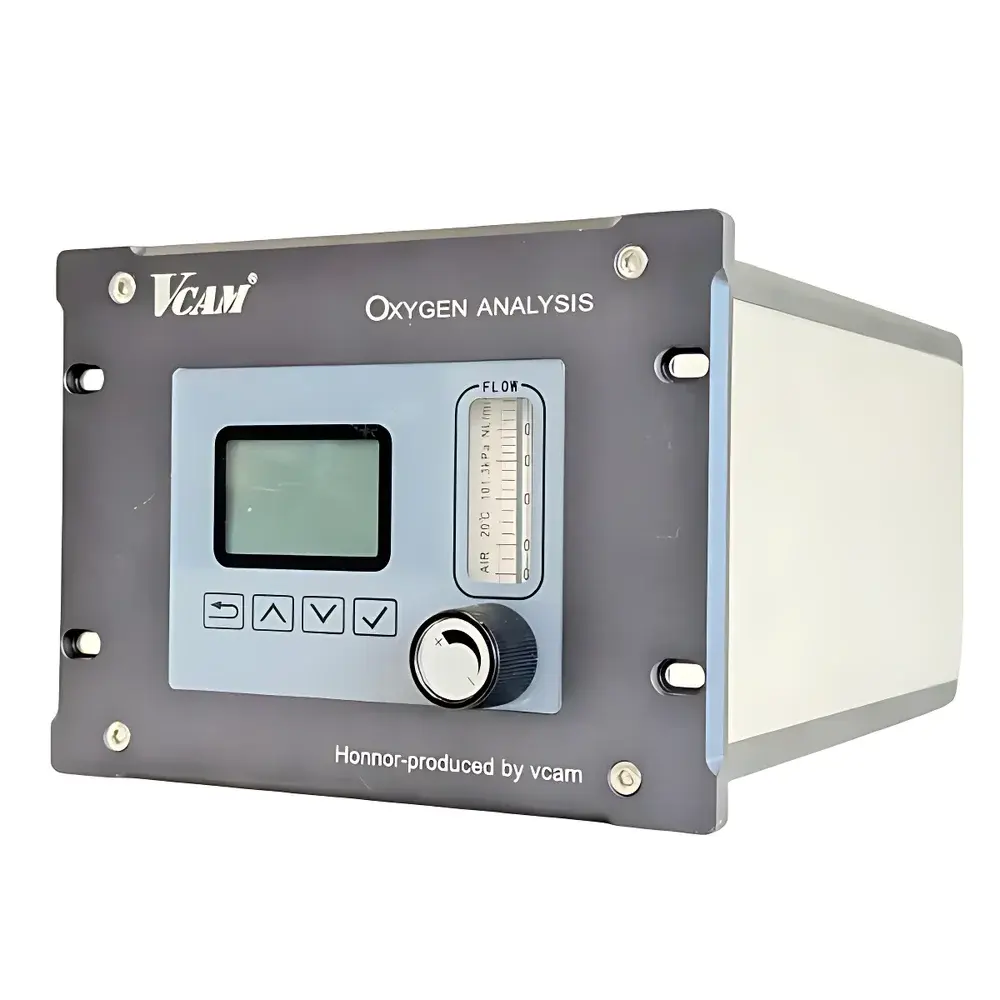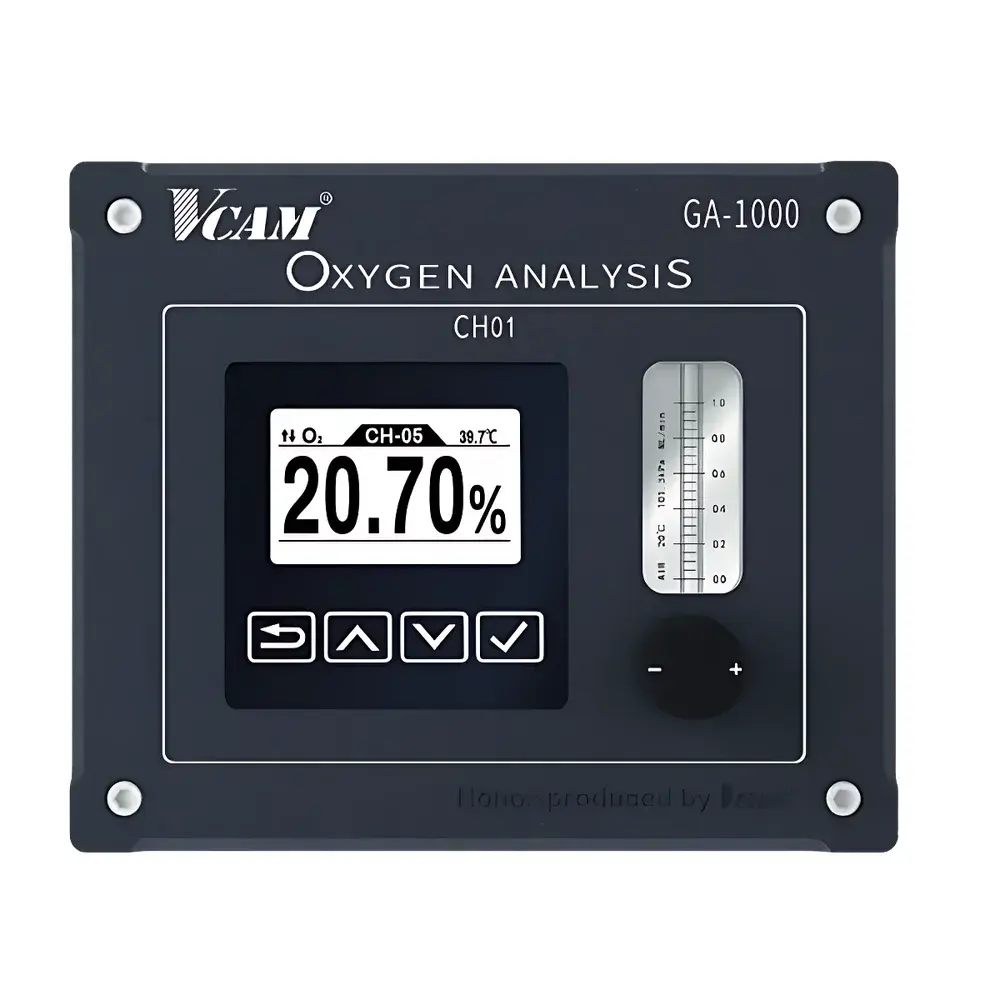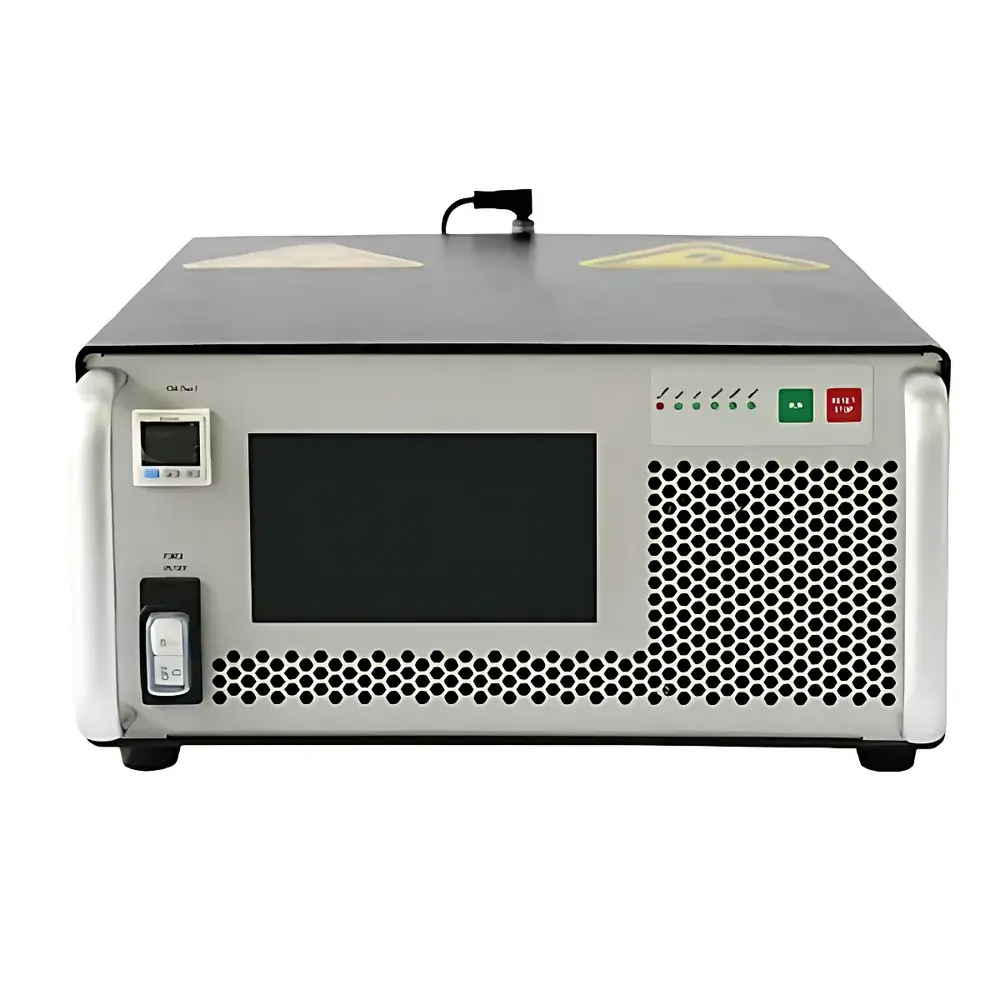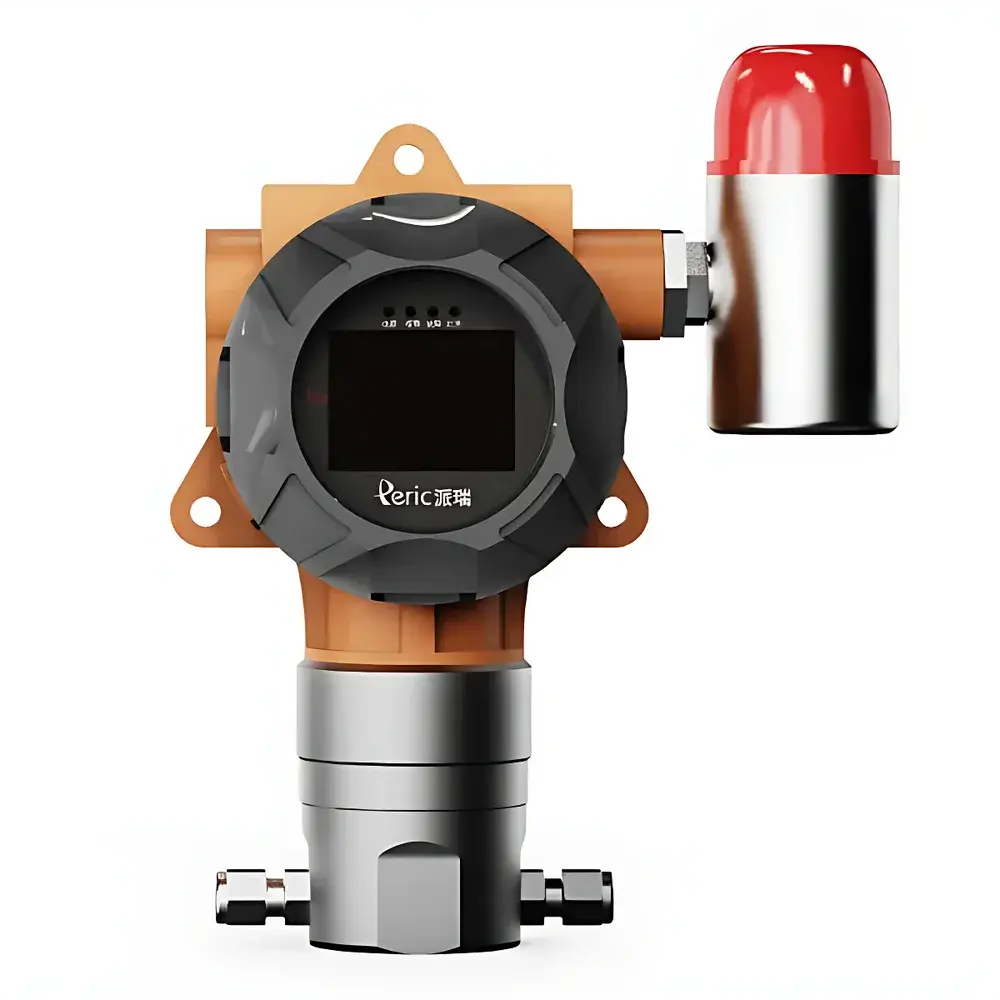
PERIC GNF-TR-O2-1 Electrochemical Trace Oxygen Analyzer
| Brand | PERIC |
|---|---|
| Origin | Hebei, China |
| Manufacturer Type | OEM Manufacturer |
| Origin Category | Domestic (China) |
| Model | GNF-TR-O2-1 |
| Sensor Type | Electrochemical |
| Measurement Range | 0–10 / 0–100 / 0–1000 ppm O₂ |
| Accuracy | ±2% FS |
| Repeatability | ±1% FS |
| Response Time (T₉₀) | ≤30 s |
| Stability | ±1% FS / 7 days |
| Explosion Protection Rating | Ex db IIC T6 Gb (ATEX/IECEx equivalent) |
| Ingress Protection | IP66 |
| Output Signal | 4–20 mA (3-wire), RS485 Modbus RTU |
| Power Supply | 24 VDC |
| Operating Temperature | –10 to +50 °C |
| Relative Humidity | <90% RH (non-condensing) |
| Sample Pressure | Ambient ±10% (outlet vented to atmosphere) |
| Sample Flow Rate | 1.0–1.5 L/min |
| Gas Inlet/Outlet | 1/4″ NPT female, with standard Φ6 stainless steel compression fittings |
| Sensor Lifetime | >2 years (typical operating conditions) |
| Instrument Service Life | >5 years (normal use) |
Overview
The PERIC GNF-TR-O₂-1 Electrochemical Trace Oxygen Analyzer is an intrinsically robust, field-deployable instrument engineered for continuous, real-time quantification of trace-level oxygen concentrations in inert or process gas streams. It operates on the principle of amperometric electrochemical detection—where molecular oxygen diffuses through a selective membrane and undergoes a controlled redox reaction at a catalytic working electrode, generating a current linearly proportional to O₂ partial pressure. This measurement architecture delivers high specificity for O₂ in complex matrices containing nitrogen, argon, hydrogen, helium, or CO₂—without cross-sensitivity to common interferents such as CO, H₂S, or hydrocarbons. Designed for integration into hazardous area installations, the analyzer complies with IEC 60079-0 and IEC 60079-1 standards, bearing the Ex db IIC T6 Gb certification—making it suitable for Zone 1 and Zone 2 classified environments per ATEX and IECEx directives. Its modular construction separates the explosion-proof sensor housing from the display/control unit, enabling flexible mounting configurations while maintaining full compliance with international functional safety expectations.
Key Features
- Triple-range electrochemical sensor with user-selectable full-scale settings: 0–10 ppm, 0–100 ppm, or 0–1000 ppm O₂—optimized for applications ranging from high-purity inert gas monitoring to leak-detection in sealed systems.
- Stability performance of ±1% FS over 7 days without recalibration—reducing maintenance frequency and operational downtime in unattended or remote installations.
- Fast T₉₀ response time ≤30 seconds ensures timely detection of oxygen ingress events during purging, blanketing, or glovebox integrity verification.
- Dual-output interface: isolated 4–20 mA analog output (3-wire configuration) compatible with industrial PLCs and DCS systems, plus RS485 serial port supporting Modbus RTU protocol for bidirectional communication and remote configuration.
- IP66-rated enclosure provides dust-tight and high-pressure water jet resistance—suitable for outdoor or washdown-prone environments in chemical, semiconductor, and food packaging facilities.
- Integrated local display module enables on-site setup, zero/span calibration, alarm threshold adjustment, and real-time diagnostics without external software dependency.
Sample Compatibility & Compliance
The GNF-TR-O₂-1 is validated for use with non-corrosive, dry, particle-free gas streams at ambient pressure (±10%) and flow rates of 1.0–1.5 L/min. It is not intended for use with acidic, solvent-saturated, or high-humidity samples (>90% RH), nor with gases containing >10 ppm chlorine, sulfur dioxide, or halogenated compounds—substances known to degrade electrochemical sensor membranes and electrodes. The analyzer conforms to ISO 8573-1:2010 Class 2 for compressed air purity monitoring when used with appropriate sample conditioning. Its design supports alignment with FDA 21 CFR Part 11 requirements for electronic records and signatures when paired with validated host SCADA or MES platforms. Documentation includes full test reports for EMC (IEC 61326-1), RoHS compliance, and CE marking under the ATEX Directive 2014/34/EU.
Software & Data Management
A Windows-based PC utility—supplied with each unit—enables advanced configuration, firmware updates, calibration logging, and data export in CSV format. The software implements audit-trail functionality, recording all parameter changes, calibration events, and user logins with timestamps and operator IDs—supporting GLP/GMP-aligned record-keeping practices. All communication via RS485 is encrypted using CRC-16 error-checking, ensuring data integrity across industrial networks. Calibration history, sensor health metrics (e.g., baseline drift, electrolyte saturation status), and alarm event logs are stored onboard for retrieval during routine QA audits or incident investigations.
Applications
- Monitoring residual O₂ in nitrogen-blanketed reactors, distillation columns, and storage tanks in petrochemical and pharmaceutical manufacturing.
- Quality assurance of high-purity argon/helium used in welding, semiconductor CVD/PVD processes, and analytical carrier gas supply lines.
- In-line verification of inert gas purity prior to packaging of oxygen-sensitive products—including lithium-ion battery cells, specialty chemicals, and nutraceuticals.
- Leak testing of vacuum chambers, gloveboxes, and hermetic enclosures where sub-10 ppm O₂ thresholds define pass/fail criteria.
- Environmental monitoring of inert atmospheres in fire suppression systems and transformer oil degassing units.
FAQ
What calibration gases are required for routine maintenance?
Zero gas: ultra-high-purity nitrogen (99.999%+, O₂ <10 ppb); span gas: certified O₂-in-nitrogen mixtures matching the selected range (e.g., 5 ppm, 50 ppm, or 500 ppm).
Can the analyzer be installed in a Class I, Division 1 location?
Yes—the Ex db IIC T6 Gb rating certifies suitability for Class I, Division 1 (NEC/CEC) and Zone 1 (IEC) hazardous locations, provided installation follows NEC Article 501 and IEC 60079-14 guidelines.
Is sensor replacement a field-serviceable procedure?
Yes—sensor cartridges are designed for tool-free replacement; full recalibration is recommended post-replacement, though the instrument retains factory calibration coefficients for rapid recovery.
Does the device support HART communication?
No—only 4–20 mA (analog) and RS485 Modbus RTU interfaces are implemented; HART is not supported in this model variant.
What is the recommended service interval for sensor verification?
Quarterly functional checks using certified span gas are advised; annual full calibration is recommended under continuous operation or critical compliance environments (e.g., ISO 13485, GMP Annex 1).