
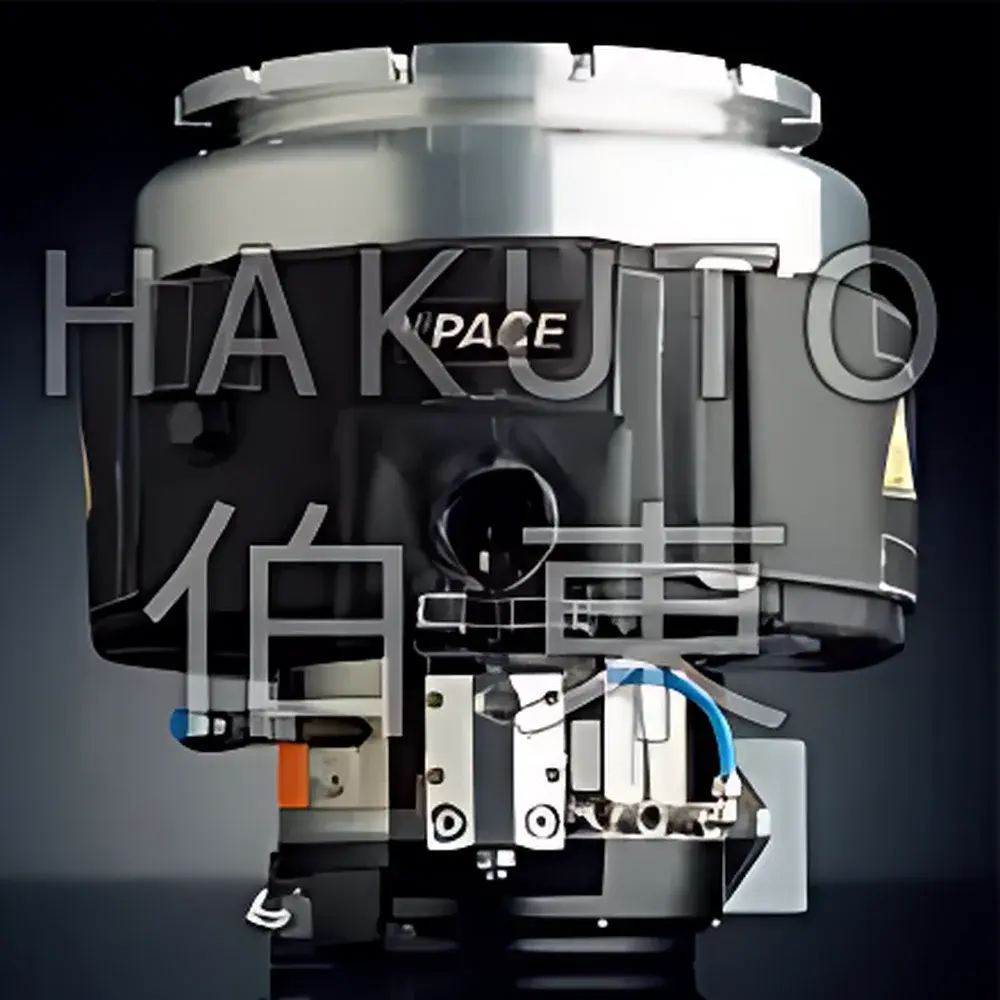
Pfeiffer HiPace 2800 IT Turbo Molecular Pump
| Brand | Pfeiffer Vacuum |
|---|---|
| Origin | Germany |
| Model | HiPace 2800 IT |
| Pump Type | Oil-Free Turbo Molecular Pump |
| Pumping Speed (N₂) | 2,300 L/s |
| Ultimate Pressure | < 1 × 10⁻⁷ hPa |
| Flange (Inlet) | DN 250 ISO-F |
| Flange (Outlet) | DN 40 ISO-KF |
| Exhaust Connection | G 1/8" |
| H₂ Pumping Speed | 2,600 L/s |
| He Pumping Speed | 2,900 L/s |
| Ar Pumping Speed | 2,100 L/s |
| Rated Rotational Speed | 27,300 rpm ±2% |
| Warm-up Time to Full Speed | 8.6 min |
| Compression Ratio (N₂) | > 1 × 10⁸ |
| Compression Ratio (H₂) | 4 × 10³ |
| Max. Forevacuum Pressure (N₂) | 0.8 hPa |
| Cooling Method | Water Cooling (100 L/h, 15–25 °C) |
| Weight | 62 kg |
| Dimensions (W × H) | 228 × 167 mm |
| Motor Power | 1 kW |
| Interface | E74, RS-485 |
| Max. Permissible Magnetic Field | 3.4 mT |
| Sound Pressure Level | < 50 dB(A) |
Overview
The Pfeiffer HiPace 2800 IT is a high-performance, oil-free turbo molecular pump engineered specifically for demanding ion implantation systems and other ultra-high vacuum (UHV) applications where exceptional hydrogen and light-gas pumping efficiency is critical. Based on proven Pfeiffer vacuum technology and manufactured in Germany, the HiPace 2800 IT employs a precision-engineered rotor geometry optimized for molecular flow dynamics of low-mass gases—particularly H₂, He, and D₂—enabling superior conductance and pumping speed compared to conventional turbo pumps of similar nominal displacement. Its operational principle relies on momentum transfer via high-speed rotating blades (27,300 rpm ±2%) interacting with gas molecules in the free-molecular flow regime, achieving ultimate pressures below 1 × 10⁻⁷ hPa per PNEUROP standards. Designed for integration into semiconductor process tools, the pump meets stringent requirements for process stability, long-term reliability, and compatibility with cleanroom environments.
Key Features
- Optimized rotor design with nickel-plated surfaces for enhanced mechanical durability, corrosion resistance, and reduced particle generation under continuous high-load operation.
- Intelligent temperature management system enabling independent thermal control of pump stages—minimizing internal condensation and deposition of volatile process byproducts (e.g., silanes, dopant precursors) during extended duty cycles.
- Industry-leading H₂ pumping speed of 2,600 L/s and He speed of 2,900 L/s—significantly exceeding standard turbo pumps in its class—ensuring rapid chamber evacuation and stable base pressure in ion beam transport paths.
- Water-cooled architecture with regulated coolant flow (100 L/h at 15–25 °C), maintaining thermal equilibrium across stator and bearing assemblies to preserve rotational accuracy and extend service intervals.
- Comprehensive digital interface (E74 + RS-485) supporting real-time monitoring of rotational speed, temperature gradients, vibration signatures, and fault diagnostics—compatible with centralized vacuum system controllers and SCADA platforms.
Sample Compatibility & Compliance
The HiPace 2800 IT is compatible with UHV and high-vacuum systems requiring continuous operation under reactive or corrosive gas loads typical in ion implantation, plasma etching, and thin-film deposition. Its all-metal, oil-free construction eliminates hydrocarbon backstreaming, ensuring contamination-free environments essential for semiconductor fabrication and surface science. The pump complies with IEC 61000-6-2 (EMC immunity) and IEC 61000-6-4 (EMC emissions), and its mechanical design conforms to ISO 2858 (pump mounting dimensions) and ISO 16063-12 (vibration calibration). While not certified as a medical device, it supports GLP/GMP-aligned vacuum infrastructure when integrated with audit-trail-capable control systems compliant with FDA 21 CFR Part 11.
Software & Data Management
The pump operates natively with Pfeiffer’s TPG300/TPG36x series controllers and is fully supported by the Vacuum Control Software Suite (VCSS), which provides graphical trend logging, event-based alarm configuration, and exportable CSV/Excel reports for maintenance history and performance validation. All operational parameters—including speed setpoints, temperature thresholds, and error codes—are timestamped and stored onboard with non-volatile memory retention. Remote firmware updates and parameter backup/restore functions are accessible via secure RS-485 communication, facilitating preventive maintenance planning and regulatory documentation traceability.
Applications
- Ion implantation systems requiring rapid H₂ removal and stable beamline vacuum (<1 × 10⁻⁶ hPa).
- High-energy physics beamlines and accelerator vacuum chambers exposed to radiolytic gas loads.
- Surface analysis instruments including XPS, AES, and LEED systems where hydrocarbon-free vacuum integrity is mandatory.
- Research-scale atomic layer deposition (ALD) and molecular beam epitaxy (MBE) reactors operating with aggressive precursors.
- Space simulation chambers and vacuum test stands demanding high compression ratios for light gases and long mean time between failures (MTBF > 25,000 hours).
FAQ
What distinguishes the HiPace 2800 IT from standard HiPace 2800 models?
The IT variant features an application-specific rotor profile and thermal management architecture optimized for ion implantation processes—delivering up to 13% higher H₂ pumping speed and adaptive stage heating to suppress condensate formation.
Is water cooling mandatory?
Yes. Continuous water cooling at 100 L/h within 15–25 °C is required to maintain rated performance and bearing longevity; air-cooled alternatives are not supported for this model.
Can the pump operate under magnetic fields encountered near ion sources?
It is rated for continuous operation in static magnetic fields up to 3.4 mT—sufficient for most ion implantation tool layouts without active shielding.
Does the pump support integration with industrial automation protocols?
Native RS-485 enables Modbus RTU mapping; optional gateway modules provide EtherNet/IP and PROFINET compatibility for factory-floor integration.
What maintenance intervals are recommended for routine operation?
Pfeiffer recommends full inspection and bearing assessment every 12,000 operating hours or 24 months—whichever occurs first—under typical semiconductor fab conditions.



