
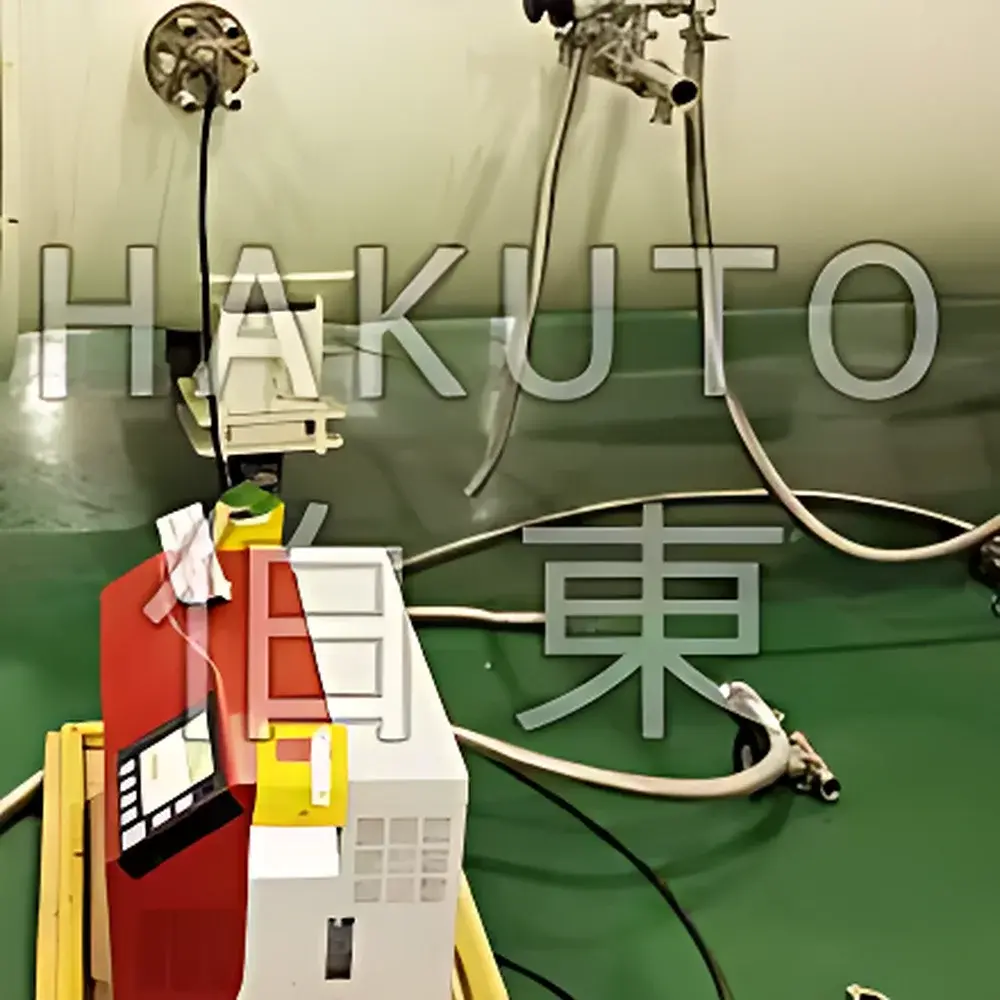
Pfeiffer Vacuum ASM 340 Helium Mass Spectrometer Leak Detector for LNG Tank Integrity Verification
| Brand | Pfeiffer Vacuum |
|---|---|
| Origin | France |
| Model | ASM 340 |
| Detection Sensitivity | ≤1×10⁻¹² mbar·L/s (He) |
| Leak Rate Measurement Range | 1×10⁻¹² to 1×10⁻⁴ mbar·L/s |
| Vacuum Interface | DN 40 ISO-KF or CF |
| Mass Analyzer Type | Magnetic Sector Quadrupole |
| Response Time | <100 ms (typical) |
| Operating Temperature | 10–40 °C |
| Compliance | CE, RoHS, EN 61000-6-2/6-3, ISO 9001 certified manufacturing |
Overview
The Pfeiffer Vacuum ASM 340 Helium Mass Spectrometer Leak Detector is an engineered solution for high-sensitivity, quantitative leak detection in cryogenic infrastructure—specifically designed for integrity verification of LNG storage tanks, transport vessels, and associated piping systems. It operates on the principle of mass spectrometry: helium (He), introduced as a tracer gas, is ionized and separated by mass-to-charge ratio (m/z = 4) within a magnetic sector quadrupole analyzer. The resulting ion current is directly proportional to helium partial pressure, enabling precise quantification of leak rates down to 1×10⁻¹² mbar·L/s. This level of sensitivity is critical for LNG applications, where even sub-micron weld defects or micro-cracks in vacuum-jacketed double-wall tanks can compromise thermal insulation, accelerate boil-off, or—under worst-case scenarios—trigger rapid phase transition and flammable vapor cloud formation. Unlike pressure decay or bubble testing, the ASM 340 provides traceable, repeatable, and location-specific leakage data compliant with international cryogenic equipment standards.
Key Features
- Ultra-high sensitivity helium detection with real-time response time under 100 ms, optimized for fast scanning of large surface areas including tank shells, manways, valve flanges, and support penetrations.
- Dual-mode operation: supports both vacuum-integrated (vacuum chamber) and sniffer (local probe) methodologies—enabling flexible deployment across shop-floor QA, field commissioning, and post-maintenance verification.
- Integrated vacuum interface with DN 40 ISO-KF or CF flange options, compatible with standard roughing and high-vacuum pump configurations required for vacuum-box or hood testing of LNG tank outer jackets.
- Robust magnetic sector quadrupole mass analyzer offering long-term stability, minimal drift, and immunity to hydrocarbon interference—essential for industrial environments with variable background gas composition.
- Automated calibration routines with built-in reference leak ports, supporting daily verification per ASTM E493 and ISO 10857 requirements for leak detection system validation.
- IP54-rated enclosure with industrial-grade electronics, rated for continuous operation in ambient temperatures from 10 °C to 40 °C—suitable for outdoor LNG terminal environments and fabrication yard conditions.
Sample Compatibility & Compliance
The ASM 340 is validated for use with stainless steel 304L/316L, aluminum 5083, and nickel-alloy 9% Ni construction typical of LNG inner tanks and vacuum-insulated outer casings. Its helium-based methodology avoids reactivity concerns associated with hydrogen or halogen tracers, making it safe for use on passivated surfaces and post-weld heat-treated joints. The instrument meets functional safety requirements aligned with IEC 61508 SIL 2 for integration into automated tank commissioning workflows. All measurement outputs are traceable to NIST-certified helium reference standards, satisfying audit requirements under ISO/IEC 17025-accredited laboratories and regulatory frameworks including EN 14620 (cryogenic tanks), ASME BPVC Section VIII Div. 1 & 2, and API RP 2510 (LNG facilities). Data logs include full metadata (operator ID, timestamp, test configuration, environmental conditions), supporting GLP/GMP-compliant documentation.
Software & Data Management
The ASM 340 integrates with Pfeiffer’s proprietary LeakTest Pro software, which provides configurable test sequences, multi-point mapping, and automatic pass/fail classification based on user-defined thresholds (e.g., ≤1×10⁻⁹ Pa·m³/s per weld seam, ≤1×10⁻⁸ Pa·m³/s per complete vessel). Raw spectral data, ion current traces, and vacuum status are logged in CSV and XML formats for third-party analysis. Audit trail functionality complies with FDA 21 CFR Part 11 requirements, including electronic signatures, role-based access control, and immutable record retention. Optional OPC UA and Modbus TCP interfaces enable direct PLC integration for inline leak verification during tank assembly lines or automated cold box qualification.
Applications
- Final acceptance testing of factory-assembled LNG full-containment tanks prior to site delivery.
- Field verification of vacuum jacket integrity following installation, seismic anchoring, or thermal cycling.
- Weld seam certification for inner tank membranes and outer shell joints per ISO 5817 quality levels B/C.
- Routine surveillance of aging infrastructure—including boil-off rate correlation studies and predictive maintenance scheduling.
- Leak localization and quantification on cryogenic transfer arms, emergency shutdown valves, and submerged combustion vaporizers.
- Validation of vacuum insulation performance in LNG fuel tanks for maritime and heavy-duty transport applications (ISO 16922, IMO IGF Code).
FAQ
What is the minimum detectable leak rate for LNG tank testing using the ASM 340?
The instrument achieves a base sensitivity of ≤1×10⁻¹² mbar·L/s under optimal vacuum conditions (≤1×10⁻⁵ mbar), meeting the strictest specifications for Class A vacuum-jacketed LNG containment systems.
Can the ASM 340 be used for both vacuum-box and local-sniffer testing modes?
Yes—its dual operational architecture supports both modes without hardware modification; vacuum mode requires connection to a compatible backing pump and high-vacuum stage, while sniffer mode uses integrated turbomolecular pumping and external helium supply.
Is helium tracer gas safe for use on stainless steel LNG tanks?
Helium is inert, non-toxic, non-flammable, and does not interact with austenitic stainless steels or aluminum alloys used in LNG construction—making it the internationally accepted tracer for ASME and EN-compliant leak verification.
How does the ASM 340 support regulatory compliance for LNG facility commissioning?
It generates auditable, timestamped reports with full metrological traceability, satisfies ISO 10857 calibration validation protocols, and integrates with QMS platforms for electronic signature and revision-controlled documentation per API RP 1173 and EN 1594.
Does the system require external vacuum pumping for large-volume tank testing?
For vacuum-mode testing of full-scale LNG tanks (>10,000 m³), auxiliary vacuum pump trains (typically two-stage oil-free screw + turbomolecular pumps) are recommended to achieve and maintain the required base pressure; the ASM 340 serves as the precision detection front-end.




