
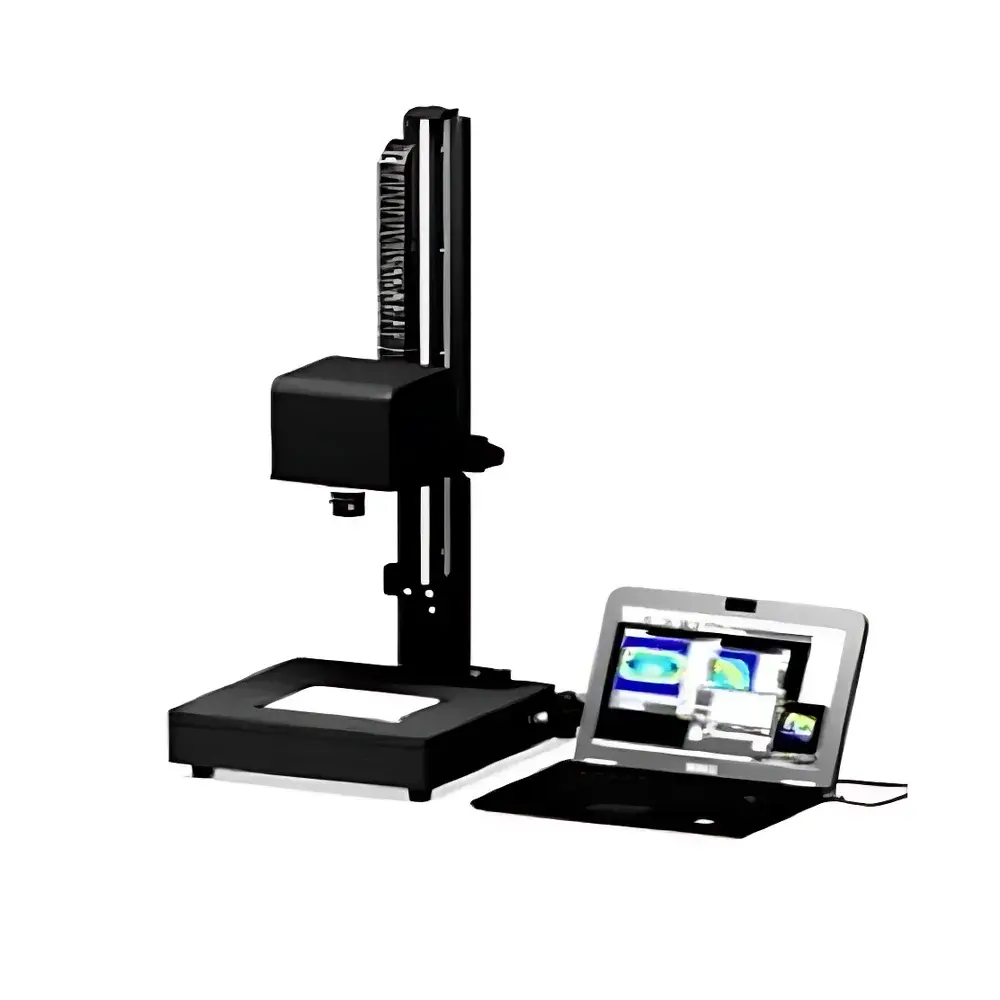
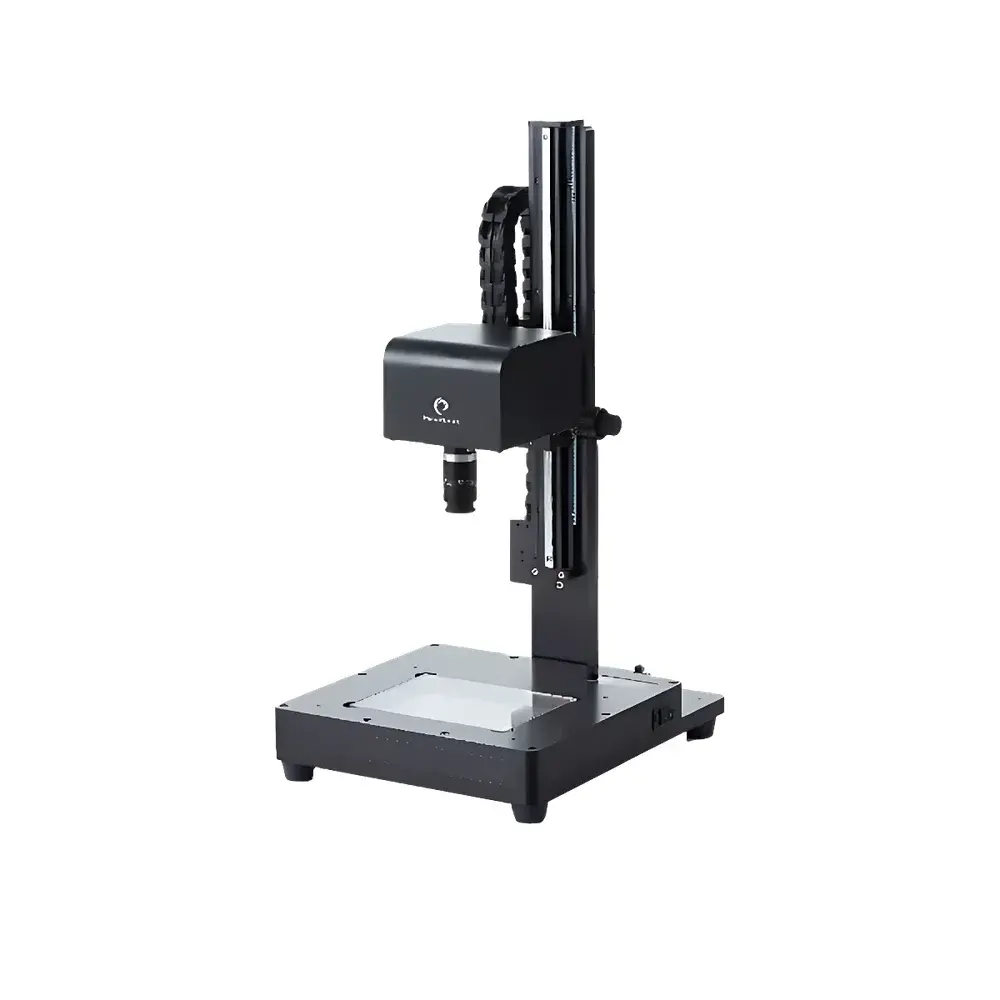
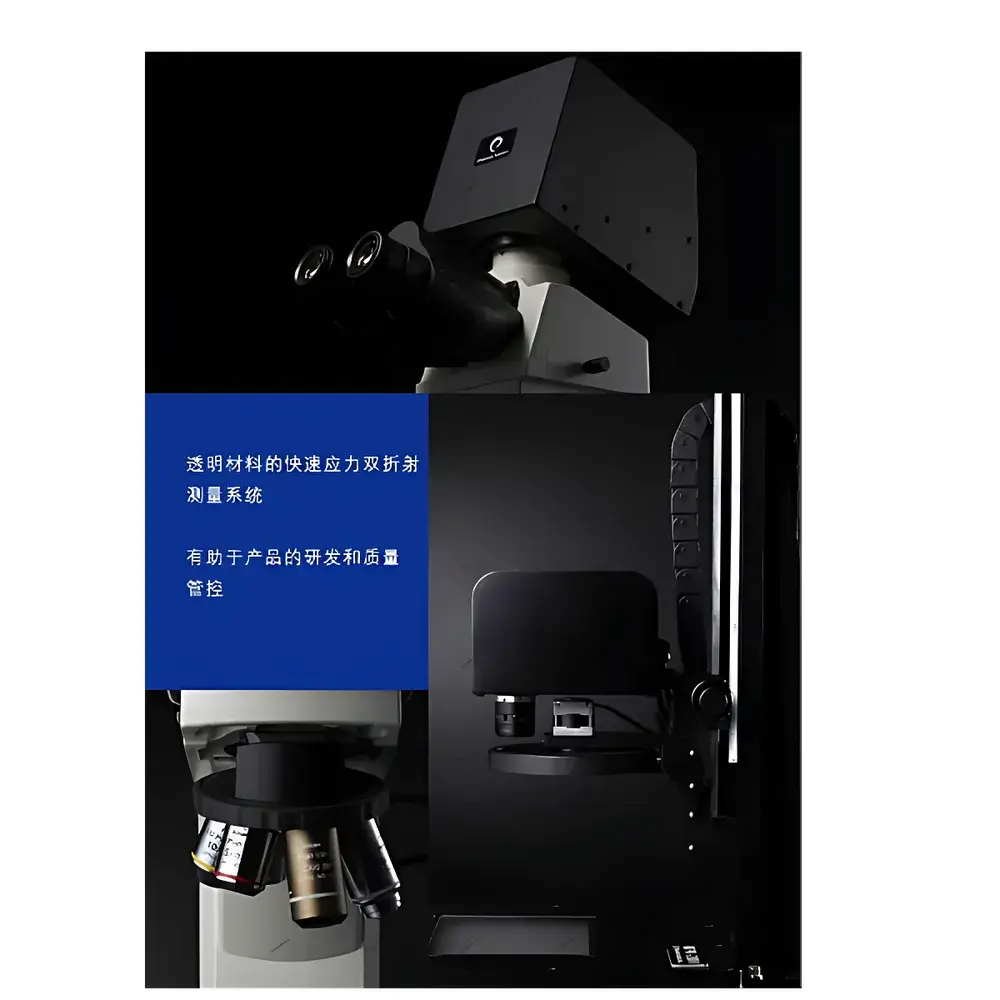
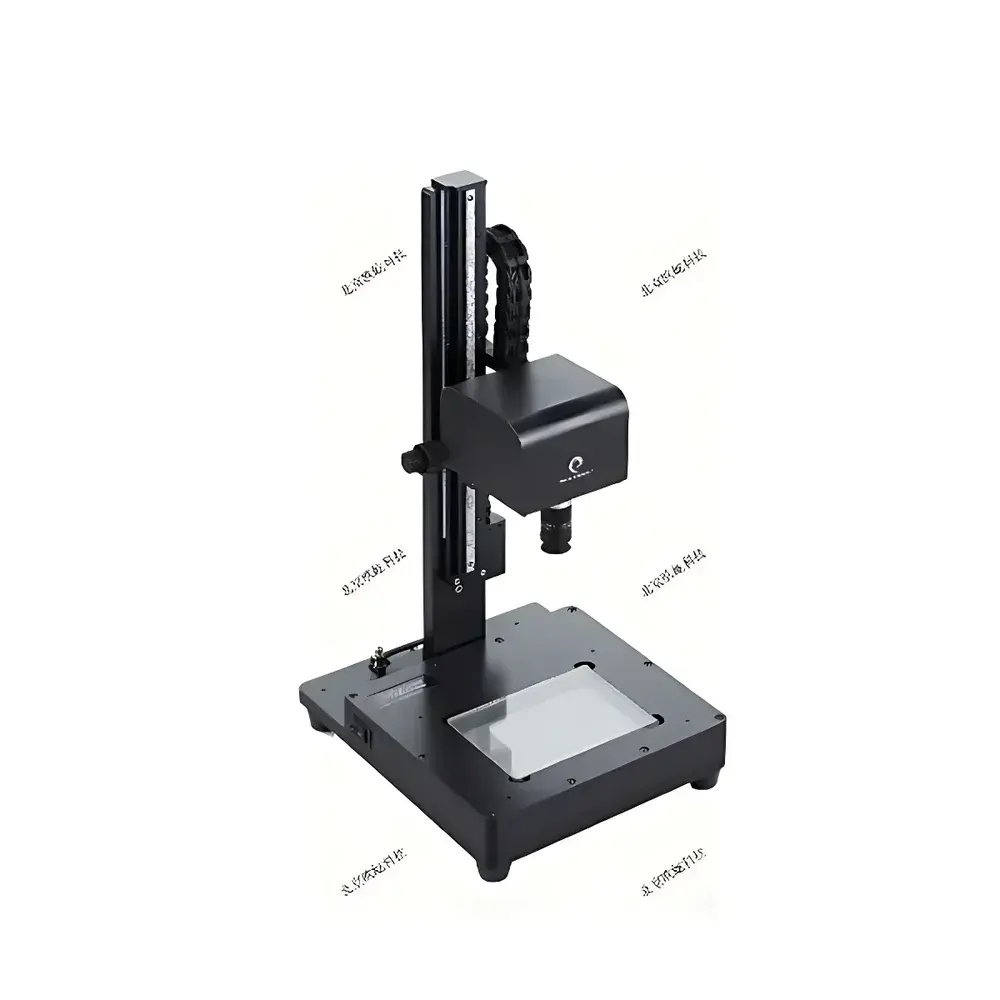
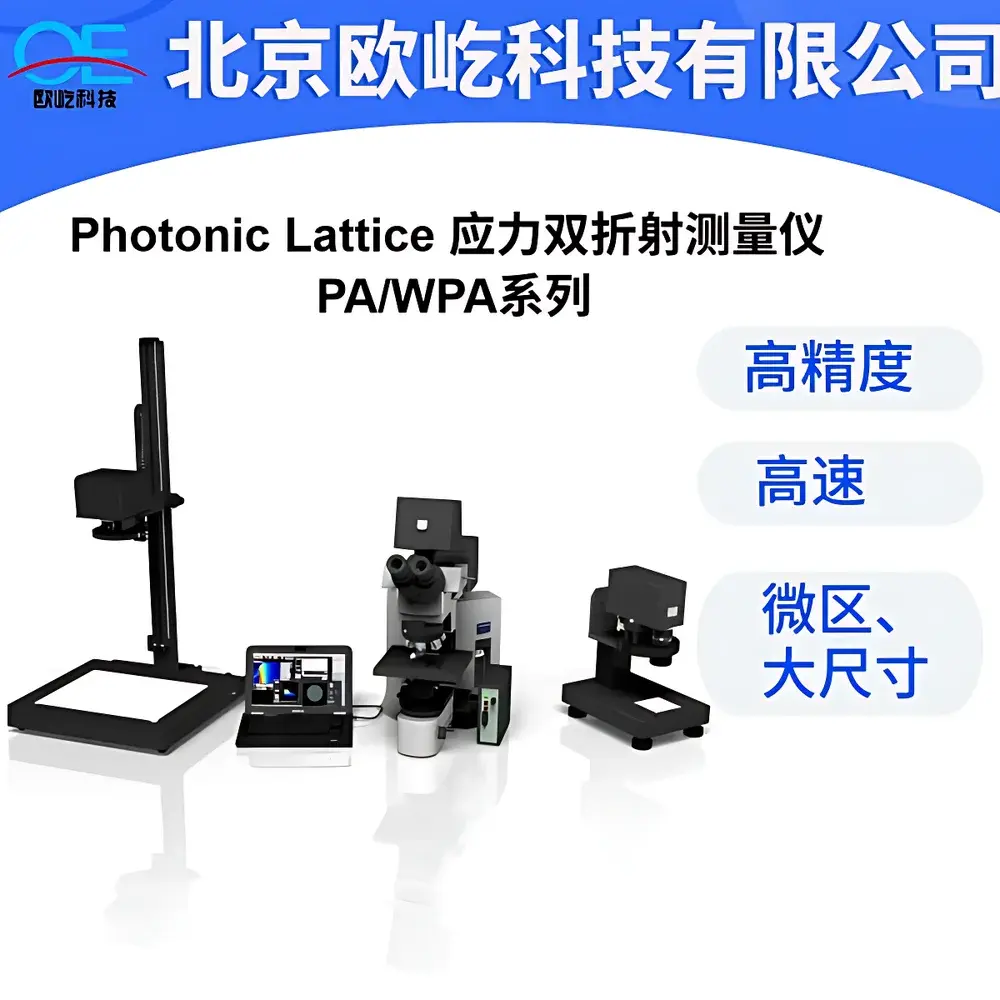
Photonic Lattice PA-300 Polarizing Stress Meter
| Brand | Photonic Lattice |
|---|---|
| Origin | Japan |
| Model | PA-300 |
| Measurement Wavelength | 520 nm |
| Birefringence Range | 0–130 nm |
| Minimum Resolution | 0.001 nm |
| Repeatability | < 0.1 nm (σ) |
| Field of View (Standard) | 27 × 36 mm to 99 × 132 mm |
| Optional Expanded FOV | 7 × 8.4 mm (with beam-expanding lens) |
| Output Parameters | Retardation [nm], Fast Axis Orientation [°], Stress Conversion [MPa] (optional) |
| Camera Resolution | 2056 × 2464 pixels |
| Measurement Time per Sample | ≤ 3 s |
Overview
The Photonic Lattice PA-300 Polarizing Stress Meter is a high-speed, full-field birefringence measurement system engineered for quantitative stress and residual strain analysis in transparent and semi-transparent optical materials. Based on the principle of polarization-resolved imaging interferometry, the PA-300 utilizes a proprietary photonic crystal polarizer array integrated with a high-resolution monochrome CMOS camera (2056 × 2464 pixels) operating at 520 nm wavelength. Unlike conventional rotating-polarizer or photoelastic modulator (PEM)-based systems, the PA-300 eliminates mechanical moving parts—such as motorized waveplates or rotating filters—replacing them with a static, multi-channel polarization capture architecture. This design enables simultaneous acquisition of retardation magnitude and fast-axis orientation across the entire field of view in a single exposure, delivering spatially resolved birefringence maps with sub-nanometer sensitivity and millisecond-level temporal stability.
Key Features
- Static optical architecture: No rotating or scanning components ensures long-term alignment stability and zero mechanical wear.
- Full-field, single-shot measurement: Captures retardation and axis orientation over the entire FOV (up to 99 × 132 mm) in ≤ 3 seconds—ideal for inline or high-throughput QC environments.
- High spatial resolution: 2056 × 2464 pixel polarization camera provides dense sampling without interpolation artifacts; minimum detectable retardation resolution of 0.001 nm (σ).
- Traceable calibration: Factory-calibrated against NIST-traceable reference standards; supports user verification using certified quartz wedges or calibrated stress plates.
- Modular optics: Interchangeable lens assemblies enable adaptation to diverse sample geometries—from micro-optics (7 × 8.4 mm FOV with beam-expanding lens) to large-area substrates (e.g., 300 mm display glass).
- Stress conversion module (optional): Integrates ASTM C1355-compliant algorithms to convert measured retardation into principal stress values (MPa), assuming known material birefringence coefficient (C-value) and thickness.
Sample Compatibility & Compliance
The PA-300 accommodates planar, flat, or gently curved transparent substrates with thicknesses ranging from 0.1 mm to 50 mm, including optical glasses (BK7, fused silica), crystalline wafers (sapphire, SiC), chemically strengthened aluminosilicate glasses (e.g., Gorilla Glass), and polymer lenses (CR-39, polycarbonate). Surface flatness requirements are ≤ λ/4 PV over the measurement area; no surface coating or anti-reflection treatment is required. The system complies with ISO 11146-1 (laser beam profiling standards), ASTM F2616 (stress birefringence testing of optical windows), and supports audit-ready documentation for GLP/GMP environments. Data export formats include TIFF (raw polarization states), CSV (retardation/axis grids), and HDF5 (for integration with MATLAB or Python-based analysis pipelines).
Software & Data Management
The PA-300 is operated via the dedicated PolarView™ software suite, which runs on Windows 10/11 (64-bit) and supports both local and networked deployment. Core capabilities include real-time live view with dynamic range optimization, region-of-interest (ROI) masking, multi-sample batch processing, and comparative overlay analysis across time-series or lot-to-lot datasets. All measurement sessions automatically log metadata—including timestamp, operator ID, instrument serial number, calibration status, and environmental conditions (optional temperature/humidity sensor input)—ensuring full traceability under FDA 21 CFR Part 11 requirements when configured with electronic signatures and audit trail modules. Third-party control is enabled via TCP/IP API (RESTful endpoints) and LabVIEW/VISA drivers for integration into automated manufacturing execution systems (MES).
Applications
- Quality assurance of precision optical components: lens doublets, prisms, and laser cavity optics where stress-induced wavefront distortion must remain below λ/20 PV.
- In-line monitoring of tempered glass manufacturing: detection of edge compression gradients and center tension anomalies in smartphone cover glass.
- Failure analysis of semiconductor substrates: mapping thermal stress distribution in SiC and GaN wafers post-dicing or bonding.
- R&D validation of low-stress thin-film deposition processes: quantifying substrate bending and interfacial stress evolution during PVD/CVD cycles.
- Regulatory compliance testing: USP (birefringence limits for pharmaceutical vials) and MIL-PRF-13830B (optical element stress classification).
FAQ
Does the PA-300 require periodic recalibration?
Yes—Photonic Lattice recommends annual factory recalibration or user-performed verification using certified reference standards every 90 days in production environments.
Can the PA-300 measure curved or non-planar samples?
It is optimized for flat or low-curvature (< 0.5 D) surfaces; significant curvature introduces optical path difference errors that require custom compensation models (available as optional consulting service).
Is stress conversion supported for all materials?
Stress calculation requires input of the material-specific stress-optic coefficient (C-value) and uniform thickness; default libraries include common optical glasses and sapphire, but users may define custom materials.
What environmental conditions affect measurement accuracy?
Ambient temperature fluctuations > ±1°C/hour or vibration exceeding 0.01 g RMS at 10–100 Hz may degrade repeatability; operation within ISO Class 5 cleanroom or temperature-stabilized lab (23 ± 0.5°C) is recommended for metrology-grade results.
How is data integrity ensured during long-term deployment?
All raw images and processed results are stored with SHA-256 checksums; PolarView™ enforces write-once-read-many (WORM) archive mode when configured for 21 CFR Part 11 compliance.





