
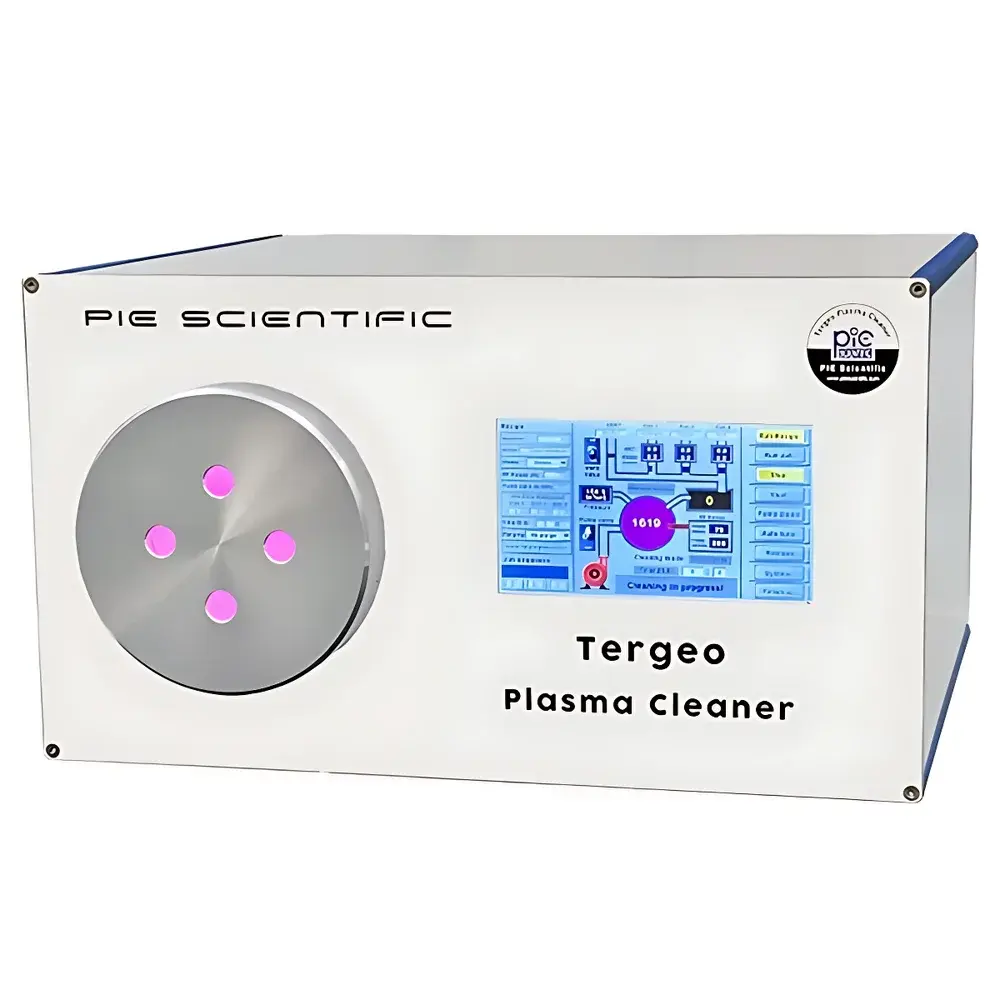
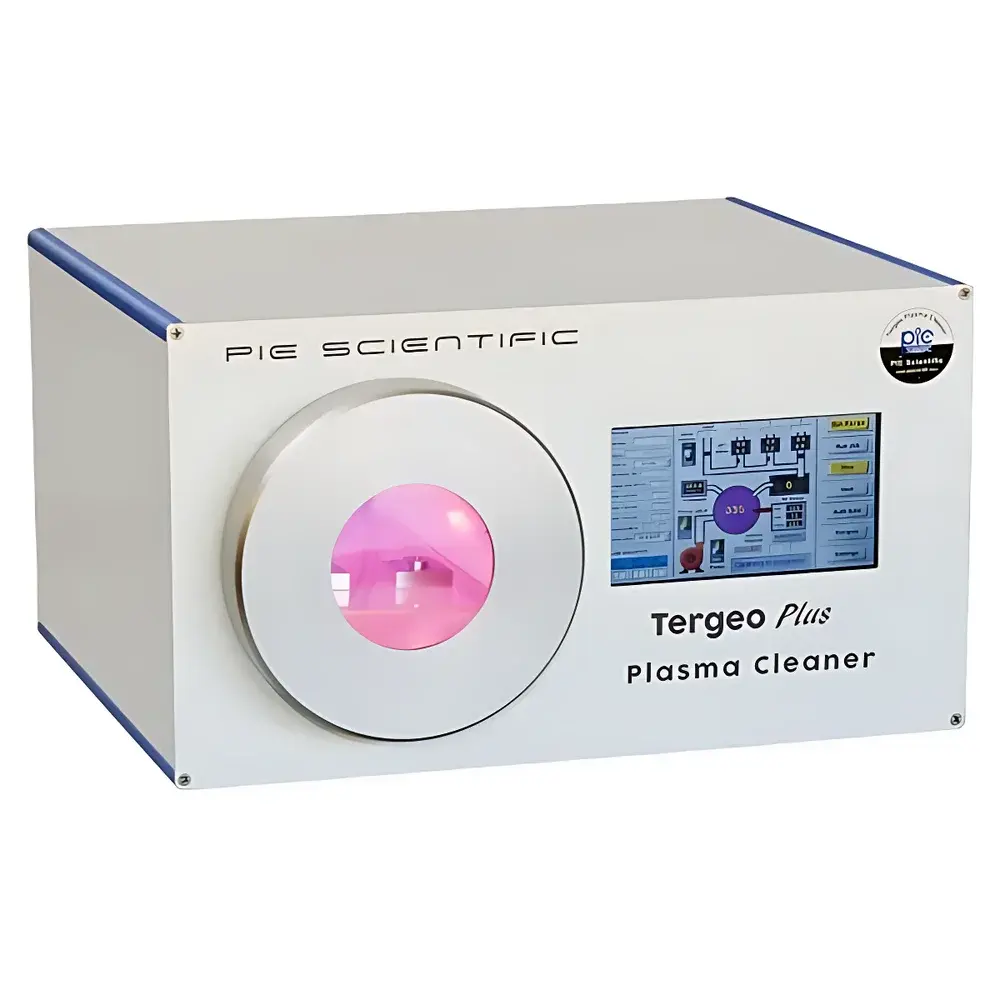
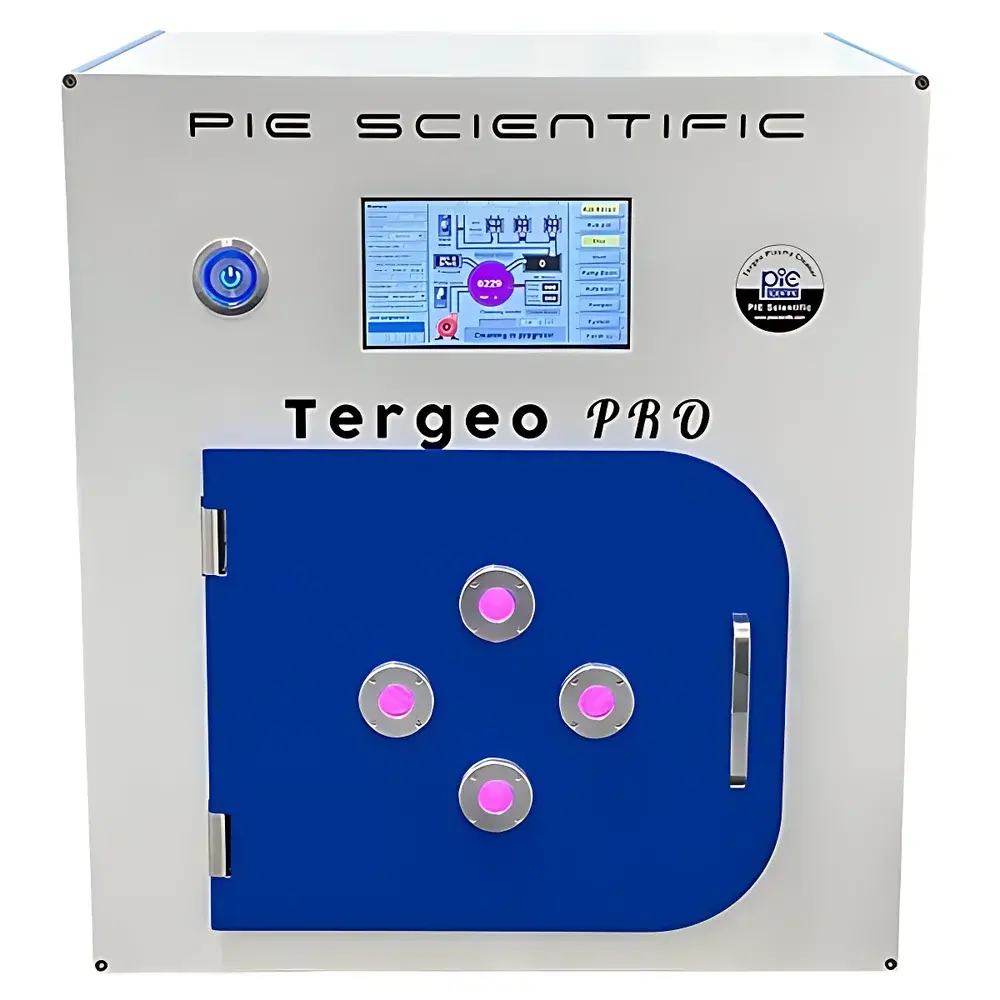
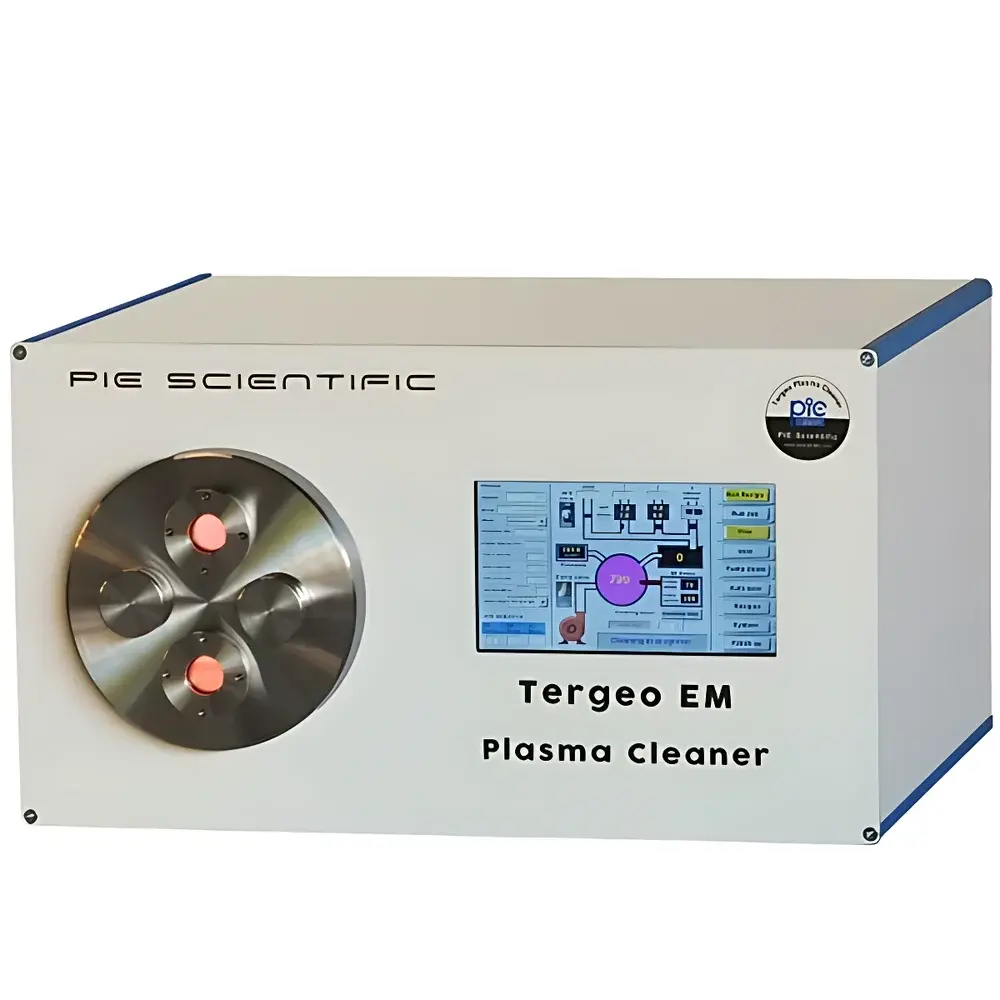
PIE Scientific Tergeo Basic Plasma Etcher and Asher
| Brand | PIE Scientific |
|---|---|
| Origin | USA |
| Model | Tergeo Basic |
| RF Frequency | 13.56 MHz |
| RF Power | 75 W (optional 150 W) |
| Chamber Internal Diameter × Depth | 110 mm × 280 mm |
| Chamber Volume | 2.6 L |
| Chamber Material | High-Purity Fused Quartz |
| Gas Inlets | 2 standard, optional 3rd |
| Control Interface | 7-inch full-color touchscreen, fully automated |
| Plasma Type | Capacitively Coupled RF Plasma (CCP), non-microwave, non-underfill, non-wafer-specific |
| Compliance | CE, RoHS, FCC Class A |
Overview
The PIE Scientific Tergeo Basic Plasma Etcher and Asher is a compact, benchtop-capable radiofrequency (RF) plasma system engineered for precision surface modification, low-temperature ashing, and controlled etching of nanoscale and sensitive substrates. Operating at the industrial standard frequency of 13.56 MHz, it generates a capacitively coupled plasma (CCP) within a high-purity fused quartz chamber—ensuring chemical inertness, thermal stability, and optical transparency for process monitoring. Unlike microwave or downstream plasma configurations, the Tergeo Basic employs direct immersion plasma generation, enabling high-efficiency removal of organic contaminants, photoresist stripping, and carbonaceous residue ablation—including coal matrix decomposition under controlled oxidative or inert gas environments. Its design adheres to fundamental plasma physics principles governing electron energy distribution, ion bombardment control, and radical-dominated surface reactions—making it suitable for both analytical sample preparation (e.g., SEM/TEM grid cleaning) and functional surface engineering (e.g., polymer hydrophilization, biomaterial activation).
Key Features
- Capacitively coupled RF plasma source operating at 13.56 MHz with stable impedance matching and minimal harmonic emission
- Adjustable RF power output: standard 75 W configuration; optional upgrade to 150 W for accelerated etch rates or higher-density plasma generation
- High-purity fused quartz reaction chamber (ID 110 mm × depth 280 mm; total volume 2.6 L) resistant to halogenated, oxygen-based, and fluorocarbon chemistries
- Intuitive 7-inch capacitive touchscreen interface with preloaded protocols, real-time parameter logging, and user-defined recipe storage
- Dual-gas mass flow controller (MFC) system as standard; optional third MFC for multi-step gas sequencing (e.g., O2 → Ar → CF4)
- Integrated safety interlocks including door-open shutdown, overpressure venting, and RF emission shielding compliant with IEC 61000-6-3
- Support for both reactive (O2, CF4, SF6) and inert (Ar, He, N2) process gases—enabling tunable surface chemistry outcomes
Sample Compatibility & Compliance
The Tergeo Basic accommodates substrates up to 100 mm in diameter—including silicon wafers, TEM grids, glass slides, polymer films, ceramic sensors, and coal particulates. Its low-temperature plasma operation (< 60 °C average surface rise during typical 5–10 min ashing cycles) prevents thermal degradation of heat-sensitive materials such as PET, PDMS, or protein-coated surfaces. The system meets CE marking requirements for electromagnetic compatibility (EMC) and low-voltage directive (LVD), conforms to RoHS 2011/65/EU restrictions on hazardous substances, and complies with FCC Part 15 Class A emissions limits for laboratory environments. For regulated laboratories, audit-ready operation logs and parameter traceability support GLP/GMP documentation practices; however, native 21 CFR Part 11 compliance requires integration with validated third-party electronic lab notebook (ELN) or LIMS platforms.
Software & Data Management
The embedded firmware supports protocol-driven operation with up to 99 user-defined methods, each storing gas composition, pressure setpoint (via analog vacuum gauge feedback), RF power level, treatment duration, and ramp profiles. All operational data—including timestamped RF forward/reflected power, chamber pressure, and gas flow rates—is logged internally and exportable via USB 2.0 to CSV format. No cloud connectivity or remote access is implemented—ensuring data sovereignty and alignment with institutional IT security policies. Optional RS-232 or Ethernet interfaces enable integration into centralized facility monitoring systems using Modbus RTU or TCP protocols.
Applications
- Nanomaterial sample cleaning prior to XRD, XPS, or AFM analysis
- Low-temperature coal ashing for proximate/ultimate analysis per ASTM D3174 and ISO 1171
- Photoresist removal from lithography masks and MEMS devices without substrate damage
- Surface activation of polymeric medical devices (e.g., catheters, implants) to enhance protein adsorption or cell adhesion
- Hydrophilization of PDMS microfluidic channels for improved aqueous reagent wetting
- Contamination mitigation on SEM/TEM specimen stubs and holder components
- Functional group introduction (e.g., –OH, –COOH) on carbon nanotubes or graphene oxide films
FAQ
What plasma mode does the Tergeo Basic use, and why is CCP preferred for surface-sensitive applications?
It utilizes capacitively coupled RF plasma (CCP), which offers superior control over ion energy distribution compared to microwave plasmas—minimizing sputtering damage while maintaining high radical flux for efficient organic decomposition.
Can the system perform coal ashing in accordance with standardized methods?
Yes—when operated with pure oxygen or oxygen–argon mixtures at controlled pressure and power, it achieves quantitative carbon removal consistent with ASTM D3174 ash content determination protocols.
Is the quartz chamber resistant to aggressive chemistries such as SF₆ or CF₄?
Yes, high-purity fused quartz exhibits excellent resistance to fluorine-based etchants below 200 °C and is routinely used in semiconductor-grade plasma tools for similar applications.
Does the Tergeo Basic support automated gas switching during a single run?
With the optional third gas inlet and firmware upgrade, sequential multi-gas protocols (e.g., O₂ ash → Ar sputter → N₂ passivation) can be executed without manual intervention.
What electrical requirements does the instrument have?
Universal AC input (110–230 VAC, 50/60 Hz), single-phase, with maximum draw of 1.2 A at 230 V—compatible with standard laboratory GFCI outlets.



