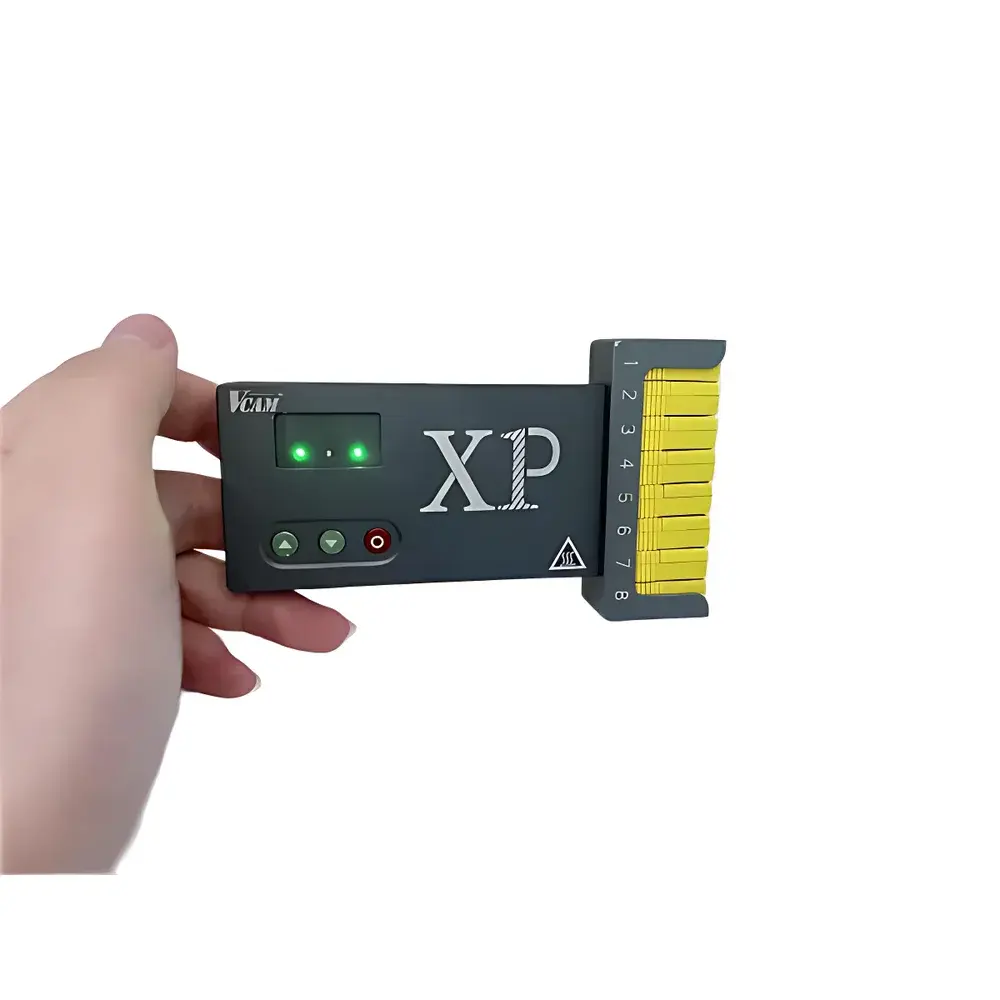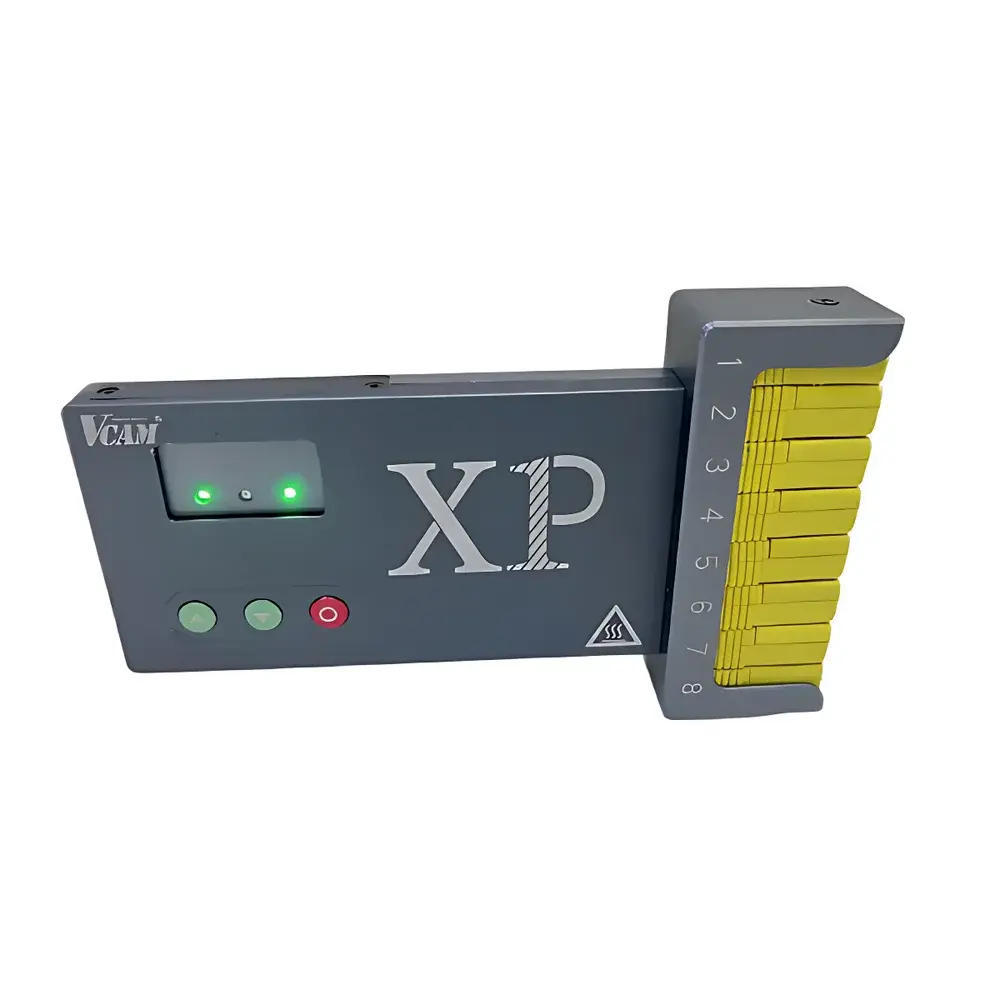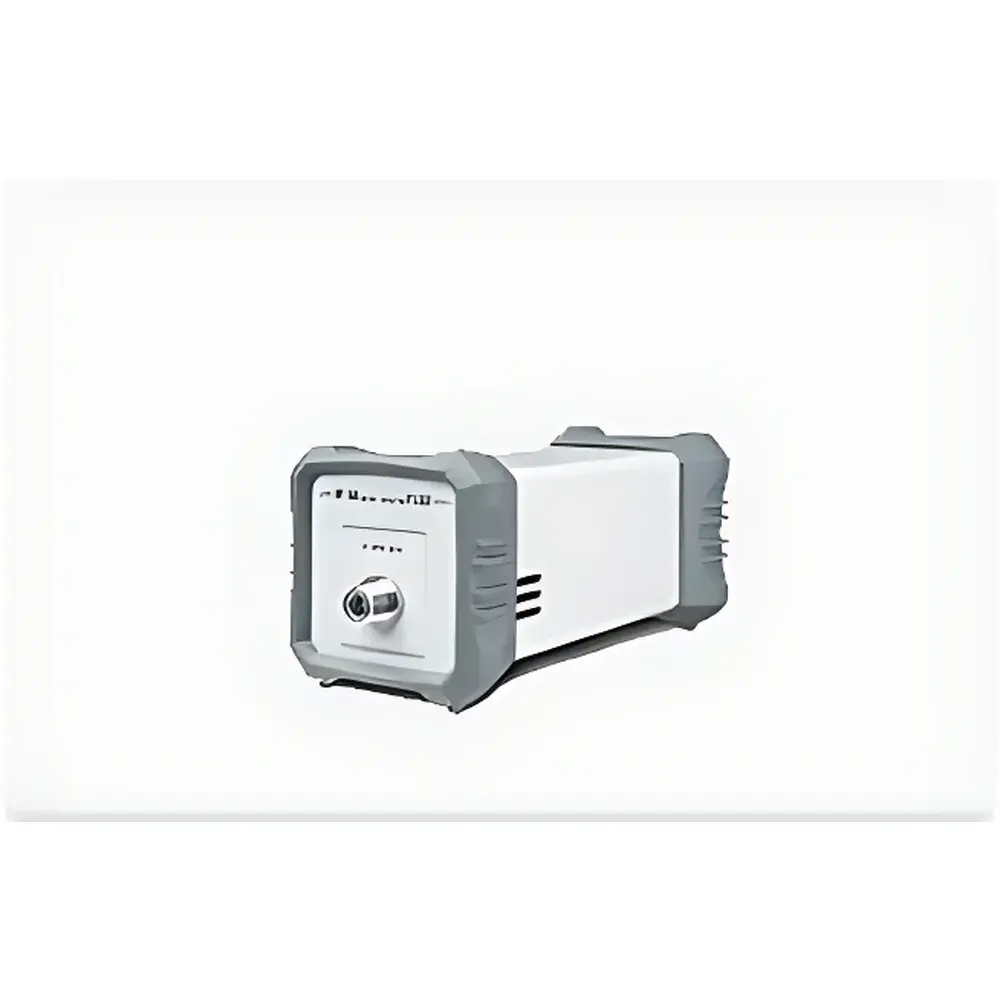
PMM 9180 18 GHz Frequency Extension Module for PMM 9010 EMI Test Receiver
| PMM | Brand |
|---|---|
| Origin | Italy |
| Manufacturer Type | Authorized Distributor |
| Import Status | Imported |
| Model | PMM 9180 |
| Price | Upon Request |
Overview
The PMM 9180 18 GHz Frequency Extension Module is a precision-engineered digital front-end unit designed to extend the operational frequency range of the PMM 9010 EMI test receiver from its native upper limit to 18 GHz. Unlike conventional analog extension solutions, the 9180 employs high-fidelity RF-to-digital conversion directly at the antenna feed point—minimizing signal degradation, impedance mismatch, and ambient electromagnetic coupling inherent in coaxial cabling. Operating on the principle of distributed digital signal acquisition, the module digitizes RF signals within the 6–18 GHz band using a calibrated, temperature-stabilized ADC architecture synchronized via optical clock distribution. This enables full compliance with CISPR 16-1-1:2023 (Ed. 4.0) and MIL-STD-461F/G radiated emission measurement requirements, while preserving the metrological traceability and dynamic range integrity of the base receiver system.
Key Features
- Digital fiber-optic interface (≥2.5 Gb/s proprietary protocol) eliminates RF cable loss, mode conversion, and field-induced noise coupling—reducing measurement uncertainty by up to 1.8 dB in anechoic chamber environments.
- Integrated Li-ion rechargeable battery (10–15 V DC, 2.5 A; 4 h continuous operation) ensures galvanic isolation and eliminates ground-loop interference during over-the-air (OTA) measurements.
- Compact form factor (235 × 105 × 105 mm, 2.2 kg) enables direct mounting behind broadband antennas—including biconical, log-periodic, and double-ridged guide horns—without mechanical stress or alignment drift.
- Four-stage preselector bank (6–9 GHz, 9–12 GHz, 12–15 GHz, 15–18 GHz) provides harmonic suppression >65 dB and spurious-free dynamic range >105 dB.
- Programmable RF attenuator (0–45 dB in 5 dB steps) and low-noise amplifier (20 dB gain, NF < 4.5 dB) support both high-level immunity testing and ultra-low-level emission detection.
- Real-time amplitude probability distribution (APD) detection compliant with IEC/CISPR TR 16-4-5:2022 for statistical characterization of broadband emissions above 1 GHz.
Sample Compatibility & Compliance
The PMM 9180 is exclusively compatible with the PMM 9010 EMI test receiver and operates as a certified subsystem under CISPR 16-1-1 Annex D (Extension Modules). It satisfies all mandatory performance criteria for radiated emission measurements per EN 55032:2021, EN 55035:2021, MIL-STD-461G RS103, and DO-160G Section 20. The module’s VSWR ≤2.0 (50 Ω BNC female) and calibrated IF bandwidths (3/10/30/100/300 kHz and CISPR-specific 9/120 kHz/1 MHz) ensure unambiguous pass/fail determination against regulatory limits. All factory calibrations are traceable to NIST and PTB standards, with certificate of conformity issued per ISO/IEC 17025:2017 requirements.
Software & Data Management
Controlled via PMM EMI Suite v5.x (Windows 10/11, 64-bit), the 9180 integrates seamlessly into automated test sequences supporting full CISPR, MIL-STD, and automotive EMC standards (e.g., ISO 11452-2, SAE J1113-41). The software implements dual-path APD analysis—simultaneously executing peak-hold scanning and statistical binning—with audit-trail logging compliant with FDA 21 CFR Part 11 and GLP/GMP data integrity requirements. Raw IQ data export (IEEE 32-bit float, .iq format) supports post-processing in MATLAB, Python (SciPy), or third-party spectrum analyzers. Firmware updates are delivered via signed USB dongle or secure HTTPS portal with cryptographic signature verification.
Applications
- Radiated emissions testing of 5G NR FR2 (24.25–29.5 GHz harmonics), Wi-Fi 6E/7 (5.925–7.125 GHz), and UWB systems (6–10.6 GHz) in semi-anechoic and fully anechoic chambers.
- Military platform EMC validation per MIL-STD-461G RS103 (radiated susceptibility) and CS114 (bulk current injection with near-field coupling assessment).
- Automotive radar sensor characterization (76–81 GHz fundamental harmonics) and ADAS ECU immunity verification.
- Pre-compliance screening of IoT edge devices, UAV telemetry links, and satellite communication terminals operating in C-, X-, Ku-, and K-bands.
- Research-grade spectral occupancy studies requiring high-resolution, low-uncertainty measurements across multi-octave bandwidths.
FAQ
Is the PMM 9180 compatible with receivers other than the PMM 9010?
No. The 9180 is a purpose-built, optically coupled extension module designed exclusively for use with the PMM 9010 platform. Its firmware, timing synchronization, and data framing protocol are not interoperable with third-party receivers.
Does the module require external calibration after installation?
No. The 9180 is supplied with a full system calibration certificate (including path loss, IF response, and detector linearity) valid for 12 months. Annual recalibration is recommended and performed at PMM-certified service centers using traceable reference standards.
Can the 9180 be used for conducted emission measurements?
Not directly. Conducted tests require LISN integration with the PMM 9010 host. However, the 9180 may be deployed in hybrid setups—for example, measuring common-mode currents on cables using near-field probes coupled to the 9180’s RF input.
What is the maximum allowable fiber length between the 9180 and 9010?
Up to 100 meters using PMM-specified single-mode optical fiber (SMF-28, FC/APC connectors). Signal integrity remains within specification (jitter < 0.3 UI, BER < 1×10⁻¹²) across the full operating temperature range (–5 °C to +45 °C).
How does the APD detection function comply with emerging standards?
The APD engine implements the statistical sampling methodology defined in CISPR TR 16-4-5:2022, including adaptive dwell time allocation, percentile-based thresholding, and cumulative distribution function (CDF) generation—all executed in real time without host PC dependency.