PMM EHP-50C Triaxial ELF Electromagnetic Field Probe
| Brand | PMM |
|---|---|
| Origin | Italy |
| Model | EHP-50C |
| Frequency Range | 5 Hz – 100 kHz |
| Axes | Simultaneous X/Y/Z vector measurement |
| Calibration Data Storage | Built-in EEPROM |
| Interface | Optical fiber (compatible with PMM 8053A field meter) |
| Signal Processing | Integrated DSP with selectable 7-band spectral resolution |
| Operating Temperature | −10 °C to +40 °C |
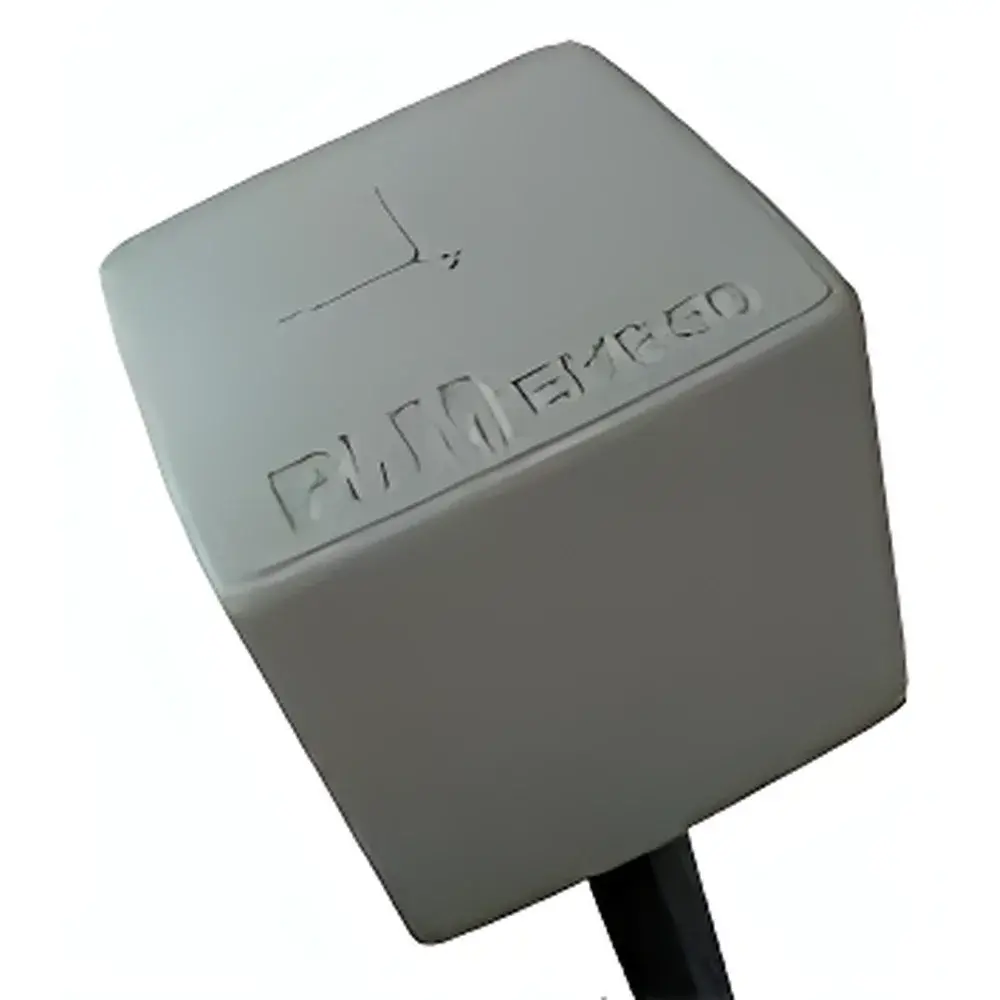
| Physical Form Factor | Compact cubic probe (dimensions not specified) |
| Power Management | Internal rechargeable battery with charging port |
| Status Indication | LED indicators for power/on/off and operational mode |
Overview
The PMM EHP-50C is a triaxial, isotropic electromagnetic field probe engineered for precision measurement of extremely low frequency (ELF) electric and magnetic fields in the 5 Hz to 100 kHz range. Designed in strict accordance with international standards for electromagnetic compatibility (EMC) and human exposure assessment—including ICNIRP, IEEE C95.1, and EU Directive 2013/35/EU—the EHP-50C operates on the principle of orthogonal sensor coupling: three mutually perpendicular sensing elements (X, Y, Z) independently transduce field components into analog signals, which are then digitized and processed by an embedded digital signal processor (DSP). Its compact cubic geometry ensures minimal field perturbation and spatial isotropy—critical for compliance testing near power infrastructure, industrial equipment, medical devices, and transportation systems. Unlike broadband averaging instruments, the EHP-50C delivers real-time spectral decomposition via configurable bandwidth selection, enabling frequency-selective evaluation required for weighted exposure assessment per regulatory limits.
Key Features
- Triaxial isotropic sensing architecture with simultaneous acquisition across X, Y, and Z axes—no manual reorientation required for vector magnitude calculation (Etotal = √(Ex² + Ey² + Ez²))
- Integrated DSP engine supporting seven user-selectable resolution bandwidths (RBW), facilitating detailed spectral analysis without external post-processing
- Built-in EEPROM stores full factory calibration data—including axis-specific sensitivity curves, frequency response correction tables, and level calibration coefficients—ensuring traceability and eliminating manual calibration file management
- Fiber-optic interface compliant with PMM’s 8053A field meter platform; galvanically isolated transmission prevents ground-loop interference and preserves signal integrity in high-noise environments
- Onboard microcontroller manages power sequencing, battery charging status, sensor biasing, and real-time diagnostics; LED indicators provide immediate visual feedback on operational state and communication link integrity
- Ruggedized cubic housing optimized for handheld and fixed-position deployment; operating temperature range certified from −10 °C to +40 °C for field use in diverse climatic conditions
Sample Compatibility & Compliance
The EHP-50C is compatible with continuous and transient ELF emissions from AC power systems (50/60 Hz harmonics), variable-frequency drives (VFDs), induction heaters, welding equipment, MRI gradient coils, and railway traction systems. It does not require physical contact or grounding, making it suitable for non-invasive survey measurements in occupied spaces. The probe meets essential requirements of IEC 61786-1:2013 (measurement of low-frequency electric, magnetic and electromagnetic fields) and supports verification against occupational and general public exposure limits defined in EN 50499:2016 and ICNIRP 2010 guidelines. All calibration data are NIST-traceable through PMM’s accredited metrology laboratory in Italy, and the probe’s firmware architecture supports audit-ready logging for GLP/GMP-aligned environments.
Software & Data Management
When paired with the PMM 8053A control unit, the EHP-50C enables real-time spectral display, marker-based frequency interrogation, and automatic peak-hold capture. Raw time-domain samples and FFT spectra are exportable via USB or Ethernet as CSV or binary formats for third-party analysis (e.g., MATLAB, Python SciPy, or custom exposure modeling tools). Firmware updates are performed over optical link to maintain electrical isolation integrity. The system supports time-stamped measurement logs with operator ID tagging, aligning with FDA 21 CFR Part 11 requirements when used in regulated biomedical facility assessments. No proprietary runtime or cloud dependency is required—data handling remains fully local and deterministic.
Applications
- Occupational safety surveys near substations, switchgear rooms, and industrial motor control centers
- Compliance verification of medical equipment (e.g., MRI, diathermy units) per IEC 60601-2-33 and IEC 62311
- Environmental impact assessment of high-voltage DC (HVDC) converter stations and electrified rail corridors
- Research-grade characterization of harmonic distortion in smart grid infrastructure
- Validation of shielding effectiveness in laboratories, cleanrooms, and sensitive electronic facilities
- Academic studies on bioelectromagnetics and low-frequency field dosimetry
FAQ
Is the EHP-50C compatible with instruments other than the PMM 8053A?
No—it requires optical fiber interfacing and protocol-level synchronization exclusive to PMM’s 8053A series field meters.
Does the probe require periodic recalibration?
Yes; PMM recommends annual recalibration at an ISO/IEC 17025-accredited laboratory to maintain traceability and measurement uncertainty compliance.
Can the EHP-50C measure both electric and magnetic fields simultaneously?
No—it is configured as either an electric-field (E-field) or magnetic-field (H-field) probe; EHP-50C denotes the electric-field variant. The EHP-50B is the corresponding magnetic-field version.
What is the typical measurement uncertainty across its frequency range?
Uncertainty is ±1.5 dB (k=2) from 5 Hz to 1 kHz, degrading to ±2.5 dB (k=2) at 100 kHz, as documented in the included calibration certificate.
Is battery life sufficient for full-shift field surveys?
Yes—fully charged, the internal Li-ion battery supports ≥8 hours of continuous operation under typical spectral acquisition settings.