
ProOpto PTA High-Power Laser Photothermal Weak Absorption Analyzer
| Brand | ProOpto |
|---|---|
| Origin | Germany |
| Manufacturer Type | Authorized Distributor |
| Origin Category | Imported |
| Model | PTA |
| Pricing | Available Upon Request |
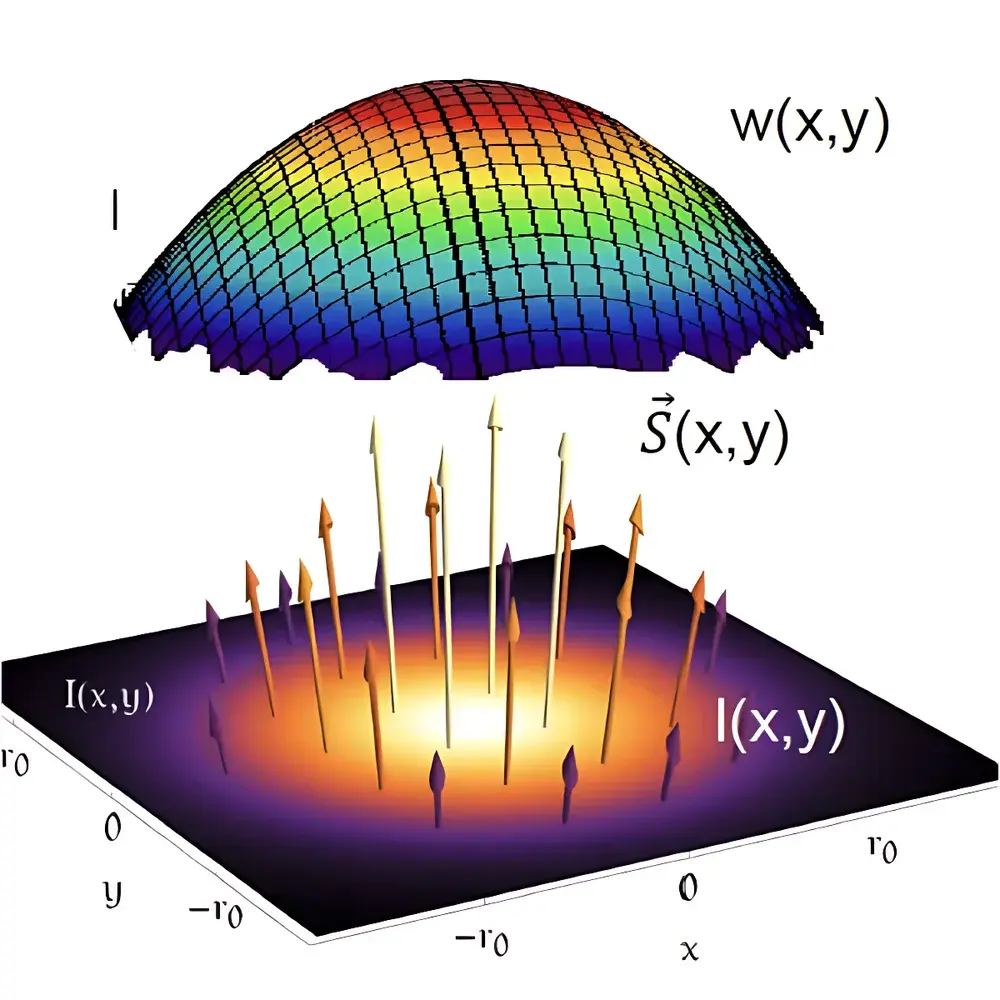
| Measurement Principle | Photothermal Deflection + Hartmann-Shack Wavefront Sensing |
| Sensor Resolution | <10 pm (≈ λ/10,000) |
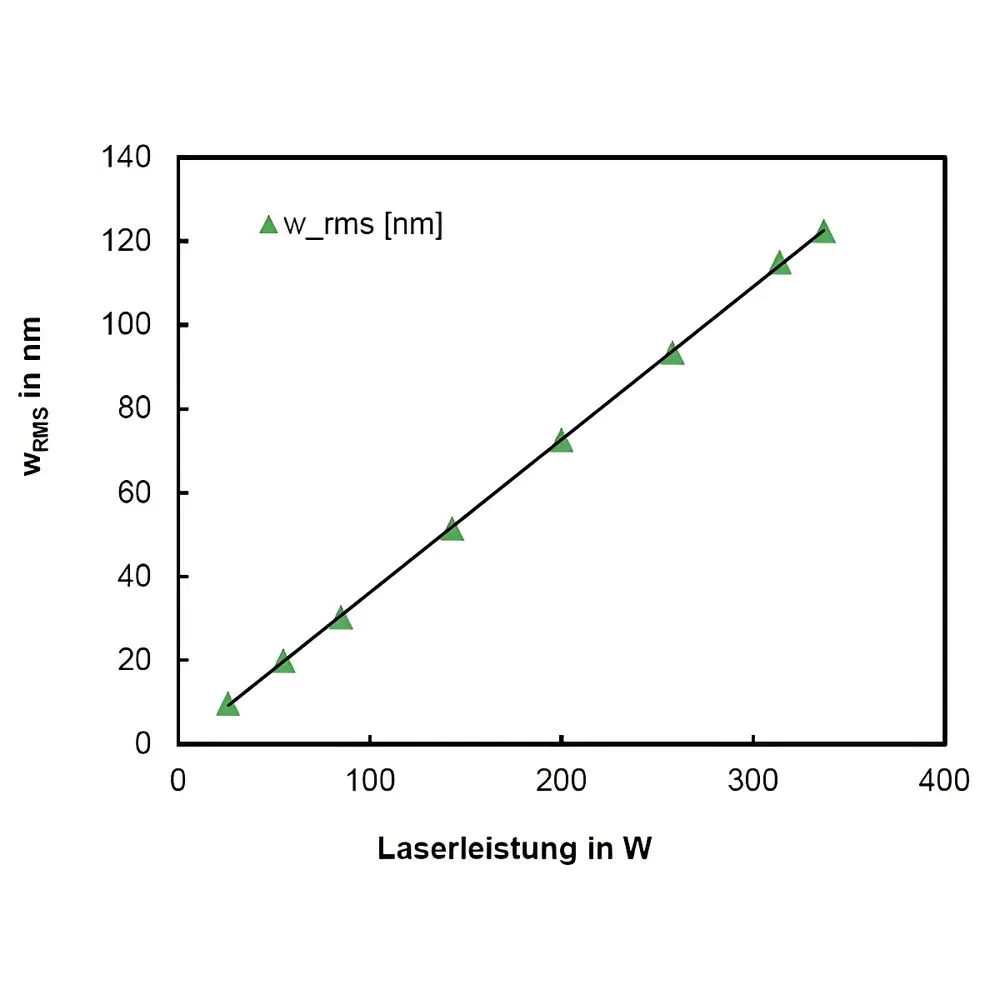
| Absorption Sensitivity | Real-time ppm-level detection |
| Supported Camera Interfaces | ~20 standard scientific camera types |
| Compliance | ISO 11146, ISO 13694, ISO 11670, ISO 15367 |
| Application Domain | Optical thin-film metrology, high-power laser component qualification, transient thermal distortion analysis |
Overview
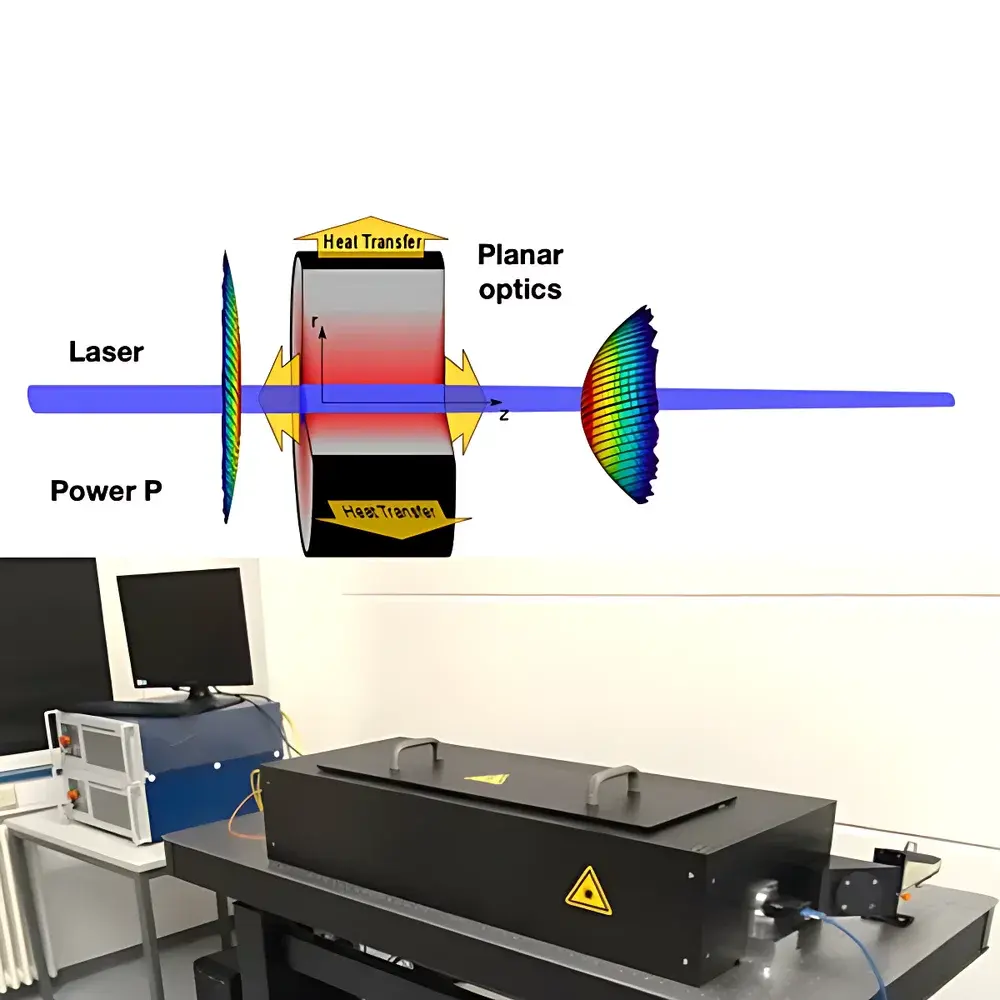
The ProOpto PTA High-Power Laser Photothermal Weak Absorption Analyzer is a precision metrology platform engineered for quantitative, non-contact measurement of minute optical absorption in dielectric coatings and bulk optical materials under high-intensity laser irradiation. It operates on the dual physical principles of photothermal deflection spectroscopy (PDS) and time-resolved Hartmann-Shack wavefront sensing—enabling simultaneous acquisition of absorption-induced thermal lensing and dynamic wavefront deformation. The system delivers sub-10 picometer (pm) displacement resolution in its interferometric detection path, corresponding to approximately λ/10,000 at 1064 nm, and supports real-time absorption quantification with ppm-level sensitivity (1 part per million = 10⁻⁶). Designed specifically for R&D labs and production QA/QC environments handling excimer (193 nm, 248 nm), solid-state (1064 nm, 532 nm), and CO₂ (10.6 µm) laser optics, the PTA provides traceable, standards-aligned data for material qualification, coating process validation, and failure mechanism analysis—including irreversible damage onset and cumulative thermal stress evolution.
Key Features
- Integrated photothermal deflection and Hartmann-Shack wavefront sensing architecture for concurrent absorption and transient thermal distortion measurement
- Sub-10 pm optical path difference resolution via differential interferometry, calibrated against NIST-traceable displacement references
- Real-time absorption coefficient calculation with ppm-level sensitivity across pulse durations from nanoseconds to continuous-wave regimes
- Time-resolved thermal lens characterization—including relaxation kinetics post-laser pulse and temporal evolution of focal shift in fused silica substrates
- Modular optical head design compatible with >20 commercially available scientific CMOS and sCMOS cameras (including Andor Zyla, Hamamatsu ORCA-Fusion, Basler ace series)
- Automated beam parameter extraction aligned with ISO 11146 (beam width/divergence/M²), ISO 13694 (irradiance profile), ISO 11670 (pointing stability), and ISO 15367 (wavefront phase distribution)
Sample Compatibility & Compliance
The PTA accommodates planar and curved optical elements up to Ø150 mm and 50 mm thickness, including single-layer and multilayer dielectric coatings on fused silica, CaF₂, BK7, and sapphire substrates. It supports both pulsed and CW excitation sources with adjustable repetition rates (1 Hz–10 kHz) and fluence control (0.1–10 J/cm²). All measurement protocols adhere to ISO-compliant beam characterization workflows, ensuring audit readiness for GLP/GMP-regulated environments. System calibration certificates include uncertainty budgets per ISO/IEC 17025 requirements, and raw data files retain full metadata for FDA 21 CFR Part 11-compliant electronic records when deployed with optional audit-trail software modules.
Software & Data Management
The proprietary PTA Control Suite v4.x provides synchronized acquisition, multi-parameter visualization, and automated report generation. It implements real-time FFT-based noise suppression, spatial filtering for Hartmann spot centroid refinement, and iterative Zernike decomposition for wavefront reconstruction. Export formats include HDF5 (with embedded metadata), CSV, and TIFF stacks for third-party analysis in MATLAB, Python (SciPy/NumPy), or Zemax OpticStudio. Software architecture supports role-based user access, electronic signature capture, and configurable data retention policies compliant with ISO 9001 quality management systems.
Applications
- Quantitative absorption mapping of anti-reflection and high-reflection coatings for UV lithography optics
- Thermal lensing dynamics in laser cavity mirrors subjected to 193 nm excimer exposure
- Transient wavefront distortion analysis of F-θ scanning lenses under high-repetition-rate ultrafast irradiation
- Accelerated lifetime testing of optical components in high-average-power fiber laser systems
- Correlation of absorption coefficient drift with permanent structural degradation (e.g., color center formation, micro-cracking)
- Process feedback for ion-beam sputtering and e-beam evaporation deposition lines
FAQ
What laser wavelengths and pulse formats does the PTA support?
The system is configured for 193 nm, 248 nm, 355 nm, 532 nm, 1064 nm, and 10.6 µm sources, accommodating ns-, ps-, fs-pulsed and CW operation with external trigger synchronization.
Can the PTA measure bulk absorption in transparent substrates?
Yes—by referencing substrate-only samples and applying Beer-Lambert modeling with surface reflection correction, bulk absorption coefficients down to 10⁻⁵ cm⁻¹ are resolvable.
Is ISO 17025 calibration documentation included?
Each delivered unit ships with a factory calibration certificate covering displacement sensor linearity, wavefront repeatability, and absorption sensitivity traceability to national metrology institutes.
How is thermal drift compensated during long-duration measurements?
Active temperature stabilization (±0.05 °C) of the optical baseplate and real-time reference beam normalization suppress ambient-induced drift to <0.5% over 2-hour acquisitions.
Does the system support automated pass/fail decision logic for production QC?
Yes—customizable thresholding rules can be embedded into acquisition scripts, generating binary outputs and annotated reports compliant with IATF 16949 statistical process control requirements.



