ProOpto UV/VIS Shack-Hartmann Wavefront Sensor
| Brand | ProOpto |
|---|---|
| Origin | Germany |
| Type | Imported Instrument |
| Model | UV/VIS |
| Price | Upon Request |
| Spectral Range | 190–1100 nm |
| Measurement Principle | Shack-Hartmann Wavefront Sensing |
| Dynamic Range | up to 100λ |
| Sensitivity | <100 pm |
| Compliance | ISO 11146, ISO 13694, ISO 11670, ISO 15367 |
| Camera Compatibility | >20 industrial camera models supported |
| Zernike Polynomial Analysis | Yes |
| Real-time M² Calculation | Yes |
| Single-shot Acquisition | Yes |
Overview
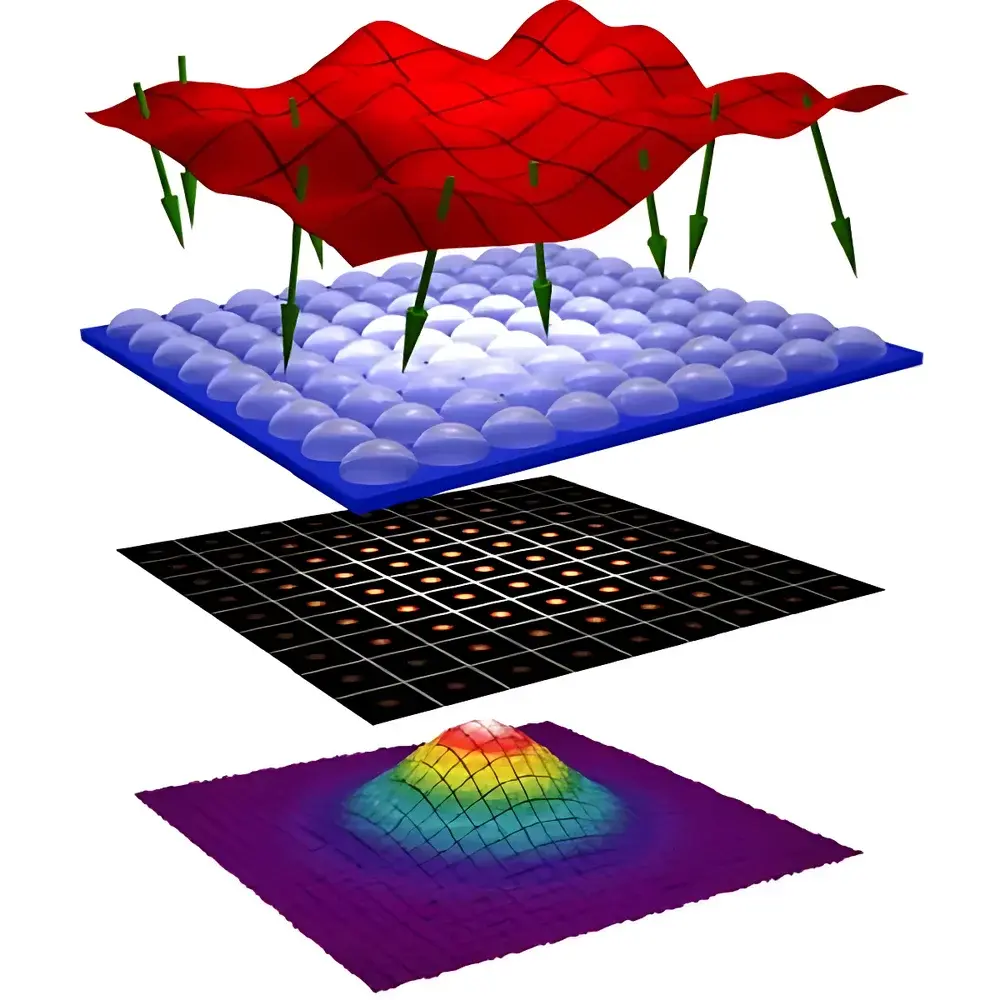
The ProOpto UV/VIS Shack-Hartmann Wavefront Sensor is a precision optical metrology instrument engineered for comprehensive laser beam characterization across the ultraviolet, visible, and near-infrared spectral bands (190–1100 nm). It operates on the well-established Shack-Hartmann principle: an incident wavefront is sampled by a micro-lens array, partitioning the beam into an array of sub-apertures. Each lenslet focuses its portion of the wavefront onto a high-resolution CMOS or sCMOS sensor; local centroid displacements of the focal spots relative to a calibrated reference grid are used to reconstruct the spatial phase gradient. Integration of the gradient field yields the full two-dimensional wavefront map—enabling quantitative assessment of aberrations, focus geometry, and propagation behavior. This sensor supports rigorous beam parameter evaluation in accordance with international standards including ISO 11146 (beam widths, divergence, M²), ISO 13694 (beam profile), ISO 11670 (pointing stability), and ISO 15367 (wavefront error and phase distribution). Its design targets applications demanding traceable, repeatable, and standards-compliant beam diagnostics—particularly in ultrafast laser development, EUV lithography alignment, adaptive optics calibration, and high-power laser system qualification.
Key Features
- Single-shot, full-field wavefront acquisition with simultaneous intensity and phase mapping
- Extended spectral coverage from deep UV (190 nm) to NIR (1100 nm), compatible with fused silica and MgF₂ optical components
- Dynamic range exceeding 100 wavelengths (λ) peak-to-valley, enabling measurement of highly aberrated beams without dynamic range compression
- RMS wavefront sensitivity better than 100 pm, achieved via low-noise imaging architecture and pixel-level centroid fitting algorithms
- Modular micro-lens array options—including variable pitch (100–500 µm), focal length (3–25 mm), and substrate material—to match beam diameter, divergence, and wavelength requirements
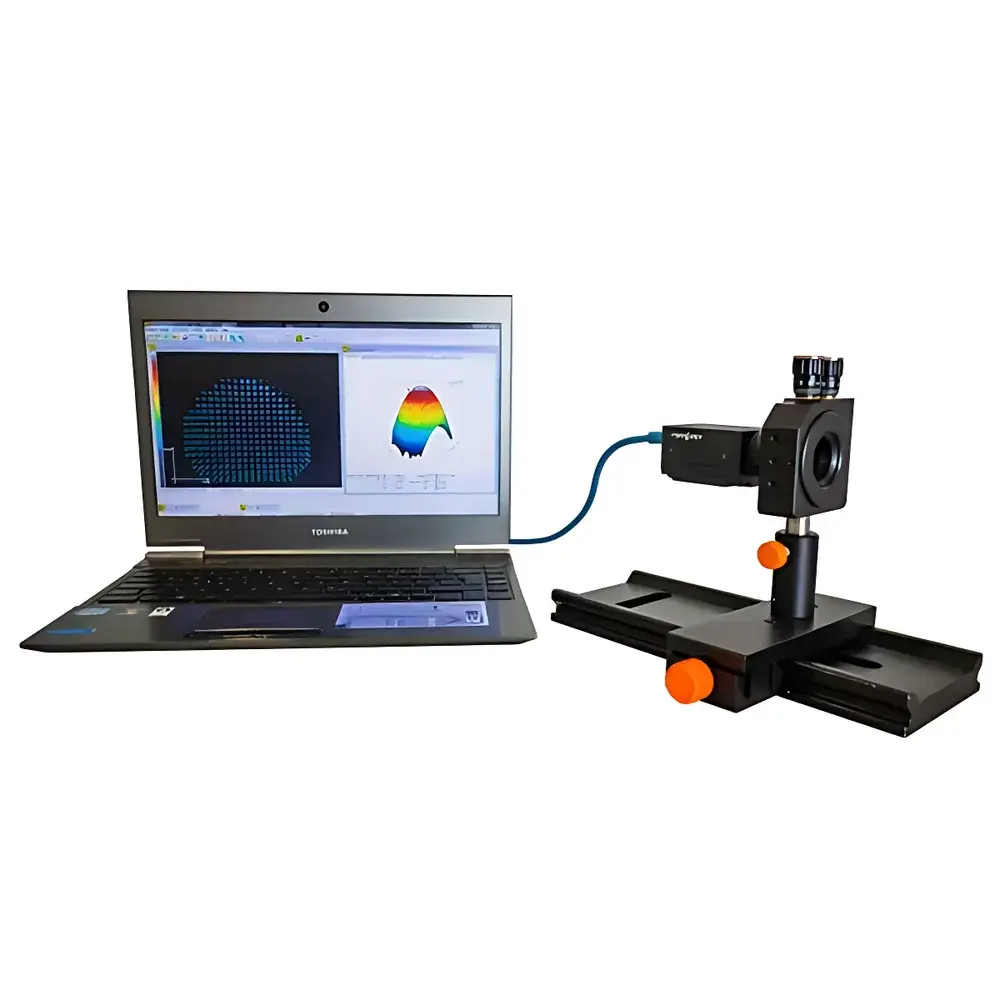
- Native support for over 20 industrial camera models (including USB3, GigE, and Camera Link interfaces), facilitating integration into existing lab infrastructure
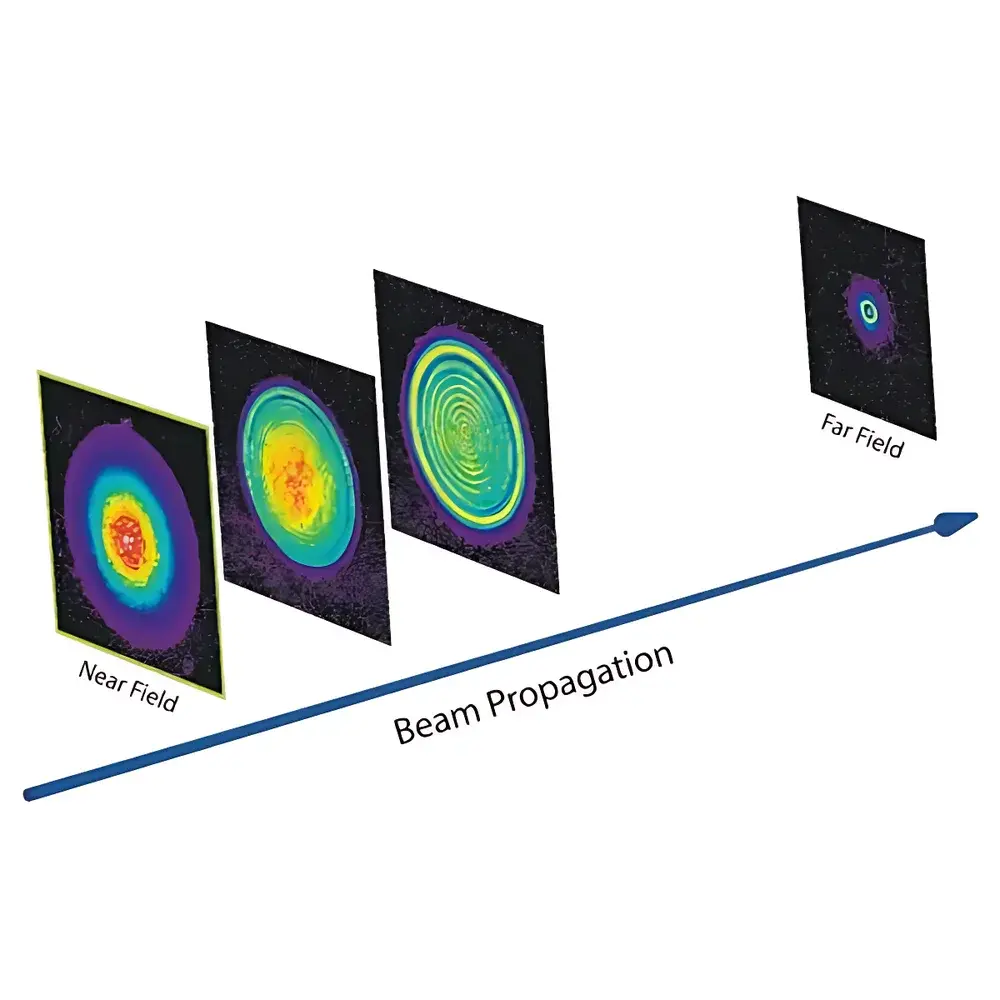
- Real-time computation of ISO-compliant beam parameters: M², beam waist location and size, Rayleigh range, divergence, and astigmatism
Sample Compatibility & Compliance
The sensor accommodates free-space collimated or focused Gaussian, multimode, and top-hat beams with diameters ranging from 1 mm to 25 mm (dependent on lenslet array configuration). It is insensitive to beam polarization and requires no beam splitting or retro-reflection—minimizing insertion loss and alignment complexity. All reported beam metrics adhere strictly to the definitions and calculation methodologies specified in ISO 11146-1/2 (2021), ISO 13694 (2022), and ISO 15367-1/2 (2019). The system supports GLP/GMP-aligned operation through audit-trail-enabled software logging, timestamped raw data export (HDF5, TIFF, CSV), and configurable user access levels. Calibration certificates traceable to PTB (Physikalisch-Technische Bundesanstalt) are available upon request.
Software & Data Management
The included ProOpto BeamAnalyzer Suite provides a deterministic, scriptable environment for beam analysis. It implements ISO-standardized algorithms for second-moment beam width calculation, iterative M² fitting using the ISO 11146 propagation model, and Zernike decomposition up to 36 terms (n=8). Data export conforms to FAIR principles: metadata-rich HDF5 files include wavelength, exposure time, sensor gain, lenslet pitch, and calibration matrix. The API supports Python (via PyBeam) and MATLAB integration for automated test sequences. Software validation documentation—including IQ/OQ protocols and 21 CFR Part 11 compliance modules (electronic signatures, change control, audit trail)—is provided for regulated environments.
Applications
- Ultrafast laser oscillator and amplifier characterization (Ti:Sapphire, Yb:fiber, OPCPA)
- UV photolithography source monitoring and coherence optimization
- Alignment and closed-loop correction in adaptive optics systems (e.g., deformable mirror calibration)
- Quality assurance of high-power CO₂ and excimer laser delivery optics
- Research in structured light generation, vortex beam metrology, and spatial mode analysis
- Validation of beam shaping optics (DOEs, axicons, diffractive lenses) under broadband illumination
FAQ
What is the minimum measurable beam diameter?
Beam diameter down to 1 mm is supported using high-density micro-lens arrays (e.g., 500 µm pitch); optimal performance is achieved when the beam covers ≥16×16 lenslets.
Can the sensor measure pulsed lasers?
Yes—compatible with pulse durations from CW to femtosecond regimes, provided average power remains within camera saturation limits and single-pulse energy does not exceed sensor damage threshold (consult datasheet per wavelength).
Is NIST or PTB traceable calibration available?
Yes—factory calibration includes wavefront flatness verification using a certified reference flat and wavelength-specific focus shift compensation; full traceability documentation is supplied.
How is Zernike coefficient uncertainty quantified?
Uncertainty arises from photon shot noise, centroid fitting error, and lenslet fabrication tolerances; typical RMS uncertainty for low-order terms (Z₂–Z₁₂) is ≤0.015 λ at 633 nm.
Does the system support real-time feedback to external devices?
Yes—the software SDK enables TCP/IP or shared memory streaming of wavefront residuals and M² values at up to 30 Hz, suitable for integration with piezo-driven mirror controllers or AOM drivers.