
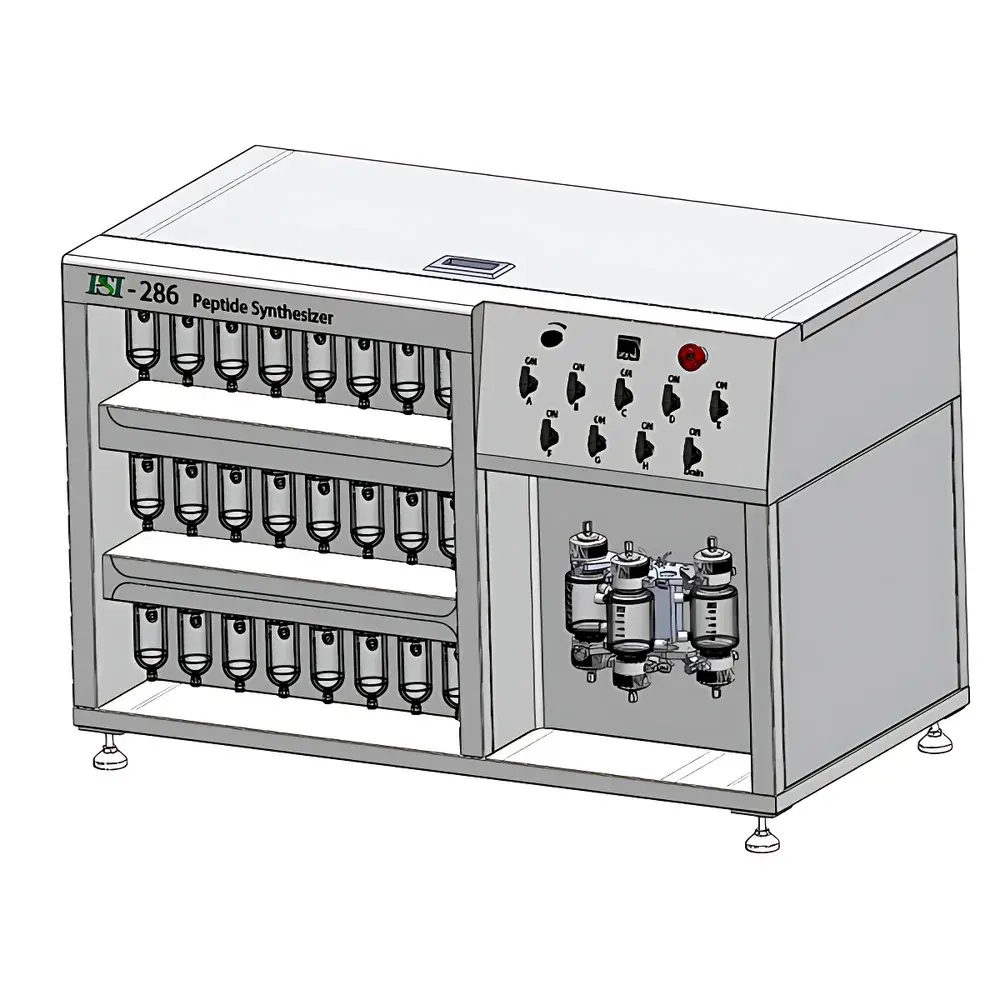
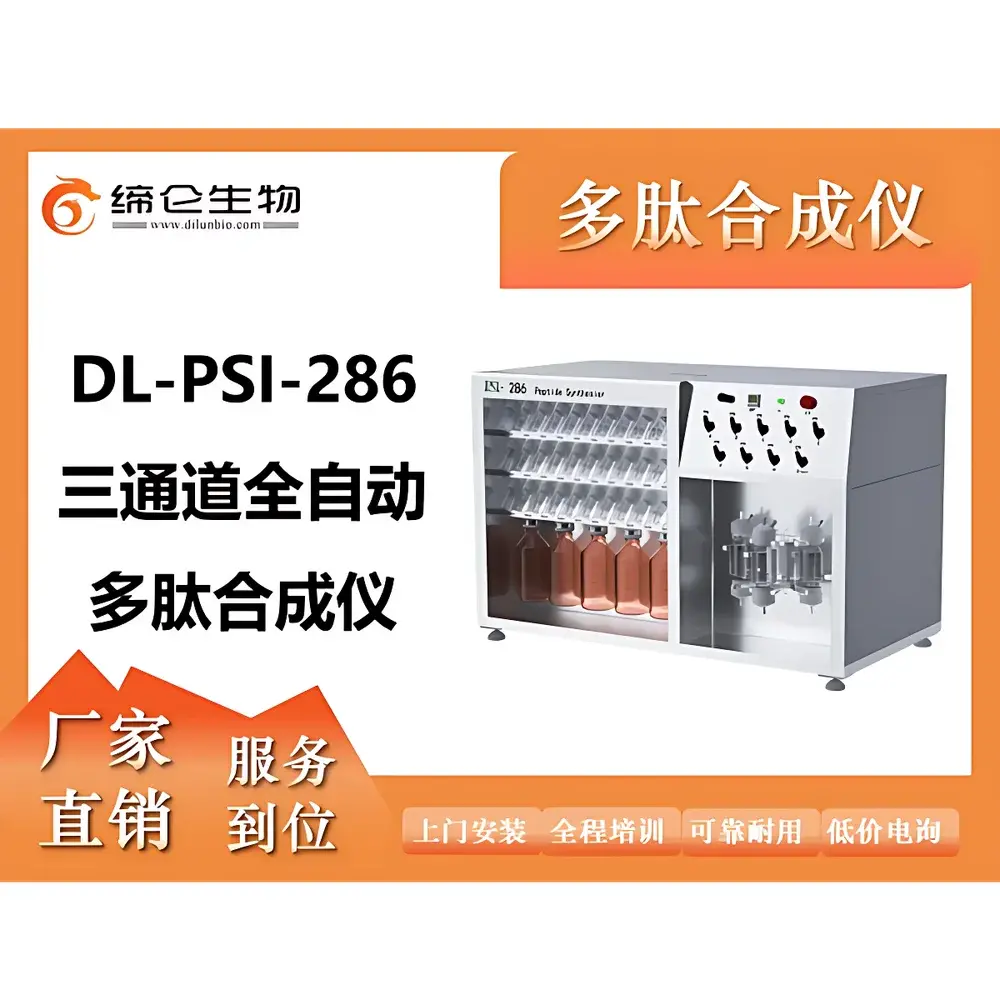
PSI DL-PSI286 Automated Peptide Synthesizer — Single- or Triple-Channel R&D System
| Brand | PSI |
|---|---|
| Origin | USA |
| Model | DL-PSI286 |
| Amino Acid Delivery | Automated |
| Reagent Delivery | Automated |
| Synthesis Scale | 0.25–3 mmol per reactor |
| Reactor Count | 1–3 (configurable) |
| Reactor Volumes | 50 mL, 100 mL, 200 mL (jacketed) |
| Syringe Pump Accuracy | ±0.01 mL |
| Coupling Efficiency | ≥99.5% |
| Solvent Flow Rate | 2–4 mL/s |
| Mixing Mode | Stirring-Free Reactor Inversion (180° mechanical oscillation) |
| Mixing Speed | 0–30 rpm, continuously adjustable |
| Construction Material | 304 stainless steel |
| Power Supply | 110/220 V, 50/60 Hz |
| Host Power | 1 kW |
| Weight | 100–150 kg |
| Dimensions (W×D×H) | 113×52×72 cm (1-channel) |
Overview
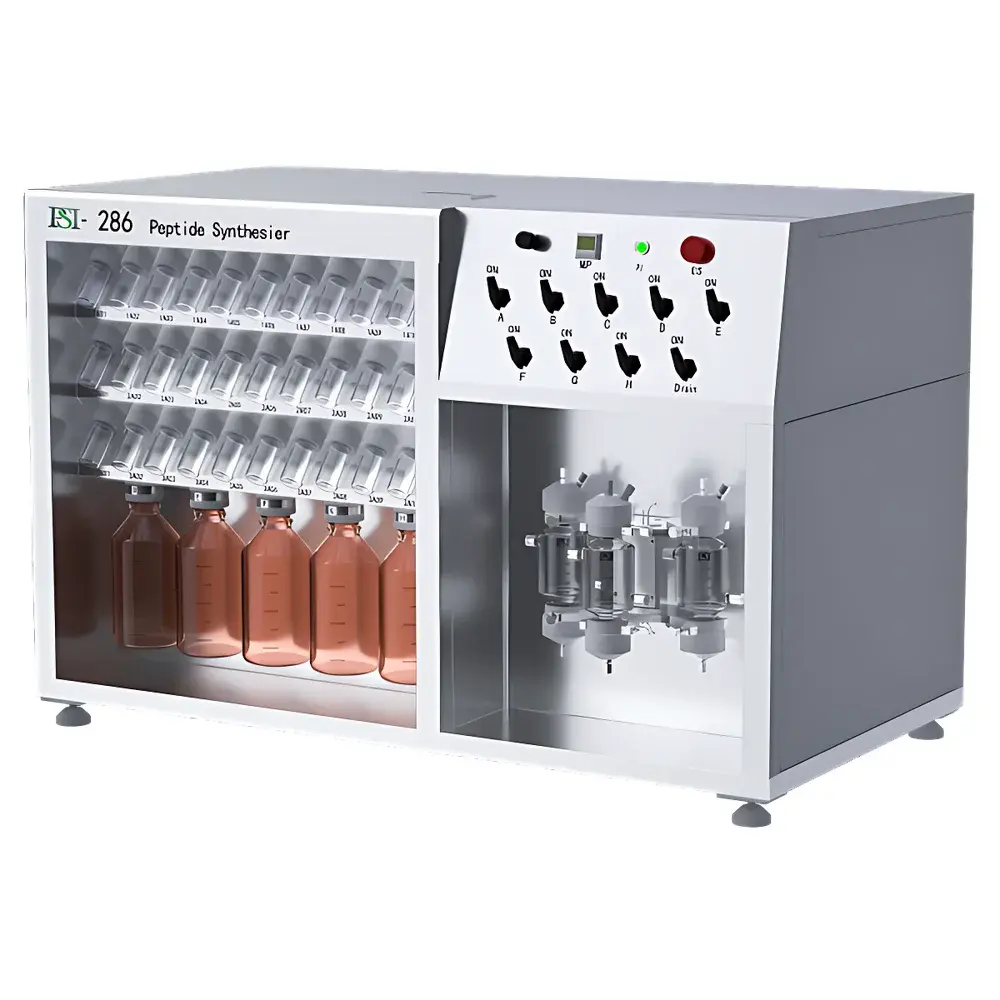
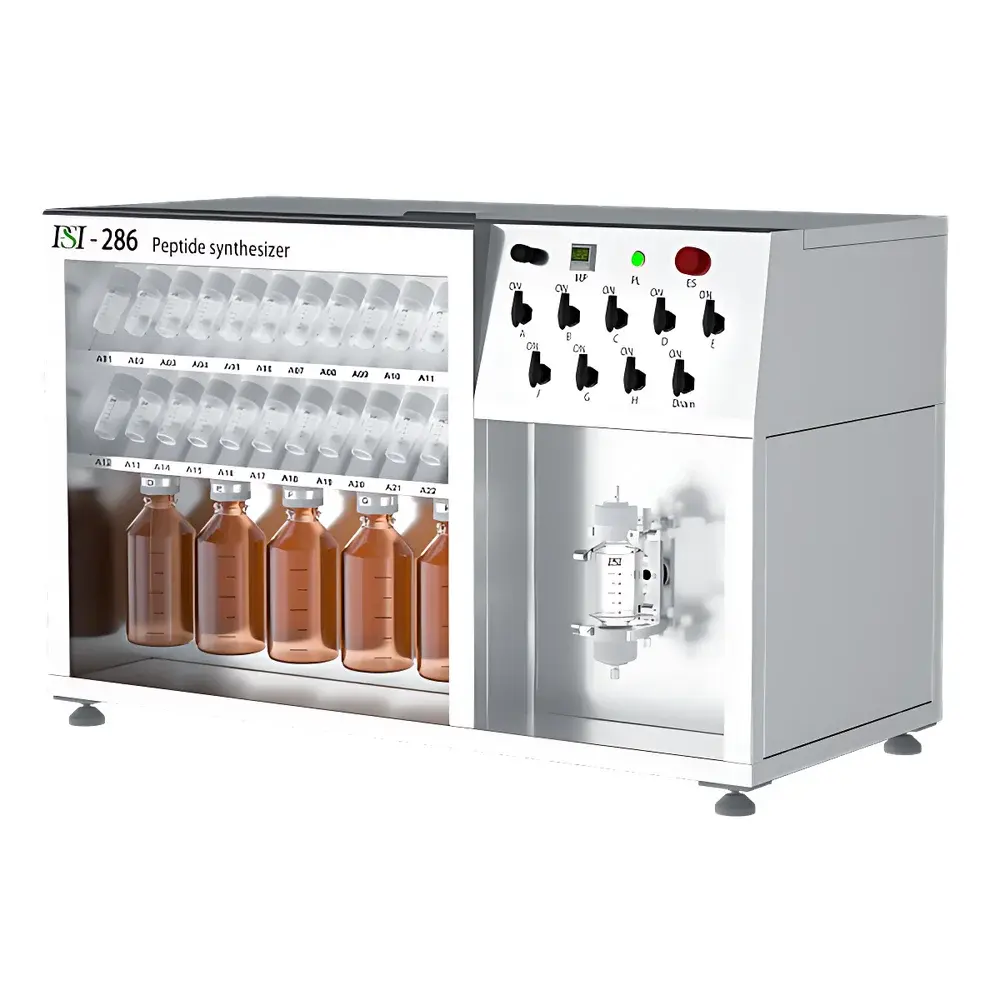
The PSI DL-PSI286 Automated Peptide Synthesizer is a modular, research-grade solid-phase peptide synthesis (SPPS) platform engineered for high-fidelity, reproducible synthesis of custom peptides up to 100+ residues. Unlike conventional synthesizers relying on impeller-based agitation—which risks resin fragmentation, inconsistent solvation, and reduced coupling efficiency—the DL-PSI286 implements PSI’s proprietary 180° mechanical reactor inversion mixing mode. This stirrer-free method subjects the solid-phase resin to controlled, turbulent collision with reagents during each coupling and deprotection cycle, preserving bead integrity while maximizing mass transfer and reaction homogeneity. Developed from foundational work by Dr. John Ye (1995), this architecture delivers ≥99.5% stepwise coupling efficiency across diverse amino acid sequences—including sterically hindered, N-methylated, D-configured, and post-translationally modified residues—without requiring elevated temperatures or extended reaction times. The system supports both Fmoc- and Boc-based chemistries and is fully compatible with standard Wang, Rink amide, and 2-chlorotrityl resins.
Key Features
- Modular channel configuration: Supports 1, 2, or 3 independent synthesis reactors—each programmable for asynchronous operation (e.g., different resin loads, coupling durations, or solvent sequences).
- Jacketed reaction vessels (50 mL, 100 mL, 200 mL) enable precise temperature control (±0.5 °C) via external chiller integration—critical for thermally sensitive couplings or low-temperature deprotections.
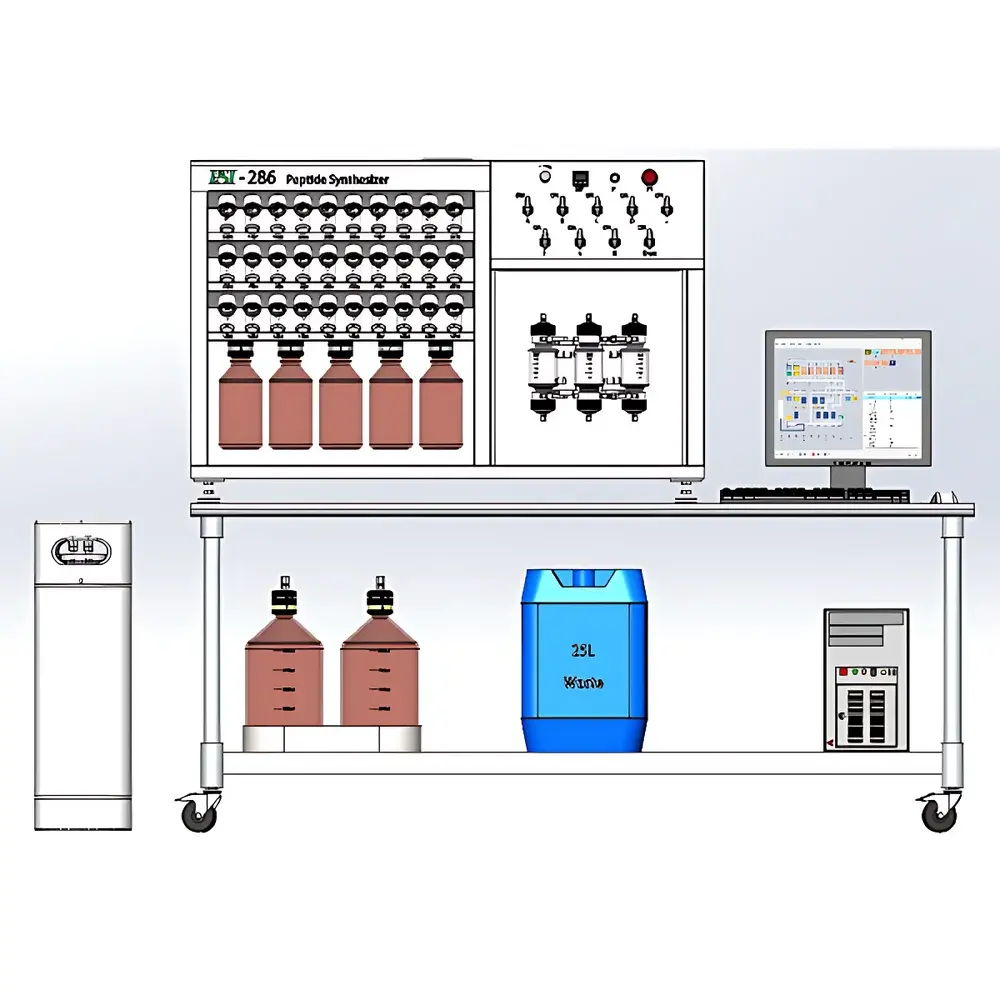
- Dual-reservoir architecture: 24 standardized amino acid vials (15–30 mL capacity) and up to 8 solvent reservoirs (glass: 0.5–5 L; 316L stainless steel: 10–30 L) ensure uninterrupted reagent supply for multi-day syntheses.
- High-precision fluid handling: Peristaltic and syringe pumps deliver reagents with ±0.01 mL volumetric accuracy and stable flow rates of 2–4 mL/s—optimized for efficient resin washing and reagent delivery without channeling or backpressure spikes.
- Robust mechanical design: All wetted components are constructed from 304 stainless steel; non-wetted structural elements feature corrosion-resistant anodized aluminum. The system operates at ≤72 dBA noise level under full load.
- Comprehensive safety interlocks: Pressure-sensing valves, leak detection circuits, and real-time solvent vapor monitoring comply with OSHA 1910.1200 and IEC 61000-6-4 electromagnetic compatibility standards.
Sample Compatibility & Compliance
The DL-PSI286 accommodates a broad spectrum of solid supports, including polystyrene, PEG-PS, and ChemMatrix® resins, across particle sizes ranging from 100–300 µm. It supports all standard protecting groups (Fmoc, t-Bu, Trt, Pbf) and activators (HBTU, HATU, DIC/Oxyma). The system meets ASTM E2500-13 (Good Automated Manufacturing Practice) for automated laboratory equipment and is preconfigured for audit readiness under FDA 21 CFR Part 11—supporting electronic signatures, user-level access controls, and immutable audit trails for all synthesis logs, parameter changes, and maintenance events. Full GLP/GMP documentation packages—including IQ/OQ/PQ protocols, calibration certificates, and material traceability records—are available upon request.
Software & Data Management
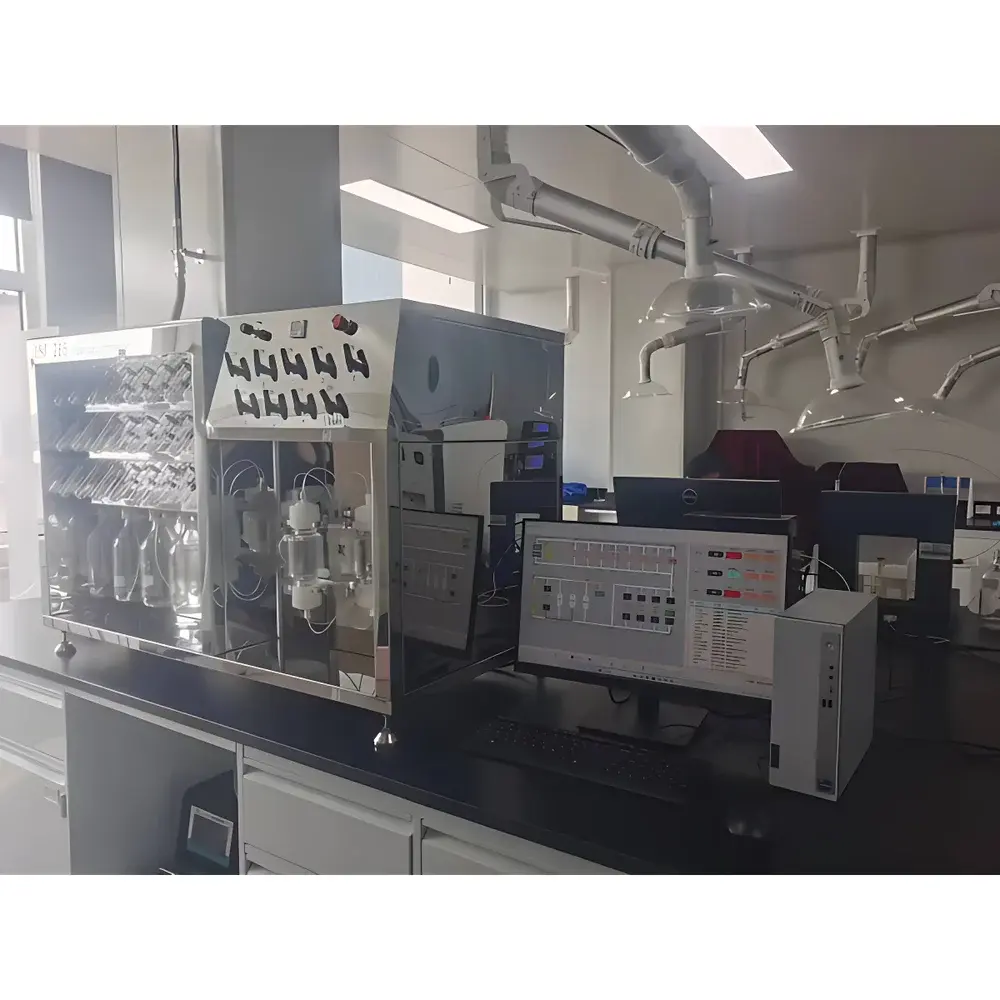
Controlled via PSI SynthOS™ v4.2—a Windows-based, touchscreen-optimized interface—the system provides intuitive sequence entry, real-time reaction monitoring (via integrated pressure/flow sensors), and dynamic protocol adjustment without interrupting active runs. All synthesis metadata—including coupling yields (calculated via ninhydrin/Kaiser test integration), reagent consumption, temperature profiles, and error logs—are exported in .csv and .xml formats compliant with ISA-88 batch record standards. Data synchronization with LIMS (e.g., LabVantage, Thermo SampleManager) and ELN platforms (e.g., Benchling, Dotmatics) is supported through RESTful API and OPC UA connectivity. Backups are automatically mirrored to network-attached storage or cloud repositories (AWS S3, Azure Blob) with AES-256 encryption.
Applications
- Academic and industrial R&D: Rapid optimization of peptide sequences for epitope mapping, enzyme substrate screening, and structure–activity relationship (SAR) studies.
- GMP-compliant intermediate synthesis: Production of clinical-grade peptide antigens, immunogens, and linker–payload intermediates for ADC development.
- Library generation: Parallel synthesis of positional scanning libraries, truncated analogs, or stereochemical variants for target validation.
- Method development: Validation of novel coupling reagents, orthogonal protection schemes, or microwave-assisted SPPS workflows.
- Technology transfer: Seamless scale-up from 0.25 mmol (R&D) to 3 mmol (pilot) batches using identical chemistry and hardware architecture.
FAQ
What is the maximum peptide length achievable on the DL-PSI286?
The system routinely synthesizes peptides exceeding 100 amino acid residues with >85% crude purity (by RP-HPLC), provided optimized protocols—including double couplings for difficult sequences and in-line real-time monitoring—are employed.
Can the system integrate with third-party analytical instruments?
Yes. Built-in RS-232, Ethernet, and USB ports support direct interfacing with HPLC systems, mass spectrometers (e.g., Bruker timsTOF), and ninhydrin analyzers for closed-loop feedback control.
Is remote monitoring and control supported?
Full remote operation—including live video feed of reactor status, real-time parameter dashboards, and emergency stop initiation—is enabled via secure TLS 1.3–encrypted web portal accessible from any authorized device.
What regulatory documentation is included with shipment?
Each unit ships with a CE Declaration of Conformity, RoHS compliance statement, Factory Acceptance Test (FAT) report, and complete 21 CFR Part 11 validation package—including software installation qualification, operational qualification, and performance qualification protocols.
Does PSI offer application support for non-standard chemistries?
Yes. PSI’s Applications Lab provides protocol development services for phosphopeptides, glycopeptides, cyclic disulfide-rich peptides, and C-terminal thioester synthesis—supported by published SOPs and co-authored peer-reviewed methodology papers.





