
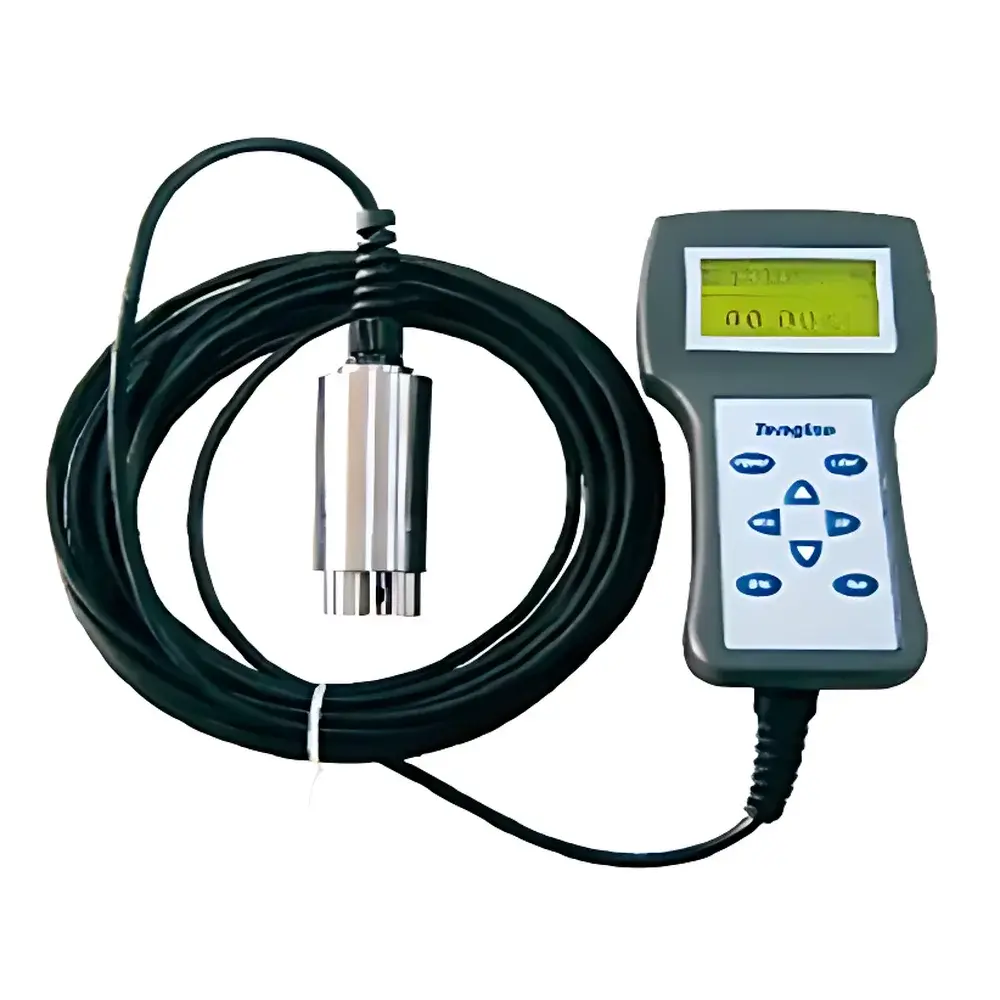
PTB-SS1000 Portable Suspended Solids Analyzer (Optical Method)
| Origin | Beijing |
|---|---|
| Manufacturer Type | Distributor |
| Origin Category | Domestic |
| Model | PTB-SS1000 |
| Price | Upon Request |
| Instrument Type | Portable |
Overview
The PTB-SS1000 Portable Suspended Solids Analyzer is an optical turbidimetric instrument engineered for rapid, in-situ quantification of suspended solids (SS) concentration in aqueous environments. It operates on the principle of multi-beam optical compensation—employing multiple synchronized light paths to dynamically correct for signal drift induced by sensor window fouling, temperature fluctuations, and photodetector aging. Unlike traditional gravimetric lab-based SS analysis (e.g., EPA Method 160.2 or ISO 11923), which requires filtration, drying, and weighing with inherent delays of hours to days, the PTB-SS1000 delivers real-time, field-deployable measurements with high reproducibility. Its optical architecture is calibrated against NIST-traceable standard suspensions and validated per ASTM D3977-21 (Standard Practice for Sampling and Processing of Water Samples for Turbidity Measurement), ensuring metrological integrity across diverse water matrices.
Key Features
- Multi-beam optical compensation system eliminates measurement drift caused by lens contamination, enabling stable operation in high-fouling environments such as aeration basins and sludge thickeners.
- Auto-ranging optical detection adapts dynamically between low-concentration (0–9999 mg/L) and high-concentration (0–30 g/L) modes without manual range switching.
- Bubble suppression algorithm mitigates interference from entrained air in aerated zones, maintaining accuracy in activated sludge systems.
- Backlit LCD display with real-time trend graphing supports on-site data interpretation and transient behavior assessment.
- Configurable units (mg/L or g/L) and intuitive Chinese-language menu interface streamline operation for field technicians without specialized instrumentation training.
- Ergonomic handheld controller (228 × 117 × 86 mm; 0.5 kg) with IP65 ingress protection and integrated rechargeable battery enables extended patrol cycles—up to ~1000 minutes per full charge.
- Submersible stainless-steel sensor (Φ45 × 130 mm; 0.5 kg; IP68 rated) with 8 m shielded cable ensures reliable deployment in submerged applications up to 7.5 bar pressure.
Sample Compatibility & Compliance
The PTB-SS1000 is validated for use in raw influent, secondary effluent, return activated sludge (RAS), waste activated sludge (WAS), thickened sludge, and clarified water streams. It meets operational requirements under ISO 5667-3 (water sampling—preservation and handling) and aligns with QA/QC protocols outlined in US EPA Guidance for Wastewater Treatment Plant Monitoring. While not certified for regulatory reporting per 40 CFR Part 136, its performance characteristics support process control, alarm triggering, and trend analysis consistent with ISO/IEC 17025-compliant laboratories’ internal monitoring programs. Sensor materials (316 stainless steel housing, PC controller body) resist corrosion in chlorinated, sulfide-rich, and mildly acidic wastewater environments (pH 4–10).
Software & Data Management
Data logging is performed internally using 64 MB Flash memory, storing timestamped SS values with date/time stamps, sensor status flags, and calibration metadata. Measurement records are exportable via USB 2.0 interface in CSV format for integration into SCADA historians, LIMS, or Excel-based trending tools. The device supports manual calibration verification using certified formazin or kaolin standards—no proprietary reagents required. Audit trails include calibration timestamps, operator ID input (via keypad), and firmware version logs, supporting GLP-aligned documentation practices. No cloud connectivity or remote firmware updates are implemented, preserving data sovereignty and minimizing cybersecurity exposure in critical infrastructure settings.
Applications
- Wastewater treatment plants: Real-time monitoring of MLSS in aeration tanks, RAS/WAS concentration control, clarifier performance evaluation, and sludge blanket depth estimation in secondary settlers.
- Drinking water facilities: Raw water turbidity screening, coagulation optimization feedback, and filter backwash trigger logic.
- Industrial process water: Pulp & paper mill white water consistency control, coal washing plant sedimentation efficiency tracking, and power plant ash pond suspension profiling.
- Environmental field surveys: Rapid assessment of stormwater runoff, riverine sediment load, and dredging plume dispersion.
- Research & education: Field validation of computational fluid dynamics (CFD) models for settling basin hydraulics and biofilm reactor mass balance studies.
FAQ
Is the PTB-SS1000 suitable for regulatory compliance reporting?
No—it is designed for operational process control and diagnostic monitoring, not for legally defensible discharge reporting under EPA or EU WFD frameworks.
Can the sensor be immersed continuously in wastewater?
Yes—the IP68-rated stainless-steel probe supports continuous submersion up to 7.5 bar and 60 °C, though routine cleaning every 7–14 days is recommended to maintain optical fidelity.
Does it require annual factory recalibration?
No—field calibration using traceable standards is supported; factory calibration is provided at shipment, with no mandatory annual recalibration unless verification fails during routine QA checks.
What is the minimum detectable SS concentration?
The effective lower limit is 3 mg/L (resolution), with optimal accuracy above 10 mg/L in clear-to-moderately turbid waters.
Is USB data export compatible with Windows, macOS, and Linux?
Yes—CSV files generated are platform-agnostic and readable by any spreadsheet or data analysis software without proprietary drivers.
Related Products







