
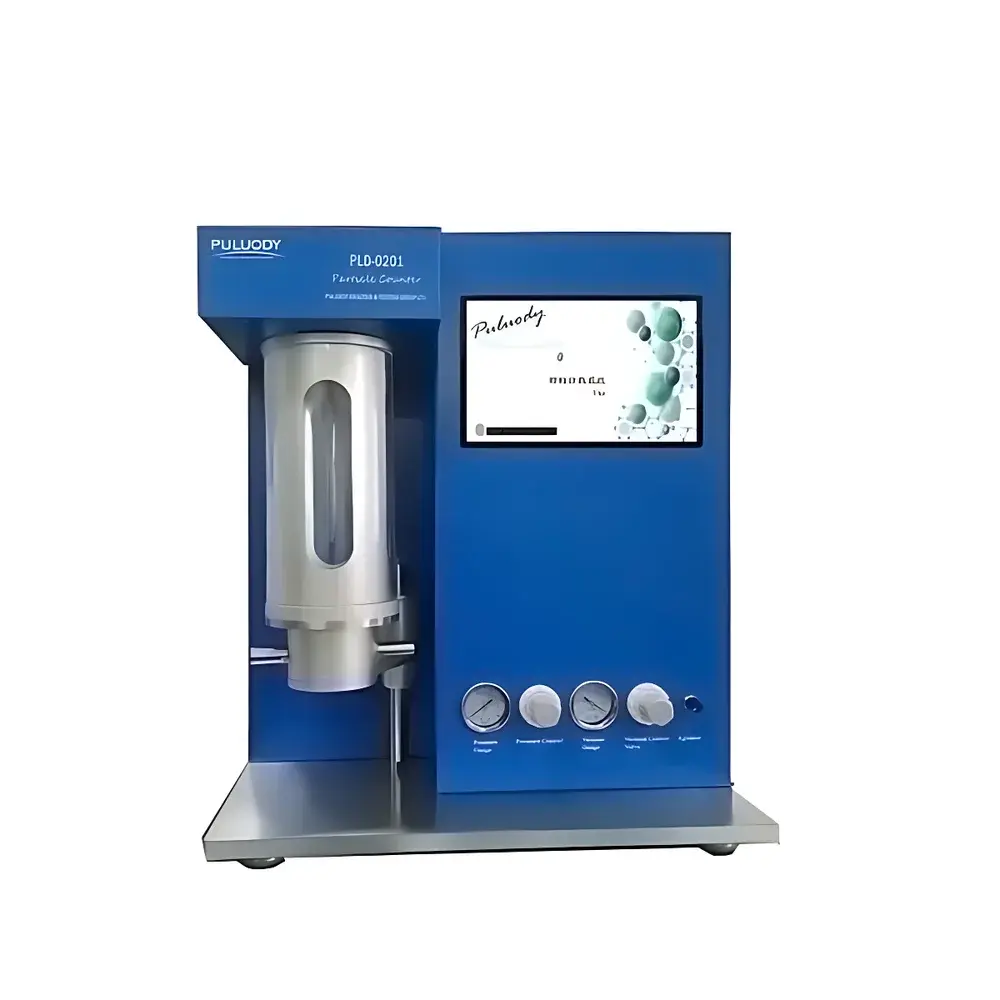
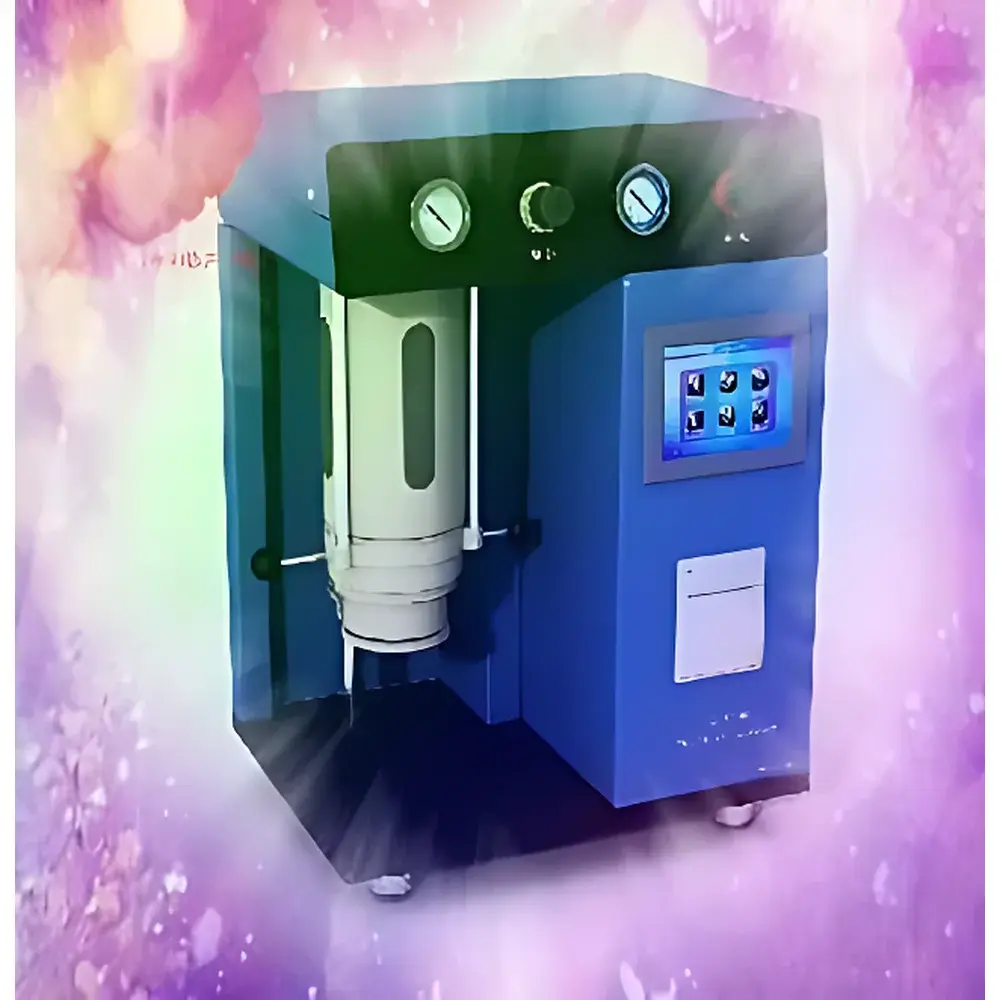
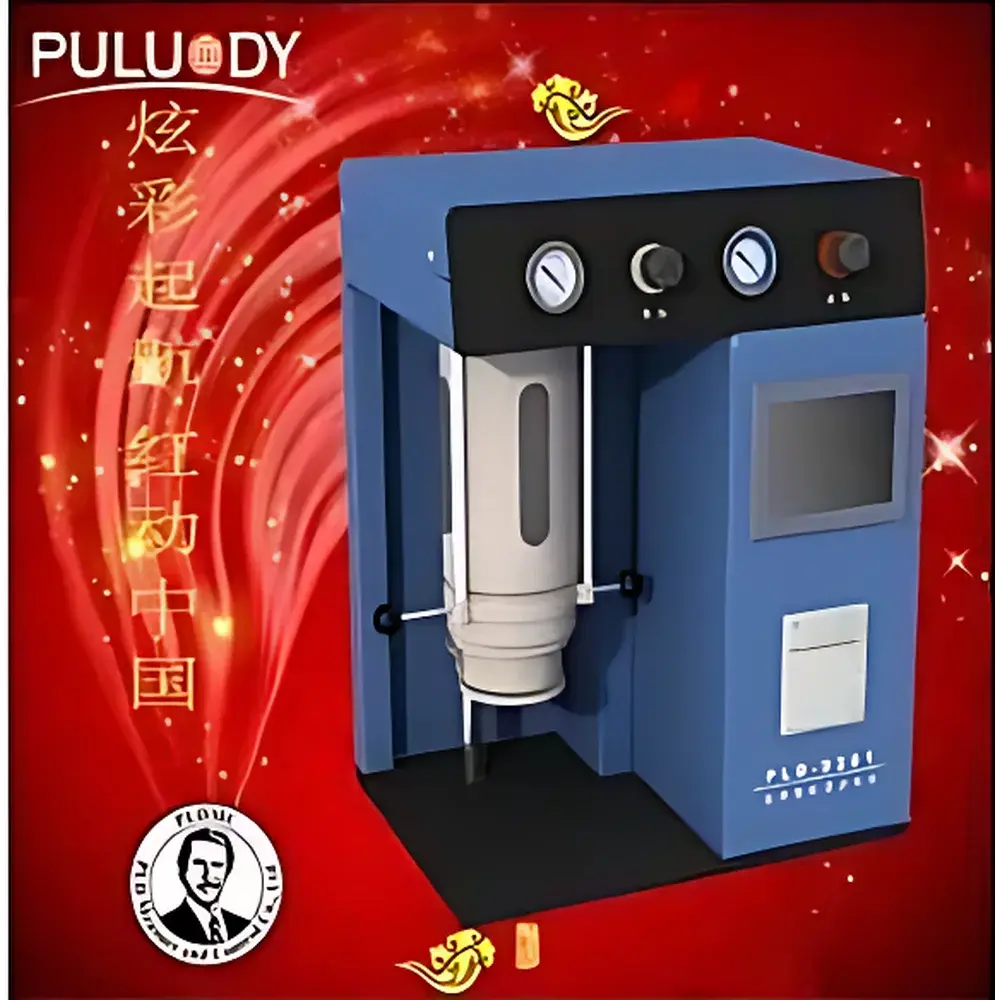
PULUODY PLD-201 Laboratory Laser-Based Oil Particle Contaminant Analyzer
| Brand | PULUODY |
|---|---|
| Origin | Shaanxi, China |
| Manufacturer Type | OEM Manufacturer |
| Regional Category | Domestic (China) |
| Model | PLD-201 |
| Instrument Type | Optical Particle Counter |
| Detection Principle | Light Obscuration (LO) with Dual-Laser Narrow-Beam Technology |
| Measurement Range | 0.01 µm – 1000 µm (sensor-dependent, up to 1000 channels) |
| Sensitivity | 1 µm (per ISO 4402) or 4 µm(c) (per ISO 11171 / GB/T 18854) |
| Sample Flow Control | Precision Piston Pump + Ultra-Precise Electromagnetic Flow Regulation |
| Calibration Standards | ISO 11171, ISO 4402, ISO 4406, NAS 1638, GB/T 14039, GJB 420A/B, DL/T 432, JJG/T 066 |
| Compliance | Meets GLP-relevant data integrity requirements |
| Software | PULL 8.1 Multi-Language Analysis Platform (English, Chinese, Japanese, Korean, etc.), 3000-test onboard storage, RS232 interface, touchscreen GUI with dual input (touch + keypad), integrated thermal printer |
| Operating Temperature | 0–50 °C |
| Sample Viscosity Limit | ≤450 mm²/s |
| Pressure Range | −0.08 to 0.8 MPa |
| Sampling Volume Accuracy | ±1% |
| Flow Rate | 5–60 mL/min (test), 10–100 mL/min (cleaning) |
| Repeatability | ≤5% coincidence error at 10,000 particles/mL |
| Data Output | Particle count per mL, contamination grade (ISO/NAS), histogram, cumulative distribution, raw pulse data |
Overview
The PULUODY PLD-201 Laboratory Laser-Based Oil Particle Contaminant Analyzer is an advanced optical particle counter engineered for high-precision quantification of insoluble particulate contamination in liquid media—primarily hydraulic oils, lubricants, transformer oils, turbine oils, aviation fuels, water-glycol fluids, and ultra-pure aqueous solutions. It operates on the internationally standardized light obscuration (LO) principle, wherein particles suspended in a laminar-flow stream pass through a collimated dual-laser narrow-beam detection zone, generating voltage pulses proportional to their cross-sectional area. The eighth-generation dual-laser sensor architecture enhances signal stability, reduces thermal drift, and extends operational lifetime—critical for laboratories requiring long-term measurement consistency across daily QC workflows. Unlike single-wavelength systems, this configuration mitigates refractive index bias and improves sizing fidelity across diverse fluid matrices, including high-viscosity oils (≤450 mm²/s) and low-conductivity solvents. Designed for compliance-critical environments, the PLD-201 supports traceable calibration against ACFTD and MTD reference materials per ISO 11171, and enables direct assignment of contamination grades per ISO 4406:1999/2017, NAS 1638, and GJB 420B—making it suitable for aerospace, power generation, defense, and semiconductor manufacturing applications where fluid cleanliness directly impacts system reliability and service life.
Key Features
- Eighth-generation dual-laser narrow-beam sensor with 1000 configurable size channels (0.01 µm to 1000 µm), enabling simultaneous multi-range analysis without hardware reconfiguration
- Integrated precision piston pump and electromagnetic flow control system ensuring volumetric accuracy better than ±1% and stable flow rates from 5 to 60 mL/min
- Automated sample conditioning module with positive/negative pressure capability, magnetic stirring, and vacuum-assisted degassing—eliminating manual pre-treatment for viscous or volatile samples
- Self-cleaning fluidic pathway post-analysis using programmable rinse cycles (10–100 mL/min), minimizing carryover and cross-contamination risk
- Industrial-grade touch-enabled color LCD interface with dual-input support (capacitive touchscreen + physical keypad), embedded real-time OS, and built-in thermal printer for standalone operation
- Comprehensive calibration traceability: certified alignment with ISO 11171, ISO 4402, GB/T 18854, and JJG/T 066; optional third-party verification via China Aviation Industry Particle Metrology Station or Northwest National Metrology Center
Sample Compatibility & Compliance
The PLD-201 accommodates a broad spectrum of liquid matrices—including hydrocarbon-based oils (mineral, synthetic, bio-based), water-glycol HFC fluids, phosphate ester FR fluids, silicone oils, glycerol-water mixtures, and ultrapure water (UPW). Its pressure-tolerant fluidic design (−0.08 to 0.8 MPa) and temperature range (room temperature to 65 °C inlet) allow safe analysis of thermally sensitive or pressurized samples. Regulatory alignment includes full support for ISO 4406, NAS 1638, and GJB 420B reporting formats required by OEM maintenance protocols and military logistics standards. While not FDA 21 CFR Part 11–certified out-of-the-box, the PULL 8.1 software architecture provides configurable user roles, electronic signatures, audit trail logging, and data immutability features—enabling validation under GLP and internal GMP frameworks. All calibration events, test parameters, and result exports are timestamped and uniquely logged, satisfying basic data integrity requirements for ISO/IEC 17025-accredited laboratories.
Software & Data Management
PULL 8.1 is a modular, multi-language analysis platform supporting English, Chinese, Japanese, Korean, German, French, Spanish, Russian, Arabic, and Portuguese interfaces. It decouples calibration routines from routine testing—allowing concurrent instrument verification and sample analysis without workflow interruption. The software stores up to 3,000 test records locally on the industrial PC, with unlimited expansion via external PCs connected via RS232. Each dataset includes raw pulse histograms, differential/cumulative particle distributions, ISO/NAS contamination grades, and customizable report templates compliant with internal QA templates or customer-specific formats. Export options include CSV, PDF, and XML; all files retain full metadata (operator ID, calibration status, sensor ID, environmental conditions). Optional cloud synchronization and LIMS integration modules are available under extended service contracts.
Applications
- Condition monitoring of hydraulic and lubrication systems in wind turbines, aircraft actuators, and heavy-duty mobile equipment
- Acceptance testing of new oil batches prior to commissioning in power transformers or gas turbine lube systems
- Wear debris analysis during component bench testing (e.g., servo valve durability, bearing fatigue studies)
- Validation of filtration efficiency for coalescers, depth filters, and membrane cartridges
- Quality release testing of pharmaceutical-grade solvents and electronics-grade process chemicals
- Research into nanoparticle dispersion stability in polymer solutions and nanofluids
FAQ
Does the PLD-201 comply with ISO 11171 for sensor calibration?
Yes—the instrument supports full implementation of ISO 11171:2010 using NIST-traceable ACFTD or MTD calibration suspensions. Factory calibration certificates include uncertainty budgets and reference material lot numbers.
Can it measure sub-micron particles in water-based coolants?
Yes—when equipped with optional nano-sensor modules (e.g., 0.01–0.1 µm range), the PLD-201 detects colloidal contaminants relevant to semiconductor wafer cleaning validation and electroplating bath control.
Is remote diagnostics supported?
Standard RS232 allows serial communication with host PCs; optional Ethernet/Wi-Fi add-on modules enable secure remote firmware updates and diagnostic log retrieval under IT-managed networks.
What maintenance intervals are recommended?
Optical alignment verification every 6 months; annual full calibration with certified reference materials; sensor cleaning after every 200 tests or when baseline noise exceeds 3σ threshold.
How is data integrity ensured during audit inspections?
PULL 8.1 enforces role-based access control, session logging, immutable result archives, and exportable audit trails—all configurable to align with internal SOPs for ISO/IEC 17025 or AS9100D laboratory accreditation.



