
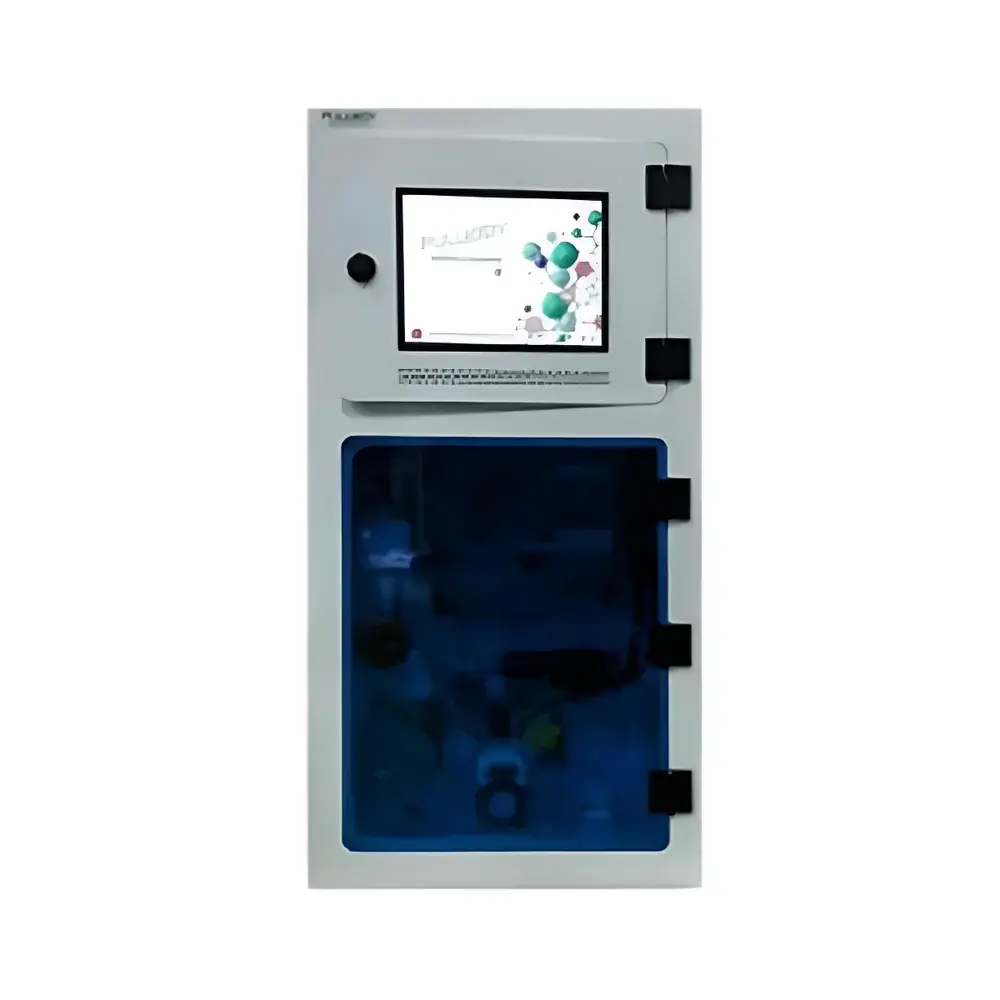
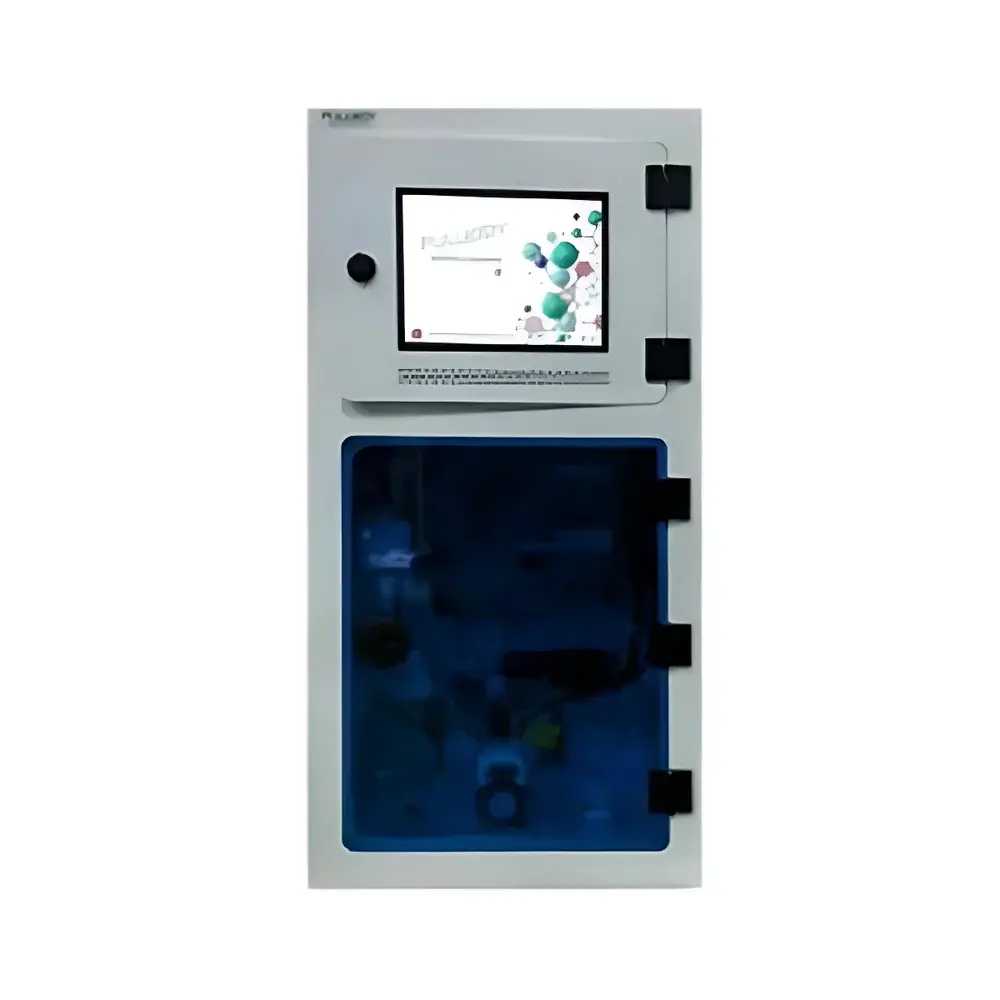
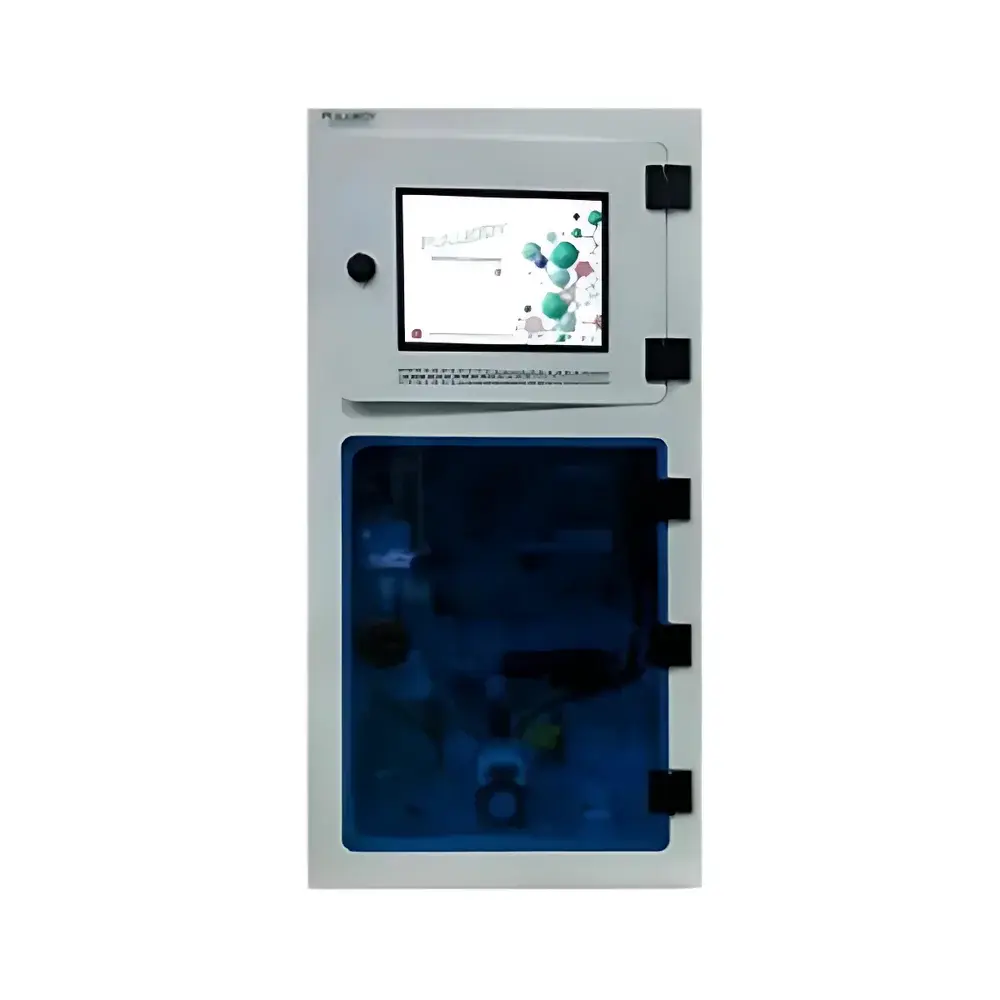
PULUODY PLD-FX-801 Liquid Particle Counter for Slurry and Ultrapure Fluids
| Brand | PULUODY |
|---|---|
| Origin | Shaanxi, China |
| Model | PLD-FX-801PL |
| Detection Principle | Dual-mode (Light Scattering + Light Obscuration) |
| Sensor Generation | 8th-generation dual-laser narrow-beam particle sensor |
| Measuring Range | 0.5–100.0 µm |
| Customizable Channels | 1–100 µm or 4–70 µm (c), down to 0.1 µm (c) |
| Sampling Accuracy | <±1% |
| Counting Accuracy | <±3% typical |
| Coincidence Limit | 1000 particles/mL (2.5% coincidence error) |
| Flow Control | Precision metering pump with dual-stage automatic dilution |
| Data Output | 4–20 mA analog interface with configurable alarm trigger |
| Calibration Standards | JJG 1061, ISO 21501, or NIST-traceable latex spheres |
| Software | V8.3 Integrated Analysis & Calibration Suite (PC + touchscreen UI) |
| Compliance Support | GLP/GMP audit trail logging, FDA 21 CFR Part 11-ready configuration options |
| Power Input | 100–265 VAC, 50–60 Hz |
Overview
The PULUODY PLD-FX-801 Liquid Particle Counter is a high-sensitivity, dual-principle instrument engineered for quantitative analysis of suspended particulate contamination in chemically aggressive and ultra-low-particulate fluids—particularly chemical mechanical planarization (CMP) slurries, semiconductor-grade ultrapure water (UPW), electronic chemicals, and precision cleaning agents. Its core measurement architecture integrates light obscuration (LO) and light scattering (LS) modalities within a single 8th-generation dual-laser narrow-beam optical sensor platform. This hybrid detection design enables robust discrimination of submicron to 100 µm particles across diverse refractive indices and morphologies—critical for identifying abrasive silica or alumina agglomerates (>1.0 µm) known to induce microscratches during wafer polishing. The system operates under ISO 21501-4 compliant methodology and supports traceable calibration per JJG 1061 or NIST-certified latex standards, ensuring metrological integrity for process-critical quality control in front-end semiconductor fabrication.
Key Features
- Dual-mode optical detection (light obscuration + multi-angle light scattering) for enhanced sizing accuracy and improved resolution of low-contrast particles in high-index slurries.
- 8th-generation dual-laser narrow-beam sensor with real-time signal processing to minimize noise and suppress false counts from bubble interference or fluid turbulence.
- Integrated on-line and off-line operation modes: continuous flow monitoring via precision metering pump (±1% volumetric accuracy) and automated two-stage dilution for high-concentration slurry analysis.
- Configurable particle size channels—including user-defined binning (e.g., 0.1 µm(c), 4–70 µm(c))—to align with industry-specific defect thresholds (e.g., SEMI F39, SEMI F63).
- Full GMP/GLP data management: timestamped audit trails, electronic signatures, and 21 CFR Part 11–compatible software configuration (V8.3 PC & embedded touchscreen interface).
- Analog 4–20 mA output with programmable alarm thresholds for integration into factory SCADA or MES systems; optional relay-triggered shutdown signaling upon exceedance.
Sample Compatibility & Compliance
The PLD-FX-801 is validated for use with aqueous and solvent-based slurries (e.g., SiO₂, Al₂O₃, CeO₂ dispersions), deionized water (≥18.2 MΩ·cm), photoresist developers, etchants, and post-CMP cleaning solutions. It meets material compatibility requirements for Class 100 cleanroom environments and features wetted-path components constructed from chemically inert 316L stainless steel, fused silica flow cells, and PTFE/PFA tubing. Regulatory alignment includes support for ISO 14644-1 (cleanroom air classification), ISO 21501-4 (particle counter calibration), USP (injectables particulate testing), and SEMI C1–C37 standards for semiconductor process fluids. Calibration traceability is maintained through documented procedures aligned with JJG 1061 (Chinese national metrology regulation) and ISO/IEC 17025–accredited third-party verification.
Software & Data Management
The V8.3 Integrated Analysis Suite provides separate, password-protected modules for calibration, routine testing, and report generation—ensuring metrological separation between reference standard application and production data acquisition. All raw pulse data are archived with metadata (temperature, pressure, flow rate, operator ID, instrument firmware version). Reporting conforms to ISO 11171 and ASTM D7619 formats, delivering both absolute particle counts per milliliter and ISO 4406 or NAS 1638 contamination codes. Audit logs record every parameter change, calibration event, and user login, supporting internal QA audits and external regulatory inspections. Export options include CSV, PDF, and XML for LIMS integration.
Applications
- CMP slurry final-out monitoring at point-of-use (POU) to detect >1.0 µm abrasive particles prior to wafer contact—preventing scratch-induced yield loss.
- Slurry qualification and batch release testing: distinguishing “good” vs. “bad” slurry lots based on large-particle concentration trends over time.
- Real-time UPW loop monitoring in fab sub-fab distribution networks, including recirculation lines and tool inlet manifolds.
- Electronic chemical purity verification (e.g., TMAH, H₂O₂, HF blends) per SEMI C37 specifications.
- Filter validation studies: quantifying delta-count reduction across membrane grades (e.g., 10 nm, 20 nm, 50 nm) under process-relevant flow conditions.
- Contamination source tracing in closed-loop polishing tools via sequential sampling at pre-/post-filter and pump discharge locations.
FAQ
What particle size ranges can the PLD-FX-801 resolve in CMP slurry?
The instrument detects particles from 0.5 µm to 100.0 µm, with configurable channel definitions—including low-end extension to 0.1 µm (c) for colloidal stability assessment and high-resolution binning in the 1–10 µm range where microscratch risk peaks.
Does the system support automated dilution for undiluted slurry analysis?
Yes. It incorporates a dual-stage, programmable auto-dilution module that maintains volumetric precision (<±1%) across dilution ratios up to 1:1000, enabling direct analysis of concentrated slurries without manual intervention.
How is calibration traceability ensured for regulatory submissions?
Calibration follows ISO 21501-4 protocols using NIST-traceable polystyrene latex standards (PSL) or certified reference materials per JJG 1061; full calibration records—including uncertainty budgets and technician credentials—are stored within the V8.3 software audit trail.
Can the PLD-FX-801 be integrated into an existing fab automation infrastructure?
It provides native 4–20 mA analog output with configurable alarm relays, Modbus TCP/IP option, and OPC UA-compatible data export—enabling seamless connection to DeltaV, Siemens PCS7, or Rockwell FactoryTalk systems.
Is offline mobile measurement supported without permanent installation?
Yes. The unit operates in portable mode with internal battery backup and wireless keyboard/mouse support, allowing flexible deployment for root-cause analysis across multiple toolsets or cleanroom zones.




