
PULUODY PMT-2-H High-Purity Liquid Particle Counter
| Brand | PULUODY |
|---|---|
| Origin | Shaanxi, China |
| Manufacturer Type | Authorized Distributor |
| Regional Classification | Domestic (China) |
| Model | PMT-2-H |
| Price | USD 72,800 (approx.) |
| Dispersion Method | Wet Dispersion |
| Instrument Type | Laboratory Laser-Based Particle Counter |
| Measurement Range | 0.5–5.0 µm |
| Repeatability | ≤3% RSD |
| Measurement Time | 60 s per sample |
| Sensor Generation | 8th-Generation Dual-Laser Narrow-Beam Detection |
| Calibration Standards | ISO 21501-4, USP <788>, EP 2.9.19, ChP 2015/2020, GB 8368 |
| Flow Control | Precision Metering Plunger Pump + Ultra-Stable Electromagnetic Flow Regulation |
| Sample Interface | 4–20 mA Analog Output |
| Data Acquisition | iPad-Compatible Wireless Interface |
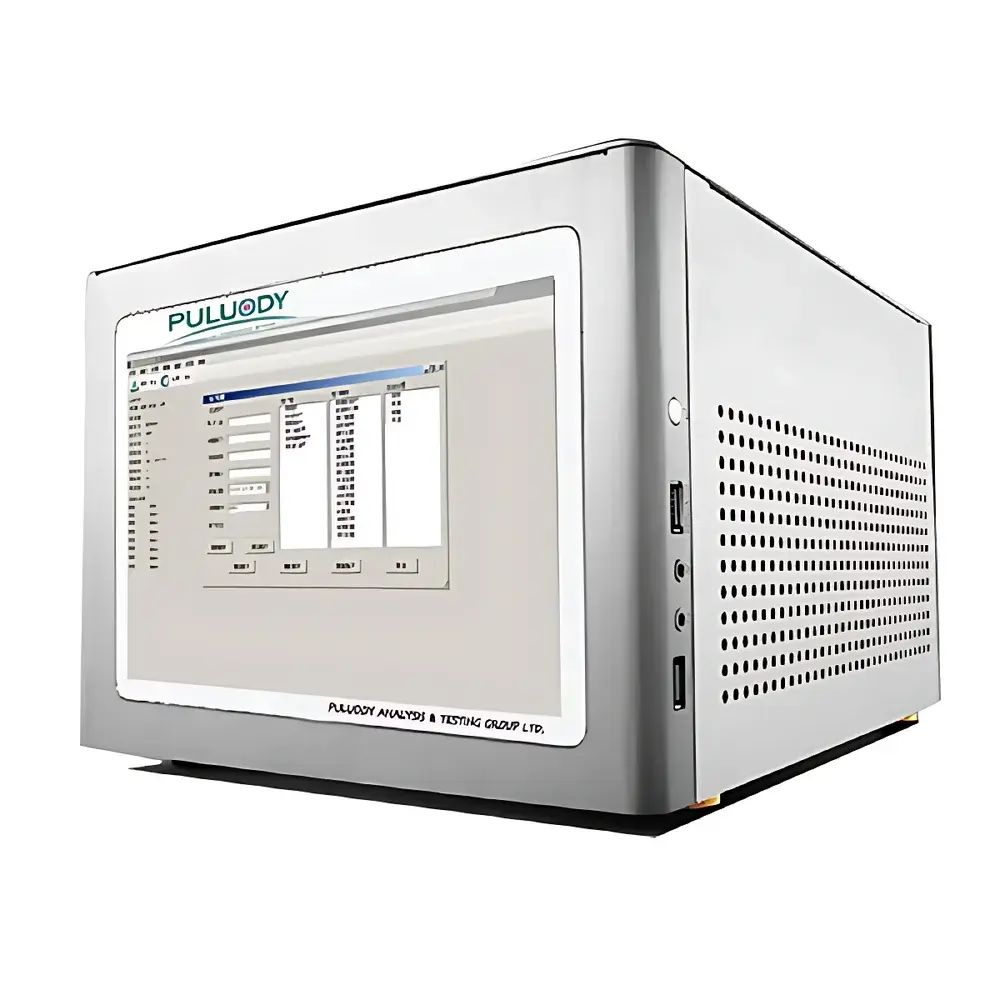
| Operating Interface | Color LCD Touchscreen + Optional Wireless Keyboard/Mouse |
| Reporting Units | Particles/mL & ISO 4406 / NAS 1638 Contamination Codes |
| Voltage Input | 100–265 VAC, 50–60 Hz |
| Counting Accuracy | <±1% volumetric error |
| coincidence limit | 1000 particles/mL (≤2.5% coincidence error) |
Overview
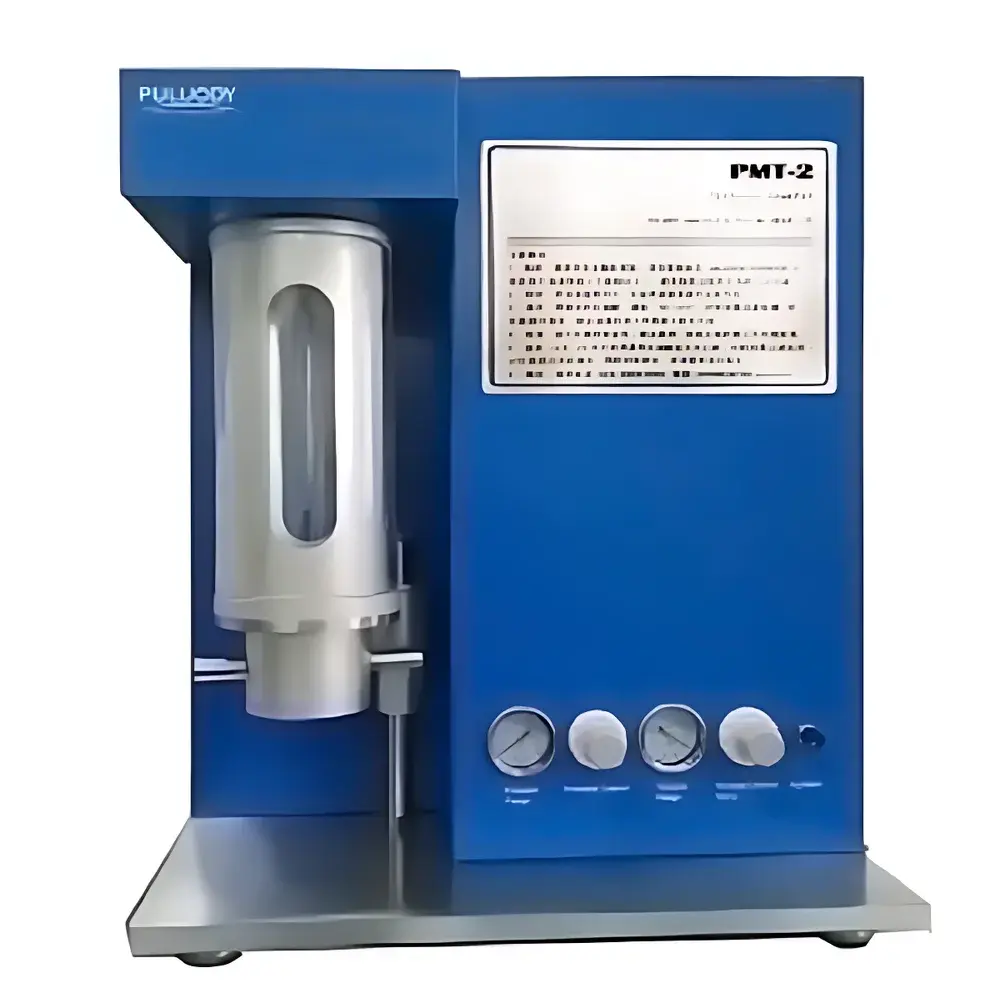
The PULUODY PMT-2-H High-Purity Liquid Particle Counter is a laboratory-grade optical particle counter engineered for quantitative analysis of insoluble particulate contamination in ultra-clean process liquids. It operates on the principle of light obscuration (LO), enhanced by an 8th-generation dual-laser narrow-beam detection architecture—originally developed and refined by PULUODY Analytical Testing Group (UK). This sensor design minimizes Mie scattering interference and improves signal-to-noise ratio for sub-micron particle resolution, particularly critical in high-value fluid matrices such as semiconductor cleaning agents, ultrapure water (UPW), photoresist solvents, and polymer precursor solutions. Unlike conventional laser diffraction systems optimized for broad size distribution profiling, the PMT-2-H is purpose-built for regulatory-compliant particle counting in low-concentration, high-purity environments where detection sensitivity, counting fidelity, and metrological traceability are non-negotiable.
Key Features
- Dual-laser narrow-beam optical detection system with independent wavelength channels for improved discrimination of refractive index effects and reduced false counts from air bubbles or dissolved gas nucleation.
- Integrated precision metering plunger pump combined with electromagnetic flow regulation ensures volumetric accuracy better than ±1%, essential for compliance with pharmacopoeial and semiconductor industry sampling protocols.
- Real-time, continuous online monitoring capability via 4–20 mA analog output interface, supporting integration into SCADA, DCS, or MES platforms for automated trend analysis and alarm-triggered intervention.
- Modular configuration supports both offline benchtop operation and inline installation using standardized sanitary fittings (e.g., 1/4″ Swagelok), enabling flexible deployment across R&D labs, cleanroom QC stations, and production line monitoring points.
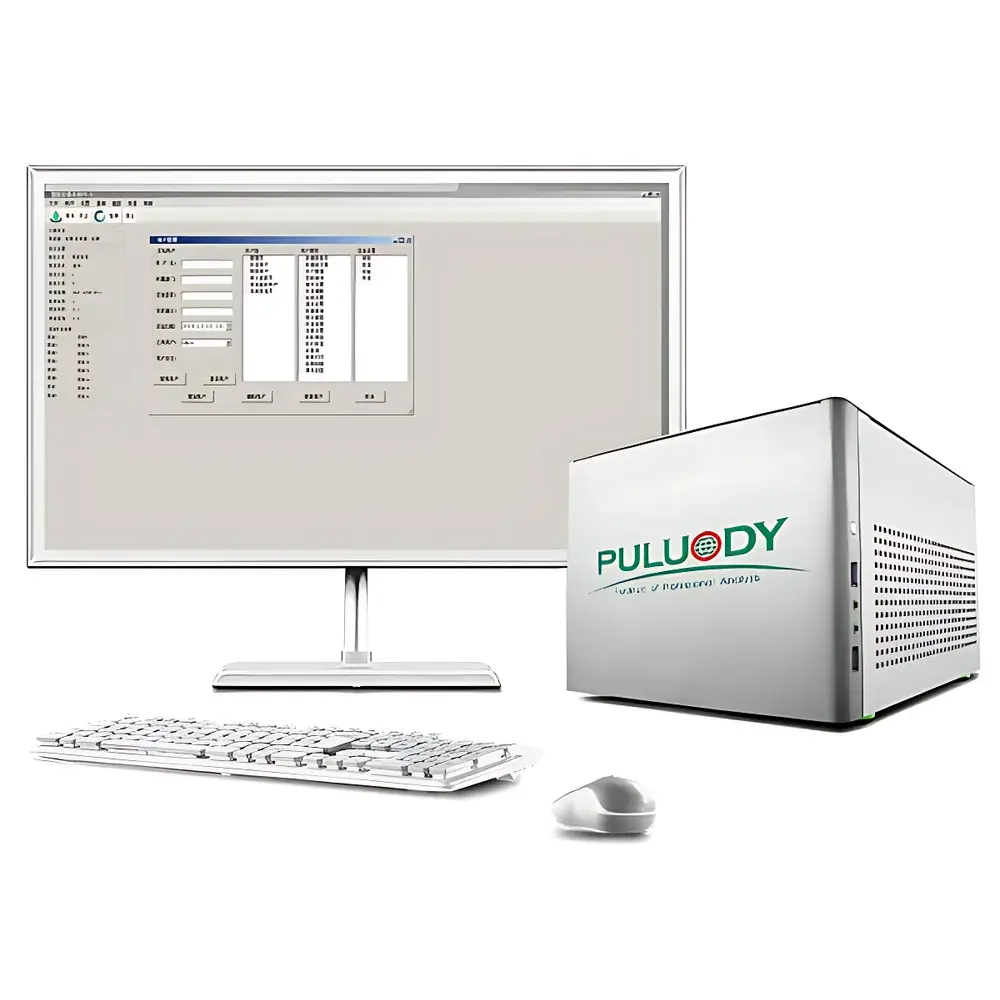
- V8.3 Analysis Software Suite—available in PC and iPad-compatible versions—with segregated calibration and measurement modules to prevent software-induced bias during routine testing and audit-ready data logging.
- Compliance-ready reporting engine generating particle concentration (particles/mL) and standardized contamination codes (ISO 4406, NAS 1638) directly aligned with GMP/GLP documentation requirements.
Sample Compatibility & Compliance
The PMT-2-H is validated for use with transparent, low-viscosity, optically homogeneous liquids including deionized water, UPW, aqueous alkaline/acidic cleaning solutions (e.g., SC-1, SC-2), organic solvents (IPA, acetone, PGMEA), and dilute polymer solutions. It meets the physical and procedural requirements of multiple international standards: USP and for injectables and ophthalmics; European Pharmacopoeia Chapter 2.9.19; Chinese Pharmacopoeia 2015/2020 Edition; ISO 21501-4 for calibration and verification of liquid-borne particle counters; and GB 8368 for medical infusion equipment testing. All calibration procedures follow JJG 1061 national metrological verification regulations or certified NIST-traceable latex reference standards (e.g., Duke Scientific 3000 series). The instrument’s firmware and software architecture support audit trails, user access control, and electronic signature functionality compliant with FDA 21 CFR Part 11 when deployed in regulated manufacturing environments.
Software & Data Management
The V8.3 software platform provides full lifecycle data management—from method definition and calibration validation to raw count export and statistical process control (SPC) charting. Calibration parameters (thresholds, gain settings, flow rate compensation) are stored separately from test methods, ensuring metrological integrity during routine operation. Data files are saved in vendor-neutral CSV and XML formats, compatible with LIMS integration. The iPad-compatible wireless interface allows remote instrument control and live data visualization without compromising network security—ideal for ISO Class 5–7 cleanroom deployments where wired connectivity is restricted. All measurement sessions automatically timestamp, record operator ID, and log environmental metadata (temperature, pressure if external sensors are connected), fulfilling GLP/GMP documentation requirements.
Applications
The PMT-2-H serves as a critical quality assurance tool in industries demanding nanoscale particulate control. In semiconductor fabrication, it monitors rinse water purity post-wet etch and pre-photolithography, detecting defects that could cause gate oxide pinholes or mask contamination. In pharmaceutical manufacturing, it verifies filter integrity and final rinse efficacy for vial washing systems and bulk solution preparation lines. In flat-panel display production, it quantifies residual abrasive particles in CMP slurries and post-polish rinse fluids. Additional validated applications include incoming inspection of nano-filtration membranes, qualification of ultrapure water distribution loops, and stability assessment of colloidal dispersions in advanced battery electrolyte R&D.
FAQ
Does the PMT-2-H comply with USP for parenteral particle testing?
Yes—the instrument meets all optical, volumetric, and reporting requirements specified in USP , including mandatory calibration with NIST-traceable standards and documented verification of counting efficiency across the 10–25 µm range.
Can it measure particles below 0.5 µm?
The standard configuration covers 0.5–5.0 µm; however, optional sensor upgrades support extended detection down to 0.1 µm (c) under controlled conditions, subject to application-specific validation per ISO 21501-4 Annex B.
Is offline mobile measurement supported?
Yes—battery-powered portable mode enables field-deployable measurements using integrated rechargeable power and wireless iPad interface, maintaining full metrological traceability without requiring AC mains.
How is data integrity ensured during long-term monitoring?
All measurements include cryptographic hash tagging, immutable audit logs, and configurable auto-backup to network drives or cloud storage—fully aligned with ALCOA+ principles for data reliability.
What service and calibration support is available outside China?
PULUODY maintains authorized service centers in the UK, Germany, and Singapore, offering ISO/IEC 17025-accredited calibration, remote diagnostics, and on-site technical support under global service agreements.
Related Products



