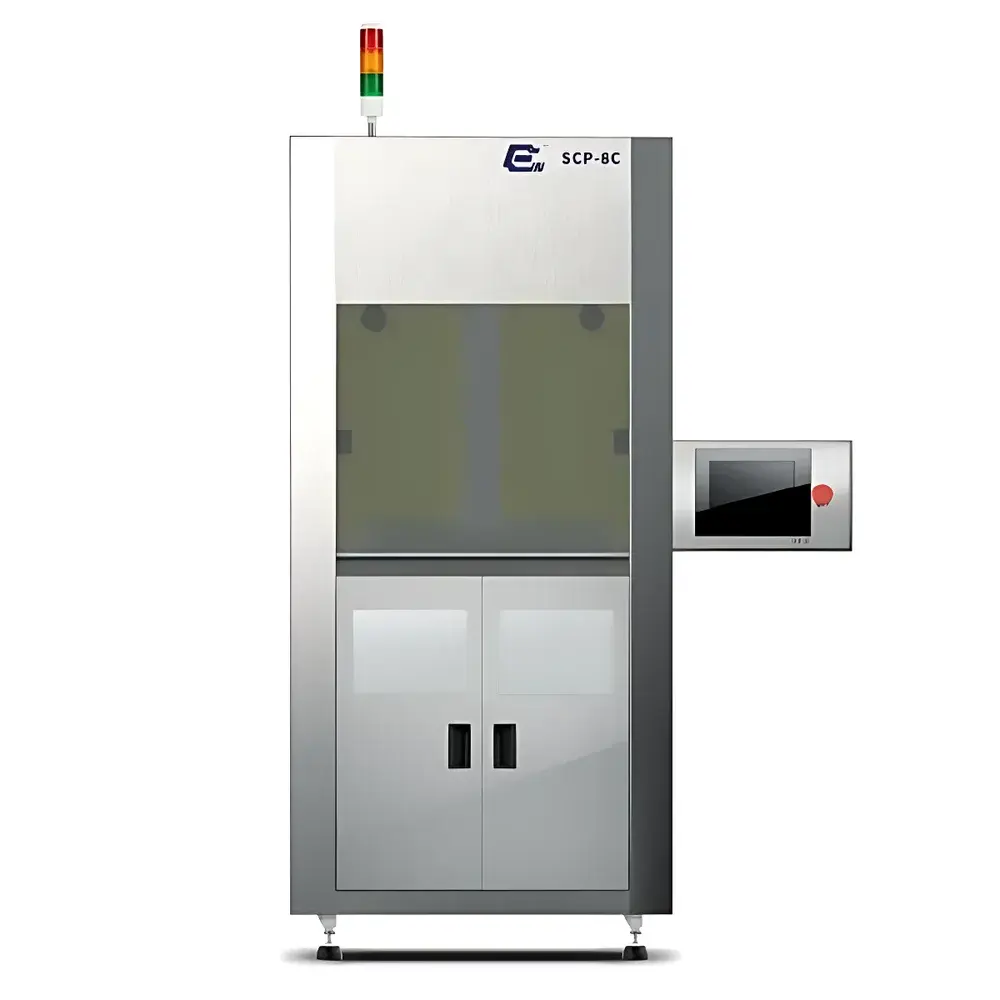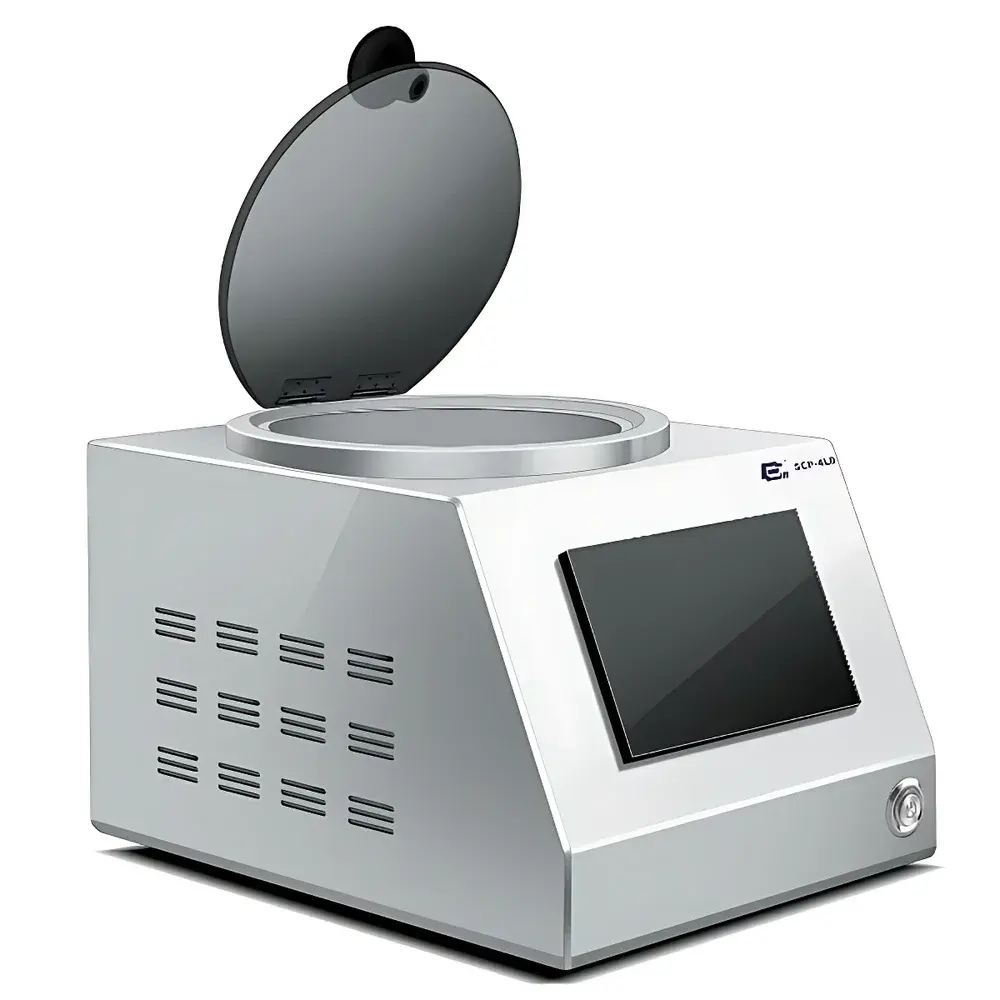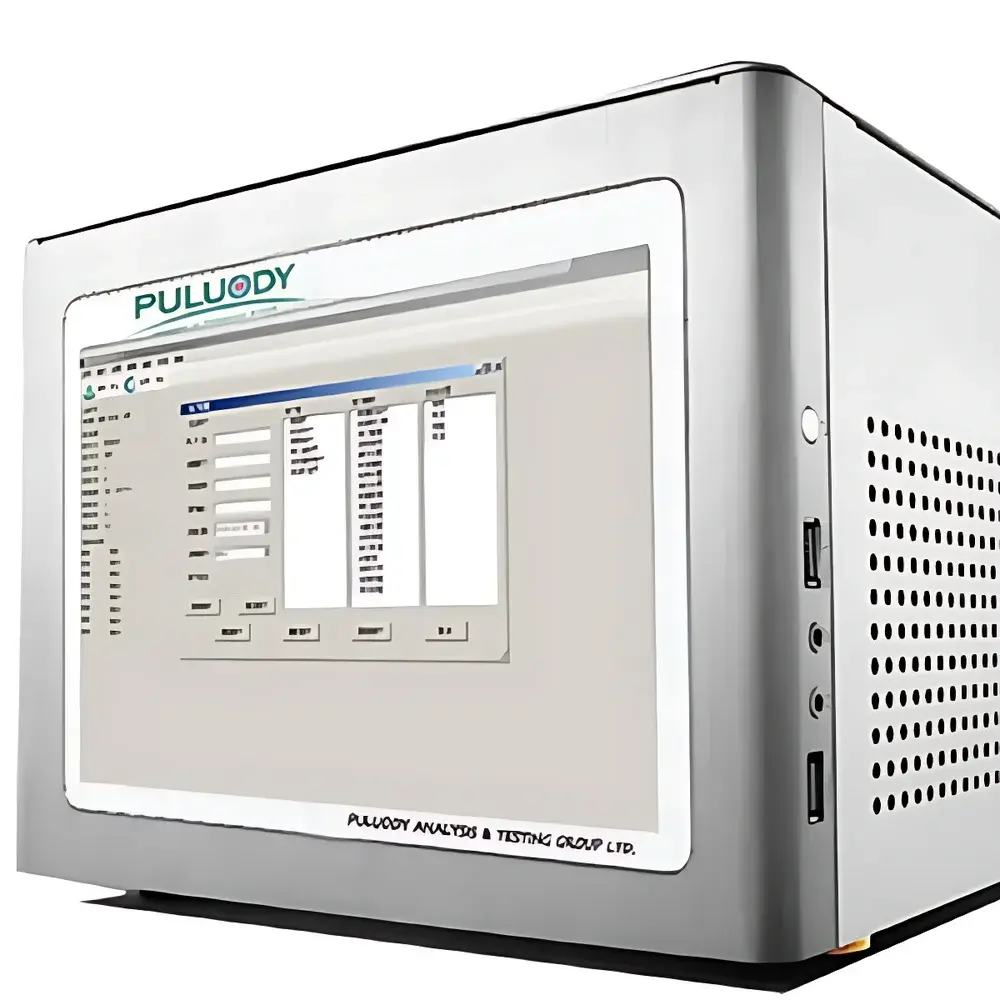
PULUODY PMT-2-C Online Ultra-Pure Water Particle Counter
| Brand | PULUODY |
|---|---|
| Model | PMT-2-C |
| Detection Principle | Dual-Laser Narrow-Beam Light Scattering |
| Sensor Generation | 8th-Generation Dual-Laser Optical Sensor |
| Measuring Range | 0.05–0.2 µm, 0.1–0.5 µm (standard) |
| Sampling Method | Precision Metering Piston Pump + Electromagnetic Flow Control |
| Sampling Accuracy | < ±1% |
| Counting Accuracy | < ±3% (typical) |
| Coincidence Limit | 1000 particles/mL (2.5% coincidence error) |
| Output Interface | 4–20 mA analog output |
| Alarm Function | Configurable particle concentration threshold alert |
| Data Reporting | Particles per mL & ISO 4406 / NAS 1638 contamination code |
| Compliance Standards | JJG 1061, ISO 21501-4, USP <788>, EP 2.9.19 |
| Software Platform | V8.3 Integrated Analysis & Calibration Software (PC + touchscreen UI) |
| Power Input | 100–265 VAC, 50–60 Hz |
| Display | Color LCD touchscreen + optional wireless keyboard/mouse |
Overview
The PULUODY PMT-2-C Online Ultra-Pure Water Particle Counter is an engineered solution for real-time, continuous particulate contamination monitoring in ultra-high-purity fluid processes—specifically designed for semiconductor front-end fabrication, wet bench chemical delivery systems, and advanced microelectronics cleaning lines. It operates on the principle of dual-laser narrow-beam light scattering, where two spatially separated laser sources illuminate the sample stream simultaneously, enabling high-sensitivity detection of sub-100 nm particles with minimized optical noise and enhanced signal-to-noise ratio. Unlike conventional single-beam instruments, this 8th-generation sensor architecture decouples size-dependent scattering intensity from flow-induced signal distortion, delivering stable baseline performance even under dynamic pressure and temperature fluctuations typical in DI water recirculation loops or chemical dispense manifolds.
Key Features
- Dual-laser narrow-beam optical sensing platform optimized for ultra-low-conductivity liquids (resistivity >18.2 MΩ·cm), minimizing electrostatic interference and bubble-induced false counts
- Precision metering piston pump combined with electromagnetic flow control ensures repeatable volumetric sampling at rates up to 100 mL/min, with <±1% volumetric accuracy and <±3% counting precision (per ISO 21501-4 verification)
- Configurable detection thresholds across multiple size channels: standard ranges include 0.05–0.2 µm and 0.1–0.5 µm; extended options support user-defined bins from 1–100 µm or 4–70 µm(c), including critical 0.1 µm(c) resolution for EUV lithography rinse validation
- Integrated analog 4–20 mA output with programmable alarm logic enables direct integration into SCADA, MES, or Fab-wide environmental monitoring systems for automated process deviation alerts
- V8.3 software architecture separates analytical measurement routines from calibration traceability modules—ensuring audit-ready compliance with FDA 21 CFR Part 11 requirements for electronic records and signatures
- Touchscreen HMI with optional wireless keyboard/mouse support allows both local operation and remote configuration without compromising cleanroom integrity
Sample Compatibility & Compliance
The PMT-2-C is validated for use with ultrapure water (UPW), deionized solvents (e.g., SC1, SC2, DHF), photoresist strippers, CMP slurries (post-filtration), and polymer-based etchants. Its wetted path employs chemically inert materials—including fused silica flow cells, PFA tubing, and ceramic pump components—to prevent leaching or surface adsorption artifacts. The instrument meets ISO 21501-4 for light-scattering particle counters, supports calibration traceability to NIST-traceable latex standards or JJG 1061-certified reference materials, and generates reports compliant with ISO 4406:2017 (fluid cleanliness codes) and NAS 1638 Class ratings. For pharmaceutical-grade UPW applications, it satisfies USP and EP 2.9.19 requirements for sub-visible particle enumeration in parenteral manufacturing environments.
Software & Data Management
The V8.3 software suite provides dual-mode operation: standalone PC-based analysis for offline trend review and embedded touchscreen interface for real-time diagnostics. All calibration events, sensor alignments, and user interventions are logged with time-stamped, immutable audit trails—including operator ID, parameter changes, and system health metrics. Data export supports CSV, PDF, and XML formats compatible with LIMS integration. Optional secure remote access enables off-site validation support while maintaining firewall-compliant TLS 1.2 encryption. Firmware updates follow a signed-package protocol to ensure integrity during field deployment.
Applications
This counter serves as a critical node in semiconductor process control strategies—monitoring rinse tank effluents, point-of-use UPW lines feeding track tools, post-filter integrity checks on 10 nm node photomask cleaning stations, and real-time feedback for nano-filtration membrane performance evaluation. It is also deployed in flat-panel display manufacturing for ITO etchant purity verification, in MEMS packaging for cavity rinse validation, and in advanced battery electrolyte production for metallic particulate screening. Its dual online/offline capability supports both permanent installation in Class 1 cleanrooms and portable deployment for root-cause analysis during yield excursions.
FAQ
What calibration standards are supported?
The PMT-2-C accepts NIST-traceable polystyrene latex (PSL) spheres per ISO 21501-4, certified reference materials per JJG 1061, and user-defined custom standards for application-specific sizing.
Can the instrument be integrated into existing factory automation systems?
Yes—it provides isolated 4–20 mA analog output with configurable alarm thresholds and Modbus TCP option for seamless integration with PLCs, DCS, or Fab-wide monitoring platforms.
Is the flow path compatible with aggressive chemistries such as concentrated HF or piranha solutions?
Standard configuration supports pH 2–12 and organic solvents; for HF or oxidizing chemistries, optional quartz/PFA-wetted path upgrades are available upon specification.
How is data integrity ensured during long-term unattended operation?
All measurements include internal timestamping, checksum-verified memory storage, and automatic backup to external USB drives or network shares—fully aligned with GLP/GMP data governance expectations.
Does the system support multi-point trending across distributed UPW loops?
Yes—centralized fleet management via V8.3 Server Edition allows synchronized calibration, firmware updates, and cross-tool statistical process control (SPC) charting across up to 64 networked units.