
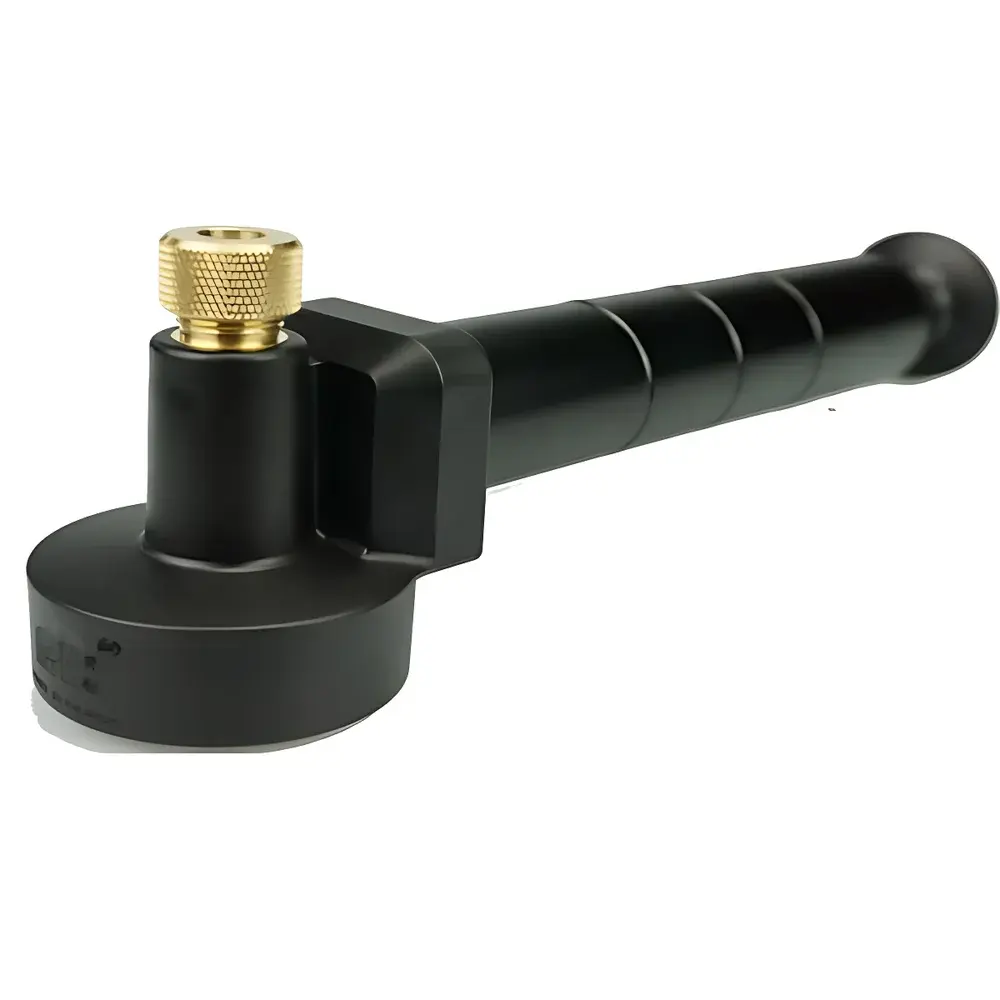
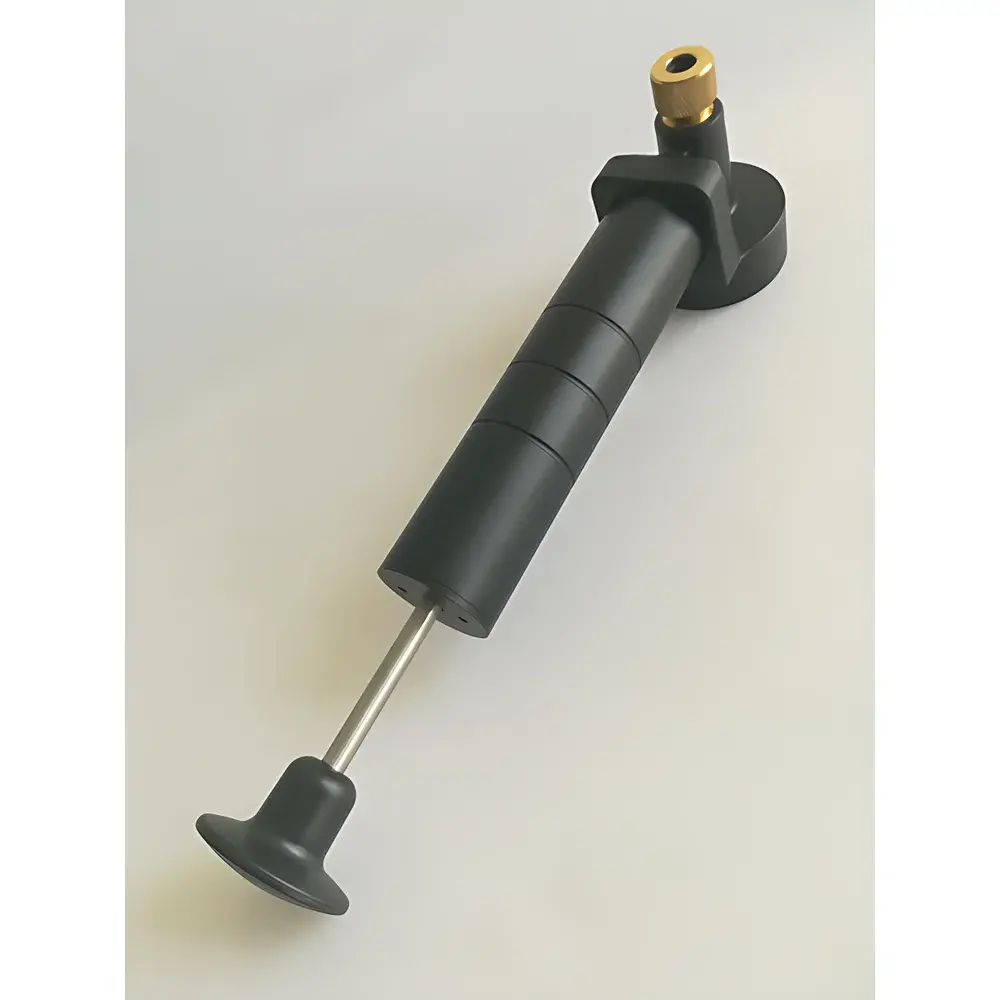
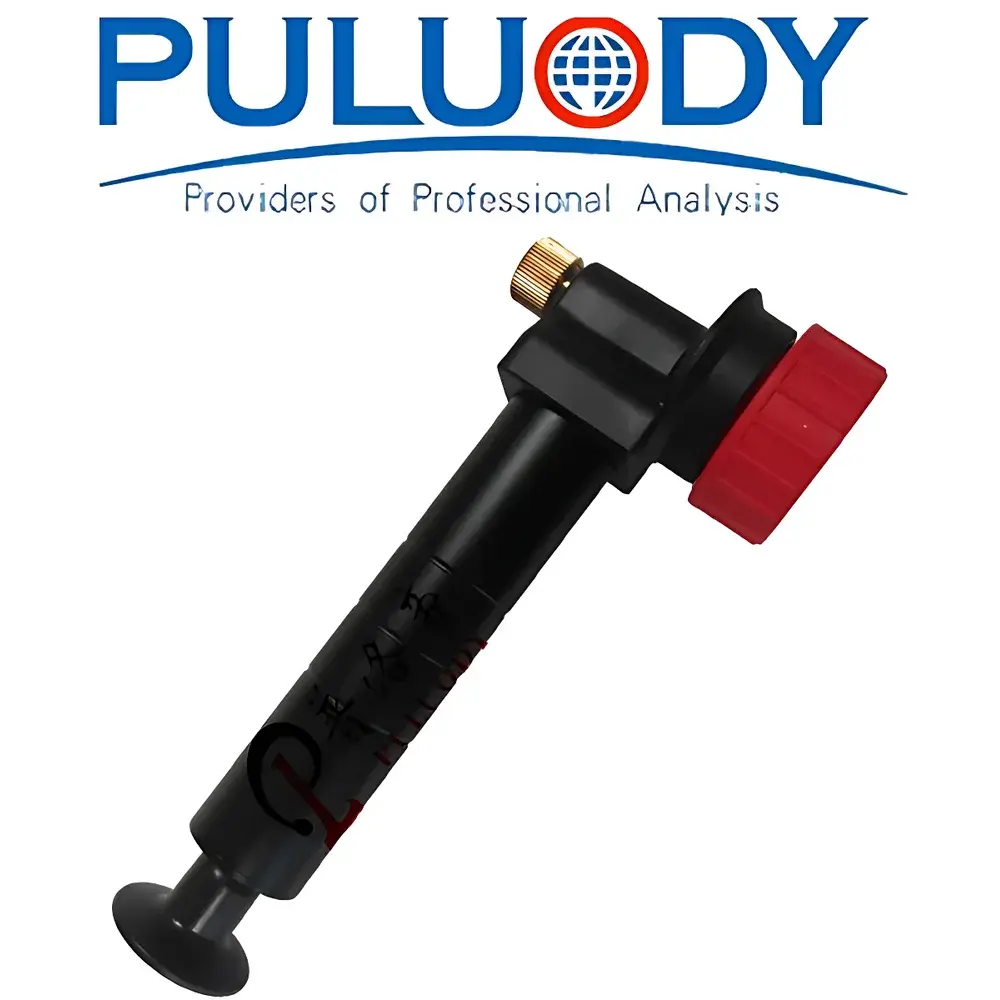
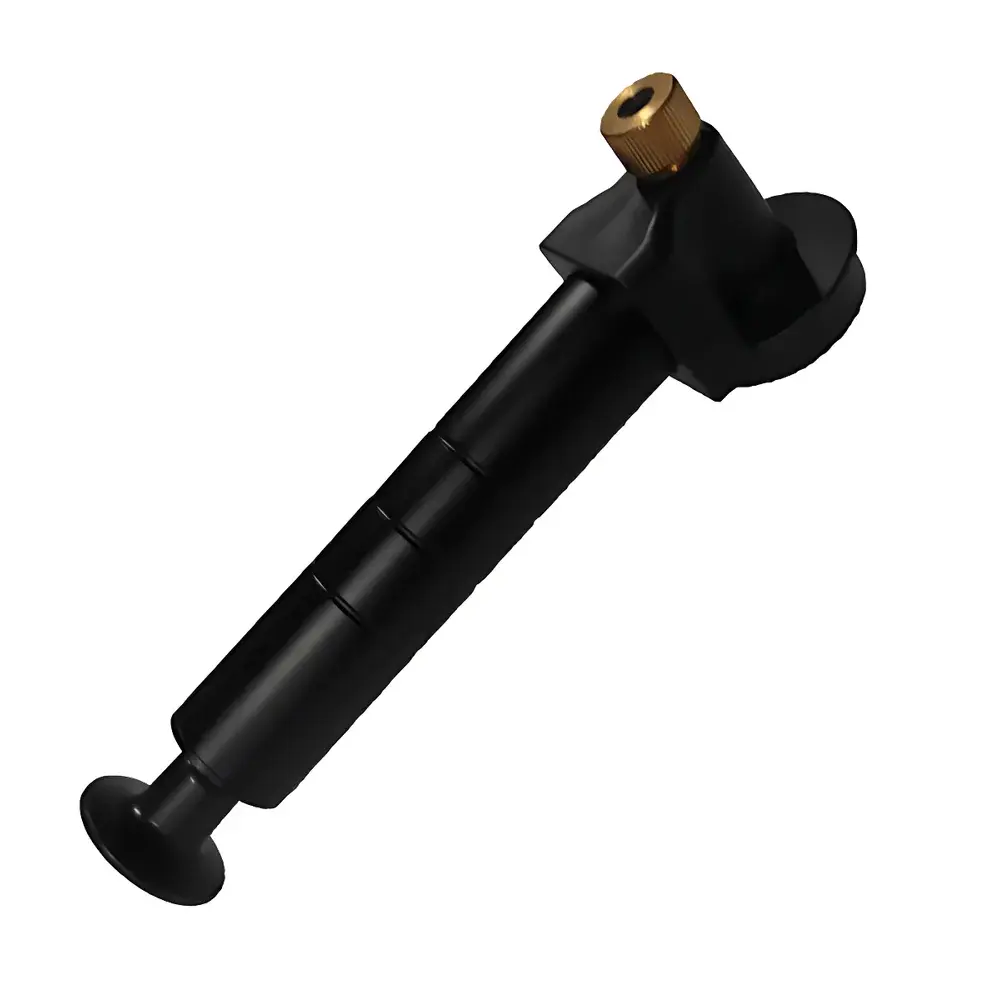
PULUODY PSD-250 Negative-Pressure Fluid Sampling Device for Oil and Hydraulic Fluids
| Brand | PULUODY |
|---|---|
| Origin | Shaanxi, China |
| Model | PSD-250 |
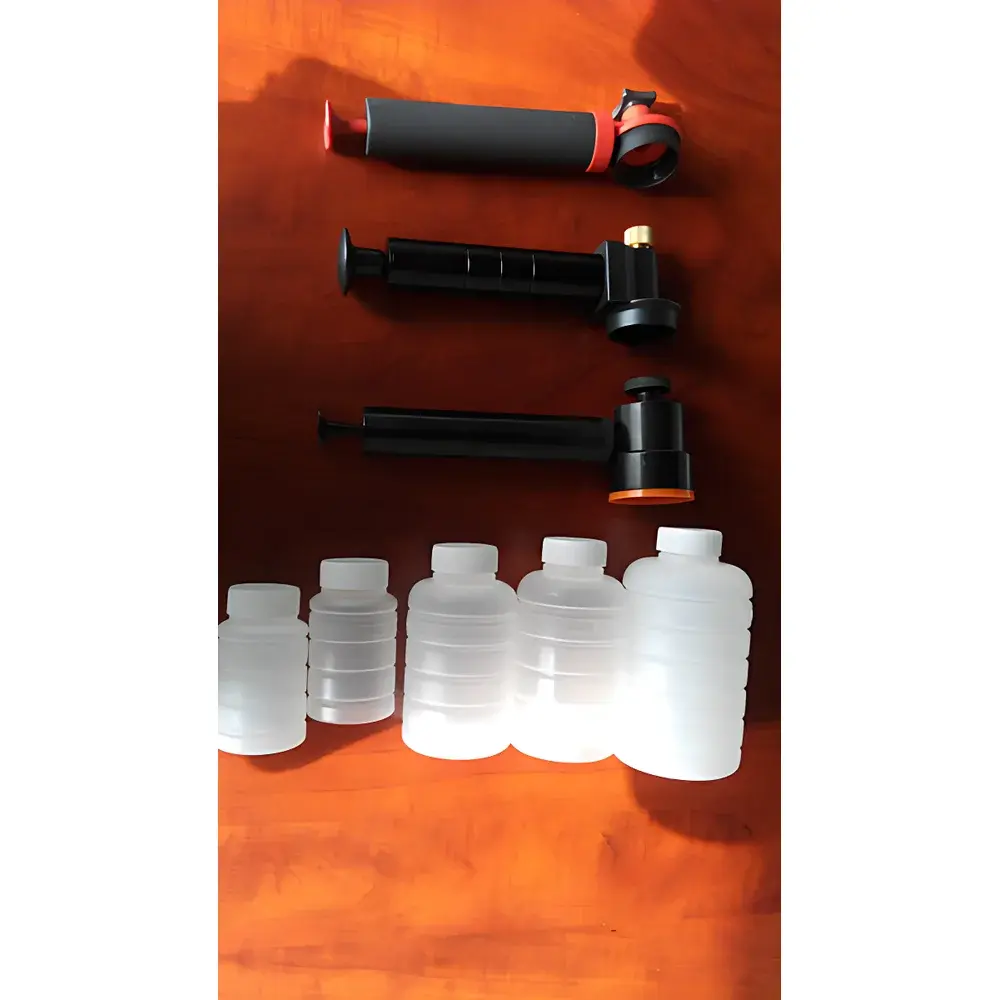
| Sample Volume Options | 100–1000 mL (customizable, including food-grade, pharmaceutical-grade, sterile, and corrosion-resistant variants) |
| Tubing Diameter | 4–8 mm (customizable) |
| Maximum Vacuum Pressure | 2 kPa |
| Tubing Compliance | NAS 1638 Class 0 |
| Cleaning Bottle Cleanliness | NAS 1638 Classes 0–4 (customizable) |
| Material Options | LC super-hard aluminum alloy (zinc-plated for corrosion resistance) or engineering-grade polymer (molded, hermetic seal) |
| Standards Compliance | GB/T 17489–1998, QC/T 29105.3–1992, DL/T 571–2007 |
Overview
The PULUODY PSD-250 is a manually operated, negative-pressure fluid sampling device engineered for contamination-controlled extraction of oil and hydraulic fluids from operational systems. It operates on the principle of vacuum-assisted aspiration: mechanical reciprocation of a hand-operated piston generates sub-atmospheric pressure within a sealed sample container, drawing fluid through a clean, inert tubing path without introducing ambient particulates, moisture, or residual carryover. This method eliminates reliance on system pressure or external power sources—ensuring safe, repeatable sampling under offline or low-energy conditions. Designed specifically for condition monitoring workflows, the PSD-250 supports integrity-preserving collection prior to particle count analysis, elemental spectroscopy, viscosity testing, or water content determination. Its architecture prevents cross-contamination between samples by enforcing single-use tubing protocols and incorporating Class 0 NAS-certified fluid pathways—critical for achieving ISO 4406 or SAE AS4059 compliance in subsequent laboratory analysis.
Key Features
- Two material configurations: LC super-hard aluminum alloy (zinc-coated for long-term corrosion resistance in industrial environments) or high-density engineering polymer (injection-molded for dimensional stability, chemical inertness, and hermetic sealing)
- Vacuum generation via ergonomic, dual-stroke manual pump mechanism—no electricity, batteries, or compressed air required
- Modular, tool-free assembly: threaded sample bottle interface, adjustable tubing retention nut, and standardized NAS 1638 Class 0 silicone or fluoropolymer tubing
- Controlled immersion depth (approx. 50 mm) minimizes sediment entrainment during extraction from reservoirs, sumps, or inline ports
- Integrated volume indicators (e.g., 200 mL fill line on 250 mL bottle) prevent overfilling and ensure consistent headspace for volatile compound preservation
- Configurable sample capacity: 100 mL to 1000 mL bottles; optional customization for food-grade, pharmaceutical-grade, sterile, or chemically resistant applications
Sample Compatibility & Compliance
The PSD-250 is validated for use with mineral oils, synthetic esters, phosphate esters (e.g., turbine and servo hydraulic fluids), transformer insulating oils, gear oils, and engine lubricants. It complies with multiple national and industry-specific standards governing representative sampling practice—including GB/T 17489–1998 (extraction from working hydraulic systems), QC/T 29105.3–1992 (solid contaminant sampling for automotive hydraulic systems), and DL/T 571–2007 (acceptance and maintenance of phosphate ester anti-wear fluids in power plants). All contact surfaces meet NAS 1638 cleanliness requirements at Class 0 (≤2 particles ≥5 µm per 100 mL), verified per ISO 11171 and ISO 4402 methodologies. The device supports GLP-compliant documentation when used with traceable, lot-numbered cleaning bottles and serialized tubing kits—enabling audit-ready chain-of-custody records for regulatory submissions (e.g., ISO 55001 asset management or IEC 60296 transformer oil surveillance).
Software & Data Management
While the PSD-250 is a standalone mechanical sampling tool, its output integrates seamlessly into digital oil analysis ecosystems. When paired with PULUODY’s certified particle counters (e.g., PDM-200 series), sample metadata—including date/time, equipment ID, location, fluid type, and sampling operator—is automatically logged via USB or Bluetooth-enabled data bridges. Raw counts are mapped to ISO 4406 codes and trended using PULUODY’s OASIS™ (Oil Analysis & Surveillance Intelligence System) software, which supports FDA 21 CFR Part 11-compliant electronic signatures, audit trails, and automated exception alerts. Each PSD-250 kit includes QR-coded consumables (tubing, bottles) enabling full traceability from sampling event to lab report—essential for GMP-aligned maintenance programs in pharmaceutical manufacturing or aerospace MRO facilities.
Applications
The PSD-250 serves as the primary sampling interface across critical rotating and static assets: hydraulic power units, servo valve manifolds, wind turbine gearboxes, steam turbine lube systems, transformer tanks, marine propulsion engines, CNC machine coolant reservoirs, and industrial heat transfer circuits. It is routinely deployed by OEM service teams, third-party condition monitoring providers, and in-house reliability engineers performing routine wear debris analysis (WDA), ferrographic slide preparation, FTIR oxidation assessment, or elemental impurity profiling (ICP-OES). Its compact form factor and portability make it suitable for field use in remote substations, offshore platforms, and rail depot maintenance bays—where electrical isolation and explosion-proof operation are mandatory.
FAQ
Is the PSD-250 compatible with non-hydraulic fluids such as transformer oil or turbine oil?
Yes—the device is chemically compatible with all common petroleum-based and synthetic dielectric and lubricating fluids, provided tubing and bottle materials are selected per chemical resistance charts.
Can the same tubing be reused across multiple sampling events?
No—NAS 1638 Class 0 tubing is designated single-use to prevent cross-contamination; reuse invalidates cleanliness certification and violates ISO 4021 sampling protocol.
Does the PSD-250 require calibration or periodic verification?
No mechanical calibration is needed; however, users must verify vacuum integrity before each use (via 15-stroke test with dry air) and document tubing/bottle lot numbers for traceability.
How does the PSD-250 prevent sediment ingestion during sampling?
The fixed 50 mm tube insertion depth—combined with controlled aspiration velocity—minimizes turbulence at the fluid–sediment interface, ensuring representative mid-depth sampling per ASTM D6224 guidance.
Is training or certification required to operate the PSD-250?
Basic operator training is recommended and provided via PULUODY’s ISO 17025-accredited sampling workshops; no formal certification is mandated, but documented competency is advised for ISO 55001-aligned programs.






