
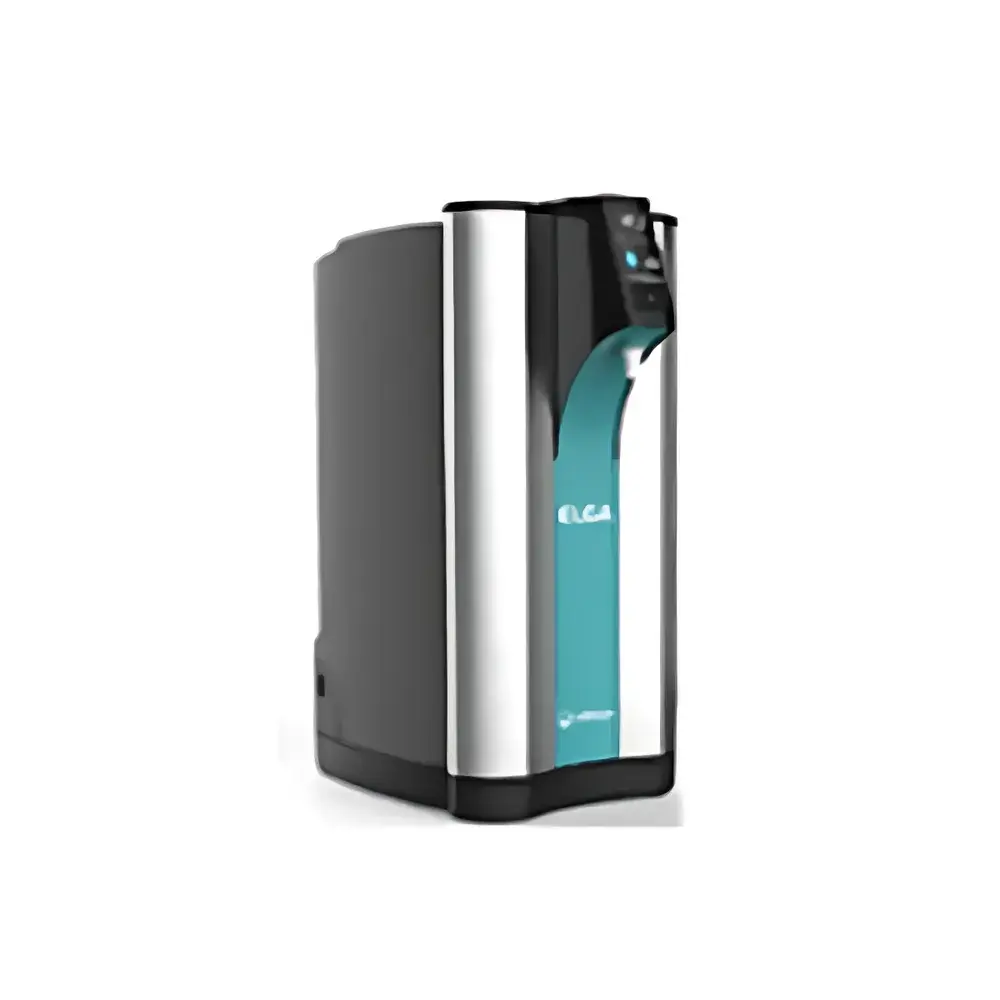
PURELAB® Quest Ultra Pure Water System
| Brand | ELGA |
|---|---|
| Origin | United Kingdom |
| Model | Quest / Quest UV |
| Purified Water Grade | ASTM Type I (Ultra-pure), Type II (Pure), Type III (RO) |
| Resistivity | 18.2 MΩ·cm at 25 °C |
| Heavy Metals & Soluble Silica | < 0.1 ppb |
| Total Organic Carbon (TOC) | < 5 ppb |
| Microbial Count | < 0.001 CFU/mL |
| Endotoxins | < 0.001 EU/mL |
| Particles (>0.1 µm) | < 1 particle/mL |
| RO Feed Flow Rate | Up to 10 L/h |
| Dispense Flow Rate | Up to 1.2 L/min |
| Integrated Reservoir | 7 L (internal), optional external tanks: 15 L or 30 L |
| Dimensions (W × D × H) | 23.2 cm × 34 cm × 51 cm |
| Compliance | Meets ISO 3696:1987, ASTM D1193-06, CLSI EP21-A, and USP <1231> for purified water |
Overview
The PURELAB® Quest Ultra Pure Water System is a compact, integrated laboratory water purification platform engineered for precision delivery of Type I (ultra-pure), Type II (pure), and Type III (reverse osmosis) water directly from municipal tap feed. Utilizing a multi-stage purification architecture—including dual-stage reverse osmosis, electrodeionization (EDI), and optional dual-wavelength UV oxidation (185/254 nm)—the system achieves consistent resistivity of 18.2 MΩ·cm at 25 °C, with TOC levels maintained below 5 ppb and endotoxin concentrations under 0.001 EU/mL. Designed for laboratories requiring reliable, low-maintenance operation without compromising on regulatory compliance, the Quest system delivers ultra-pure water suitable for critical applications such as HPLC mobile phase preparation, cell culture media formulation, molecular biology assays, and trace elemental analysis.
Key Features
- Integrated 7 L stainless-steel reservoir with level monitoring and automatic recirculation loop to maintain microbial control and TOC stability
- Optional dual-wavelength UV lamp (185 nm for TOC reduction + 254 nm for microbial inactivation) enhances oxidative degradation of organics and ensures continuous disinfection
- Modular design supports seamless integration with external storage tanks (15 L or 30 L) via rear-mounted gravity-fed or pressurized interfaces
- Intuitive front-panel interface with real-time display of resistivity, TOC, temperature, and system status; USB port enables firmware updates and data export
- Annual maintenance reminder with configurable service alerts to support preventive maintenance scheduling aligned with ISO/IEC 17025 and GLP requirements
- Three distinct dispensing modes: fixed-point Type I outlet (polished stainless-steel faucet), gravity-fed Type II from internal tank, and Type III RO water via rear port for external distribution
Sample Compatibility & Compliance
The PURELAB® Quest meets stringent international standards for laboratory water quality, including ISO 3696:1987 (Grade 1), ASTM D1193-06 (Type I), CLSI EP21-A (for analytical reagent water), and USP (Purified Water and Water for Injection specifications). Its performance profile—particularly sub-ppb heavy metal and soluble silica removal, combined with endotoxin-free output—supports applications demanding high-fidelity biological and analytical integrity. The system’s construction materials (e.g., sanitary-grade tubing, non-leaching polymers, and electropolished stainless steel) comply with FDA-recommended material compatibility guidelines for pharmaceutical water systems. When operated with AQUAVISTA software, full electronic audit trails, user access controls, and event logging are enabled—facilitating 21 CFR Part 11 compliance for regulated environments.
Software & Data Management
AQUAVISTA software (optional) provides centralized monitoring, remote diagnostics, and comprehensive data governance for multi-unit installations. It captures time-stamped records of resistivity, TOC, UV intensity, filter saturation, and maintenance events. Role-based user permissions, digital signature capability, and encrypted data storage ensure alignment with GxP documentation practices. Export functions support CSV and PDF formats for integration into LIMS or quality management systems. All calibration and validation parameters—including conductivity sensor drift compensation and UV lamp lifetime tracking—are programmable and traceable.
Applications
- HPLC, UHPLC, and LC-MS mobile phase and blank preparation where low TOC and ionic contamination are critical
- Cell culture and stem cell work requiring endotoxin- and nuclease-free water
- PCR, qRT-PCR, NGS library preparation, and CRISPR-based workflows sensitive to trace inhibitors
- Atomic absorption spectroscopy (AAS), ICP-OES, and ICP-MS diluent preparation demanding sub-ppt metal background
- Pharmaceutical QC testing per USP , EP 2.2.44, and JP 2.05 standards
- Calibration of clinical analyzers and reference material preparation in accredited medical labs
FAQ
What water grades does the PURELAB® Quest produce?
It simultaneously generates ASTM Type I (ultra-pure), Type II (pure), and Type III (RO) water from a single feed source.
Is the system compliant with 21 CFR Part 11?
Yes—when configured with AQUAVISTA software, it provides electronic signatures, audit trails, and secure user authentication required for FDA-regulated environments.
How often does the system require maintenance?
Annual servicing is recommended; the unit issues automated reminders and tracks consumable life (RO membranes, EDI cartridges, UV lamps) based on runtime and usage metrics.
Can the Quest be connected to an existing lab water network?
Yes—via optional external tank kits (15 L or 30 L) and compatible pressure regulators, enabling centralized distribution to multiple points-of-use.
Does the system include microbial monitoring capabilities?
While not equipped with real-time bioburden sensors, its design incorporates continuous UV irradiation, recirculation, and low-dead-volume plumbing to suppress microbial growth per ISO 22000 and CLSI M22-A3 guidance.



