
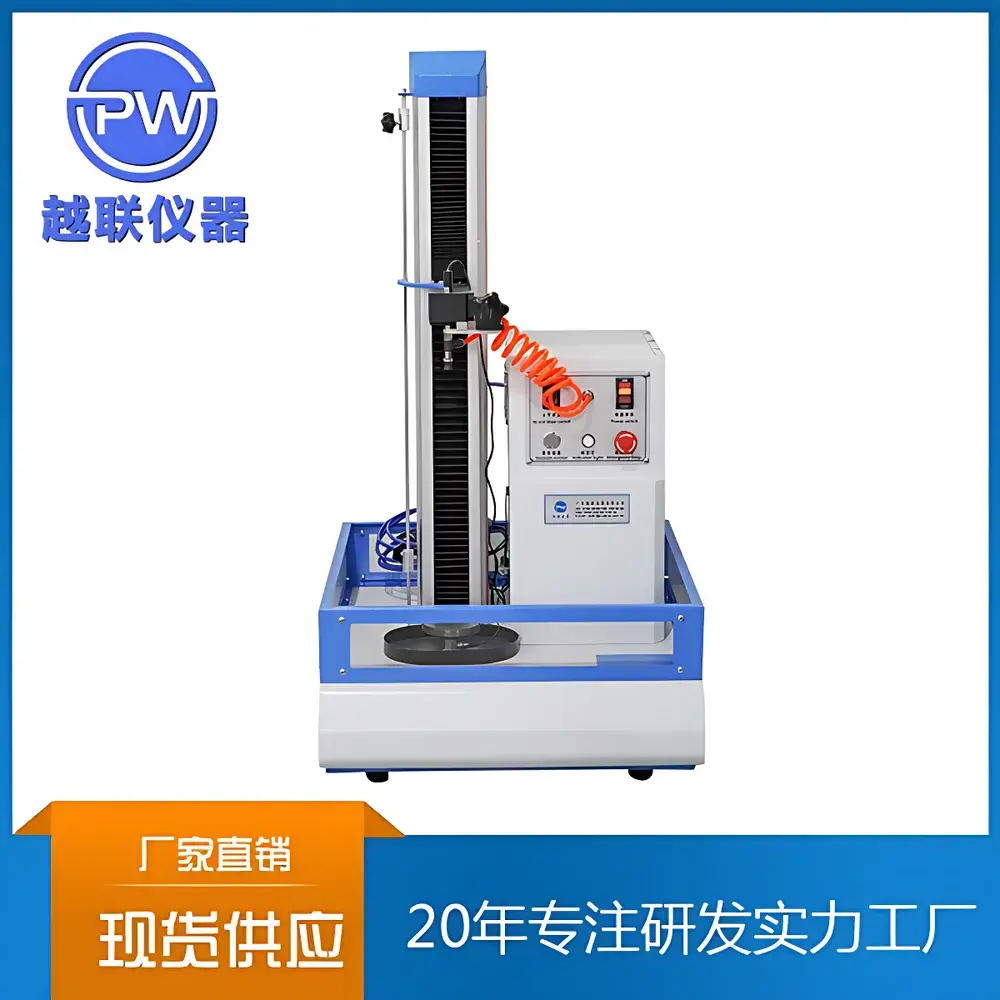
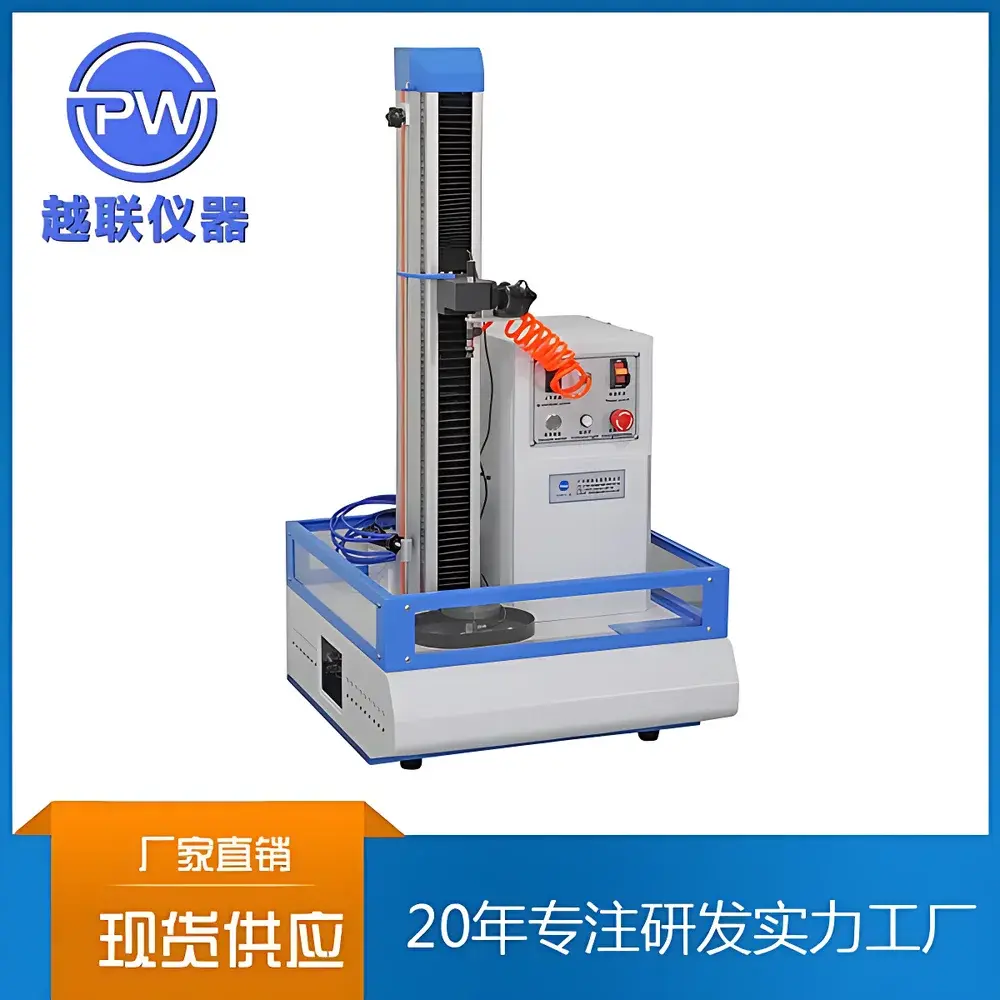
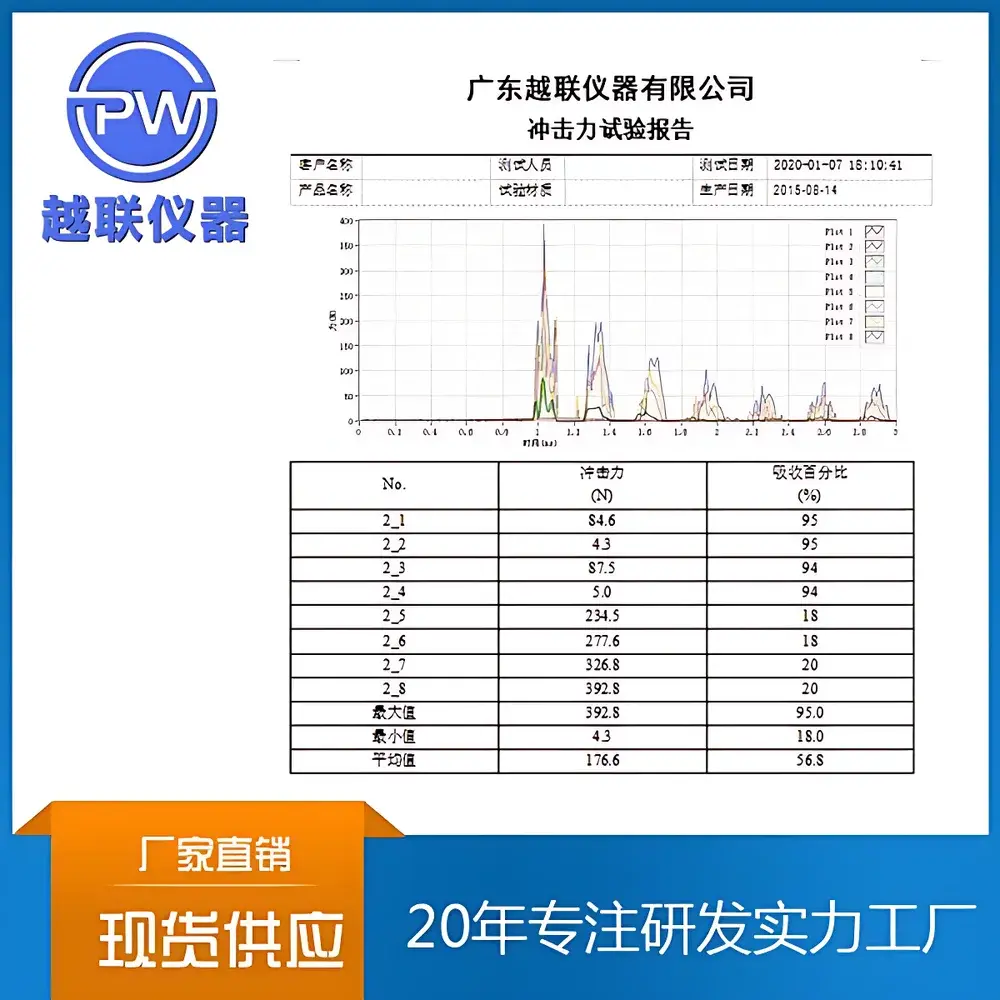
PW-IR500 / PW-IR1000 Ball Impact Energy Absorption Tester (Yuelian / PW)
| Brand | Yuelian / PW |
|---|---|
| Origin | Guangdong, China |
| Manufacturer Type | Authorized Distributor |
| Country of Origin | China |
| Model | PW-IR500 / PW-IR1000 |
| Impact Energy Range | Configurable via drop height (0–800 mm) and ball mass (customer-specified) |
| Impact Velocity | 0.01–500 mm/min (adjustable) |
| Drop Height Range | 0–800 mm (motorized vertical adjustment) |
| Data Acquisition Rate | 100 kHz |
| Release Mechanism | Electromagnetic solenoid |
| Positioning | X-Y manual fine-adjustment for center alignment |
| Sensor Capacity | Custom-configured per test requirements |
| Power Supply | AC 220 V |
| Dimensions (L×W×H) | 500 × 300 × 1400 mm |
| Net Weight | 35 kg |
Overview
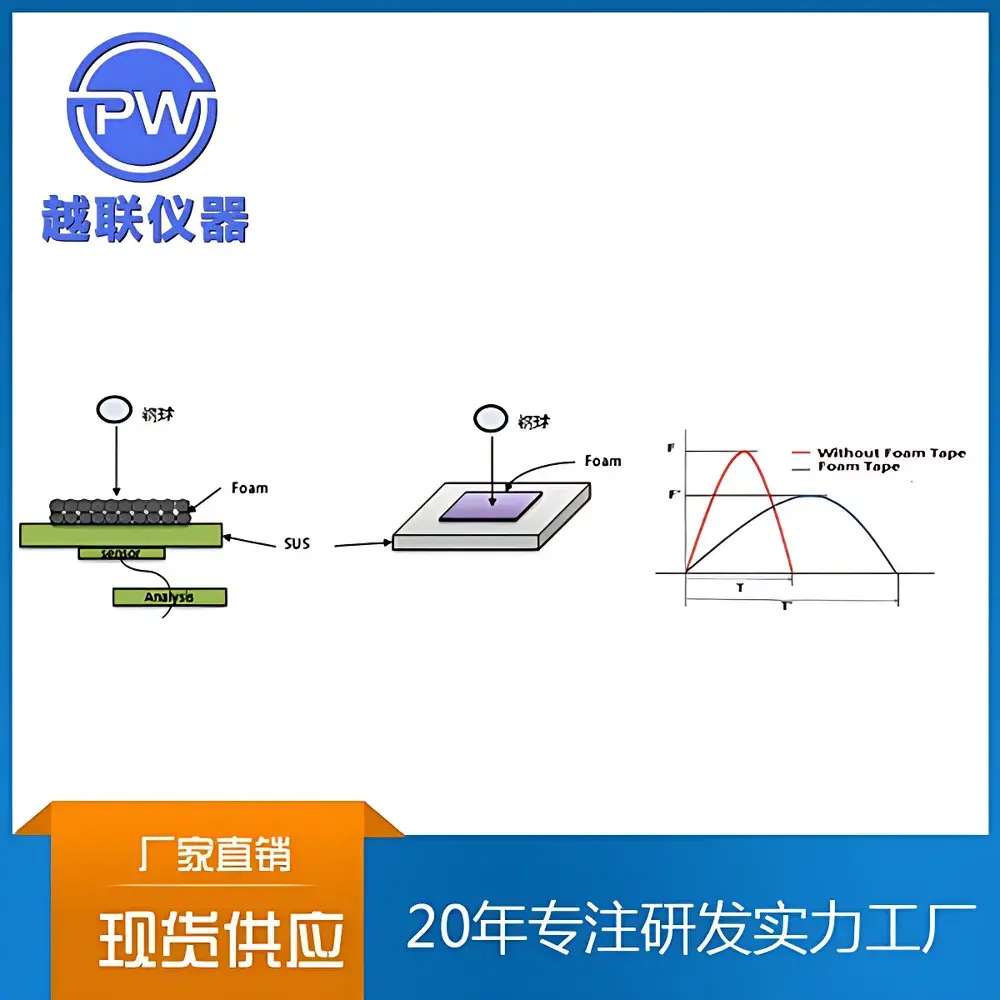
The PW-IR500 and PW-IR1000 Ball Impact Energy Absorption Testers are precision-engineered instruments designed to quantify the dynamic energy absorption characteristics of soft, compressible materials—particularly polymeric foams, elastomeric cushions, packaging inserts, and protective padding used in medical devices, consumer electronics, and automotive interiors. Operating on the principle of controlled free-fall impact, these testers comply with core mechanical testing methodologies referenced in ASTM D3574 (Standard Test Methods for Flexible Cellular Materials—Slab, Bonded, and Molded Urethane Foams), ISO 2439 (Foam plastics—Determination of resilience by ball rebound), and relevant sections of ISO 8302 (Thermal insulation—Determination of steady-state thermal resistance). A calibrated steel sphere is elevated to a user-defined height (0–800 mm), then released via electromagnetic actuation onto a horizontally mounted specimen. High-frequency force transduction (100 kHz sampling) captures the full time–force profile—including peak impact load, impulse duration, energy dissipation ratio, and rebound behavior—enabling rigorous evaluation of cushioning performance, hysteresis loss, and structural recovery.
Key Features
- Motorized vertical positioning system ensures repeatable, programmable drop heights from 0 to 800 mm with ±0.1 mm positional accuracy.
- Electromagnetic release mechanism eliminates mechanical preloading or timing jitter, guaranteeing consistent initiation of free-fall motion.
- Integrated infrared optical sensor array verifies precise alignment of the ball’s trajectory relative to the specimen’s geometric center prior to release.
- X–Y manual micrometer stage allows sub-millimeter lateral repositioning of the test specimen to ensure reproducible impact location across sequential trials.
- High-speed data acquisition subsystem (100 kHz sampling rate) resolves transient force events with minimal aliasing, supporting accurate integration of impulse and energy metrics.
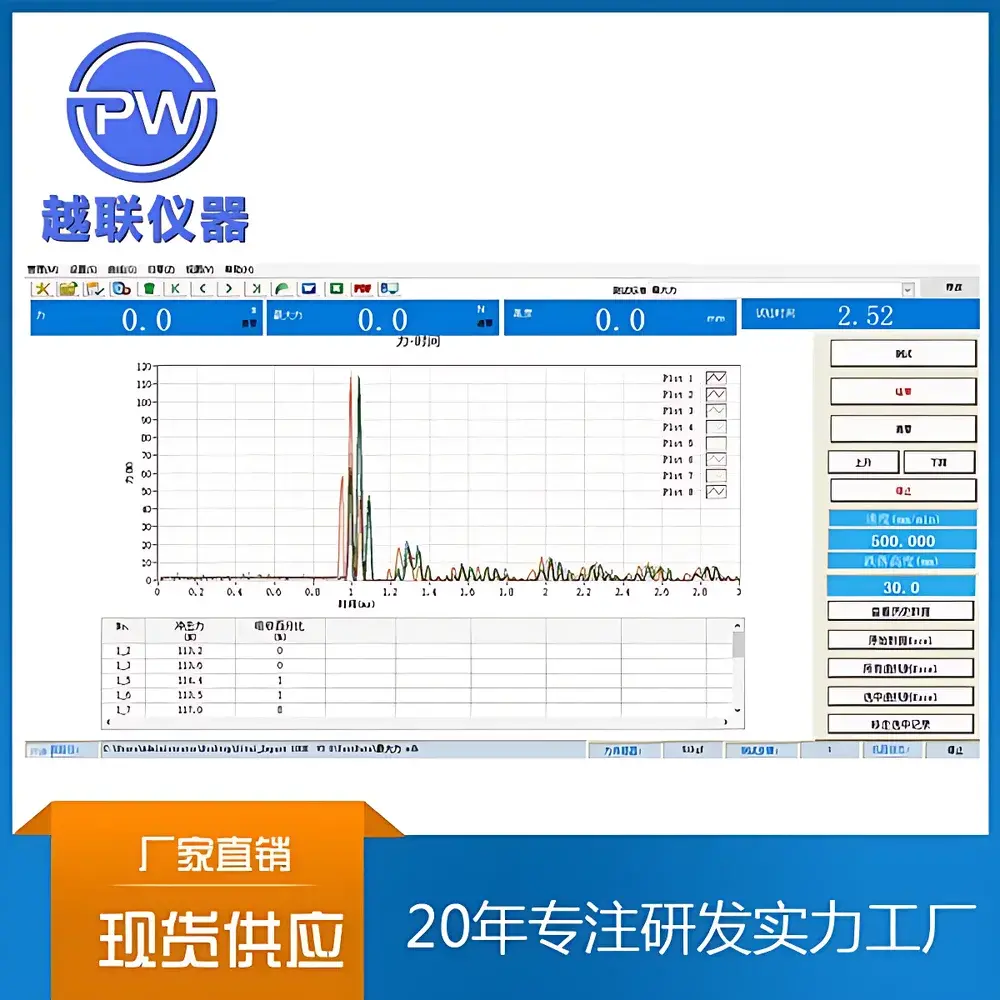
- Full PC-based control architecture enables automated test sequencing, real-time waveform visualization, and synchronized parameter logging—including displacement, velocity (derived), and force—per ASTM E2503 compliance guidelines.
Sample Compatibility & Compliance
The PW-IR series accommodates specimens up to 200 mm × 200 mm × 100 mm (L×W×H), with clamping fixtures designed to prevent lateral slippage during high-rate loading. Specimen thickness is unrestricted within the machine’s platen clearance; however, optimal results are obtained with foam densities between 15–120 kg/m³ and compression set values <15% (per ISO 1856). The system supports interchangeable impact spheres (diameters 16–50 mm; masses 0.1–5.0 kg), enabling calibration against standard reference materials traceable to NIST SRM 1692 (impact calibration standards). All firmware and software modules are structured to support audit-ready operation under GLP and GMP environments, including electronic signature capability, user access levels, and tamper-evident data archiving—fully aligned with FDA 21 CFR Part 11 requirements for regulated laboratories.
Software & Data Management
The proprietary Yuelian Impact Analysis Suite (v3.2+) provides intuitive GUI-driven test configuration, live oscilloscope-style waveform monitoring, and automated report generation compliant with ISO/IEC 17025 documentation standards. Raw force–time datasets are stored in HDF5 format with embedded metadata (operator ID, timestamp, environmental conditions, calibration certificate IDs). Export options include CSV, PDF (with embedded graphs and statistical summaries), and XML for LIMS integration. Built-in calculation modules compute key metrics: absorbed energy (J), peak deceleration (g), coefficient of restitution (COR), and normalized energy return ratio. Audit trails record all parameter modifications, data exports, and user logins—retained for ≥36 months with automatic backup to network drives.
Applications
- Quantitative validation of shock-absorbing performance in memory foam mattress cores and orthopedic seating systems.
- Comparative analysis of viscoelastic damping behavior across TPE, silicone, and cross-linked PE foams under variable strain rates.
- Quality control screening of molded EVA midsoles in athletic footwear per ISO 22197-2 protocols.
- Regulatory submission support for ISO 10993-10 biocompatibility assessments involving mechanical stress simulation on hydrogel wound dressings.
- R&D benchmarking of novel aerogel composites for aerospace thermal-acoustic insulation layers.
FAQ
What standards does the PW-IR500/PW-IR1000 directly support?
It is configured to execute test sequences aligned with ASTM D3574 Method C (ball indentation), ISO 2439 Annex A (ball rebound), and ISO 8302-derived impact thermal resistance correlation studies.
Can the system be integrated into an existing laboratory LIMS?
Yes—via standardized RESTful API endpoints and configurable ODBC-compliant database connectors for direct ingestion of test records, pass/fail flags, and raw waveform metadata.
Is calibration certification included with shipment?
Each unit ships with a factory-issued calibration certificate traceable to national metrology institutes, covering force transducer linearity (±0.5% FS), height encoder resolution (±0.05 mm), and timing synchronization (<1 µs jitter).
What maintenance intervals are recommended?
Electromagnetic release coil inspection and IR sensor cleaning every 6 months; annual recalibration of load cell and height encoder by authorized service centers.
Does the software support multi-user role-based access control?
Yes—administrators, operators, and reviewers are assigned distinct permissions for method editing, test execution, and data export functions, satisfying 21 CFR Part 11 electronic record requirements.



