
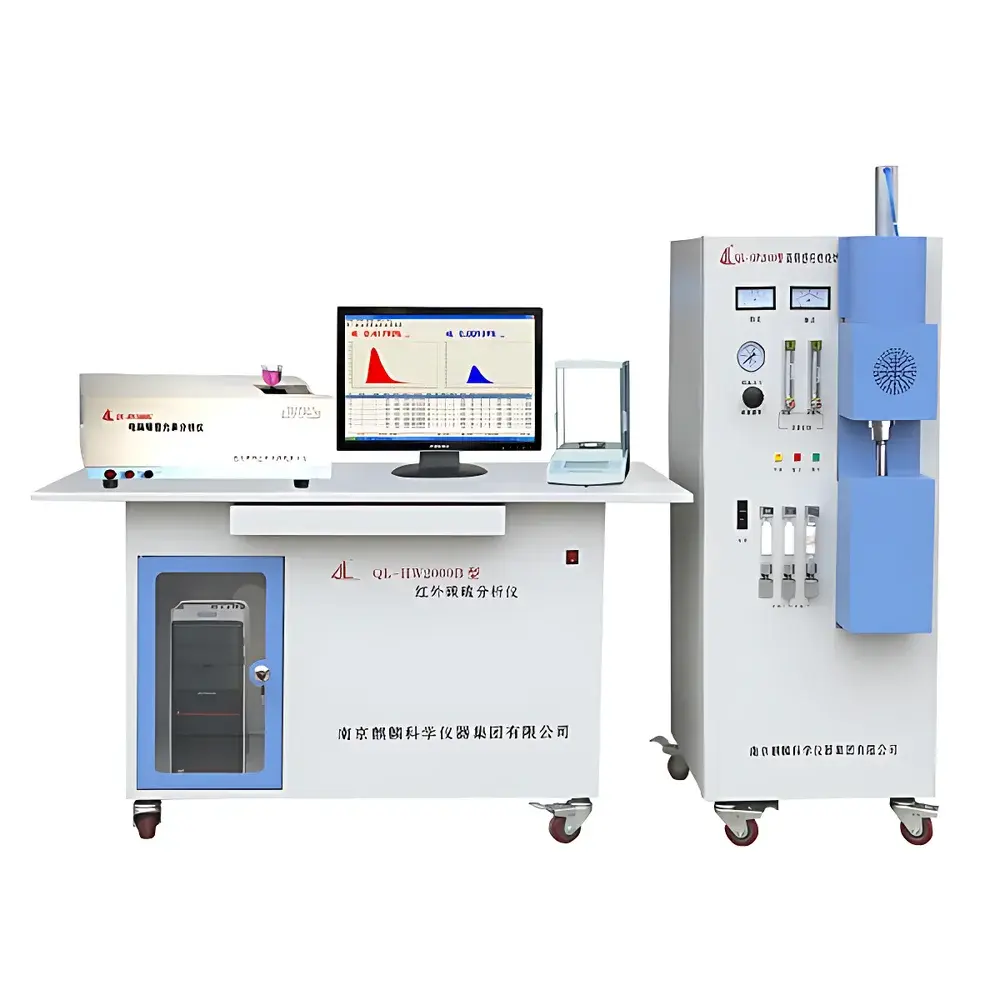
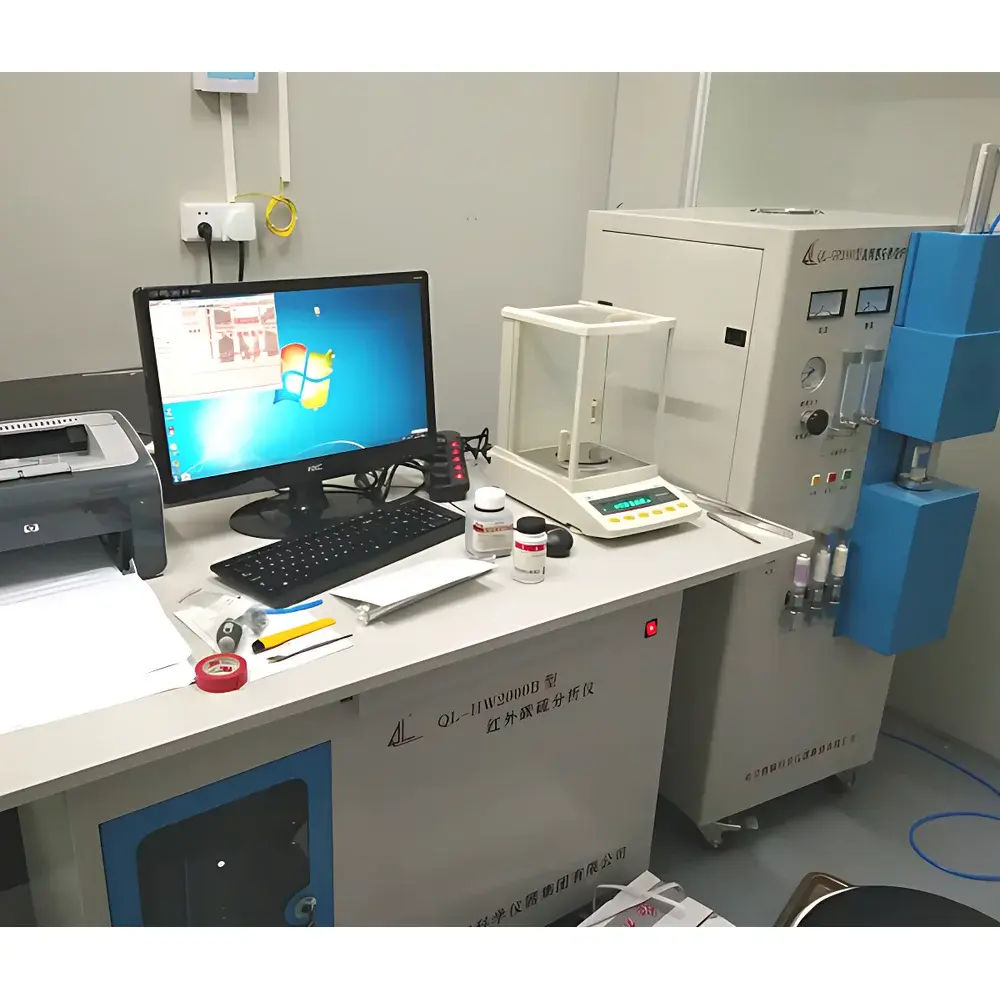
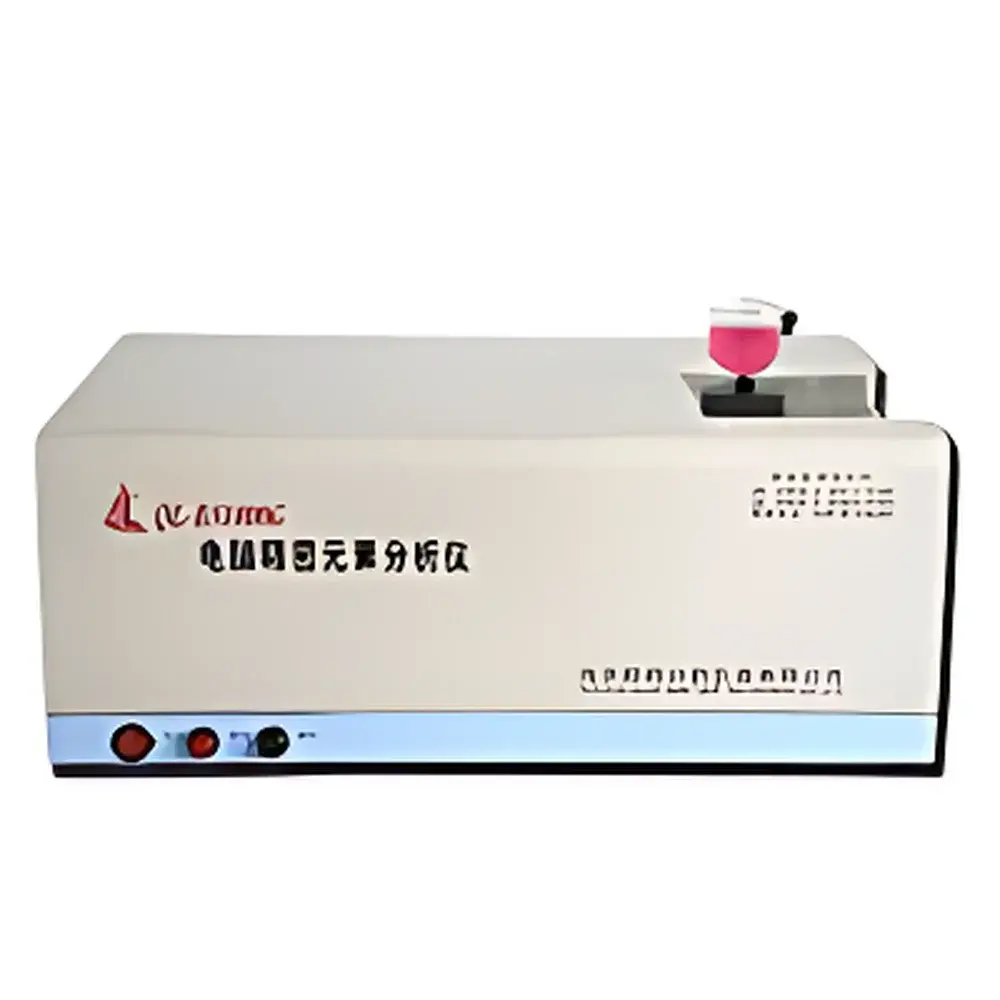
Qilin QL-HW2000BA High-Frequency Infrared Carbon-Sulfur Analyzer
| Origin | Jiangsu, China |
|---|---|
| Manufacturer Type | Authorized Distributor |
| Origin Category | Domestic (China) |
| Model | QL-HW2000BA |
| Price | USD 13,800 (FOB Jiangsu) |
| Measurement Principle | Non-Dispersive Infrared (NDIR) Absorption |
| Heating System | 2.5 kVA High-Frequency Induction Furnace (18–20 MHz) |
| Carbon Range | 0.0001–99.999 wt% |
| Sulfur Range | 0.0001–99.999 wt% |
| Sensitivity | 0.1 ppm (reading-based) |
| Precision | Carbon RSD ≤ 0.5%, Sulfur RSD ≤ 1.0% |
| Analysis Time | 25–60 s (user-adjustable |
| Compliance | GB/T 20123–2006, ISO 15350:2000 |
| Balance Integration | 0–120 g, readability 0.1 mg |
Overview
The Qilin QL-HW2000BA High-Frequency Infrared Carbon-Sulfur Analyzer is a dual-channel, combustion-based elemental analyzer engineered for precise quantification of total carbon (C) and total sulfur (S) in solid metallic and non-metallic materials. It operates on the fundamental principle of non-dispersive infrared (NDIR) absorption spectroscopy: sample combustion in a high-frequency induction furnace generates CO₂ and SO₂ gases, which are swept through temperature- and pressure-stabilized optical cells. These gases absorb infrared radiation at characteristic wavelengths—4.26 µm for CO₂ and 7.4 µm for SO₂—detected by high-stability pyroelectric sensors. The instrument’s dual-C infrared detection cell architecture enables automatic range switching between ultra-trace (ppm-level) and high-concentration (up to 99.999%) measurements without manual recalibration. Designed for metallurgical laboratories, foundry QC departments, and raw material certification facilities, the QL-HW2000BA delivers trace-to-bulk C/S analysis with metrological integrity aligned with ISO 15350:2000 and GB/T 20123–2006 requirements.
Key Features
- Dual-CPU control architecture with real-time signal acquisition at 4 Hz sampling rate, minimizing baseline drift during extended operation.
- High-stability platinum-coated infrared source operating at 800 °C, coupled with aerospace-grade synchronous modulation motor (rated for >100,000 h MTBF) ensuring long-term spectral stability.
- Gold-plated gas detection cells with minimized surface adsorption and optimized path length for enhanced signal-to-noise ratio across full dynamic range.
- Narrow-band interference filters (FWHM < 10 nm) selectively isolate CO₂ and SO₂ absorption bands, eliminating cross-sensitivity—especially critical for high-carbon steels where CO₂ saturation could otherwise distort sulfur quantification.
- Integrated high-frequency furnace (2.5 kVA, 18–20 MHz) with RF-controlled thermal ramping, delivering reproducible combustion efficiency across heterogeneous samples including carbides, rare-earth alloys, and organic matrices.
- Modular pneumatic design featuring industrial-grade solenoid valves (tested for >10⁵ cycles), mass-flow controllers with temperature/pressure compensation, and sealed optical pathways resistant to ambient humidity and dust ingress.
Sample Compatibility & Compliance
The QL-HW2000BA accommodates a broad spectrum of solid samples—including ferrous alloys (carbon steel, stainless steel, cast iron, ductile iron), non-ferrous metals (Cu, Al, Zn, Ti), refractory compounds (SiC, WC), geological materials (ores, cokes, limestone), and organics (polymers, catalysts, coal). Sample mass ranges from 0.1 to 1.0 g (automatically weighed via integrated 0.1 mg precision balance), with optional ceramic or graphite crucibles for aggressive matrices. All analytical protocols adhere to ISO 15350:2000 (steel and iron) and GB/T 20123–2006 (general solid materials), supporting audit-ready documentation for GLP and GMP environments. Optional calibration verification using certified reference materials (CRMs) from NIST, BCS, or IRMM ensures traceability to SI units.
Software & Data Management
Control and data processing are managed via embedded firmware and PC-based Qilin Analytical Suite v4.x—a Windows-native application supporting multi-user role permissions, electronic signatures, and full 21 CFR Part 11 compliance (audit trail, data integrity lock, user authentication). Raw detector signals undergo real-time linearization, background subtraction, and stoichiometric conversion (C → CO₂, S → SO₂) using user-defined calibration curves. Results are exported in CSV, XML, or LIMS-compatible ASTM E1382 format. The system logs every analysis event—including furnace parameters, gas flow rates, detector voltages, and operator ID—with timestamped digital signatures for regulatory review.
Applications
This analyzer serves as a primary C/S verification tool in quality control labs for incoming raw material inspection (e.g., scrap metal grading, alloy feedstock validation), in-process monitoring (e.g., ladle analysis pre-casting), and final product certification (e.g., ASTM A29, EN 10027 grade compliance). Its extended dynamic range supports specialized applications such as low-carbon interstitial-free (IF) steels (0.3% S), and rare-earth permanent magnets where residual S critically affects coercivity. It is also deployed in cement chemistry labs (for SO₃ quantification), environmental testing (coal ash sulfur content), and catalyst R&D (carbon deposition kinetics).
FAQ
What sample types require special preparation prior to analysis?
Non-conductive or high-volatility samples (e.g., polymers, sulfides) must be mixed with tungsten or tin accelerator powder and pressed into pellets to ensure complete, flash-type combustion. Graphite crucibles are recommended for high-sulfur matrices to prevent SO₂ adsorption.
How does the instrument handle matrix effects from high-chromium or high-nickel alloys?
The high-frequency furnace’s rapid heating profile (>1500 °C in <2 s) and oxygen-rich combustion atmosphere minimize oxide formation and promote quantitative liberation of C and S as gaseous oxides—even in refractory Ni-Cr superalloys.
Is external calibration gas required for daily operation?
No. Calibration is performed using solid CRMs; zero-gas correction uses purified O₂ carrier gas. Optional built-in span-check with certified CO₂/SO₂ permeation tubes enables automated drift verification without interrupting routine analysis.
Can the system be integrated into an existing LIMS or MES platform?
Yes. Native OPC UA and ASTM E1382 interfaces support bidirectional data exchange with major laboratory informatics systems, including Thermo Fisher SampleManager, LabVantage, and Siemens Opcenter.
What maintenance intervals are recommended for optimal performance?
Daily: desiccant replacement, filter cleaning. Quarterly: furnace liner inspection, detector window cleaning. Annually: full optical alignment verification and flow sensor recalibration—documented in the included service logbook compliant with ISO/IEC 17025 requirements.




