
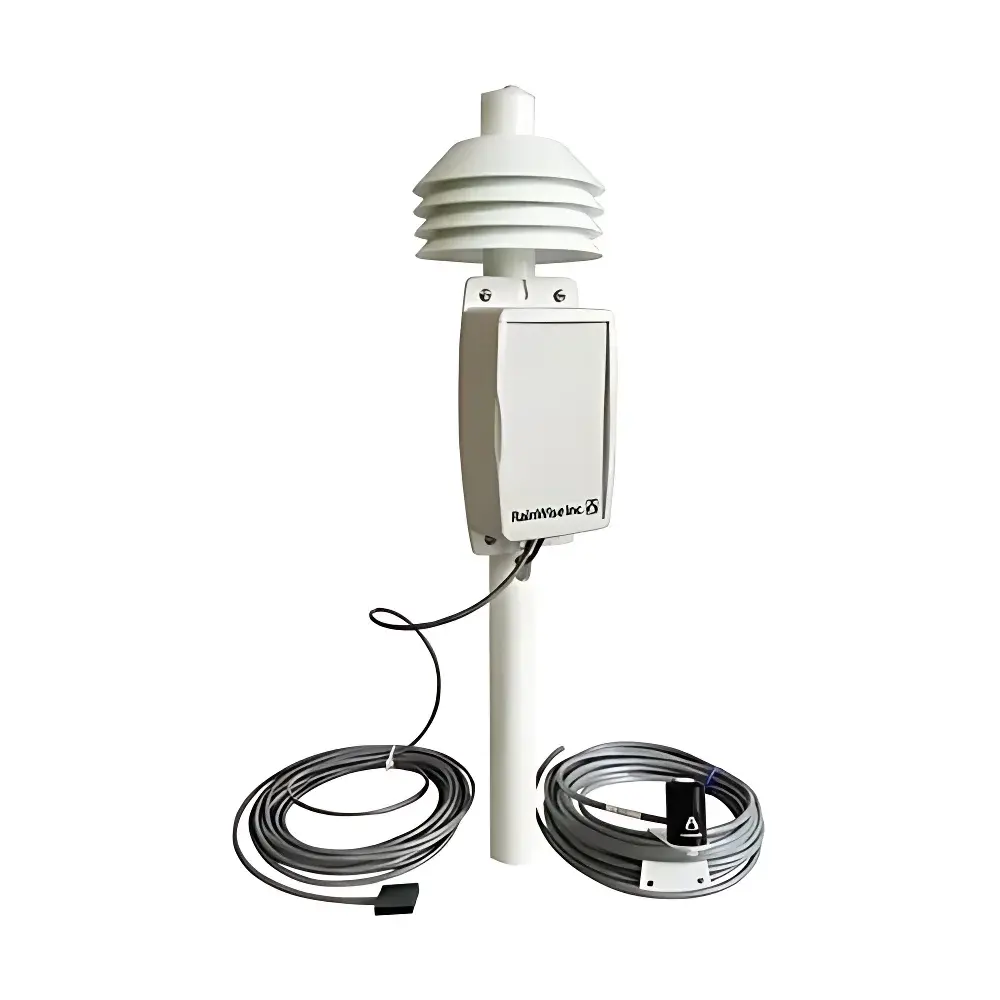
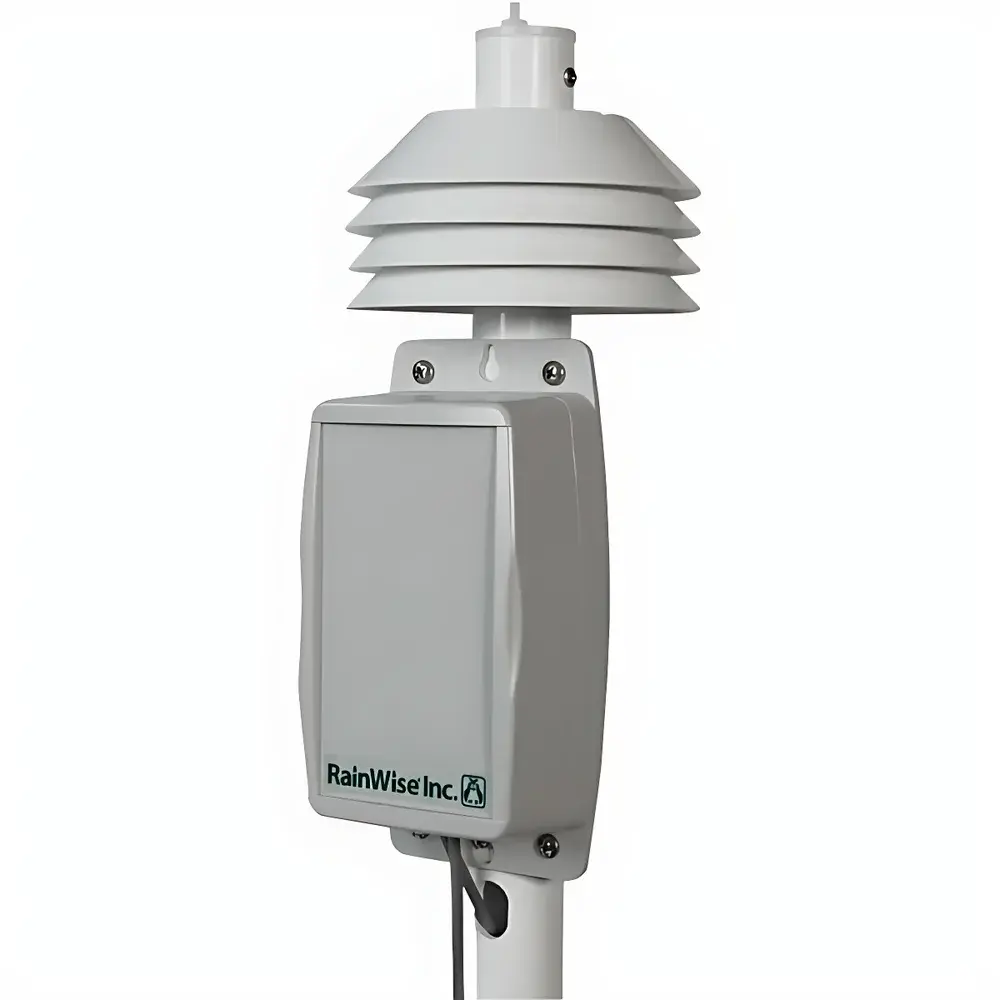
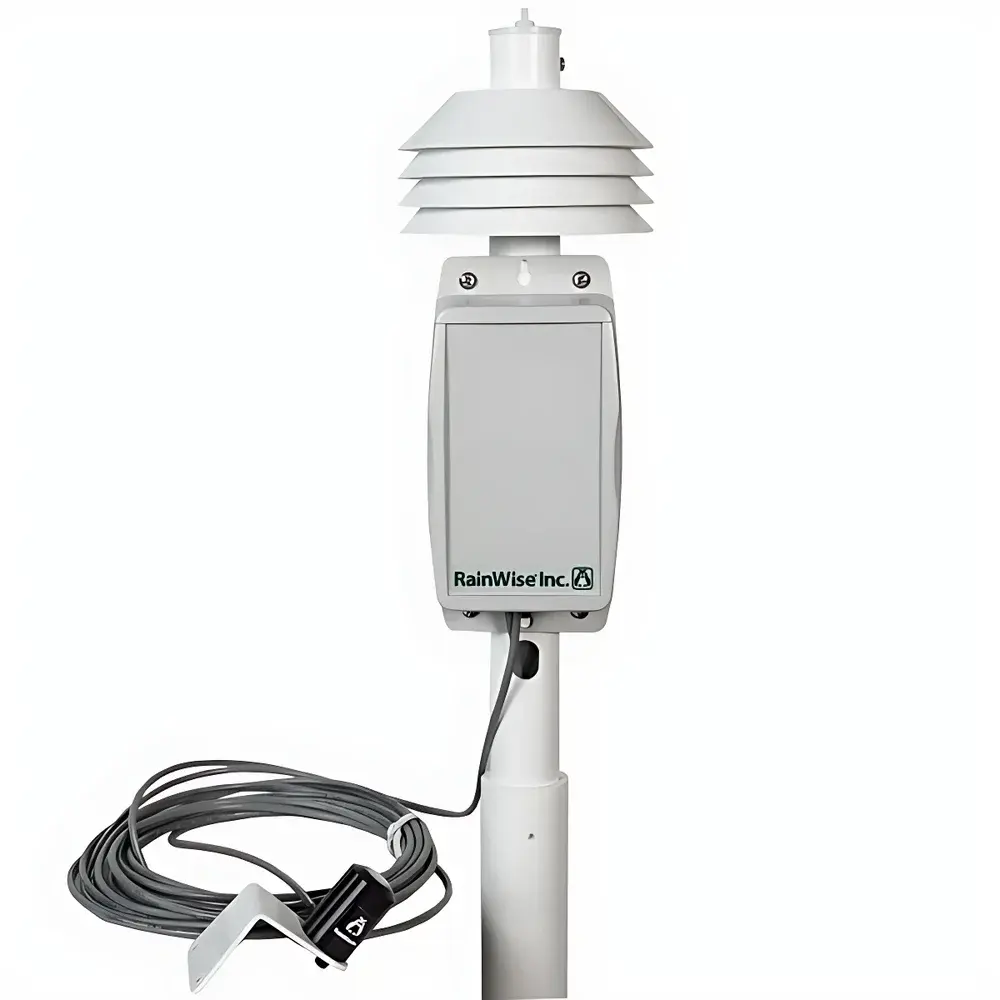
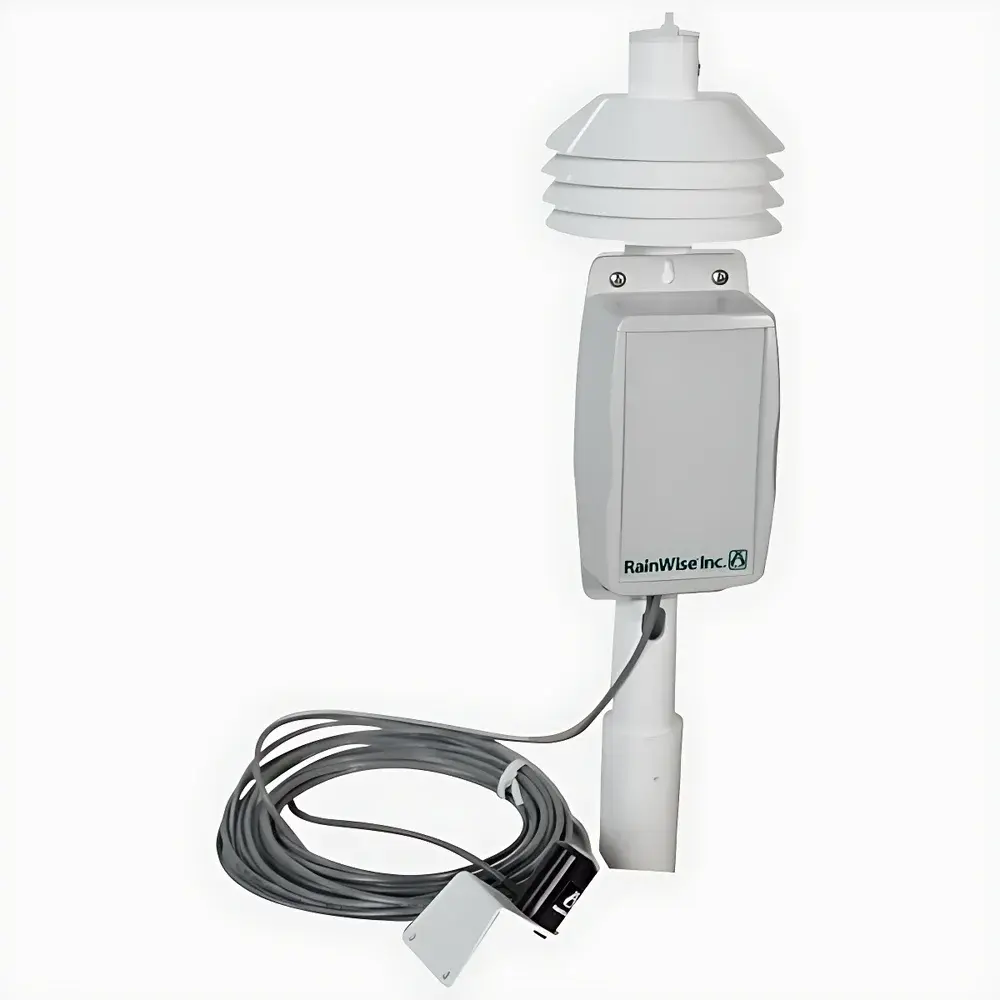
RainWise PVmet75 Photovoltaic Weather Station
| Brand | RainWise |
|---|---|
| Origin | USA |
| Model | PVmet75 |
| Instrument Type | PV-Specific Meteorological Monitoring System |
| Communication Interface | RS-485 Modbus RTU (standard), optional Modbus TCP via Ethernet |
| Solar Irradiance Range | 0–1750 W/m², Accuracy: ±5%, Resolution: 1 W/m² |
| Cosine Response Error | ±1% at 45°, ±5% at 75° |
| Air Temperature Range | −40 to +80 °C, Accuracy: ±0.3 °C, Resolution: 0.1 °C, Thermal Time Constant: 30 s |
| Backsheet Temperature Range | −40 to +80 °C, Accuracy: ±0.3 °C, Resolution: 0.1 °C, Thermal Time Constant: 270 s |
| Operating Ambient | −40 to +60 °C, 0–100% RH |
| Power Supply | 10–30 VDC, 50 mA |
| Cable Length | 7.62 m |
| Enclosure Materials | PVC, ABS, Anodized Aluminum, Stainless Steel, LEXAN®, Makrolon® 2658 |
| Dimensions (L×W×H) | 58.42 × 25.4 × 20.32 cm |
| Weight | 2.26 kg |
Overview
The RainWise PVmet75 Photovoltaic Weather Station is an engineered solution for performance monitoring and energy yield validation in utility-scale and commercial photovoltaic (PV) power plants. Designed specifically for the solar energy industry, it delivers synchronized, traceable measurements of key environmental parameters that directly influence PV module output—namely global horizontal irradiance (GHI), ambient air temperature, and PV backsheet temperature. Unlike generic meteorological stations, the PVmet75 integrates sensor physics, thermal response characteristics, and communication protocols aligned with IEC 61724-1 (Photovoltaic system performance monitoring—Guidelines for measurement, data exchange and analysis) and SunSpec Modbus register mapping standards. Its compact, modular architecture supports rapid deployment on mounting structures or ground-based poles, minimizing installation time and structural load requirements while maintaining long-term field stability under harsh outdoor conditions.
Key Features
- Integrated pyranometer with thermopile detector calibrated to ISO 9060:2018 Class C specifications; optimized cosine response for low-angle irradiance capture typical during morning/evening hours in high-latitude installations.
- Dual-channel temperature sensing: precision NTC thermistors for ambient air (ventilated radiation shield) and PV backsheet (adhesive-mount or clamp-on configuration); both sensors meet ASTM E1137/E1137M accuracy requirements for temperature measurement in energy applications.
- RS-485/422 half-duplex interface compliant with Modbus RTU protocol (default 9600 baud, 8N1), enabling seamless integration into SCADA, DAS, and inverters supporting SunSpec-compliant registers.
- Optional Modbus TCP over Ethernet allows direct connection to industrial Ethernet networks without external gateways—ideal for centralized data aggregation in large PV farms.
- RoHS-compliant, lead-free construction using UV-stabilized LEXAN® and Makrolon® polycarbonate housings, anodized aluminum brackets, and stainless-steel fasteners—engineered for >15-year service life in coastal, desert, and agrivoltaic environments.
- Configurable backsheet temperature input: standard single-sensor configuration; up to two independent backsheet probes supported via firmware update and terminal block expansion.
Sample Compatibility & Compliance
The PVmet75 is validated for continuous operation across climatic extremes—from −40 °C Arctic winters to +60 °C desert daytime ambient conditions—with full functional integrity at 100% relative humidity. All sensors are factory-calibrated against NIST-traceable reference standards, and calibration certificates are available upon request. The station complies with IEC 61724-1 Level 1 monitoring requirements for Class B (commercial) and Class C (utility) PV systems. Electrical safety conforms to UL 61010-1 and IEC 61000-6-2/-6-4 (EMC immunity and emissions). Data integrity aligns with GLP principles through deterministic timestamping, non-volatile memory storage of raw sensor values, and support for audit-ready logging when interfaced with compliant SCADA platforms.
Software & Data Management
The PVmet75 operates as a passive Modbus slave device, requiring no embedded software updates or local configuration tools. All register mapping follows SunSpec Implementation Guideline 203.0, ensuring interoperability with major PV monitoring platforms including SolarLog, Fronius Solar.web, SMA Speedwire, and Schneider Electric EcoStruxure. When integrated into systems supporting IEC 62443-3-3 security profiles, the device enables secure, authenticated data exchange. Optional Ethernet variants support DHCP, static IP assignment, and SNMPv3 traps for network-level health monitoring. Raw sensor outputs (e.g., irradiance in W/m², temperature in °C) are transmitted at user-configurable intervals (1–300 seconds), enabling granular correlation with inverter DC string data for performance ratio (PR) and degradation rate analysis per IEC 61724-3.
Applications
- Performance Ratio (PR) calculation and long-term degradation trending in accordance with IEC 61724-2.
- Energy yield modeling validation and bankability reporting for project financing and PPA compliance.
- Soiling loss quantification via comparison of measured GHI with clear-sky model predictions (e.g., REST2, McClear).
- Thermal derating analysis using backsheet temperature to correct STC-based power estimates.
- Grid-code compliance monitoring for reactive power control schemes requiring real-time irradiance and temperature inputs.
- Research-grade environmental correlation studies in university and national lab PV testbeds.
FAQ
Does the PVmet75 include a built-in data logger?
No—the PVmet75 is a sensor node only and requires connection to an external data acquisition system (e.g., PLC, SCADA RTU, or dedicated PV monitoring gateway) for data storage and visualization.
Can the backsheet temperature sensor be installed on bifacial modules?
Yes—both adhesive and mechanical clamp options are compatible with monofacial and bifacial glass-glass or glass-backsheet configurations; thermal mass considerations are accounted for in the 270-second time constant specification.
Is NIST-traceable calibration documentation provided with shipment?
A factory calibration report is included; NIST-traceable certificates with uncertainty budgets are available as a value-added service upon order placement.
What is the maximum recommended cable run length for RS-485 communication?
For reliable operation at 9600 baud, the maximum daisy-chained distance is 1200 meters using shielded twisted-pair cable (AWG 22–24) with proper termination at the last node.
How does the PVmet75 handle soiling-induced signal drift over time?
The pyranometer features a self-cleaning hydrophobic coating and is designed for quarterly manual cleaning per IEC 61724-1 maintenance guidelines; long-term drift is characterized at <0.5% per year under controlled soiling conditions.
Related Products







