
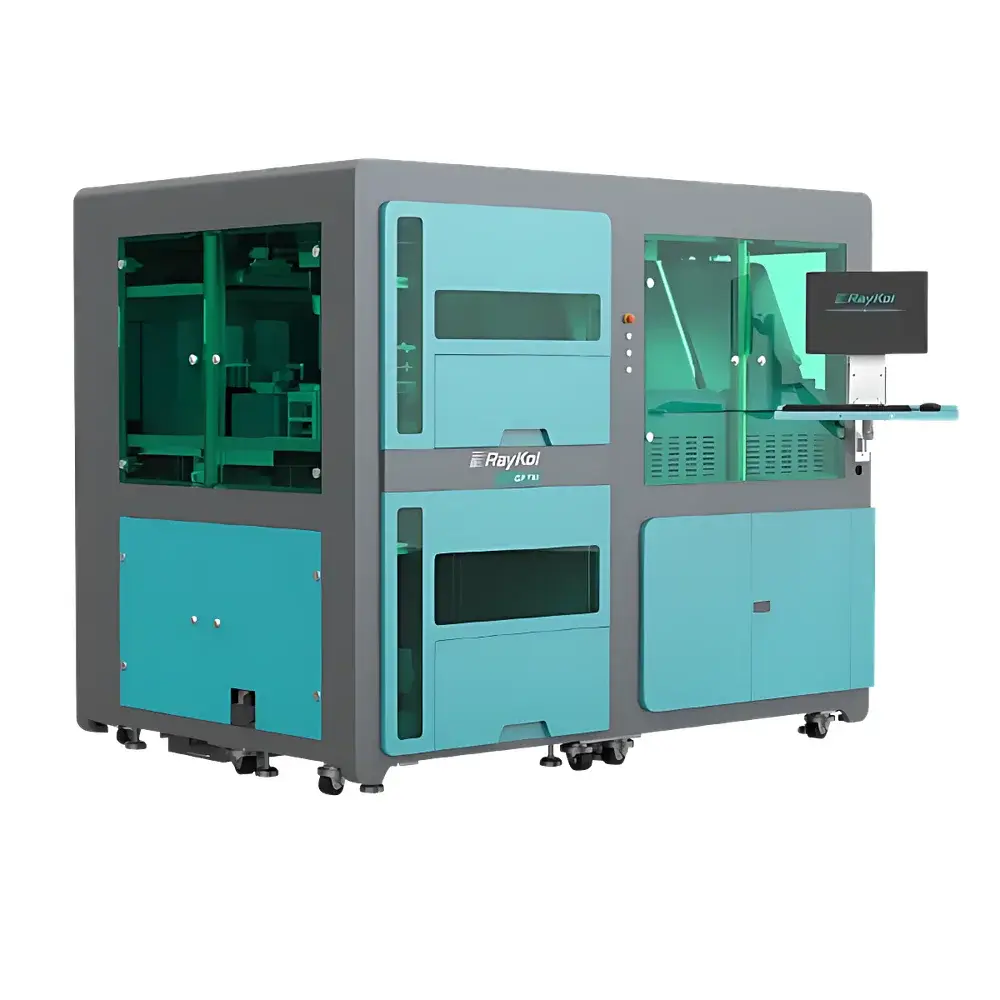
Raykol ISP700 Multifunctional Automated Sample Preparation Workstation
| Brand | Raykol |
|---|---|
| Origin | Fujian, China |
| Manufacturer Type | Original Equipment Manufacturer (OEM) |
| Country of Origin | China |
| Model | ISP700 |
| Pricing | Available Upon Request |
Overview
The Raykol ISP700 Multifunctional Automated Sample Preparation Workstation is an integrated, modular platform engineered for high-throughput, reproducible sample preparation in analytical laboratories. Designed around core principles of liquid handling automation, solid-phase extraction (SPE), dispersive SPE (QuEChERS), and direct solvent-based extraction, the ISP700 reduces manual intervention while maintaining strict adherence to validated analytical workflows. As sample preparation accounts for over 61% of total chromatographic analysis time and contributes up to 30% of measurement uncertainty—largely due to operator variability and exposure to hazardous solvents—the ISP700 addresses these critical bottlenecks through deterministic robotic motion control, gravimetric and volumetric dispensing precision, and closed-system operation. Its architecture supports method transfer across regulatory environments, including those requiring trace-level residue quantification in complex matrices such as food, herbal medicine, soil, and pharmaceutical raw materials.
Key Features
- Fully unattended 24/7 operation with intelligent scheduling and error-recovery protocols
- Modular design supporting >30 interchangeable functional units—including dual-channel SPE manifolds, QuEChERS vortex/shaker modules, centrifuge integration, evaporation stations, and autosampler-compatible fraction collection
- Integrated gravimetric feedback loop for solvent addition and extract volume verification, minimizing pipetting drift
- Chemical-resistant fluidic pathways compatible with acetonitrile, methanol, ethyl acetate, hexane, and other common organic solvents used in residue analysis
- Onboard barcode scanning and RFID-enabled consumable tracking for full chain-of-custody documentation
- IP54-rated enclosure with optional fume extraction interface for safe operation in standard laboratory environments
Sample Compatibility & Compliance
The ISP700 accommodates diverse sample types—including homogenized food tissues, ground herbal powders, soil slurries, milk extracts, and pharmaceutical excipients—across volumes from 0.5 mL to 50 mL per run. It supports matrix-matched calibration, internal standard addition, and parallel processing of up to 96 samples per batch. The system complies with key regulatory frameworks governing residue analysis: methods referenced in GB 23200.113–2018 (GC-MS/MS for 208 pesticides), GB 23200.121–2021 (LC-MS/MS for 331 pesticides), GB/T 22338–2008 (chloramphenicol in animal-derived foods), and Chinese Pharmacopoeia 2020 Edition General Chapter 2341 (prohibited pesticide multiresidue analysis in botanicals) and 2351 (mycotoxin determination). Instrument control logs, audit trails, and electronic signatures align with GLP and GMP requirements; optional 21 CFR Part 11-compliant software packages are available for regulated QA/QC environments.
Software & Data Management
The workstation operates via Raykol’s proprietary SmartPrep™ Control Suite—a Windows-based application enabling drag-and-drop method building, real-time status monitoring, and event-driven alerting (e.g., low reagent level, module timeout, or pressure fault). All method parameters—including flow rates, dwell times, centrifugation speeds, and temperature setpoints—are version-controlled and exportable in XML format for cross-laboratory validation. Raw log files record timestamps, actuator positions, sensor readings, and user actions with SHA-256 hashing for integrity verification. Data outputs integrate seamlessly with LIMS platforms via ASTM E1384-compliant HL7 or CSV interfaces. Audit trail retention exceeds 18 months by default, configurable per institutional data governance policy.
Applications
- Automated multi-residue analysis of veterinary drugs (e.g., fluoroquinolones, tetracyclines, sulfonamides) in meat, eggs, and dairy products
- High-sensitivity screening of illegal food additives (e.g., melamine, Sudan dyes, rhodamine B) using LC-MS/MS-ready extracts
- Comprehensive pesticide residue profiling in fruits, vegetables, tea, and traditional Chinese medicinal herbs
- Antibiotic quantification in environmental soil samples following EPA Method 1694 adaptations
- Mycoestrogen and aflatoxin extraction from cereal grains and nut products per AOAC Official Method 2005.08 and ISO 17025-accredited protocols
FAQ
Does the ISP700 support method validation per ISO/IEC 17025?
Yes—its programmable repeatability, documented calibration procedures, and full traceability of consumables and instrument parameters meet ISO/IEC 17025 clause 5.5.2 requirements for automated equipment.
Can existing lab personnel operate the system without specialized programming training?
The SmartPrep™ interface uses intuitive workflow templates aligned with common SOPs (e.g., QuEChERS EN 15662); basic operation requires under two hours of supervised orientation.
Is third-party instrument integration supported?
Yes—via RS232, TCP/IP, and LabVIEW-compatible drivers, the ISP700 can trigger autosamplers, GC/LC systems, and balance readouts using industry-standard handshake protocols.
What maintenance intervals are recommended?
Daily visual inspection of fluid paths and waste lines; quarterly recalibration of dispensing modules; annual preventive maintenance including pump valve replacement and optical sensor cleaning—documented in the included service logbook.
How is solvent exposure risk mitigated during operation?
All solvent-handling modules operate within sealed chambers; optional connection to central fume hoods or standalone activated carbon filtration units meets OSHA PEL and EU Directive 2004/37/EC occupational exposure limits.



