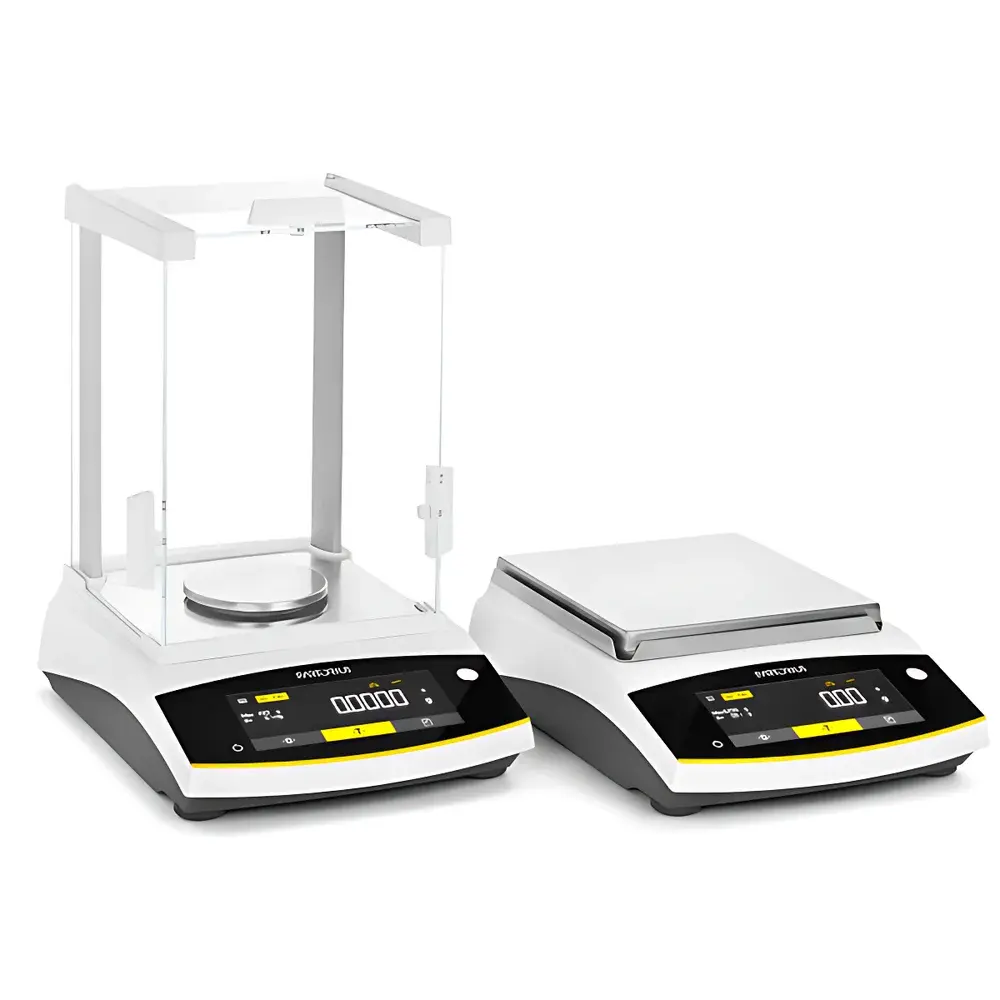
Sartorius Entris® II BCE2202-1CCN Precision Balance
| Brand | Sartorius |
|---|---|
| Origin | Shanghai, China |
| Model | BCE2202-1CCN |
| Type | Precision Balance |
| Maximum Capacity | 2200 g |
| Readability | 10 mg |
| Repeatability | ≤ ±10 mg |
| Calibration | External |
| Pan Size | Rectangular |
| Connectivity | USB-C + RS232 (9-pin) |
| Compliance | GLP/GMP-compliant data output |
| Operating Languages | 8 (English, German, French, Italian, Spanish, Portuguese, Russian, Polish) |
| Environmental Protection | PBT housing, stainless steel & coated glass draft shield |
| Features | @start self-test, isoCAL auto-adjustment (time- and temperature-triggered), anti-static design, overload protection, large weighing chamber with removable sliding doors |
Overview
The Sartorius Entris® II BCE2202-1CCN is a high-reliability precision balance engineered for routine laboratory weighing tasks requiring consistent accuracy, robustness, and regulatory compliance. Designed in Germany and manufactured in Shanghai under Sartorius’ globally harmonized quality system, this 2200 g capacity balance delivers 10 mg readability — meeting the technical definition of a Class II precision balance per OIML R 76 and ISO 9001–certified production standards. Its core measurement architecture integrates Sartorius’ proprietary monolithic load cell technology, delivering rapid stabilization (<2 seconds typical), low drift, and exceptional long-term linearity across its full range. The balance operates on electromagnetic force compensation principles optimized for static and quasi-static mass determination, making it suitable for applications where environmental stability, operator consistency, and traceable calibration are critical — including QC release testing, raw material verification, and formulation support in pharmaceutical, chemical, and food laboratories.
Key Features
- Monolithic sensor design ensures high reproducibility (≤ ±10 mg repeatability) and resistance to mechanical stress or thermal hysteresis.
- isoCAL internal adjustment system automatically triggers calibration based on predefined time intervals and ambient temperature shifts — eliminating manual recalibration errors and supporting SOP-driven workflows.
- @start self-diagnostic function performs hardware integrity checks at power-on, verifying sensor response, display functionality, and interface readiness before first use.
- Large rectangular weighing pan (approx. 180 × 180 mm) and spacious draft chamber accommodate voluminous containers, reaction vessels, or multi-component setups; side- and top-sliding doors are fully detachable for cleaning and maintenance.
- Draft shield constructed from chemically resistant, antistatic coated glass and reinforced PBT polymer — minimizing electrostatic interference and cross-contamination risk in shared lab environments.
- Overload protection up to 150% of maximum capacity safeguards sensor integrity during accidental overloading.
- USB-C and legacy 9-pin RS232 interfaces ensure seamless integration with LIMS, ELN, or statistical process control software while maintaining backward compatibility with existing lab infrastructure.
Sample Compatibility & Compliance
The BCE2202-1CCN supports a broad range of sample types — from powders and granules to liquids in beakers or flasks — thanks to its wide pan geometry and stable draft enclosure. Its construction materials (stainless steel pan, PBT housing, coated glass) comply with ISO 8549-1 for balance durability and USP requirements for pharmaceutical weighing equipment. Data output adheres to GLP and GMP documentation standards: timestamps, operator ID (via password-protected access), balance ID, net/gross/tare values, and calibration status are embedded in each exported record. All internal adjustments and calibration events are logged with audit-trail capability — fully compatible with FDA 21 CFR Part 11–aligned systems when paired with validated software.
Software & Data Management
Twelve built-in application modes — including parts counting, percentage weighing, density determination (with optional kit), animal weighing, statistics (mean, SD, CV%), peak hold, checkweighing, and unit conversion — eliminate the need for external calculation tools. Data export is configurable via time-based intervals (e.g., every 5 s) or event-triggered (e.g., after stable reading confirmation). Output formats include ASCII text compliant with ASTM E1489 and ISO/IEC 17025 reporting templates. The intuitive LED touchscreen interface supports eight languages and enforces role-based access control through user-defined passwords — ensuring configuration integrity and preventing unauthorized parameter changes.
Applications
This balance serves as a foundational instrument in regulated and non-regulated settings: raw material receipt inspection per ISO 10012; batch record documentation in API manufacturing; excipient dispensing in solid-dose development; educational lab instruction in analytical chemistry; and quality control sampling in food safety labs. Its 2200 g capacity and 10 mg resolution make it especially suited for intermediate-scale formulation, packaging validation, and stability study sample preparation where both mass magnitude and metrological confidence are essential.
FAQ
What does “10 mg readability” mean in practical terms?
It indicates the smallest mass increment the balance can reliably resolve and display — corresponding to 0.01 g or 1/100th of a gram, consistent with “percent-of-gram” classification in industrial terminology.
Is isoCAL the same as automatic internal calibration?
No — isoCAL is Sartorius’ proprietary auto-adjustment protocol that corrects for drift using internal reference masses and environmental feedback; it does not replace external calibration with traceable weights, which remains mandatory for ISO/IEC 17025 accreditation.
Can this balance be connected to a networked LIMS?
Yes — via RS232 or USB-C, using standard ASCII protocols; integration requires configuration of baud rate, parity, and termination characters per your LIMS vendor’s specifications.
Does the balance meet NIST-traceable calibration requirements?
The device itself is not NIST-traceable, but its performance can be verified and documented using NIST-traceable weights; Sartorius provides calibration certificates upon request for qualified service partners.
What maintenance is required to sustain metrological performance?
Daily cleaning of the pan and draft shield with isopropyl alcohol; quarterly verification using certified test weights; annual preventive maintenance by an authorized Sartorius service technician is recommended for GLP/GMP environments.