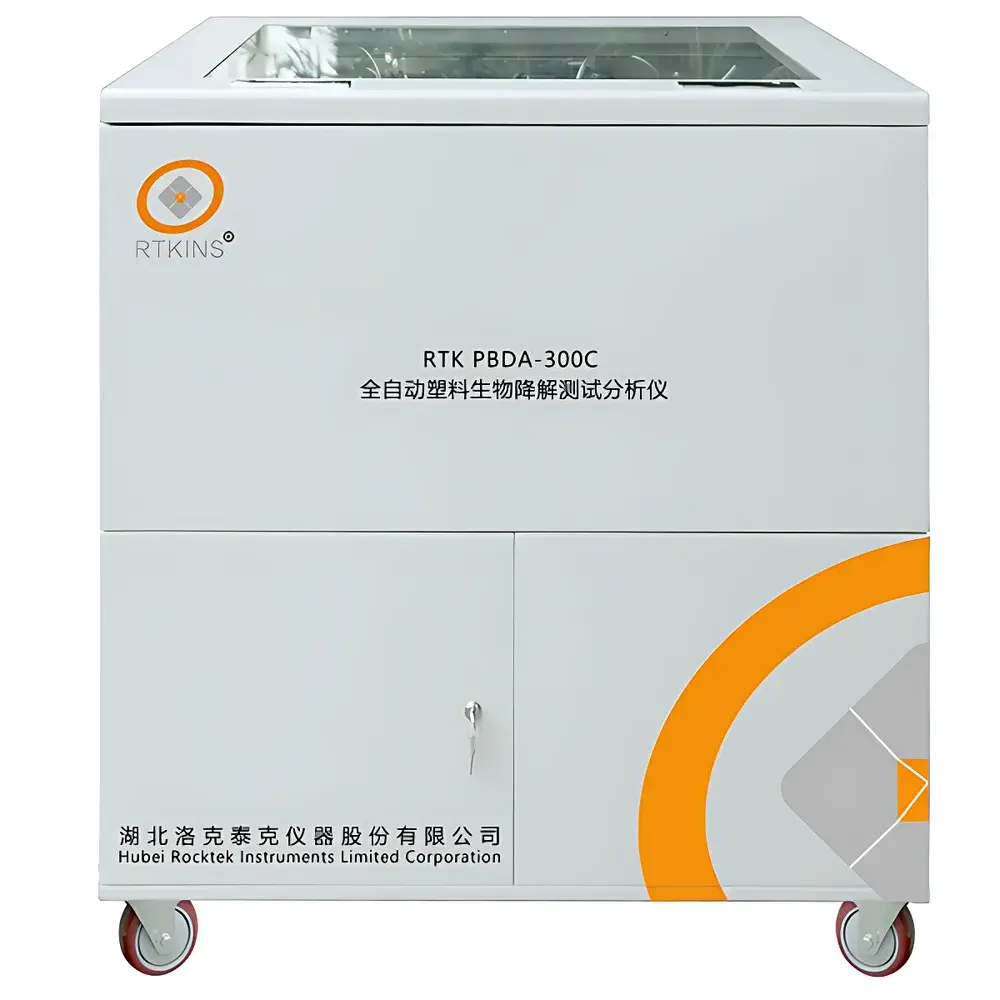
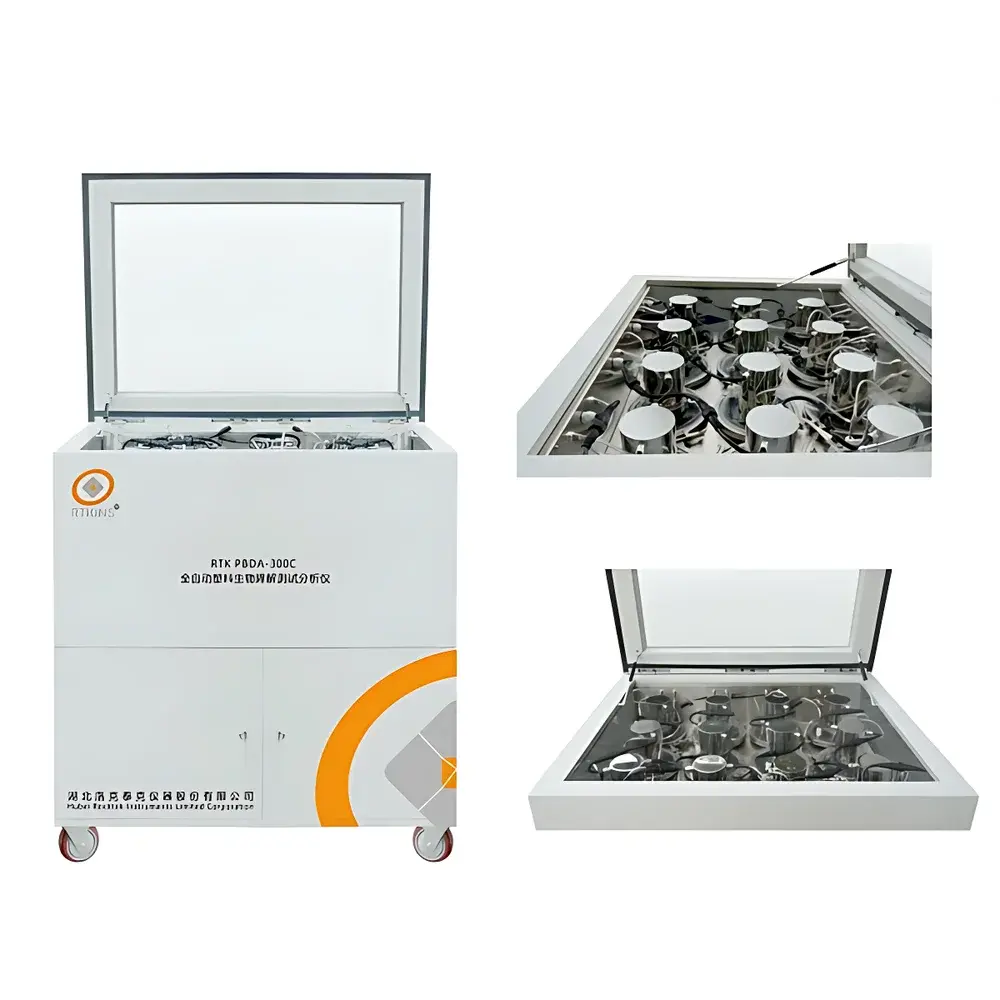
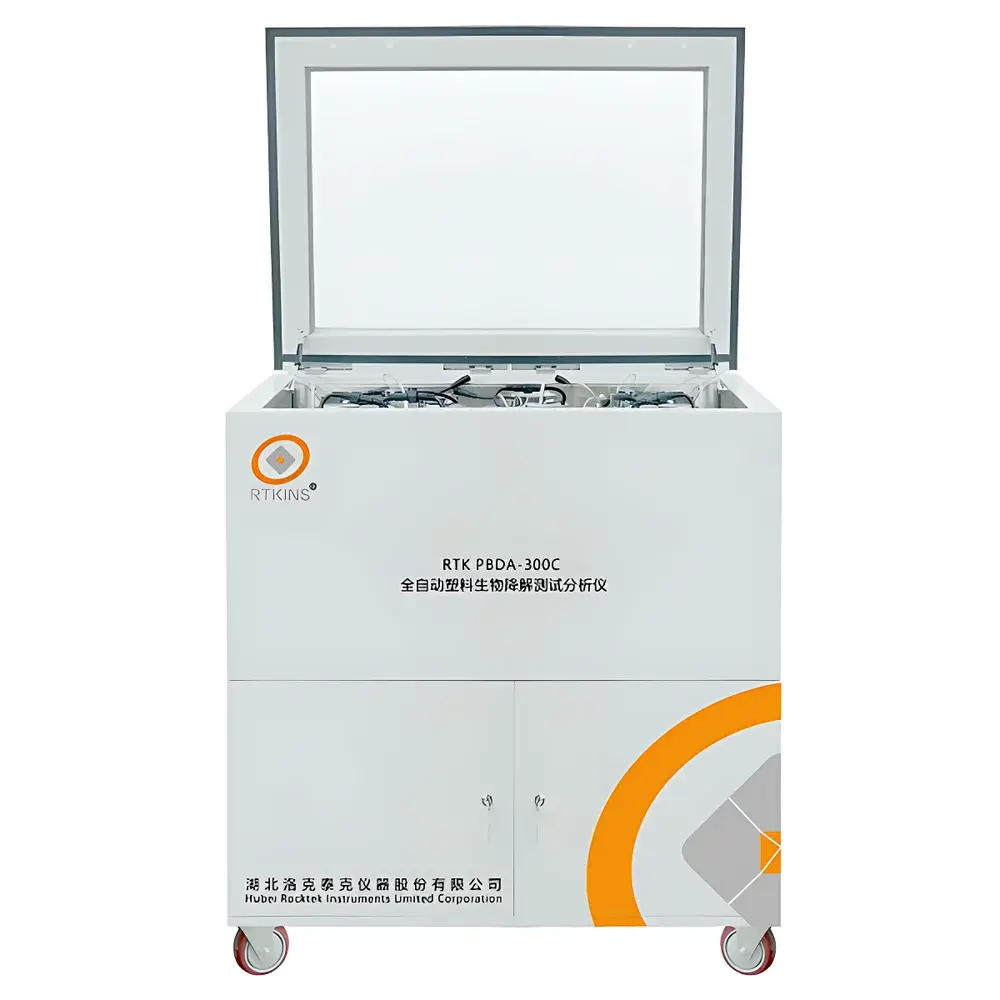
Rocktek RTK PBDA-300C Automated Plastic Biodegradation Testing System
| Brand | Rocktek |
|---|---|
| Model | RTK PBDA-300C |
| Origin | Hubei, China |
| Control Channels | 12 or 24 (expandable in increments of 12) |
| Temperature Range | Ambient +5 °C to 70 °C |
| Temp. Stability | ±2 °C |
| CO₂ Detection | 0–10,000 ppm (NDIR) |
| Accuracy | ±100 ppm (0–2000 ppm), ±500 ppm (>2000 ppm) |
| O₂ Detection | 0–25% vol (electrochemical) |
| Resolution | 0.1% vol |
| Mass Flow Controllers | 13 units |
| Range | 0–200 mL/min |
| Accuracy | ±0.3% FS (≤30% FS), ±1.0% FS (>30% FS) |
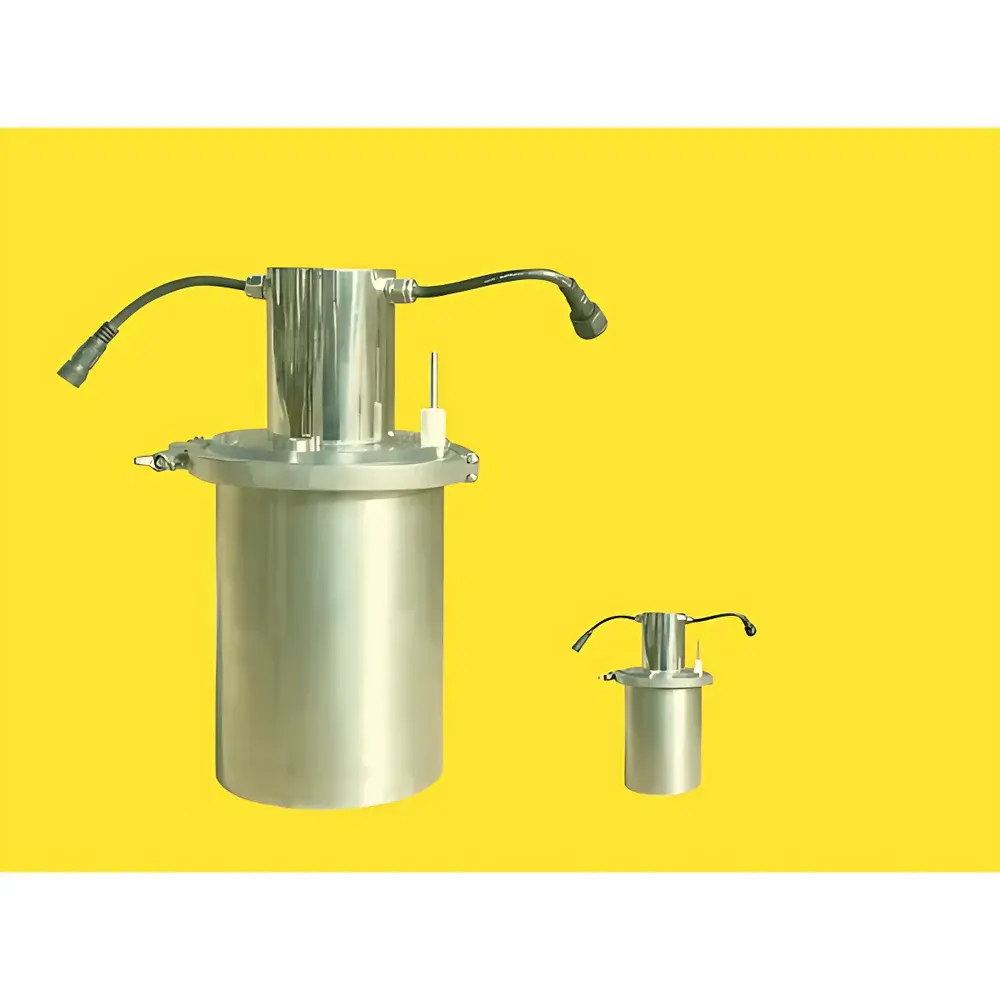
| Vessel Capacity | >3 L per stainless-steel reactor |
| Dimensions (12-channel) | 960 × 790 × 1050 mm |
| Dimensions (24-channel) | 960 × 1580 × 1050 mm |
| Compliance | EN 13432, ISO 14855-1, GB/T 19277.1 |
Overview
The Rocktek RTK PBDA-300C Automated Plastic Biodegradation Testing System is an engineered platform for quantitative assessment of aerobic biodegradation performance of plastic materials and products under standardized industrial composting conditions. It operates on the principle of controlled aerobic respirometry: test specimens are homogenously mixed with mature industrial compost inoculum and placed into sealed, temperature-regulated stainless-steel reactors. Under precisely maintained environmental parameters—temperature, moisture, oxygen partial pressure, and forced aeration—the microbial community mineralizes organic carbon into CO₂, which is continuously quantified via non-dispersive infrared (NDIR) detection. The system calculates biodegradation percentage as the molar ratio of experimentally evolved CO₂ to the theoretical CO₂ yield (ThCO₂) derived from the specimen’s organic carbon content, in strict accordance with ISO 14855-1, EN 13432 Annex B, and GB/T 19277.1. Designed for reproducible, long-term (up to 180-day) testing, the PBDA-300C delivers traceable, audit-ready data essential for certification, regulatory submission, and R&D validation.
Key Features
- Modular, scalable architecture supporting 12 or 24 independent reaction channels—with optional expansion to N × 12 configurations for high-throughput laboratories.
- PLC-based control system with SIL2-rated reliability, ensuring operational continuity, deterministic timing, and fail-safe shutdown protocols.
- Dual-gas monitoring: real-time NDIR-based CO₂ measurement (0–10,000 ppm) paired with electrochemical O₂ sensing (0–25% vol) for dynamic respiratory quotient (RQ) calculation and process diagnostics.
- 13 high-accuracy mass flow controllers (MFCs), each dedicated to individual reactor inlet/outlet streams, enabling precise stoichiometric air supply and exhaust balancing per vessel.
- Independent per-vessel environmental actuation: programmable stirring cycles (duration/interval), humidity dosing (via ultrasonic misting), and thermal equilibration within a fanless, low-noise insulated chamber.
- RJ45 Ethernet interface compliant with Modbus TCP/IP, enabling centralized supervision of multi-unit deployments via SCADA or LIMS integration.
- Robust mechanical design: 3-L stainless-steel reactors with PTFE-sealed lids, IP54-rated enclosure, and vibration-damped mounting for stable long-duration operation.
Sample Compatibility & Compliance
The PBDA-300C accommodates solid polymeric specimens—including films, granules, molded parts, and composite blends—up to 20 g dry weight per reactor, provided they meet particle size and surface-area specifications outlined in ISO 14855-1. Inoculum must be mature, mesophilic industrial compost meeting EN 13432 criteria (e.g., <10% volatile solids loss post-maturation, C/N ratio 10–25). All hardware, sensor calibration protocols, and software workflows are aligned with Good Laboratory Practice (GLP) documentation requirements. Data integrity conforms to FDA 21 CFR Part 11 principles through electronic signatures, immutable audit trails, and time-stamped event logging. Test reports include full metadata: ambient lab conditions, inoculum characterization, specimen preparation logs, daily CO₂ cumulative plots, and pass/fail determination against threshold criteria (≥90% biodegradation within 180 days per EN 13432).
Software & Data Management
The embedded Windows-based control software features a modular GUI with role-based access levels (operator, supervisor, administrator). It supports fully automated test sequencing—from initial equilibration and baseline stabilization to endpoint confirmation—without manual intervention. Critical functions include: automatic power-loss recovery with state-resume capability; configurable report templates compliant with ISO/IEC 17025 technical record requirements; export of raw time-series datasets (CSV, Excel) with sensor timestamps synchronized to UTC; and integrated calibration management with certificate traceability to NIST-traceable standards. Audit logs record all user actions, parameter modifications, and system events, supporting GLP/GMP audits and ISO 9001 internal reviews.
Applications
- Verification of conformity for OK Compost INDUSTRIAL, DIN-Geprüft, and TÜV Austria certifications.
- Comparative biodegradation kinetics studies across polymer chemistries (e.g., PLA, PHA, PBAT, starch blends).
- Formulation optimization in R&D labs evaluating additive effects (pro-oxidants, enzymes, fillers) on degradation onset and rate.
- Regulatory dossier preparation for EU EPR schemes, US EPA Safer Choice, and China’s GB/T 20197-compliant labeling.
- Long-term stability assessment of biodegradable packaging under accelerated composting stressors.
FAQ
What standards does the PBDA-300C directly support?
EN 13432, ISO 14855-1, and GB/T 19277.1 are natively implemented in test method templates, including required temperature ramp profiles, sampling frequencies, and pass/fail logic.
Can the system operate unattended for the full 6-month test duration?
Yes—hardware redundancy (dual power supplies, watchdog timers), automated calibration checks, and battery-backed real-time clock ensure uninterrupted operation with minimal operator oversight.
Is third-party verification of CO₂ sensor accuracy available?
Each NDIR module ships with a factory calibration certificate traceable to NIST Standard Reference Material (SRM) 1971; optional annual on-site verification using certified gas mixtures is supported.
How is data integrity ensured during multi-user networked operation?
Role-based permissions, encrypted database storage, and immutable audit trails prevent unauthorized modification; all exported reports embed digital signatures and hash-verified metadata.
What maintenance intervals are recommended for routine operation?
Quarterly MFC zero-point verification, semiannual O₂ sensor replacement, and annual NDIR optical path cleaning—documented in the included Preventive Maintenance Logbook and scheduled via software alerts.
Related Products