
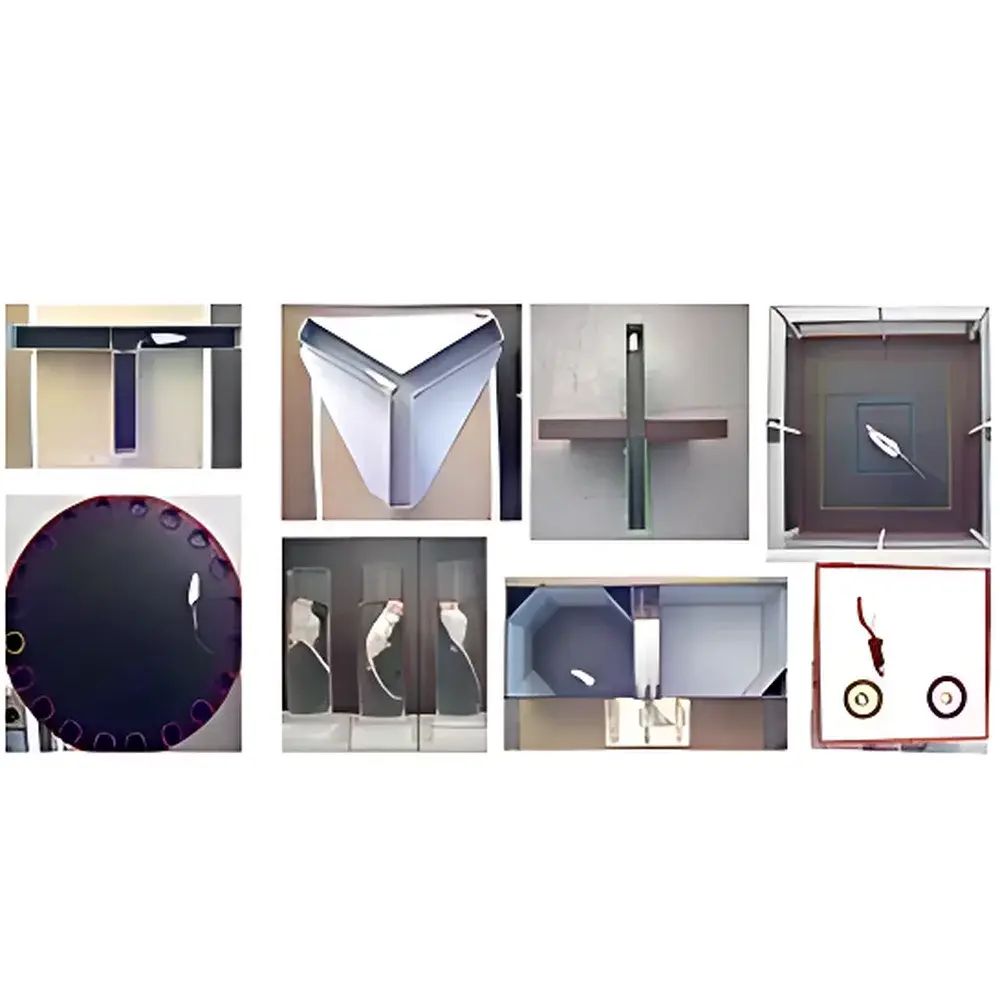
RWD 63001–63014 Behavioral Hardware Suite for Rodent Neurobehavioral Research
| Key | Brand: RWD |
|---|---|
| Origin | Shenzhen, China |
| Manufacturer Type | OEM/ODM Producer |
| Country of Origin | Domestic (China) |
| Model Range | 63001–63014 |
| Pricing | Upon Request |
Overview
The RWD Behavioral Hardware Suite (Models 63001–63014) is a standardized, modular set of ethologically grounded apparatuses engineered for reproducible assessment of spatial learning, memory, anxiety-like behavior, exploratory drive, and sensorimotor integration in laboratory rodents. Each unit operates on classical behavioral paradigms validated across decades of neuroscience and pharmacology research—including the Morris Water Maze (MWM), Y-Maze, Open Field Test (OFT), Elevated Plus Maze (EPM), Radial Arm Maze (RAM), O-Maze, and Light-Dark Box. These systems do not incorporate active sensing or actuation; instead, they provide precisely dimensioned, optically neutral physical environments designed to elicit quantifiable naturalistic responses under controlled environmental conditions. All units are constructed to minimize extraneous visual cues, reduce odor retention, and ensure mechanical stability—critical prerequisites for high inter-laboratory reproducibility in preclinical behavioral phenotyping.
Key Features
- Modular design with consistent material specifications: gray acrylic (PMMA) for transparent mazes (Y-Maze, EPM, RAM, OFT) and gray polyethylene for water-based assays (MWM), ensuring low reflectivity and minimal olfactory carryover.
- Species-specific scaling: parallel configurations for rats and mice, with proportional arm lengths, wall heights, platform diameters, and base dimensions aligned to established allometric guidelines (e.g., MWM platform diameter = 10 cm for mice, 15 cm for rats per NIH SOPs).
- Functional interoperability: detachable gates, reversible arm orientations, and standardized mounting interfaces enable cross-paradigm experimental sequencing within a single testing room setup.
- Structural integrity: load-bearing metal frames (O-Maze models) and reinforced acrylic joints withstand repeated cleaning cycles using 70% ethanol or diluted quaternary ammonium solutions without warping or haze formation.
- Compliance-ready geometry: all dimensions adhere to published ASTM F2987-14 (Standard Guide for Behavioral Testing of Rodents) and ISO/IEC 17025-aligned validation protocols for apparatus qualification.
Sample Compatibility & Compliance
The suite supports C57BL/6, BALB/c, Sprague-Dawley, and Wistar strains across standard age ranges (P21–P180). All components are compatible with automated video-tracking systems (e.g., Noldus EthoVision XT, ViewPoint Behavior Tracker) when used with calibrated overhead illumination (≥300 lux, uniform ±10%) and monochrome CMOS cameras (≥60 fps, 1280×720 resolution). Units meet GLP-compliant documentation requirements for apparatus verification: dimensional tolerance ≤±1 mm, surface roughness Ra < 0.8 µm, and thermal stability across 18–26°C ambient range. No electrical or pneumatic interfaces are integrated—ensuring intrinsic electromagnetic compatibility (EMC) during concurrent electrophysiology or fMRI experiments.
Software & Data Management
As a hardware-only platform, the RWD Behavioral Suite does not include proprietary software. It is fully agnostic to third-party analysis pipelines and integrates natively with FDA 21 CFR Part 11–compliant tracking platforms supporting audit trails, user role management, and raw data export in HDF5 or CSV formats. Calibration certificates (dimensional verification, light uniformity maps, acoustic noise profiles <45 dB(A)) are provided upon request for IQ/OQ documentation. Each model ships with a traceable serial number and a manufacturer’s declaration of conformity to GB/T 27417–2017 (Guidelines for Validation of Analytical Methods in Life Sciences).
Applications
- Spatial reference memory evaluation via escape latency and quadrant preference metrics in MWM (Model 63001/63002).
- Working memory and spontaneous alternation quantification in Y-Maze (63005/63006) and Radial Arm Maze (63011/63012).
- Anxiety-related behavior profiling using time-in-open-arm ratios and risk-assessment stretching in EPM (63009/63010) and O-Maze (63013/63014).
- Locomotor activity, thigmotaxis, and center-field exploration in Open Field (63007/63008).
- Unconditioned aversion response measurement in Light-Dark Box (63015), with validated photometric gradients (dark chamber illuminance <5 lux, light chamber ≥300 lux).
- Preclinical validation of CNS-active compounds (e.g., NMDA antagonists, SSRIs, anxiolytics) per ICH S5(R3) and OECD TG 426 guidelines.
FAQ
What is the primary measurement principle underlying these behavioral assays?
These are observational, environment-driven paradigms—not instrumented sensors. Behavior is inferred from spatial trajectory, dwell time, entry frequency, and latency metrics captured by external video-tracking systems.
Are these devices compliant with international regulatory standards for preclinical studies?
Yes—design dimensions follow ASTM F2987-14 and OECD TG 426; materials comply with USP for plastic extractables; validation documentation supports GLP audits.
Can the hardware be sterilized between subjects?
All acrylic and polyethylene components tolerate repeated wiping with 70% ethanol or 0.5% sodium hypochlorite; metal frames (O-Maze) support autoclaving at 121°C for 20 min.
Is technical support available for experimental protocol optimization?
RWD provides application notes covering habituation protocols, lighting calibration, water temperature control (MWM), and strain-specific baseline performance benchmarks.
Do these systems require electrical power or computer interfacing?
No—these are passive, non-electronic apparatuses. Power is required only for external tracking hardware and environmental control systems (e.g., HVAC, lighting, water heaters).




