
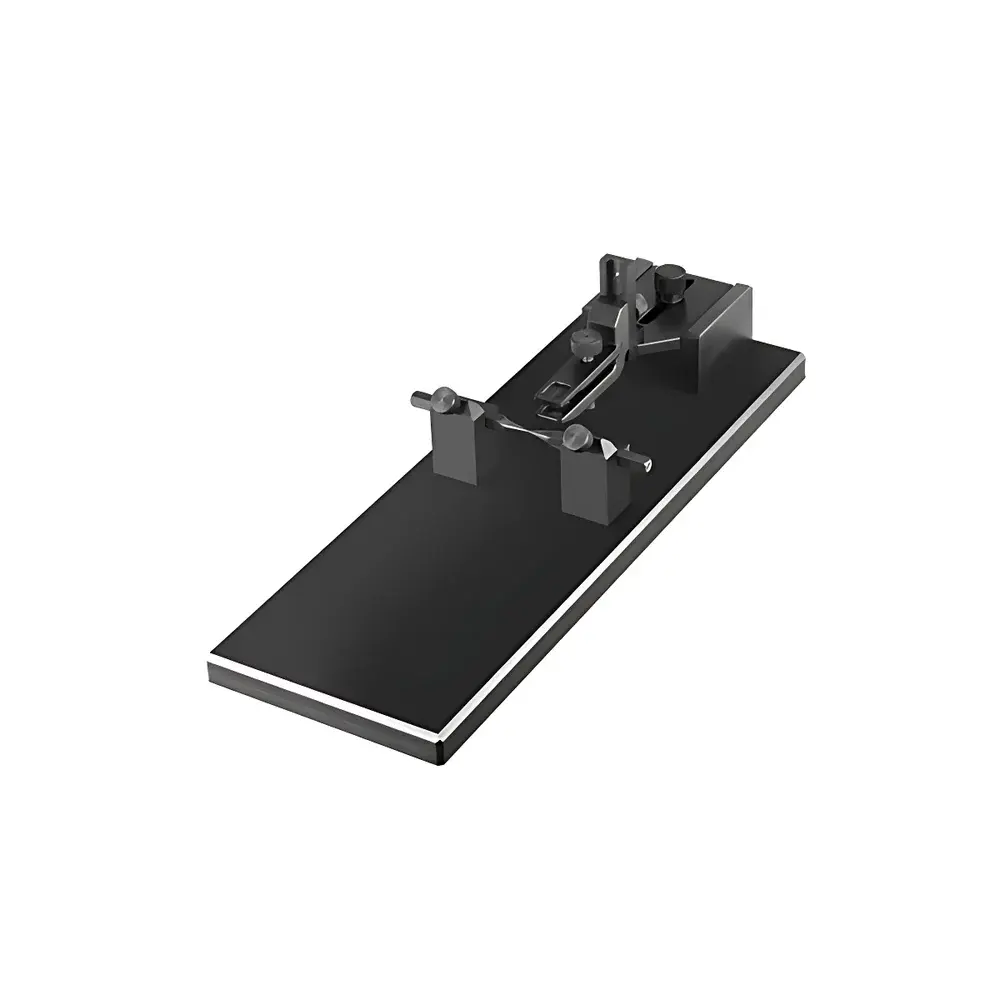
RWD 68011 MRI-Compatible Rat Adapter (Customizable)
| Brand | RWD |
|---|---|
| Origin | Shenzhen, China |
| Manufacturer Type | Original Equipment Manufacturer (OEM) |
| Product Origin | Domestic (China) |
| Model | 68011 |
| Pricing | Available Upon Request |
| Dimensions | 360 mm (L) × 125 mm (W) × 96 mm (H) |
| Electromagnetic Compatibility | Certified for 1.5T and 3.0T MRI environments |
| Material Composition | Non-ferromagnetic, RF-transparent polymer composite |
| Animal Weight Range | 200–500 g rats (custom weight brackets available) |
| Mounting Interface | Standardized MRI bed rail compatibility (ISO/IEC 60601-2-33 compliant mechanical interface) |
Overview
The RWD 68011 MRI-Compatible Rat Adapter is an engineered mechanical interface designed specifically for longitudinal in vivo magnetic resonance imaging (MRI) studies involving Sprague-Dawley or Wistar rats. Unlike generic restraint systems, this adapter integrates electromagnetic compatibility (EMC) by design—utilizing a proprietary non-ferromagnetic, radiofrequency (RF)-transparent polymer composite that eliminates eddy current generation, signal distortion, and thermal artifacts during scanning. Its structural geometry adheres to the spatial constraints and safety requirements of clinical and preclinical MRI scanners operating at field strengths up to 3.0 tesla. The device functions as a passive, static positioning platform—not an active coil or sensor—and thus introduces no additional electronic noise, ensuring baseline integrity of B0 homogeneity and RF coil loading characteristics. It is intended for use with standard MRI-compatible animal monitoring systems (e.g., respiratory gating modules, fiber-optic temperature probes), and its low-profile form factor enables unobstructed access to the animal’s thoracic and cranial regions during multi-coil array acquisitions.
Key Features
- EMC-validated construction: Fully non-metallic, non-conductive material composition certified per IEC 60601-2-33 Annex DD for MRI safety (no projectile risk, no RF heating hazard)
- Precision anatomical alignment: Integrated dorsal spine support and adjustable nasal cone ensure reproducible head-first supine positioning across repeated imaging sessions
- Modular restraint system: Dual-point thoracic and pelvic fixation straps (silicone-coated, MRI-safe elastomer) provide stable immobilization without compromising physiological monitoring access
- Standardized mechanical interface: Compatible with common MRI bed rail profiles (e.g., Bruker BioSpec, Siemens Skyra, Philips Achieva), enabling rapid setup and scanner interoperability
- Customization-ready architecture: Base platform accepts add-on modules including stereotaxic frames, RF coil mounts, and integrated physiological sensor ports (available under OEM agreement)
- Autoclavable and chemical-resistant surface: Withstands repeated decontamination using 70% ethanol, hydrogen peroxide vapor, or hospital-grade disinfectants without dimensional or dielectric property degradation
Sample Compatibility & Compliance
The RWD 68011 supports adult rats weighing 200–500 g, with optional bracket inserts for sub-200 g juvenile models or obese phenotypes (>600 g). All materials comply with ISO 10993-5 (cytotoxicity) and ISO 10993-10 (irritation/sensitization) biocompatibility standards. Mechanical design conforms to IEC 60601-2-33:2010 clause 201.12.4.103 for MRI patient support devices, including static magnetic field force testing (<0.5 N deflection at 3T) and RF-induced heating assessment (<0.5°C temperature rise under ASTM F2182-19 conditions). The adapter is not classified as a medical device under FDA 21 CFR Part 820 but meets GLP-aligned documentation requirements for preclinical imaging study traceability.
Software & Data Management
As a hardware-only positioning solution, the 68011 requires no embedded firmware or driver installation. Positioning metadata—including subject ID, scan date, restraint configuration, and custom module selection—is manually logged into institutional PACS or ELN systems (e.g., LabArchives, Benchling) via standardized DICOM-SR templates. RWD provides a structured CSV metadata schema for integration with automated image analysis pipelines (e.g., FSL, AFNI, SPM12). For regulated environments, the device supports audit-trail-ready documentation when used in conjunction with 21 CFR Part 11-compliant electronic lab notebooks.
Applications
- Longitudinal structural MRI: High-resolution T1-weighted, T2-weighted, and FLAIR imaging of neurodegenerative models (e.g., APP/PS1, 5xFAD)
- Functional MRI (fMRI): Resting-state and stimulus-evoked BOLD acquisition requiring motion artifact suppression
- MRI-guided interventions: Stereotactic drug delivery or focused ultrasound (FUS) targeting with real-time positional feedback
- Multimodal coregistration: Precise alignment of MRI-derived anatomical volumes with ex vivo histology or PET/MRS datasets
- Toxicology and pharmacokinetic studies: Serial imaging of tumor xenografts or cardiac remodeling under chronic dosing regimens
FAQ
Is the 68011 compatible with 7T preclinical MRI systems?
Yes—while validated for 1.5T and 3.0T clinical scanners, its material properties and geometric design have been tested under 7T static field conditions; however, users must verify local RF coil coupling effects prior to deployment.
Can the adapter be sterilized between subjects?
Yes—autoclaving at 121°C for 20 minutes is supported; repeated autoclaving (>50 cycles) may affect strap elasticity and should be monitored per facility SOP.
Does RWD offer validation reports for EMC compliance?
Yes—certified test reports from third-party accredited labs (CNAS-accredited per ISO/IEC 17025) are provided upon order confirmation, including SAR mapping, magnetic pull force, and RF heating data.
Is customization available for mouse or rabbit models?
Yes—RWD offers engineering consultation and prototype development for species-specific adapters under NDA; lead time and MOQ apply.
How is animal physiology monitored during scanning?
The adapter features dedicated routing channels for fiber-optic respiration belts, rectal temperature probes, and ECG electrode leads—all positioned outside the RF transmit/receive field to avoid interference.




