
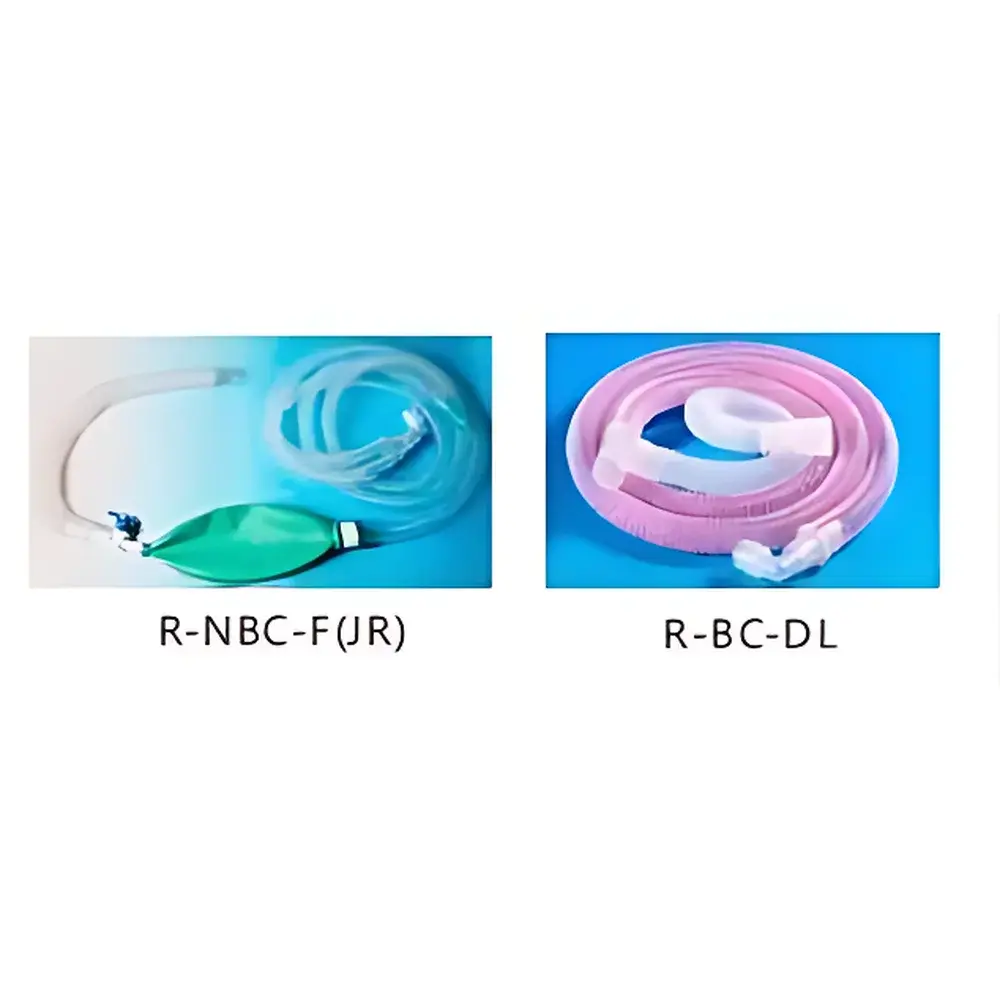
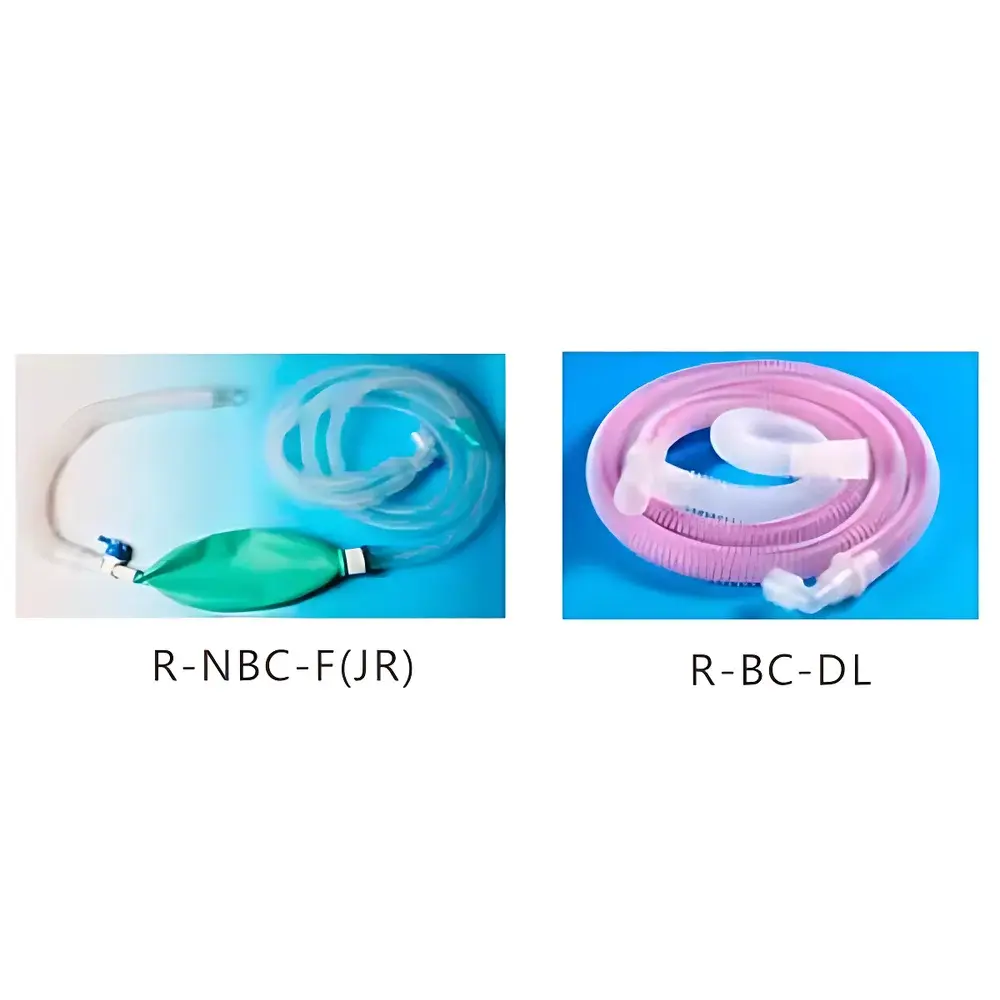
RWD R-BC-DL Anesthesia Breathing Circuit
| Brand | RWD |
|---|---|
| Origin | Guangdong, China |
| Manufacturer Type | Original Equipment Manufacturer (OEM) |
| Country of Origin | China |
| Model | R-BC-DL |
| Pricing | Available Upon Request |
| Configuration | Dual-Limb Anesthesia Breathing Circuit with 22 mm Male / 15 mm Female Connectors, 1.5 m Length |
| Circuit Type | Non-Rebreathing (Mapleson D Variant) |
| Connector Standard | ISO 5356-1 Compliant |
Overview
The RWD R-BC-DL Anesthesia Breathing Circuit is a dual-limb, non-rebreathing respiratory system engineered for use in low-flow and semi-open anesthetic delivery during general anesthesia. Designed in accordance with the functional principles of the Mapleson D classification, it operates on the principle of expiratory gas venting to atmosphere while delivering fresh gas flow (FGF) directly to the patient via the inspiratory limb—minimizing rebreathing of carbon dioxide without requiring a CO2 absorber. This configuration ensures predictable gas dynamics under variable minute ventilation and FGF conditions, making it particularly suitable for spontaneous or assisted ventilation in pediatric and adult patients during short-duration procedures.
Key Features
- Dual-limb architecture with anatomically optimized routing to reduce dead space and resistance
- ISO 5356-1 compliant 22 mm male (inspiratory) and 15 mm female (expiratory) connectors for universal compatibility with anesthesia machines and patient interfaces
- 1.5-meter total circuit length, balanced to support ergonomic positioning and minimize kinking or disconnection risk
- Medical-grade PVC tubing with controlled flexibility and kink resistance, validated for repeated sterilization cycles (autoclave up to 134°C, ethylene oxide, and gamma irradiation)
- Integrated adjustable pressure-limiting (APL) valve port compatible with standard anesthesia machine scavenging systems
- Latex-free, DEHP-free, and silicone-oil-free construction meeting ISO 10993-5 cytotoxicity and ISO 10993-10 sensitization requirements
Sample Compatibility & Compliance
The R-BC-DL circuit is validated for use with volatile anesthetics (e.g., sevoflurane, isoflurane, desflurane), oxygen, nitrous oxide, and medical air across standard anesthesia workstations. It supports both manual and mechanical ventilation modes and has been tested for airflow resistance ≤ 0.8 cm H2O/L/sec at 60 L/min (per ISO 80601-2-13). All materials comply with USP Class VI biological safety standards and EU MDR 2017/745 essential requirements. The circuit is CE-marked (Class IIa) and registered with China NMPA as a Class II medical device (Registration No.: valid per batch documentation). Documentation includes full traceability of raw material lot numbers, biocompatibility test reports, and shelf-life validation (36 months when stored at 15–30°C, <75% RH).
Software & Data Management
As a passive mechanical breathing circuit, the R-BC-DL does not incorporate embedded electronics or software. However, its design enables seamless integration into digitally monitored anesthesia environments. When used with anesthesia machines featuring integrated gas monitoring (e.g., Datex-Ohmeda Aisys CS2, Dräger Primus IE), real-time parameters—including inspired O2, end-tidal anesthetic concentration (ETAC), and airway pressures—are automatically logged and archived in accordance with FDA 21 CFR Part 11-compliant electronic health record (EHR) systems. Circuit identification and usage tracking can be managed via hospital inventory management platforms using serialized barcode labels affixed to each sterile package.
Applications
- Short-duration surgical procedures requiring rapid anesthetic induction and emergence (e.g., ophthalmic, ENT, dental, and outpatient orthopedic interventions)
- Pediatric anesthesia where low anatomical dead space and minimal resistance are critical for maintaining spontaneous ventilation
- Field or mobile anesthesia units where simplicity, reliability, and absence of CO2 absorbent dependency reduce logistical burden
- Simulation-based training for anesthesiology residents focusing on Mapleson circuit physics, FGF titration, and rebreathing threshold analysis
- Quality assurance testing of anesthesia machine ventilator performance and gas delivery accuracy
FAQ
Is the R-BC-DL circuit compatible with high-flow nasal cannula (HFNC) systems?
No—it is designed exclusively for use with conventional anesthesia ventilators and manual resuscitators (e.g., Ambu bags) operating within standard anesthesia gas delivery pathways.
Can this circuit be reused after sterilization?
No. The R-BC-DL is supplied sterile and intended for single-patient, single-procedure use in compliance with WHO and CDC guidelines on anesthesia circuit hygiene and cross-contamination prevention.
Does the circuit include a CO2 absorber?
No. As a non-rebreathing Mapleson D-type circuit, it relies on adequate fresh gas flow (>2× minute ventilation) to prevent CO2 accumulation; no CO2 absorption mechanism is incorporated.
What is the maximum recommended fresh gas flow for optimal performance?
For spontaneous ventilation, FGF ≥ 3 L/min is recommended; for controlled ventilation, FGF ≥ 5 L/min ensures negligible rebreathing (CO2 concentration < 0.1% at end-tidal sampling).
Are custom lengths or connector configurations available?
Yes—RWD offers OEM customization including extended lengths (up to 2.5 m), alternative connector sizes (e.g., 22 mm female), and integrated humidity exchange modules upon formal engineering review and regulatory consultation.




