
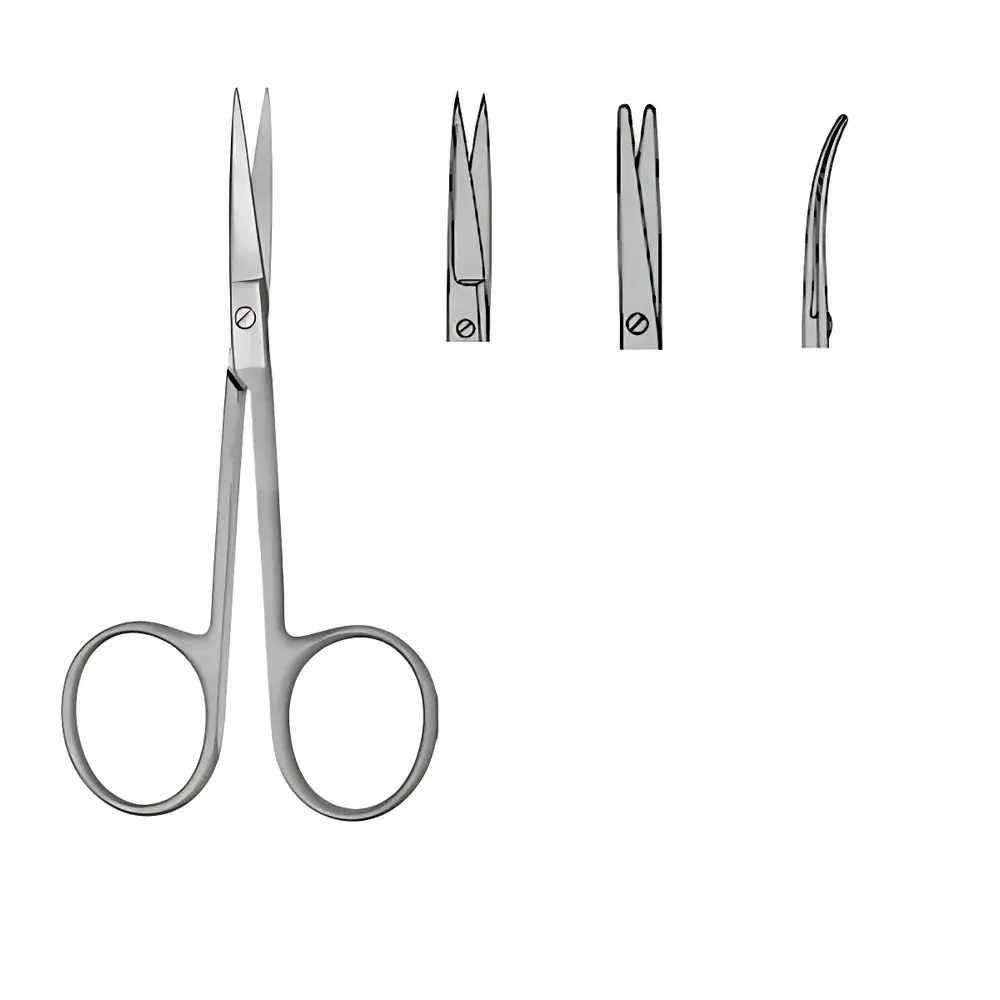
RWD S12001-09 Precision Microscissors
| Brand | RWD |
|---|---|
| Origin | Shenzhen, China |
| Manufacturer Type | Direct Manufacturer |
| Country of Origin | China |
| Model | S12001-09 |
| Blade Configuration | Straight/Tapered Point |
| Blade Length | 23 mm |
| Blade Width | 5 mm |
| Total Length | 10.5 cm |
Overview
The RWD S12001-09 Precision Microscissors are high-precision surgical instruments engineered for delicate soft-tissue manipulation in ophthalmic, neurosurgical, microvascular, and experimental biomedical procedures. Designed according to ISO 7740-1:2021 (Surgical Instruments — Requirements for Materials and Construction) and compliant with EN ISO 13485:2016 quality management standards for medical device manufacturing, these microscissors feature a straight/tapered-point configuration optimized for controlled cutting and precise tissue separation under magnification. The instrument operates on mechanical shear principle—relying on precisely aligned, hardened stainless steel blades that generate localized stress concentration at the cutting interface to sever biological tissues with minimal lateral force or deformation. Its 23 mm blade length and 5 mm blade width balance maneuverability and structural rigidity, enabling reliable performance in confined anatomical fields such as anterior chamber surgery, retinal membrane peeling, and small-vessel anastomosis.
Key Features
- High-carbon stainless steel construction (AISI 420 equivalent), passivated per ASTM F86 for enhanced corrosion resistance and biocompatibility
- Micro-polished cutting edges with ≤0.2 µm surface roughness (Ra), verified by profilometry, ensuring low-tissue-adhesion performance
- Ergonomic, non-slip textured handles with 10.5 cm total length—optimized for fingertip control and reduced hand fatigue during prolonged microsurgical sessions
- Blade geometry engineered for minimal tissue drag: tapered point enables accurate puncture and initiation of incisions; straight cutting edge ensures linear, predictable transection
- Autoclavable up to 134°C (273°F) for 18 minutes per EN 285:2015 steam sterilization cycles without dimensional drift or edge degradation
- Individually serialized and traceable to batch-level material certification and hardness testing (52–56 HRC)
Sample Compatibility & Compliance
These microscissors are validated for use with human and animal soft tissues—including vascular structures (arterioles <200 µm diameter), peripheral nerves (e.g., sciatic branch dissection), ocular tissues (corneal stroma, lens capsule), hepatic parenchyma, renal cortex, and mucosal membranes. They meet USP Class VI biocompatibility requirements for short-term implantation contact and are compatible with standard glutaraldehyde and hydrogen-peroxide-based cold sterilants where autoclaving is contraindicated. All production conforms to ISO 10993-1:2018 biological evaluation framework and supports GLP-compliant preclinical study documentation. Device labeling includes UDI-DI (Unique Device Identifier – Device Identifier) per FDA 21 CFR Part 830 and EU MDR Annex VI.
Software & Data Management
As a Class I non-powered surgical instrument, the RWD S12001-09 does not incorporate embedded electronics or software. However, its design integrates seamlessly into digital surgical workflows: serial numbers support integration with hospital asset-tracking systems (e.g., RFID-enabled inventory modules), and batch documentation is available in PDF/CSV format for electronic quality records (eQMS) per 21 CFR Part 11-compliant platforms. Traceability data—including raw material lot codes, heat treatment logs, and final inspection reports—can be retrieved via RWD’s secure manufacturer portal using the instrument’s unique identifier.
Applications
- Ophthalmology: Capsulorhexis initiation, intraocular membrane dissection, trabeculectomy flap trimming
- Neurosurgery: Dural opening in microdissection, arachnoid plane separation, cranial nerve sheath fenestration
- Vascular surgery: Microanastomosis site preparation, adventitia stripping from arterioles/venules
- Translational research: Rodent liver lobectomy, murine kidney decapsulation, zebrafish yolk sac vessel isolation
- Pathology: Precise excision of biopsy specimens for frozen-section analysis without thermal artifact
- Plastic surgery: Delicate undermining of dermal flaps and subcutaneous fat layer segmentation
FAQ
What sterilization methods are validated for the S12001-09 microscissors?
Steam autoclaving (134°C, 18 min) is the primary validated method. Ethylene oxide (EtO) and low-temperature hydrogen peroxide plasma are acceptable alternatives when validated per AAMI TIR12:2022.
Is this instrument suitable for laser-assisted procedures?
No—this is a purely mechanical instrument with no optical or conductive enhancements. It must be used outside the laser beam path to avoid reflective hazards or thermal damage to blade metallurgy.
Can the blades be resharpened clinically?
Resharpening is not recommended. Edge geometry and hardness are factory-optimized; field sharpening compromises dimensional tolerances and increases risk of micro-notching. RWD provides certified replacement instruments through authorized distributors.
Does RWD offer custom configurations (e.g., angled tips or different blade widths)?
Yes—custom geometries (e.g., 45° angled tips, 3 mm blade width variants) are available under OEM agreement with minimum order quantities and extended lead times. Engineering drawings and metrology reports are provided upon request.
How is compliance with ISO 13485 maintained across production batches?
Each batch undergoes 100% visual inspection, hardness verification, and functional shear testing per ISO 7740-2:2021. Full quality records—including environmental monitoring logs and calibration certificates—are retained for 15 years post-manufacture.






