
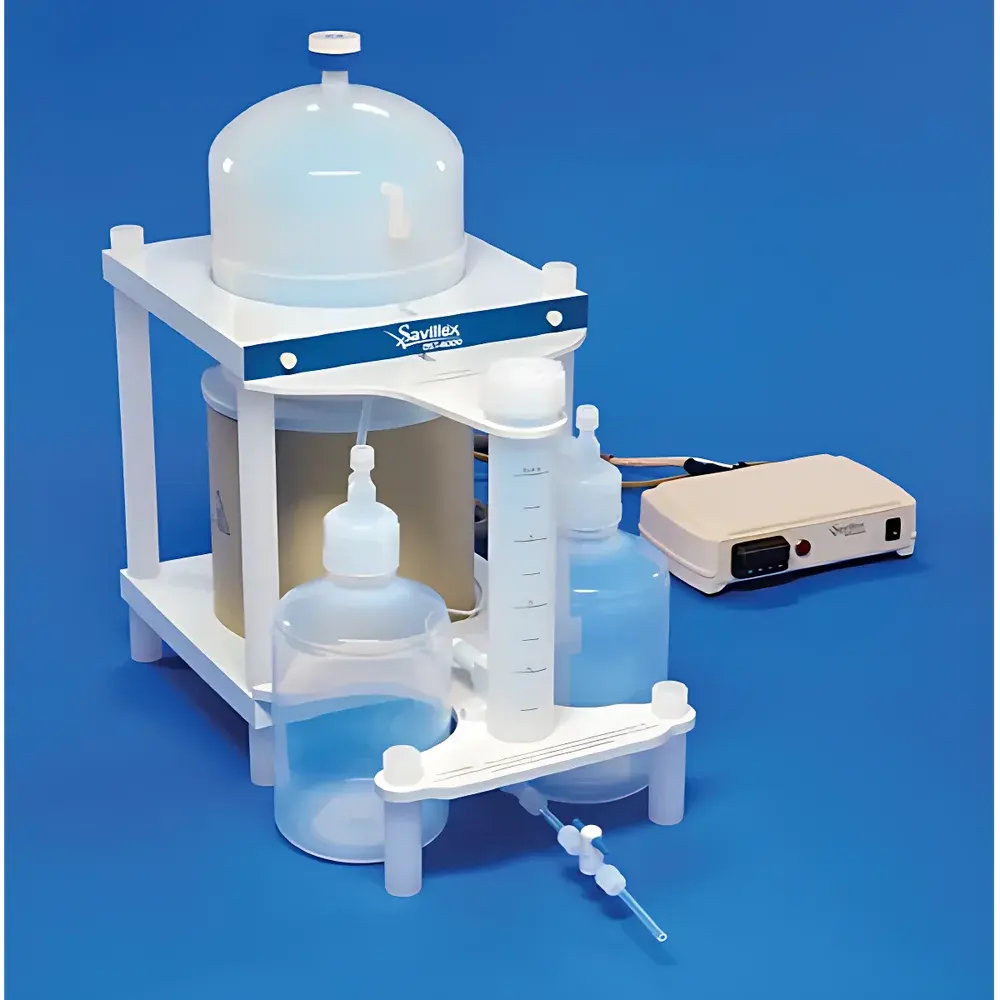
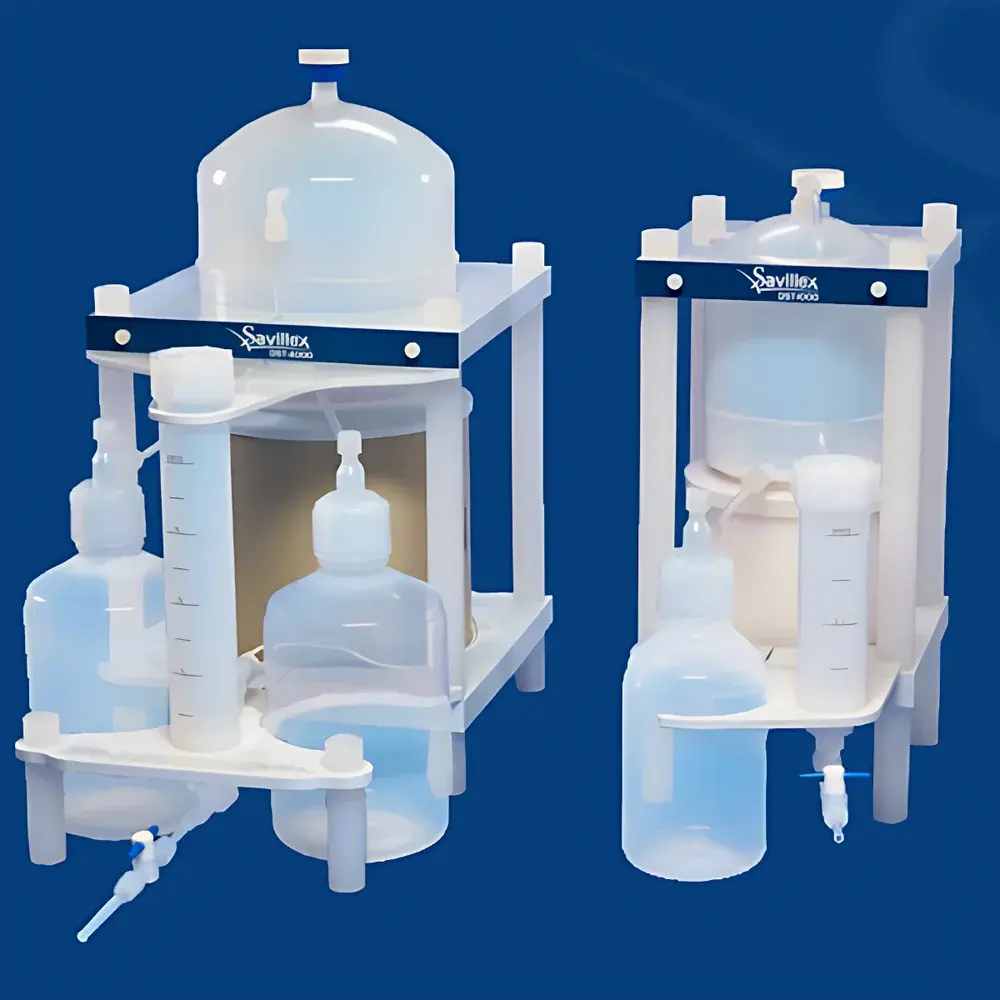
Savillex DST4000 Sub-Boiling Acid Distillation System
| Brand | Savillex |
|---|---|
| Origin | USA |
| Model | DST4000 |
| Instrument Type | Sub-boiling Distiller |
| Heating Method | Encircling Electric Heating Mantle |
| Cooling Method | Natural Air Cooling |
| Distillation Rate | 1000 mL / 12 h |
| Ramp Time to Operating Temperature | 60 min |
| Endpoint Control | Temperature-Based Setpoint Activation |
| Heating Element | Integrated Electric Heating Mantle |
| Power Supply | 230 VAC ±10%, 50/60 Hz |
| Power Consumption | 125 W |
| Weight | 7.25 kg |
| Capacity Range | 500 mL – 4 L |
| Wetted Materials | Molded PFA Only |
| Footprint | < 0.093 m² (< 1 ft²) |
Overview
The Savillex DST4000 Sub-Boiling Acid Distillation System is a precision-engineered, fully PFA-wetted distillation apparatus designed for the ultra-high-purity purification of mineral acids—including HNO₃, HCl, HF, and H₂O₂—used in trace elemental analysis by ICP-OES, ICP-MS, and HR-ICP-MS. Operating on the principle of sub-boiling (or near-boiling) distillation, the DST4000 maintains the liquid phase at a temperature just below its atmospheric boiling point, minimizing vapor-phase carryover of non-volatile contaminants (e.g., metals, silicates, and particulates) while enabling selective volatilization of the acid. This thermodynamically controlled process yields reagent-grade or higher purity acids with total metal impurity levels consistently below 1–10 pg/g—meeting stringent requirements for ultratrace analytical workflows in geochemistry, nuclear forensics, semiconductor metrology, and clinical reference material preparation.
Key Features
- Fully molded PFA construction for all fluid-contact surfaces—eliminating leaching from joints, gaskets, or threaded fittings common in laminated or assembled fluoropolymer systems.
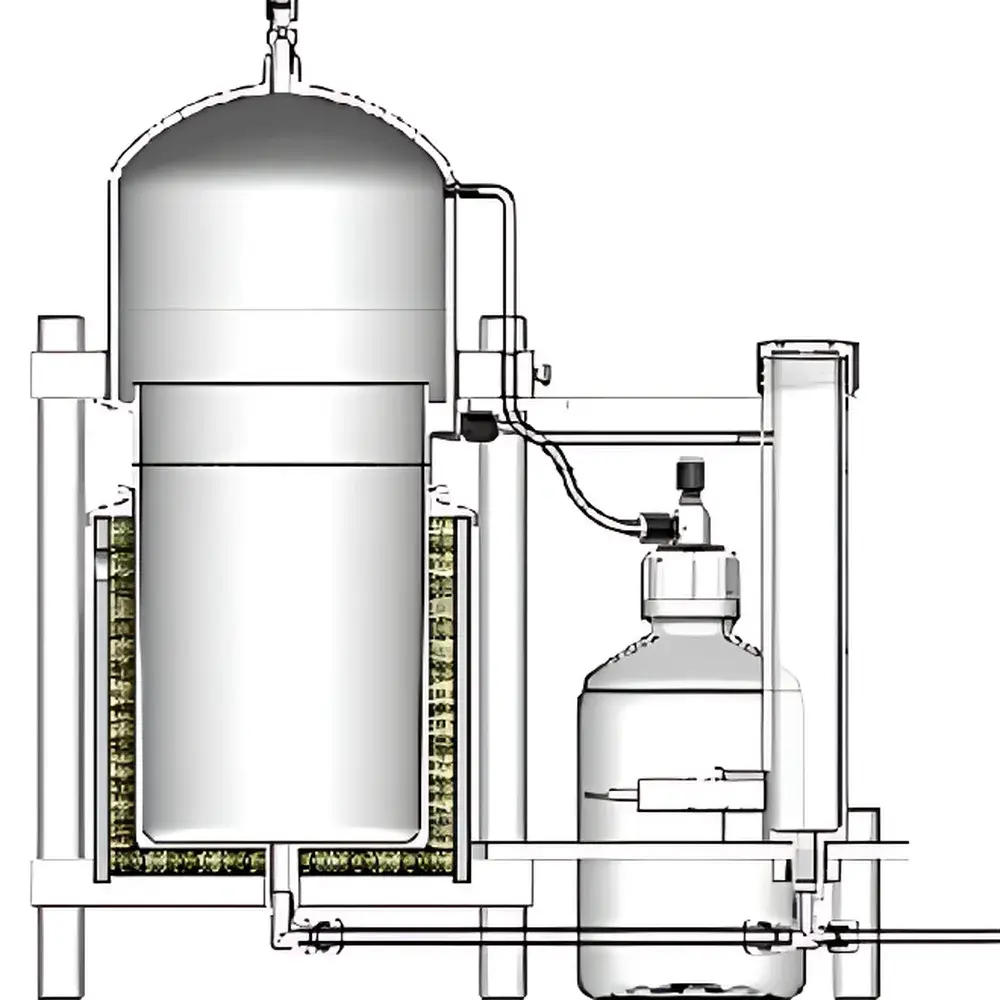
- Encircling electric heating mantle provides uniform, low-gradient thermal input directly to the evaporation chamber—avoiding localized hot spots, thermal shock, or quartz/glass degradation associated with radiant lamps or open-coil heaters.
- No external water cooling required: natural convective air cooling of the condenser ensures operational independence from lab water infrastructure, reduces facility load, and supports deployment in mobile labs or ISO-classified cleanrooms.
- Integrated temperature-controlled endpoint logic: distillation halts automatically when the internal sensor detects attainment of the user-defined setpoint temperature—preventing dry-out, over-concentration, or thermal decomposition of sensitive acids (e.g., HF or peroxides).
- Self-draining waste channel with gravity-fed discharge—no peristaltic pumps, valves, or tubing required—reducing maintenance points and cross-contamination risk during routine cleaning or acid batch changeover.
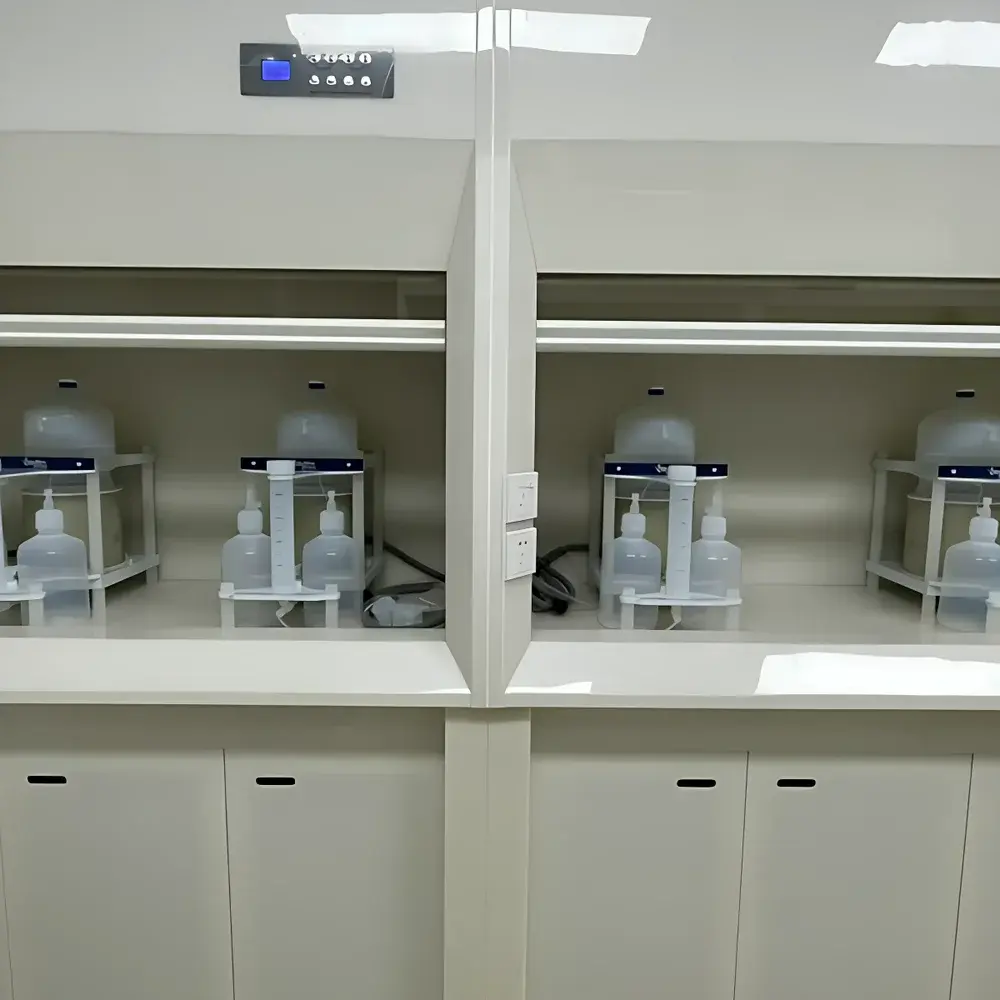
- Compact footprint (< 0.093 m²) enables installation within standard fume hoods without compromising workspace ergonomics or airflow integrity; compliant with ANSI/AIHA Z9.5 laboratory ventilation guidelines.
Sample Compatibility & Compliance
The DST4000 is validated for use with high-purity hydrochloric acid (≥37%), nitric acid (≥69%), hydrofluoric acid (49% and 70%), and hydrogen peroxide (30% and 70%). Its PFA-only architecture resists aggressive etching and stress cracking under prolonged exposure to concentrated HF and mixed acid matrices (e.g., aqua regia). The system conforms to ASTM D1193 Type I water specifications for post-distillation rinse validation and supports GLP/GMP documentation requirements through operator-defined run logs (time-stamped start/end, setpoint, and observed temperature profile). While not a regulated medical device, its design aligns with FDA 21 CFR Part 11 principles for audit-trail-capable instrumentation where electronic records are maintained.
Software & Data Management
The DST4000 operates as a standalone analog-digital hybrid system: temperature setpoint and real-time readout are managed via an embedded digital controller with LED display and tactile keypad. No proprietary software, drivers, or PC interface is required—ensuring long-term operational continuity and compatibility across evolving IT environments. All process parameters (set temperature, elapsed time, power-on status) are retained in non-volatile memory across power cycles. For laboratories implementing LIMS integration, optional analog voltage output (0–5 V DC proportional to sensor temperature) can be routed to third-party data acquisition modules supporting IEEE 1451 or Modbus RTU protocols.
Applications
- Preparation of calibration standards and blanks for ICP-MS analysis of environmental water, soil digests, and biological tissues.
- Purification of HF for semiconductor wafer etch solutions where Na, K, Fe, and Al contamination must remain < 5 pg/g.
- Recovery and reconditioning of spent acids from microwave digestion vessels—reducing hazardous waste disposal volume by >80%.
- Generation of ultra-low-background acids for radiogenic isotope ratio measurements (e.g., Sr, Nd, Pb) in TIMS and MC-ICP-MS laboratories.
- On-demand production of sub-part-per-quadrillion (ppq) acid blanks for certified reference material (CRM) certification studies.
FAQ
What is the maximum recommended fill volume for optimal distillation efficiency?
For consistent sub-boiling operation and minimal bumping, the recommended fill range is 1.5–3.5 L. Volumes below 500 mL increase thermal lag and reduce condensation yield; volumes above 4 L exceed vessel geometry limits and compromise vapor path uniformity.
Can the DST4000 be used for sulfuric or phosphoric acid?
No. These high-boiling-point, non-volatile acids decompose or polymerize under sustained sub-boiling conditions and are incompatible with PFA’s thermal stability envelope (max continuous use: 260°C). The DST4000 is strictly intended for volatile mineral acids.
Is periodic recalibration of the temperature sensor required?
The integrated Pt100 RTD sensor is factory-calibrated to ±0.3°C across 25–220°C and does not require user recalibration. Annual verification against a NIST-traceable reference thermometer is recommended for GLP-compliant labs.
How often should the PFA condenser be cleaned, and what is the recommended procedure?
Visual inspection after every 5–10 batches is advised. If residue is observed, soak the condenser in 5% v/v nitric acid at 60°C for 2 hours, followed by three rinses with 18.2 MΩ·cm DI water and nitrogen purge—no mechanical scrubbing permitted.
Does the DST4000 meet CE or UKCA marking requirements?
Yes. The unit carries CE marking under the EU Electromagnetic Compatibility Directive 2014/30/EU and Low Voltage Directive 2014/35/EU. UKCA compliance is achieved via identical technical documentation and testing protocols.



