
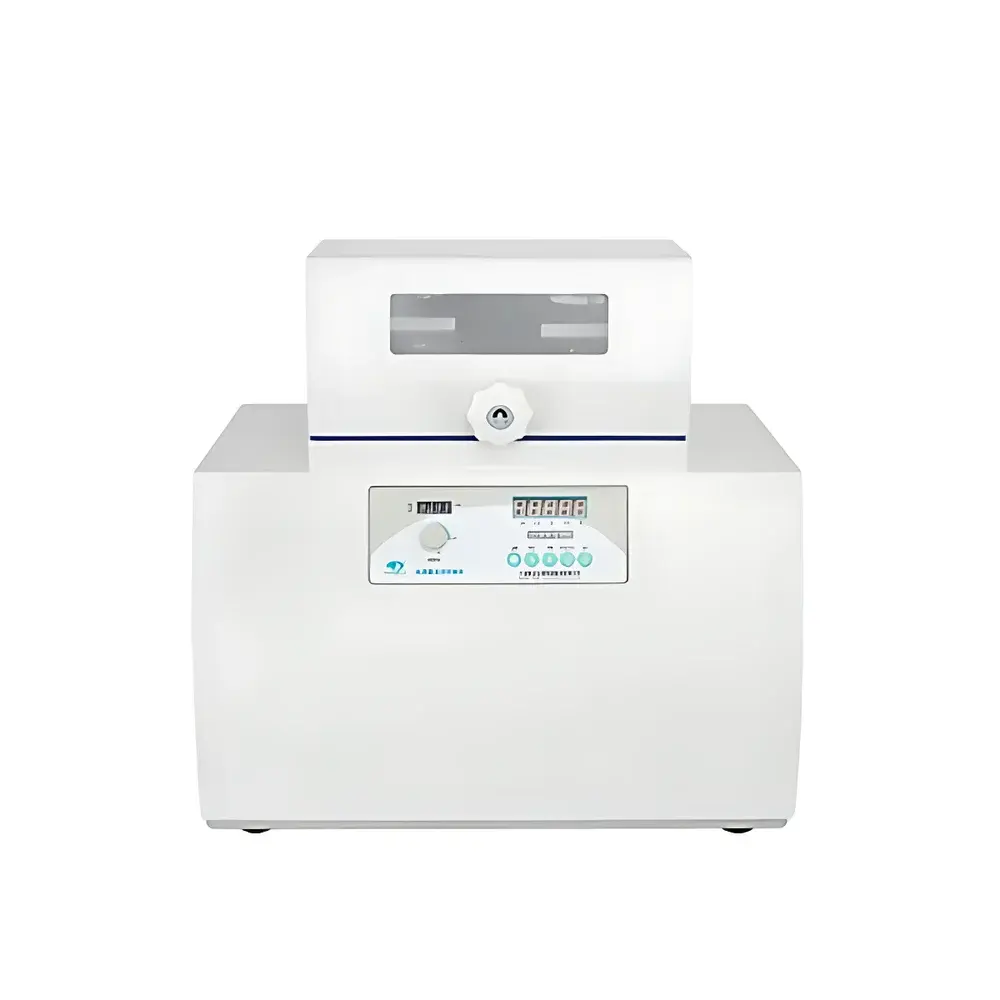
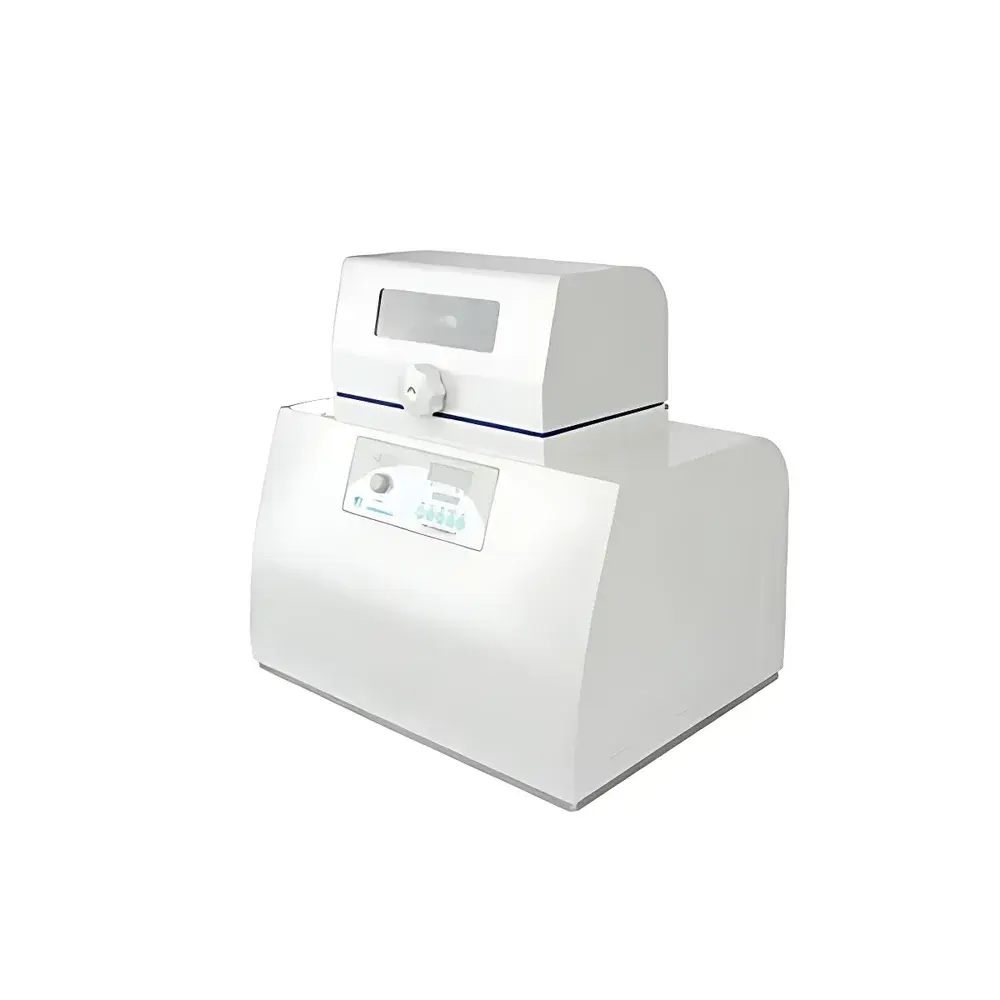
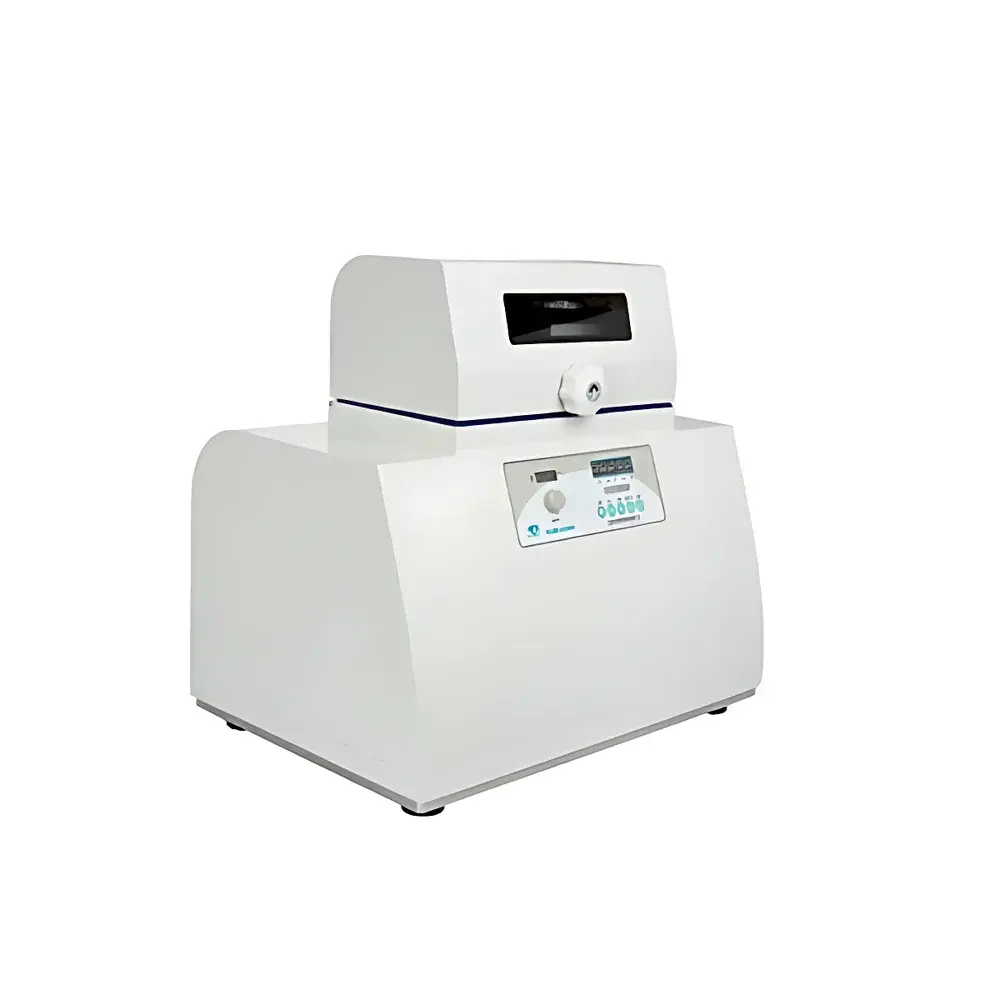
Scientz SCIENTZ-192 High-Throughput Tissue Grinder
| Brand | Scientz |
|---|---|
| Origin | Zhejiang, China |
| Manufacturer Type | Direct Manufacturer |
| Country of Origin | China |
| Model | SCIENTZ-192 |
| Pricing | Upon Request |
Overview
The Scientz SCIENTZ-192 High-Throughput Tissue Grinder is an engineered vertical-axis oscillatory homogenizer designed for rapid, reproducible mechanical lysis of biological and non-biological samples under controlled cryogenic or ambient conditions. It operates on the principle of high-frequency reciprocating impact and shear forces generated by the collision of grinding media (e.g., beads, balls) with sample material inside sealed, individual tubes. This mechanism ensures efficient cell disruption—critical for downstream molecular applications requiring intact nucleic acids (DNA/RNA) and functional proteins. Unlike rotor-stator or probe-based homogenizers, the SCIENTZ-192 eliminates cross-contamination risk through independent tube motion and fully enclosed operation. Its architecture supports standardized workflows compliant with ISO 17025-accredited laboratories and GLP/GMP environments where traceability, repeatability, and operator safety are mandated.
Key Features
- High-throughput capacity: Simultaneous processing of up to 48 × 2.0 mL tubes or 4 × 96-well plates in a single run—optimized for batched extraction protocols.
- Cryogenic compatibility: Supports direct loading of pre-frozen tubes (–80 °C), enabling preservation of labile biomolecules during grinding.
- Sealed-tube processing: Each sample remains physically isolated throughout the cycle; no shared chambers or fluid pathways prevent inter-sample carryover.
- Programmable control interface: Intuitive digital controller allows precise adjustment of frequency (Hz), duration (s), pause intervals, and cycle repeats—parameters stored with timestamped audit logs.
- Acoustic attenuation design: Enclosed housing with vibration-dampening mounts reduces operational noise to ≤65 dB(A), meeting ISO 15712-1 laboratory ambient noise guidelines.
- Safety-integrated mechanics: Interlocked lid sensor halts oscillation immediately upon door opening; motor deceleration complies with IEC 61000-4-11 voltage dip immunity standards.
- Consistent energy transfer: Vertical oscillation axis ensures uniform bead trajectory and kinetic energy distribution across all positions—validated via intra-run CV <3% for RNA yield (n=12 replicates, mouse liver tissue).
Sample Compatibility & Compliance
The SCIENTZ-192 accommodates diverse matrices without modification: soft animal tissues (brain, liver, kidney), fibrous plant material (roots, stems, seeds), microbial pellets (E. coli, yeast), environmental solids (soil, sludge, feces), pharmaceutical tablets, polymers (PE, PS), and mineral specimens (coal, shale). Compatible grinding media include stainless steel (48–52 HRC), hardened steel (58–63 HRC), tungsten carbide (≈1200 HV), agate (6.5–7 Mohs), sintered alumina (8–8.5 Mohs), zirconia (7.5 Mohs), and PTFE—each selected based on hardness, density, chemical inertness, and leaching profile per ASTM D5232 for trace metal analysis. The system meets CE marking requirements (2014/30/EU EMC Directive, 2014/35/EU LVD) and aligns with ISO 22196 for antimicrobial surface testing preparation.
Software & Data Management
While the SCIENTZ-192 operates via embedded firmware (no PC dependency), its parameter logs—including date/time stamp, user ID, frequency, duration, and cycle count—are exportable via USB port in CSV format. Audit trail functionality satisfies FDA 21 CFR Part 11 requirements when integrated into validated LIMS environments. Optional firmware upgrades support time-stamped event logging (start/stop/pause), password-protected method locking, and calibration certificate import for metrological traceability. All stored data reside locally on device memory with write-protection enabled by default.
Applications
This instrument is routinely deployed in genomics (DNA/RNA isolation prior to qPCR, NGS library prep), proteomics (extraction of membrane-bound or nuclear proteins), microbiome research (soil/fecal DNA recovery), pharmacognosy (herbal active compound release), forensic toxicology (tissue homogenization for LC-MS/MS), and materials science (polymer dispersion analysis). Published studies include detection of cytokeratin 20 mRNA in colorectal cancer CTCs (Journal of Molecular Medicine, 2004), immunomagnetic enrichment workflows (J. Gastroenterol. Hepatol., 2013), and low-cholesterol fermented sausage formulation (Nongye Pinjia Jigong, 2011)—all requiring consistent, scalable lysis without thermal degradation.
FAQ
What types of grinding media are compatible with the SCIENTZ-192?
Stainless steel, hardened steel, tungsten carbide, agate, sintered alumina, zirconia, and PTFE beads—selected based on sample hardness, required energy input, and analytical sensitivity to metallic or siliceous contaminants.
Can the instrument process samples at sub-zero temperatures?
Yes. Pre-chilled tubes (down to –80 °C) may be loaded directly; the chamber design prevents condensation ingress and maintains structural integrity during cryogenic operation.
Is the SCIENTZ-192 suitable for regulated GMP/GLP environments?
Its programmable parameters, audit-trail-capable logging, and mechanical safety interlocks support compliance with GLP (OECD 1998) and GMP Annex 11 when validated per site-specific SOPs.
How is cross-contamination prevented between samples?
Each tube undergoes independent oscillatory motion within a sealed adapter block; no shared fluid paths, rotating shafts, or aerosol-generating interfaces exist.
What maintenance is required for long-term reliability?
Annual verification of oscillation amplitude (±0.5 mm tolerance), bearing lubrication inspection, and calibration of timer accuracy against NIST-traceable chronometers.



