
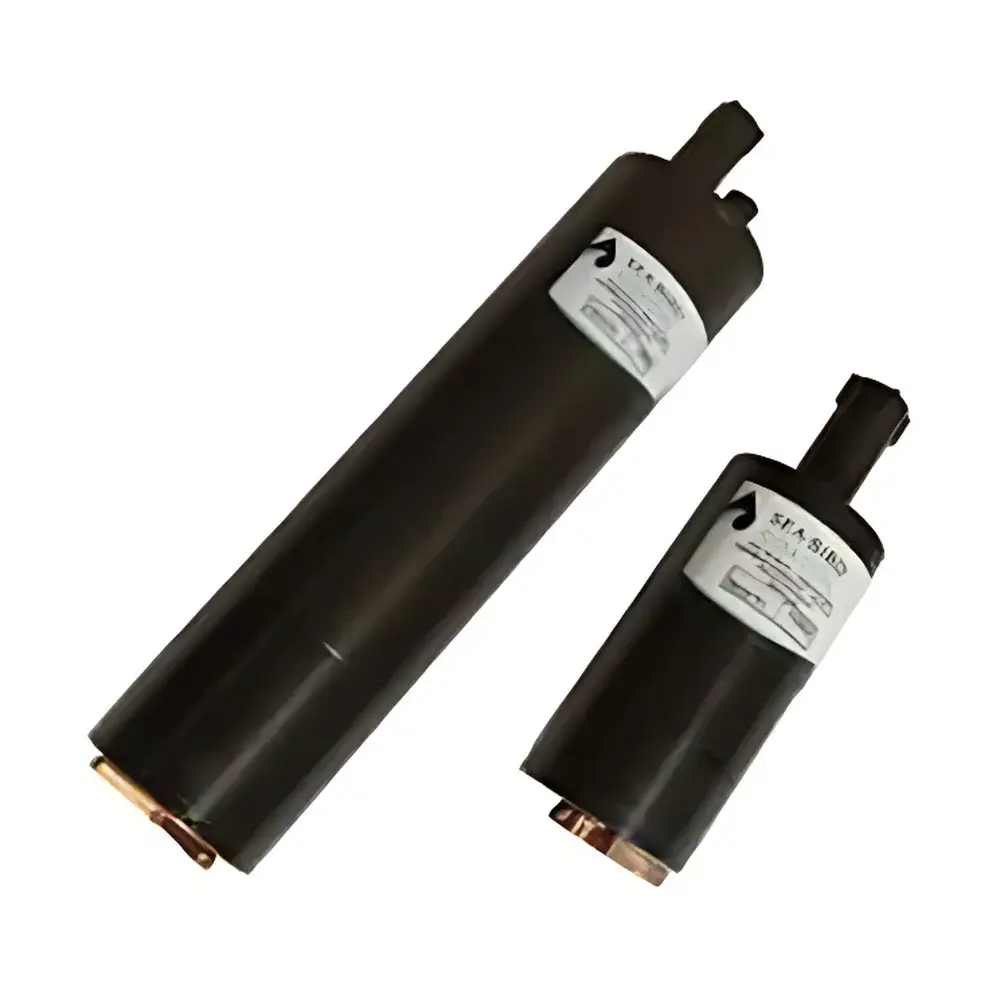
Sea-Bird Coastal ECO Single- and Multi-Parameter Fluorometer
| Brand | Sea-Bird Scientific |
|---|---|
| Origin | USA |
| Manufacturer | WET Labs (designed and manufactured) |
| Model | ECO Series |
| Instrument Type | Submersible Optical Sensor Platform |
| Deployment Modes | Profiling, Moored, Buoy-Mounted, Handheld (via optional interface) |
| Compliance | IP68 rated, ASTM D3921-22 (for turbidity), ISO 10264-2 (for chlorophyll-a fluorescence calibration traceability), GLP-compliant data logging |
Overview
The Sea-Bird Coastal ECO series is a family of submersible optical sensors engineered for high-fidelity, long-term in situ measurement of key aquatic optical properties. Developed by WET Labs—a leader in oceanographic optics—and integrated into Sea-Bird Scientific’s environmental monitoring ecosystem, the ECO platform leverages precision photodiode-based detection with narrowband interference filters and temperature-stabilized LED excitation sources. Each sensor operates on the principle of fluorescence excitation-emission or light scattering, calibrated against NIST-traceable standards. Unlike conventional benchtop fluorometers, the ECO is designed for continuous deployment in dynamic freshwater, estuarine, and marine environments—supporting both discrete profiling and unattended moored operations for durations exceeding 6–12 months without recalibration. Its modular architecture enables configuration as single-parameter (e.g., Chl-a only), dual-parameter (e.g., Chl-a + turbidity), or tri-parameter systems, all sharing identical mechanical housing, power management, and data telemetry interfaces.
Key Features
- Optical Engine: High-quantum-efficiency silicon photodiodes with spectral response optimized across 350–750 nm; minimal thermal drift (<0.02 %/°C) ensures stability under diurnal temperature cycles.
- Biofouling Mitigation: Integrated Bio-wiper™ mechanical cleaning system actuates at user-defined intervals (e.g., every 6–24 hours), physically removing biofilm from optical windows without consumables or chemical agents.
- Power & Data Architecture: Internal rechargeable Li-ion battery (up to 18 months typical life at 15-min sampling interval); onboard 4 GB SD card with FAT32 formatting; real-time serial output (RS-232/RS-485) and optional Bluetooth/WiFi telemetry modules.
- Modular Sensor Configurations: Six interchangeable optical modules—Chl-a (470/685 nm), CDOM (370/460 nm), Fluorescein (470/525 nm), Phycoerythrin (532/575 nm), Phycocyanin (594/650 nm), and Turbidity (700 nm scatter)—allow field-swappable parameter selection without hardware replacement.
- Environmental Robustness: Titanium or Delrin® pressure housings rated to 600 m depth; conformal coating on PCBs; operating temperature range: −2 °C to 40 °C.
Sample Compatibility & Compliance
The ECO series is validated for use in natural waters ranging from oligotrophic open ocean (Chl-a: 0.01–10 µg/L) to eutrophic reservoirs (turbidity: 0.1–1000 NTU) and CDOM-rich blackwater rivers (absorbance at 350 nm up to 5 m⁻¹). All optical modules comply with ASTM D3921-22 for turbidity measurement accuracy and ISO 10264-2 for chlorophyll-a fluorescence calibration traceability to primary reference materials. Data logs include embedded metadata (timestamp, pressure, temperature, battery voltage) and support audit-ready export formats (CSV, NetCDF) compatible with EPA STORET and EU WISE databases. Firmware supports configurable data validation flags per parameter, enabling automatic rejection of out-of-range or low-SNR readings per GLP requirements.
Software & Data Management
ECO sensors interface natively with Sea-Bird’s SBE Data Processing software (v7.2+), which provides batch calibration coefficient application, spectral correction for Raman scattering and inner-filter effects, and unit conversion (e.g., RFU → µg/L Chl-a using site-specific quenching corrections). Raw binary files (.hex) are convertible to ASCII via the ECO Utility Tool, supporting integration into Python (via seabirdpy), MATLAB, or R workflows. For regulatory reporting, the system supports 21 CFR Part 11–compliant electronic signatures when paired with Sea-Bird’s SecureLog™ server, including full audit trails for calibration edits, firmware updates, and data exports.
Applications
- Lake and reservoir trophic state monitoring via synchronized Chl-a and CDOM time-series to distinguish algal bloom drivers from terrestrial DOM inputs.
- Riverine dye-tracing studies using fluorescein detection limits of 10⁻¹² mol/L (sub-ppt), enabling precise residence time distribution modeling in complex floodplain geometries.
- Harmful algal bloom (HAB) early warning through concurrent phycocyanin (cyanobacteria) and phycoerythrin (cryptophytes/rhodophytes) quantification at species-relevant excitation wavelengths.
- Estuarine mixing zone characterization via turbidity-Chl-a covariance analysis to identify sediment resuspension events decoupled from phytoplankton dynamics.
- Long-term benthic flux studies using bottom-mounted ECO-NTU modules to quantify particle settling velocity and organic carbon export efficiency.
FAQ
What is the maximum deployment duration for an ECO sensor without maintenance?
Typical unattended operation exceeds 12 months in temperate coastal waters when configured with Bio-wiper™ cycling every 12 hours and sampling at 15-minute intervals. In high-fouling tropical estuaries, 6–8 months is typical.
Can ECO sensors be calibrated in-house, or is factory calibration required?
Field calibration is possible using certified reference standards (e.g., quinine sulfate for Chl-a, Formazin for turbidity), but factory calibration against NIST-traceable sources is recommended annually for regulatory-grade data.
How does the ECO handle temperature-induced fluorescence quenching?
Each optical module includes a thermistor adjacent to the detector; firmware applies real-time temperature compensation coefficients derived from empirical quenching curves measured during factory characterization.
Is the ECO compatible with third-party data loggers such as Campbell Scientific CR1000X or Onset HOBO?
Yes—via RS-232/RS-485 serial output with ASCII command protocol; full register mapping and polling syntax are documented in the ECO Communications Manual v4.1.
Does the Bio-wiper™ mechanism require periodic replacement of wiper blades?
No—wiper blades are fabricated from abrasion-resistant silicone elastomer and are rated for >50,000 actuations; no scheduled replacement is specified in the maintenance schedule.







