SETAFLASH Model 82000-2 Automated Micro Closed-Cup Flash Point Tester
| Brand | SETA |
|---|---|
| Origin | United Kingdom |
| Model | 82000-2 |
| Test Method | Closed-Cup (Rapid Equilibrium / Constant Rate of Rise) |
| Automation Level | Fully Automatic |
| Temperature Range | −20 °C to 130 °C or Ambient +5 °C to 300 °C |
| Sample Volume | 2–4 mL |
| Ignition Source | Selectable Electric Spark or Gas Flame |
| Compliance | ASTM D3278, D3828, D7236 |
Overview
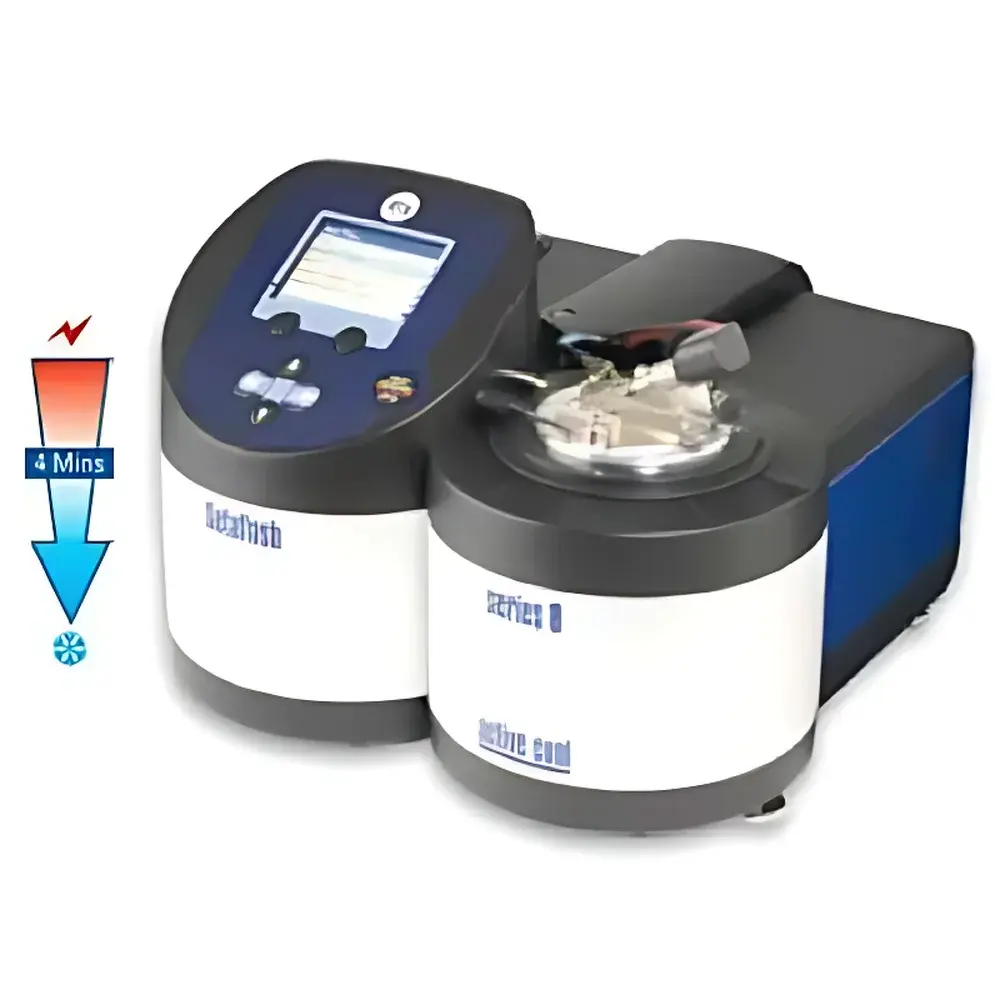
The SETAFLASH Model 82000-2 is a fully automated micro closed-cup flash point tester engineered for precision, repeatability, and regulatory compliance in petroleum, chemical, coatings, and solvent testing laboratories. It implements the Rapid Equilibrium (RE) method—originally developed and standardized by SETA in the late 1960s—and the Constant Rate of Rise (CRR) method, both recognized as primary test protocols under major international standards. The instrument operates on the principle of detecting the lowest temperature at which vapors above a contained liquid sample ignite momentarily when exposed to an ignition source under controlled, sealed conditions. Its design adheres strictly to the thermodynamic and kinetic constraints defined in ASTM D3278, ISO 3679, and GB/T 5208, ensuring traceable measurement integrity across global quality assurance frameworks.
Key Features
- Fully automated operation including heating ramp control, ignition sequence initiation, flash detection, and result calculation—no manual intervention required during test execution.
- Dual-method capability: Rapid Equilibrium mode (1-minute dwell ≤100 °C; 2-minute dwell >100 °C, adjustable 1–99 min) and Constant Rate of Rise mode with programmable heating rates per standard requirements.
- Wide operational temperature range: −20 °C to 130 °C (with Peltier cooling) or ambient +5 °C to 300 °C (with high-temperature heater), enabling analysis of volatile solvents through heavy distillates.
- Minimal sample consumption: Only 2–4 mL per test—reducing material cost, waste generation, and exposure risk while maintaining statistical validity per ISO/IEC 17025 validation guidelines.
- Selectably configurable ignition: User-switchable between electric spark (compliant with ASTM D3828) and gas flame (compatible with IP 523 and ISO 3679), ensuring method-specific fidelity.
- Integrated rapid cooling system: Achieves reduction from 80 °C to 20 °C in ≤4 minutes, supporting high-throughput workflows without thermal carryover artifacts.
- Real-time atmospheric pressure compensation: Automatic correction applied to all flash point results using built-in barometric sensor data—critical for GLP-compliant reporting and inter-laboratory comparability.
- Robust safety architecture: Includes vapor containment lid interlock, flame-out detection, overtemperature cutoff, and fail-safe ignition sequencing—designed to meet IEC 61010-1 and ATEX Category 3G requirements.
Sample Compatibility & Compliance
The 82000-2 accommodates a broad spectrum of low-to-medium volatility liquids, including hydrocarbon solvents, diesel fractions, lubricating oils, paint thinners, adhesives, cleaning agents, and non-viscous flammable liquids classified under UN Class 3. Sample cups are available in aluminum (standard) or stainless steel (for aggressive or high-temperature applications). All test protocols align with mandatory regulatory frameworks: EPA Method 1020 A & B for hazardous waste characterization; CHIPS Regulations for U.S. Department of Transportation transport classification; and UN Manual of Tests and Criteria, Part III, Section 32.3 for Class 3 flammability determination. Instrument performance verification follows ASTM D7094 Annex A1 and ISO/IEC 17025 clause 5.5.2, with documented uncertainty budgets available upon request.
Software & Data Management
The instrument supports RS232, USB, and Ethernet connectivity for seamless integration into LIMS and ELN environments. Firmware includes audit-trail functionality compliant with FDA 21 CFR Part 11 (electronic signatures, user access levels, immutable event logs). Up to 64 test records—including raw temperature/time profiles, ignition events, atmospheric pressure, and operator ID—are stored onboard with timestamping. Data export formats include CSV and PDF reports pre-formatted to match ASTM, ISO, and GB/T certificate templates. Optional PC-based software enables advanced statistical analysis (e.g., repeatability RSD calculation per ISO 4259), method parameter libraries, and automated report generation with digital signature support.
Applications
- Quality control of refinery streams, gasoline blends, jet fuels, and biodiesel feedstocks per ASTM D93/D3278 specifications.
- Regulatory testing for SDS preparation (GHS Category 2/3 flammability classification) and transport documentation (UN 1203, UN 1263, etc.).
- R&D screening of novel solvent formulations, coating resins, and cleaning chemistries where minimal sample use is essential.
- Third-party certification labs performing accredited flash point testing to ISO/IEC 17025 scope requirements.
- Environmental laboratories verifying flash point of aqueous waste streams under EPA 1020 A/B protocols.
FAQ
What flash point methods does the 82000-2 support?
It supports both Rapid Equilibrium (ASTM D3278, ISO 3679, GB/T 5208) and Constant Rate of Rise (ASTM D3828, IP 524) methods, with user-selectable ignition source and dwell time parameters.
Is atmospheric pressure correction automatic?
Yes—the integrated barometric sensor continuously monitors ambient pressure and applies real-time correction to all reported flash point values per ISO 3679 Annex B and ASTM D3278 Section 10.
Can the instrument be validated for GLP or GMP environments?
Yes—it provides full electronic audit trail, user authentication, calibration history logging, and IQ/OQ documentation templates compatible with FDA 21 CFR Part 11 and EU Annex 11 requirements.
What safety certifications apply to the 82000-2?
It conforms to IEC 61010-1 (Electrical Safety for Measurement Equipment) and carries CE marking; optional configurations meet ATEX II 3G for use in Zone 2 hazardous areas.
How is temperature accuracy verified?
Traceable NIST-calibrated reference thermometers (e.g., PRTs certified to ±0.05 °C) are used during factory verification; users may perform periodic checks using certified calibration baths per ISO/IEC 17025 clause 5.5.2.