
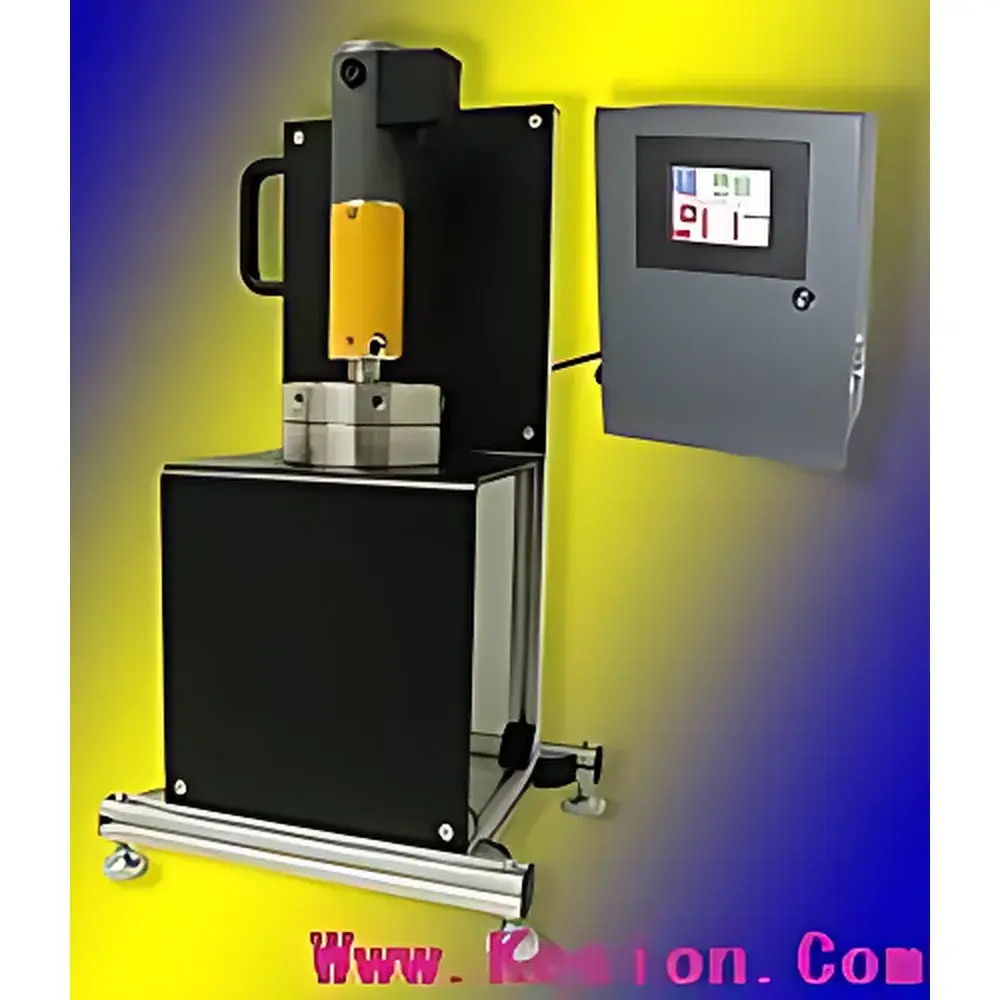
SFT HPR Series Supercritical Fluid Particle Engineering System
| Brand | SFT |
|---|---|
| Origin | USA |
| Manufacturer Type | Authorized Distributor |
| Origin Category | Imported |
| Model | HPR Series Laboratory-Scale System |
| Price | USD $100,000 |
| Max Operating Temperature | 200 °C |
| Pressure Rating | 10,000 PSI (68.9 MPa) |
| Extraction Volumes | 50 mL – 8 L |
| Flow Control | Programmable via integrated high-pressure pump and back-pressure regulator |
| Channel Configuration | Single- or multi-channel (configurable) |
| Application Scope | Supercritical fluid dyeing, reaction, extraction, drying, and cleaning |
Overview
The SFT HPR Series Supercritical Fluid Particle Engineering System is a fully integrated, ASME-compliant laboratory-scale platform engineered for precision processing of materials using supercritical carbon dioxide (scCO₂) and other supercritical fluids. It operates on the fundamental principle that above its critical point (31.1 °C, 1072 PSI for CO₂), the fluid exhibits tunable solvent strength, near-zero surface tension, and high diffusivity—enabling efficient mass transfer, particle nucleation, and morphology control. Unlike conventional extraction or drying systems, this platform supports dynamic process modulation across pressure, temperature, flow rate, and co-solvent (entrainer) concentration to achieve reproducible particle engineering outcomes—including micronization, co-precipitation, aerogel synthesis, and surface functionalization. Designed for R&D laboratories in pharmaceuticals, advanced materials, and specialty chemicals, it delivers deterministic control over crystallization kinetics and phase behavior under supercritical conditions.
Key Features
- ASME Section VIII Division 1–certified reactor vessels available in volumes from 50 mL to 8 L, with standard 500 mL configuration; all pressure boundaries rated to 10,000 PSI (68.9 MPa)
- Temperature-controlled operation up to 200 °C with ±0.5 °C stability across the full range, enabled by dual-zone electric heating and PID-regulated cooling jackets
- Modular architecture supporting single- or multi-channel configurations for parallel process development or sequential batch processing
- Two orthogonal sapphire or fused quartz viewports (standard Ø25 mm, optional larger diameters) for real-time optical monitoring of phase transitions, precipitation onset, and particle agglomeration
- Integrated high-resolution imaging system with synchronized data acquisition: industrial-grade CMOS camera, frame rates up to 120 fps, calibrated lighting, and time-stamped video export compatible with MATLAB and ImageJ workflows
- Automated control unit featuring programmable logic controller (PLC) with touchscreen HMI, ISO 13849–compliant safety interlocks, and configurable ramp/soak profiles for pressure and temperature
- Dedicated high-purity scCO₂ delivery: diaphragm-type gas compressor with oil-free compression stages, integrated CO₂ purification cartridge, and inline moisture/oxygen sensors
- High-precision entrainer delivery system: dual-piston metering pump capable of delivering polar modifiers (e.g., ethanol, acetone) at flow rates from 0.01 to 10 mL/min with ≤1% volumetric repeatability
Sample Compatibility & Compliance
The system accommodates solid, liquid, and semi-solid feedstocks—including APIs, polymers, natural extracts, metal precursors, and biopolymers—without thermal degradation or solvent residue. All wetted components are constructed from ASTM A182 F22 or F51 stainless steel, with Hastelloy C-276 options for highly corrosive entrainers. The design conforms to ASME B31.3 Process Piping Code for high-pressure fluid service and incorporates redundant pressure relief mechanisms compliant with ANSI/ISA-84.00.01 (IEC 61511). Documentation includes Factory Acceptance Test (FAT) reports, material traceability certificates, and ASME U-1A data reports. For regulated environments, the control system supports 21 CFR Part 11–compliant audit trails, electronic signatures, and user-role-based access control when configured with optional validation packages.
Software & Data Management
The embedded control software provides real-time visualization of pressure, temperature, flow, and valve status across all process loops. Data logging occurs at 10 Hz minimum, stored in timestamped CSV and HDF5 formats with metadata tagging (batch ID, operator, SOP version). Optional add-ons include thermodynamic modeling integration (e.g., NIST REFPROP API), automated endpoint detection via image analytics, and LIMS-compatible RESTful API for bidirectional data exchange. All software modules undergo annual cybersecurity assessment per IEC 62443-3-3 and support TLS 1.2+ encrypted communications.
Applications
- Pharmaceutical particle engineering: production of respirable dry powder inhaler (DPI) formulations with controlled size distribution (Dv50 = 1–5 µm) and improved dissolution kinetics
- Nanomaterial synthesis: scCO₂-assisted deposition of metal-organic frameworks (MOFs) and quantum dot composites on porous substrates
- Green extraction: selective isolation of thermolabile phytochemicals (e.g., curcumin, anthocyanins) without organic solvents
- Supercritical dyeing: uniform coloration of polyester and polypropylene fibers using disperse dyes, eliminating aqueous effluent
- Aerogel fabrication: solvent-free drying of silica, cellulose, and chitosan gels preserving >95% porosity and <10 nm pore structure
- Surface cleaning and sterilization: residue-free removal of photoresist and biocontaminants from MEMS devices and implantable sensors
FAQ
What safety certifications does the system carry?
The reactor vessel carries ASME “U” Stamp certification; electrical components meet UL 61010-1 and CE/EMC Directive 2014/30/EU requirements. Full FAT documentation is provided prior to shipment.
Can the system be validated for GMP use?
Yes—IQ/OQ protocols are available upon request. With optional 21 CFR Part 11 software licensing and qualified backup power, the system meets FDA and EMA expectations for Phase I–III clinical manufacturing support.
Is remote monitoring supported?
Standard Ethernet/IP connectivity enables secure remote access via VPN; optional cloud telemetry (AWS IoT Core) supports predictive maintenance alerts based on pump cycle count and pressure transient analysis.
What maintenance intervals are recommended?
Quarterly calibration of pressure transducers and temperature sensors; annual replacement of diaphragm seals and entrainer pump check valves; biannual verification of safety relief valve setpoints per ASME PTC 25.
Are custom reactor geometries available?
Yes—custom internal baffling, impeller configurations, and heated/cooled jacket designs can be fabricated under engineering change order (ECO) with lead times of 12–16 weeks.



