
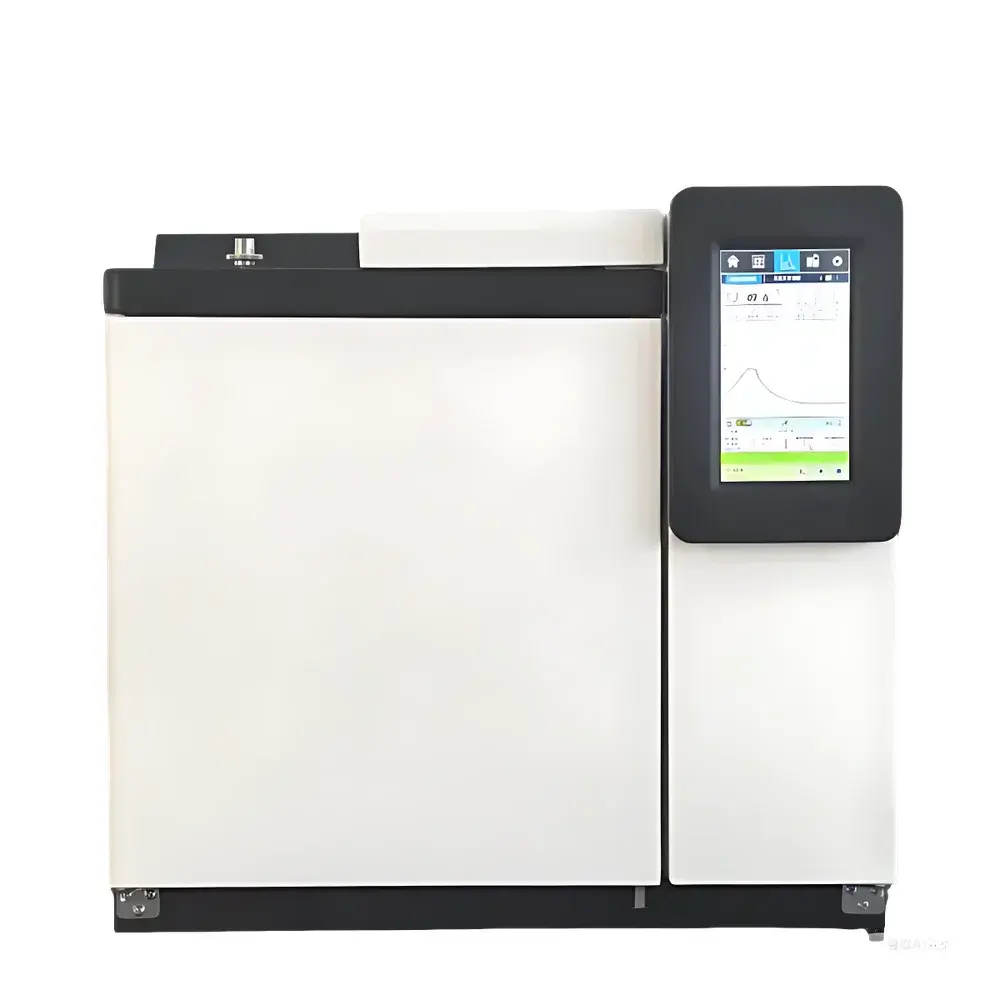
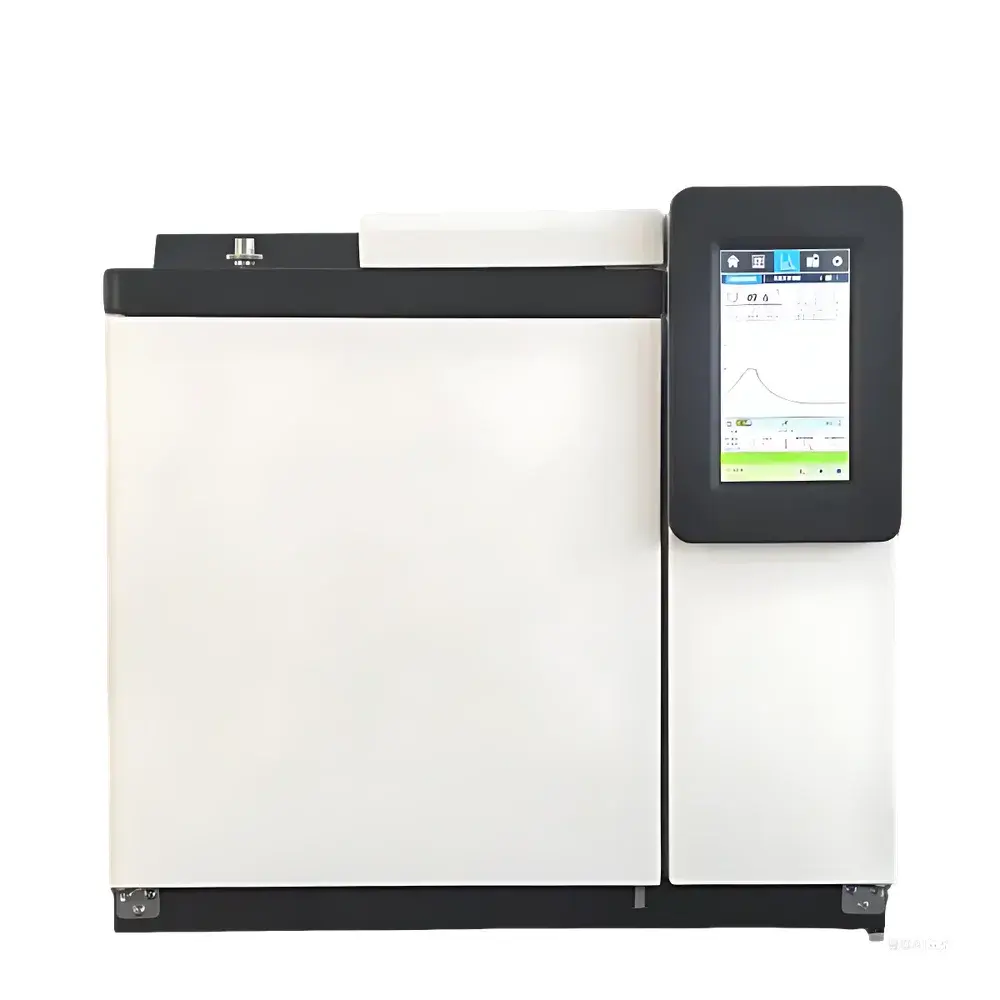
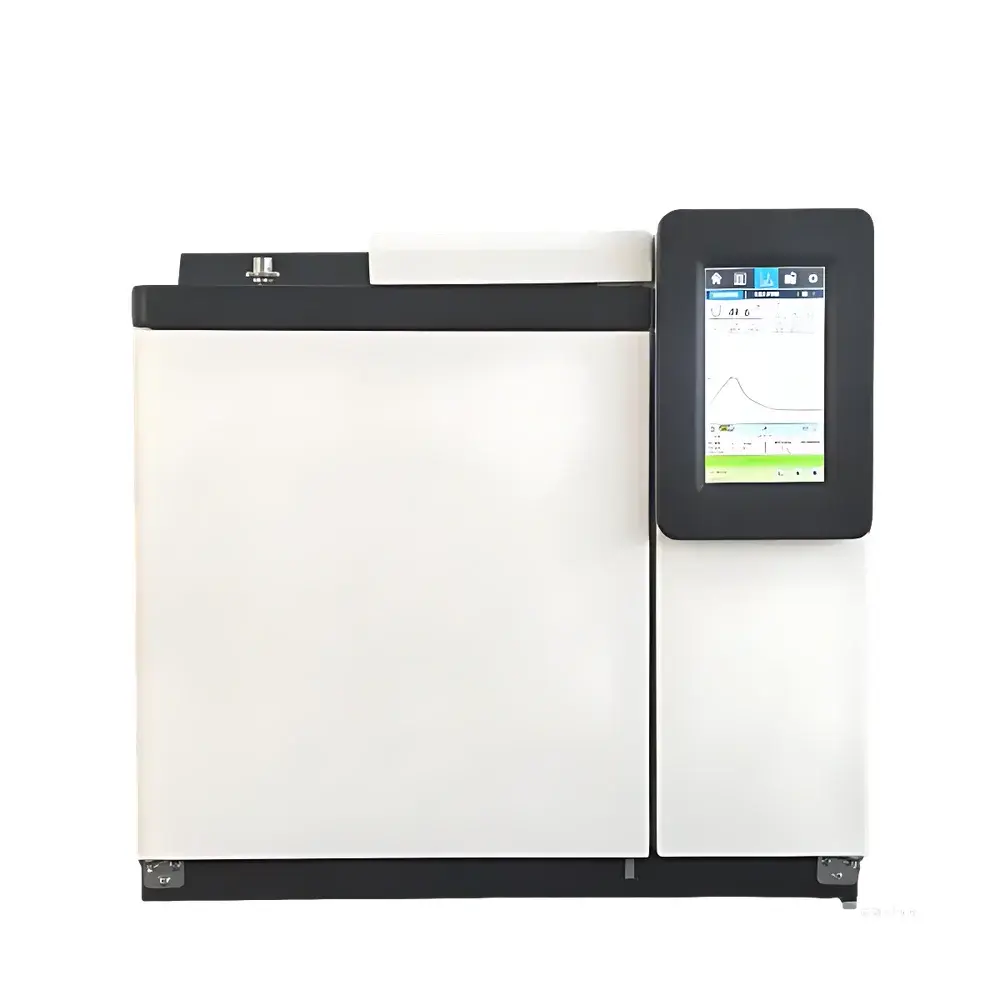
Shandong Luchuang GC9860 Laboratory Gas Chromatograph
| Brand | Shandong Luchuang |
|---|---|
| Origin | Shandong, China |
| Manufacturer Type | Direct Manufacturer |
| Instrument Type | Laboratory Gas Chromatograph |
| Application Scope | General-Purpose |
| Oven Temperature Range | Ambient +8 °C to 450 °C |
| Maximum Ramp Rate | 65 °C/min |
| Cooling Rate | 300 °C → 100 °C in ≤3.5 min (at 25 °C ambient) |
| Temperature Accuracy | ±0.01 °C |
| Programmable Temperature Steps | ≥100 |
| FID Detection Limit | ≤2×10⁻¹² g/s (n-hexadecane) |
| FID Linear Dynamic Range | ≥10⁷ |
| FID Operating Temperature | Up to 450 °C |
| Inlet Max Temp | 450 °C |
| Simultaneous Inlets | Up to 3 |
| Available Inlet Types | 6 configurations |
| Simultaneous Detectors | 1–3 (FID/TCD modular options) |
| TCD Dual-Channel Makeup Gas Support | Yes |
Overview
The Shandong Luchuang GC9860 is a benchtop laboratory gas chromatograph engineered for precision, reproducibility, and operational flexibility in routine and method-development environments. It employs classic packed and capillary column separation principles based on differential partitioning of analytes between a mobile gas phase (carrier gas: He, H₂, or N₂) and a stationary phase coated inside fused-silica or stainless-steel columns. The system integrates a thermally optimized oven with advanced thermal mass management, enabling rapid heating/cooling cycles and sub-millidegree temperature stability—critical for retention time reproducibility across multi-day sequences. Designed for compliance-aware laboratories, the GC9860 supports method traceability, audit-ready data handling, and configurable hardware architecture suitable for pharmaceutical QC, environmental monitoring, petrochemical analysis, food safety testing, and academic research.
Key Features
- 7-inch capacitive touchscreen interface: High-resolution display with intuitive graphical workflow navigation; enables direct method editing, real-time parameter adjustment, and status visualization without external PC dependency.
- Integrated chromatography data system (CDS): Embedded IoT-enabled software platform supporting remote instrument control, live chromatogram streaming, automated peak integration, calibration curve generation, and report export in PDF/CSV formats.
- Electronically monitored gas control system: Digital pressure and flow readouts replace analog gauges; supports precise carrier gas optimization via electronic pneumatic control (EPC) for both split/splitless and on-column injection modes.
- High-fidelity temperature management: Oven features dual-zone heating elements, low-thermal-inertia insulation, and adaptive PID algorithms—achieving ±0.01 °C isothermal stability and ≤3.5 min cooldown from 300 °C to 100 °C (25 °C ambient).
- Modular inlet architecture: Accommodates up to three independently controllable inlets (e.g., split/splitless, PTV, cool-on-column); six interchangeable inlet modules available to support volatile, semi-volatile, and thermally labile compounds.
- Multi-detector expandability: Supports simultaneous installation of 1–3 detectors—including flame ionization (FID), thermal conductivity (TCD), and electron capture (ECD)—with optional dual-FID or dual-TCD configurations and TCD dual makeup gas channels for single/dual-column operation.
Sample Compatibility & Compliance
The GC9860 accommodates a broad range of sample matrices—including aqueous extracts, organic solvents, headspace vapors, and derivatized biological fluids—when paired with appropriate column chemistries (e.g., DB-5ms, HP-INNOWAX, or PLOT Al₂O₃). Its hardware and firmware comply with fundamental requirements for GLP/GMP-aligned workflows: electronic signatures, user access levels, audit trail logging, and data integrity safeguards aligned with FDA 21 CFR Part 11 principles. While not pre-certified for specific ISO/ASTM methods, the instrument meets technical prerequisites for ASTM D3606 (gasoline aromatics), ISO 11843 (detection capability), USP (chromatography), and EPA Method 8021B (halogenated hydrocarbons) when validated per laboratory SOPs.
Software & Data Management
The embedded CDS provides full acquisition, processing, and reporting functionality. Raw data (.cdf or .raw) are stored locally with timestamped metadata, including method parameters, detector settings, and environmental conditions. Software supports batch processing, template-based report generation, and customizable pass/fail criteria for release testing. Audit trail records all user actions—including method edits, integration parameter changes, and result approvals—with immutable timestamps. Export options include CSV for LIMS integration, PDF for regulatory submissions, and XML for enterprise data lakes. Remote access is enabled via secure HTTPS tunneling with role-based authentication.
Applications
- Residual solvent analysis in pharmaceutical intermediates (ICH Q3C compliant workflows)
- VOC profiling in indoor air and industrial emissions (EPA TO-17, ASTM D5197)
- Fatty acid methyl ester (FAME) quantification in biodiesel feedstocks (EN 14103)
- Pesticide residue screening in fruits and vegetables (AOAC 2007.01)
- Hydrocarbon group-type analysis in lubricants and fuels (ASTM D5186)
- Essential oil composition fingerprinting using chiral or polar capillary columns
FAQ
What column types are supported?
The GC9860 accepts standard 0.1–0.53 mm ID fused-silica capillary columns (up to 60 m length) and stainless-steel packed columns (up to 4 mm ID × 4 m), compatible with common stationary phases including polydimethylsiloxane, polyethylene glycol, and aluminum oxide.
Does the system support method transfer from other GC platforms?
Yes—retention time alignment, gradient scaling, and flow rate conversion tools are built into the CDS; users can import legacy methods from Agilent, Shimadzu, or Thermo platforms with manual validation recommended per ICH Q2(R2).
Is remote diagnostics available?
The instrument includes embedded diagnostic routines accessible via web interface; error logs, sensor health reports, and calibration history are retrievable remotely for proactive maintenance planning.
Can the GC9860 be integrated into an automated sample preparation workflow?
It supports standard RS-232 and Ethernet communication protocols; third-party autosamplers (e.g., CTC PAL, GERSTEL MPS) may be interfaced using vendor-provided drivers or custom ASCII command sets.
What validation documentation is provided?
Factory-installed IQ/OQ documentation is included; PQ protocols must be developed in-house per application-specific requirements and regulatory jurisdiction.






