
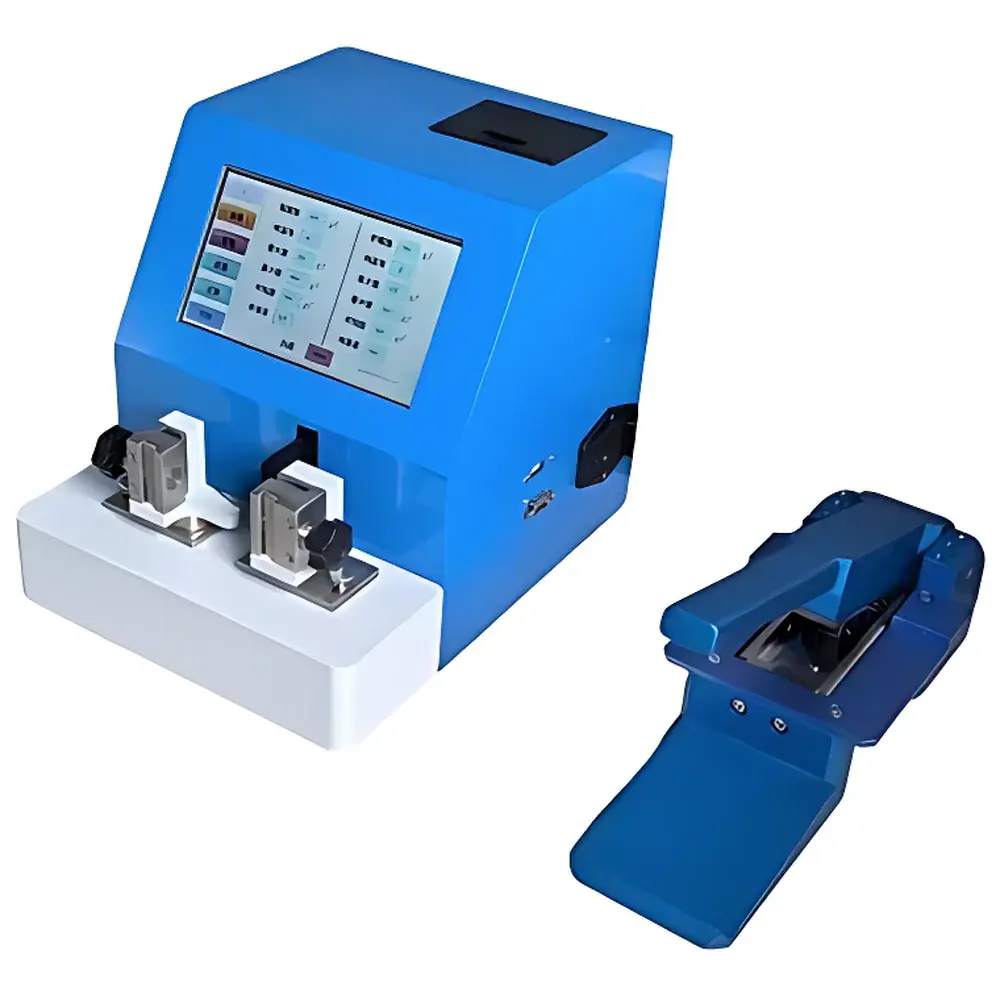
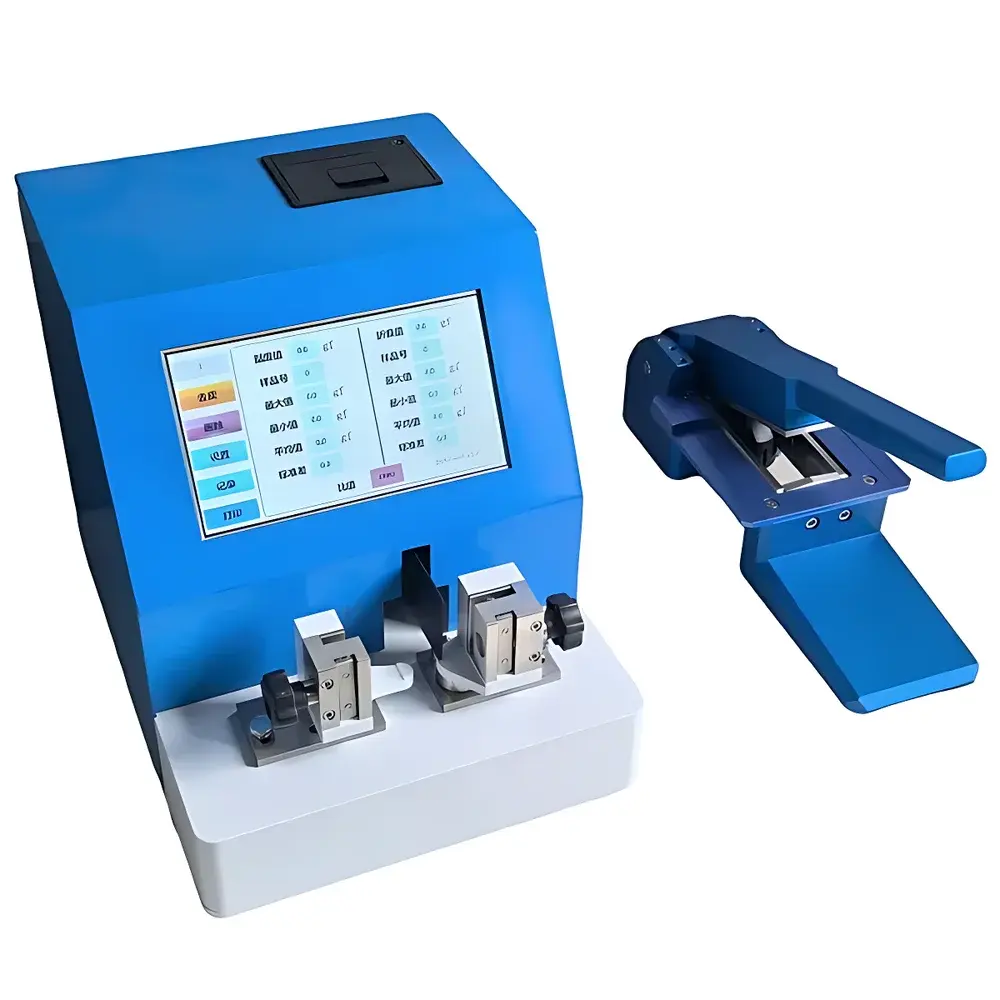
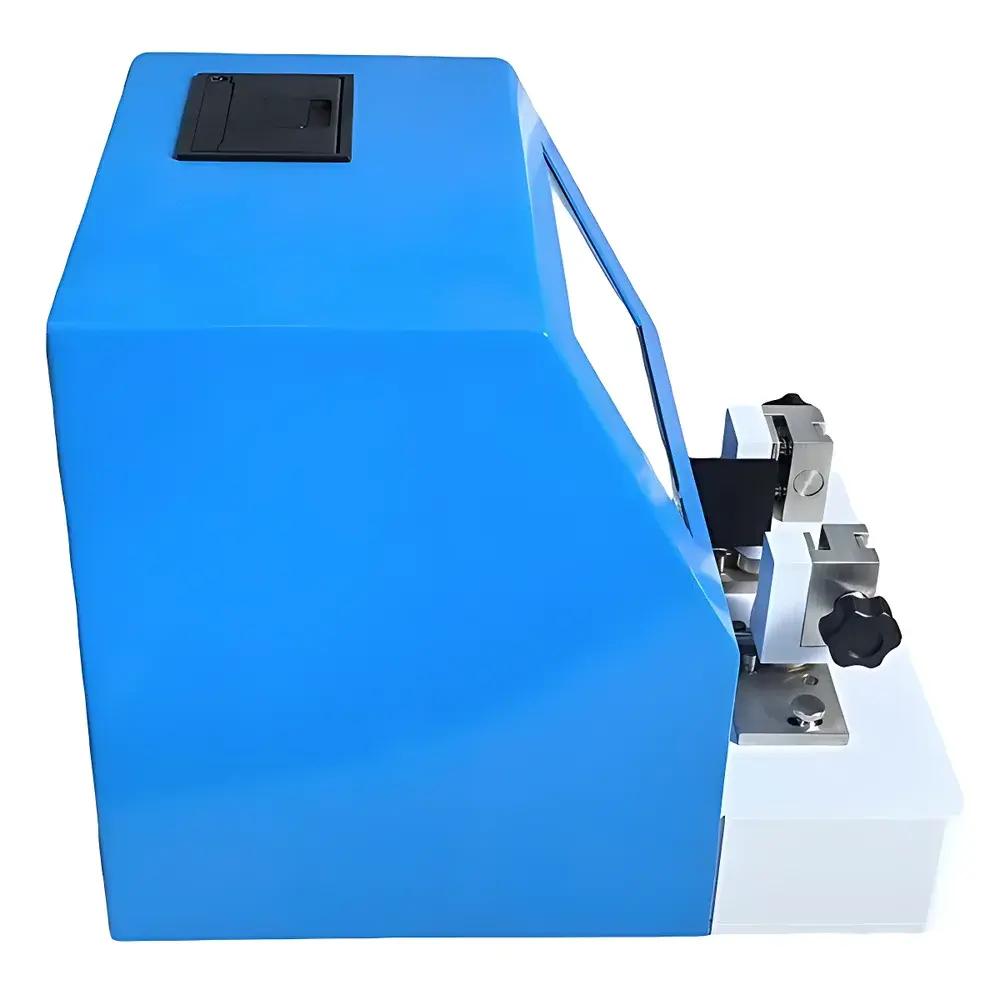
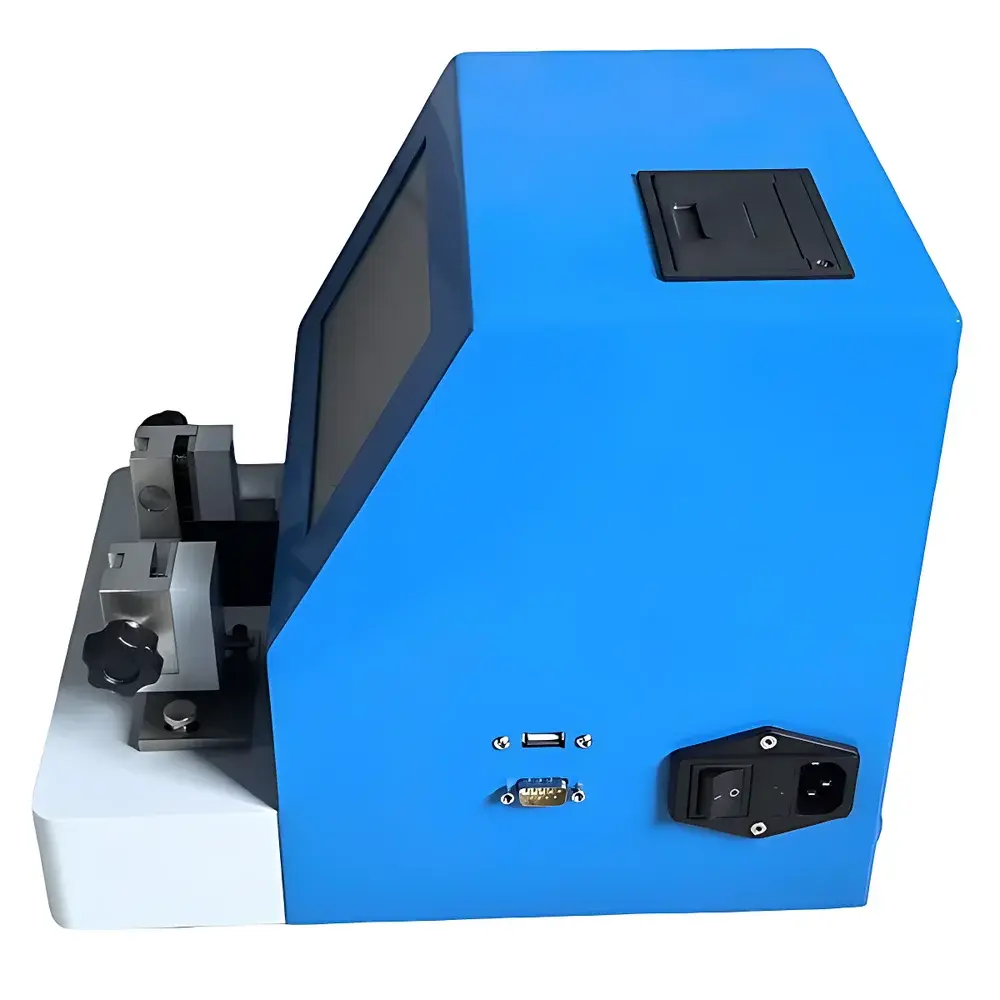
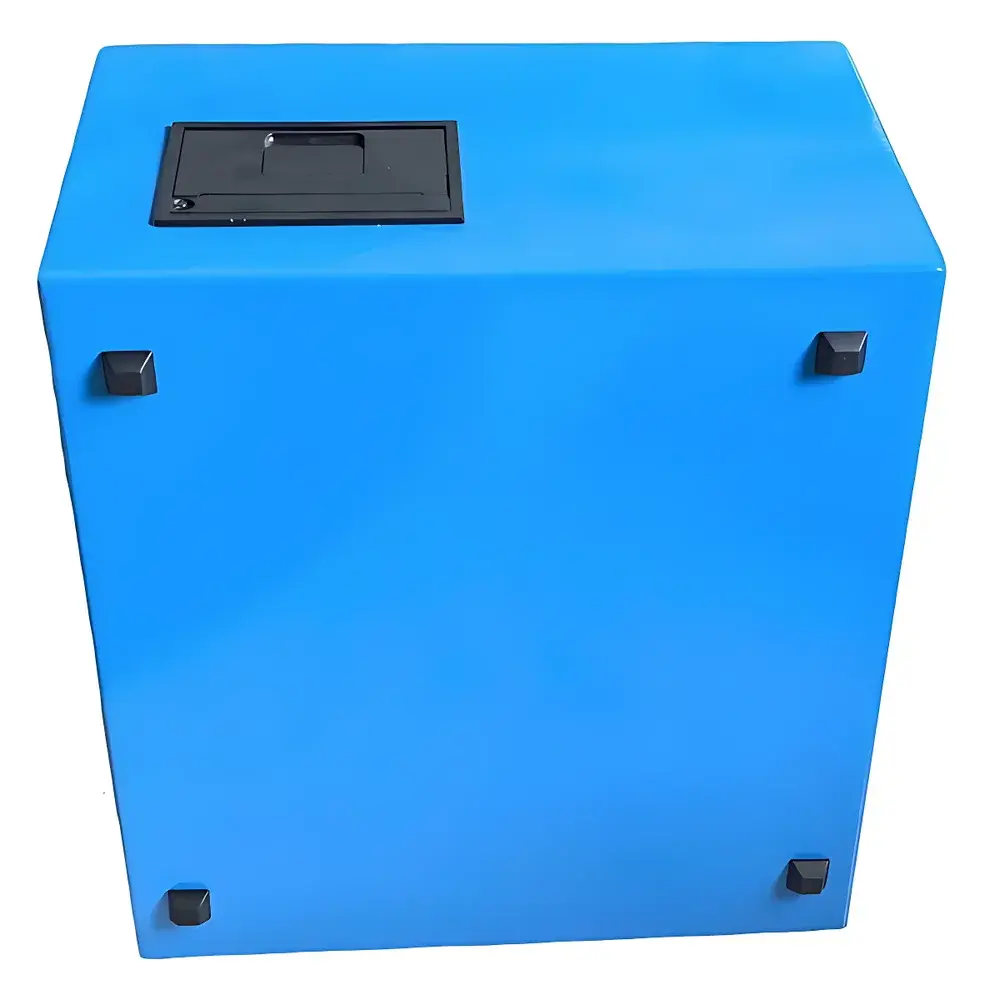
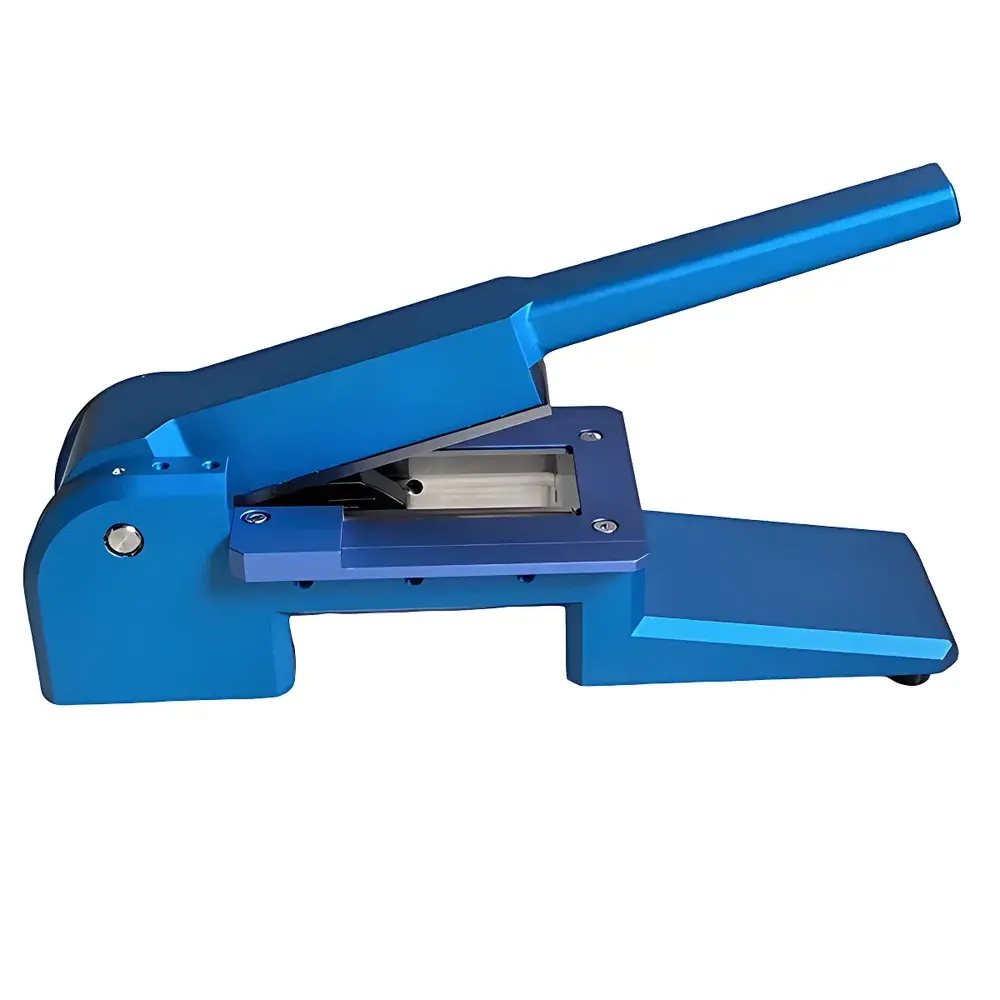
Shang Zun CS-06 Series Crease Stiffness Tester
| Brand | Shang Zun |
|---|---|
| Origin | Guangdong, China |
| Model | CS-06 Series |
| Testing Range | 0–1200 gf |
| Crease Angle | 90° (rounded crease option available on CS-06R and CS-06M) |
| Board Stiffness Angle | 15° |
| Sample Dimensions (Crease) | 38 × 36 mm |
| Sample Dimensions (Board) | 70 × 38 mm |
| Resolution | 0.1 gf |
| Test Duration | Adjustable 0–15 s |
| Standard Mass | 200 g |
| Interface | USB + RS-232 |
| Power Supply | 100–240 V AC, 50 Hz |
| Compliance | ISO 5628, TAPPI T 823, GB/T 22895 |
Overview
The Shang Zun CS-06 Series Crease Stiffness Tester is an electromechanical instrument engineered for precise quantification of bending resistance in thin flexible materials—specifically paperboard, corrugated board, laminated films, and rigid plastic sheets. It operates on the principle of controlled angular deflection under standardized gravitational loading, conforming to the fundamental mechanics described in ISO 5628 (Determination of stiffness of paper and board — The Taber method) and TAPPI T 823 (Stiffness of Paperboard by the Taber Stiffness Tester). Unlike torsional or dynamic rheological methods, this device measures static resistance to folding at defined angles—15° for general board stiffness and 90° for crease-specific rigidity—enabling direct correlation with real-world packaging performance such as carton erectability, hinge durability, and fold-line retention under compression.
Key Features
- 7-inch full-color capacitive touchscreen interface with intuitive navigation, supporting direct access to test history, statistical summary (mean, min, max, standard deviation), and real-time display of both board stiffness and crease stiffness values.
- High-precision imported load cell with 0.1 gf resolution and integrated overload protection, ensuring long-term repeatability and metrological stability across ≥10,000 test cycles.
- Mechanically optimized sample clamp assembly featuring precision-machined bearing surfaces, zero-backlash rotation mechanism, and hardened angle-limiting pins—guaranteeing consistent 15° or 90° deflection without positional drift or rebound.
- Dual communication architecture: native USB 2.0 and RS-232 serial port support for seamless integration into laboratory LIMS or QC data acquisition systems.
- Embedded thermal line printer with quick-access paper tray and auto-cutter functionality, enabling immediate hard-copy generation of test reports compliant with internal QA documentation requirements.
- Robust power conditioning circuitry including EMI-filtered AC input (220 V ±10%, 50 Hz), dedicated earth-ground connection, and dual-stage fuse protection for operational safety in industrial environments.
Sample Compatibility & Compliance
The CS-06 series accommodates standardized specimen geometries per international testing protocols: 70 × 38 mm strips for general board stiffness evaluation and 38 × 36 mm specimens for crease-specific measurement—including optional rounded-crease configurations (CS-06R/CS-06M models) that simulate die-cut hinge geometry used in premium folding cartons. All variants comply with ISO 5628 Class B accuracy tolerances, TAPPI T 823 procedural specifications, and China’s national standard GB/T 22895–2008. The system supports GLP-aligned operation through password-protected parameter configuration, audit-trail-capable test logging (when paired with optional software), and traceable calibration via NIST-traceable reference masses and angular verification fixtures.
Software & Data Management
Optional PC-based software provides extended functionality including automated report generation (PDF/CSV), multi-user role management (administrator/operator), configurable pass/fail thresholds with audible visual alerts, and ratio calculation between board and crease stiffness—critical for evaluating hinge-to-panel stiffness balance in pharmaceutical or luxury packaging design. Data export conforms to ASTM E1447 and ISO/IEC 17025 reporting conventions, with timestamped records containing operator ID, environmental conditions (if externally logged), and instrument firmware revision. When deployed in regulated environments, the software package supports 21 CFR Part 11-compliant electronic signatures and audit trail review capabilities.
Applications
This tester serves quality control laboratories in packaging manufacturing, R&D departments developing sustainable fiber-based alternatives to plastic, and third-party certification bodies validating compliance with retailer-specific packaging standards (e.g., Walmart Sustainable Packaging Scorecard, Amazon Frustration-Free Packaging Program). Typical use cases include incoming raw material verification of linerboard stiffness, process validation of creasing die settings during carton production, comparative analysis of coated vs. uncoated substrates, and accelerated aging studies assessing stiffness retention after humidity cycling per ISO 187.
FAQ
What standards does the CS-06 Series comply with?
It meets ISO 5628, TAPPI T 823, and GB/T 22895 for stiffness measurement methodology and accuracy.
Can the instrument differentiate between board stiffness and crease stiffness in a single test sequence?
Yes—the touchscreen interface allows sequential or parallel execution of both test modes with independent parameter storage and result overlay.
Is calibration traceable to national metrology institutes?
Calibration is performed using certified reference masses and angular gauges; full traceability documentation is provided upon request.
Does the system support automated data transfer to ERP or MES platforms?
Via RS-232 or USB CDC mode, raw ASCII output can be parsed by SCADA or custom middleware without proprietary drivers.
Are round-crease fixtures compatible with all CS-06 models?
Only CS-06R and CS-06M models include mechanical and firmware support for rounded crease geometry; retrofitting older units is not supported.




