
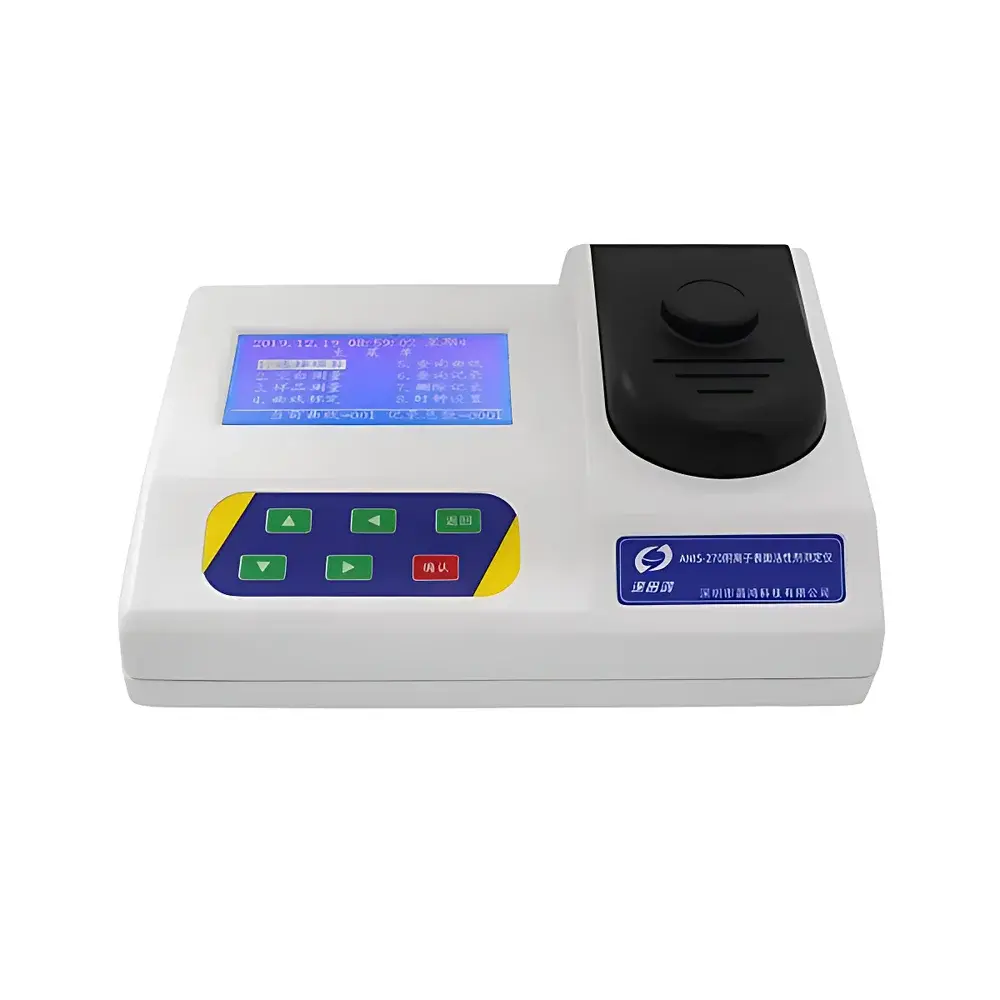
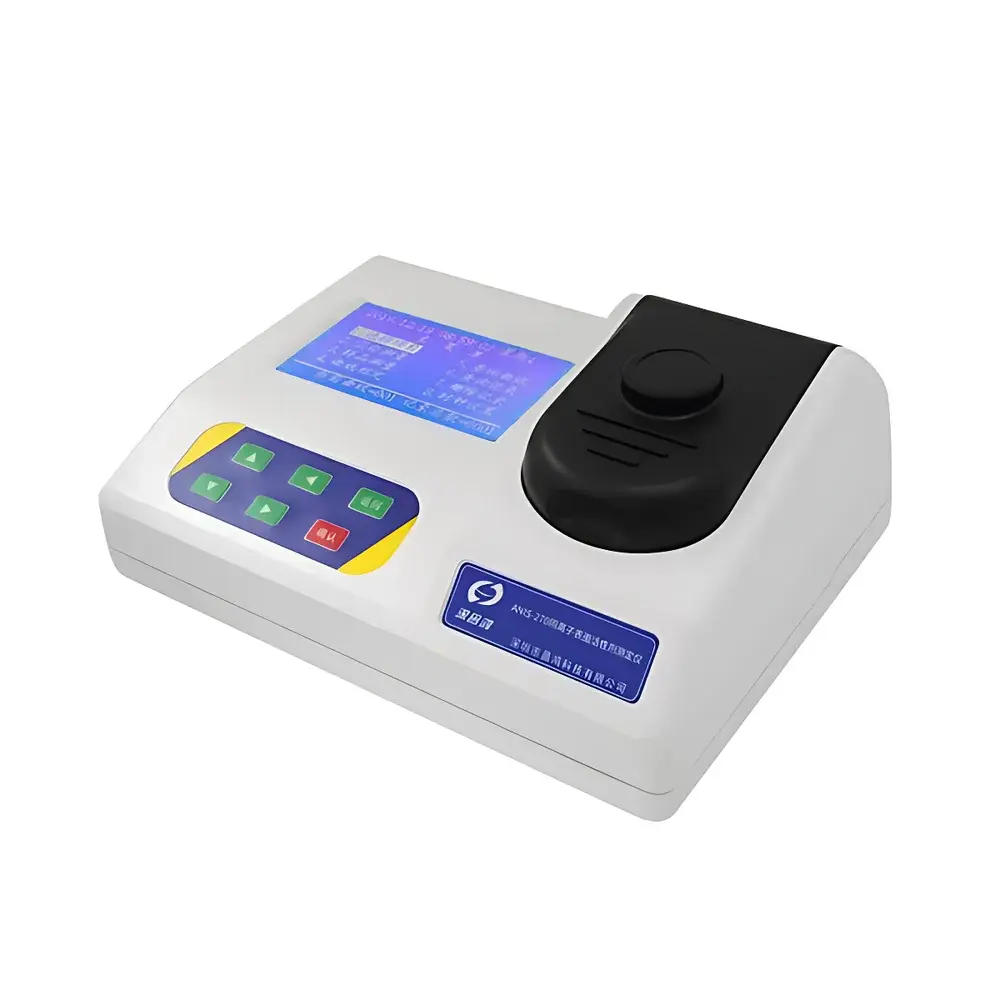
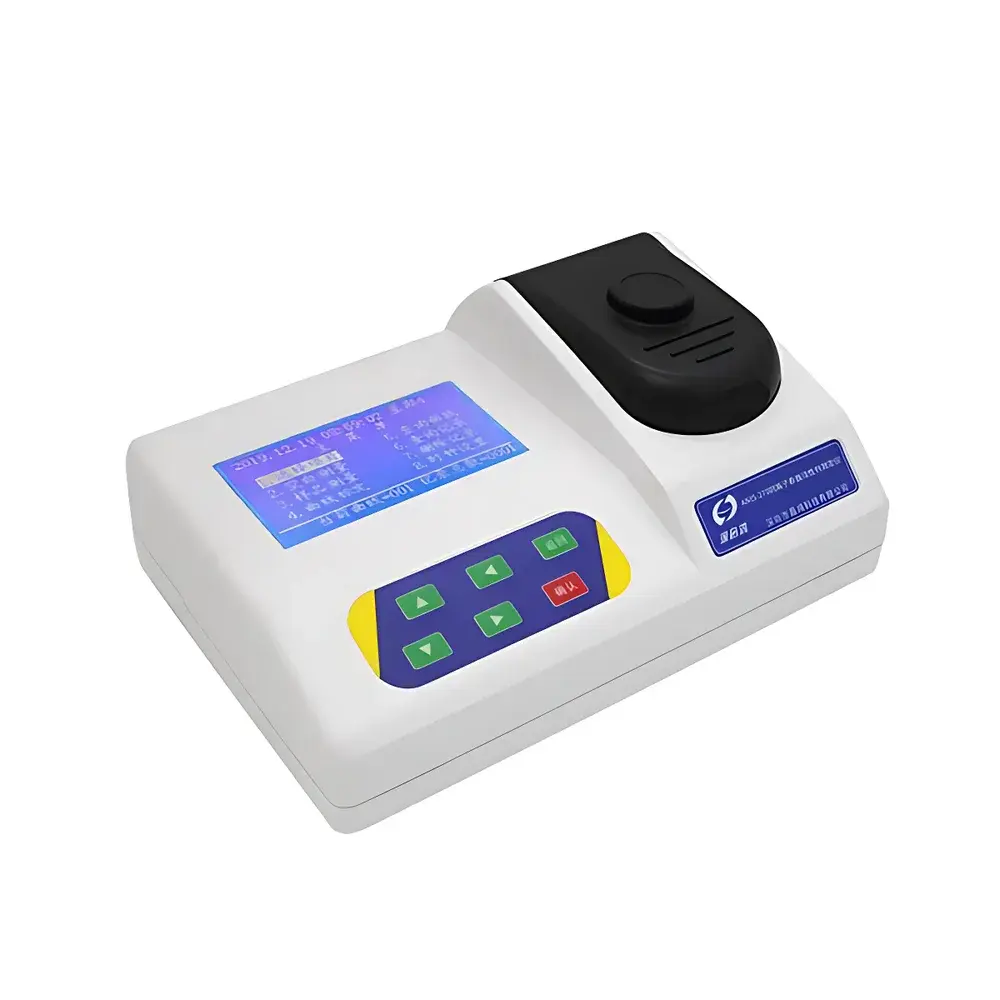
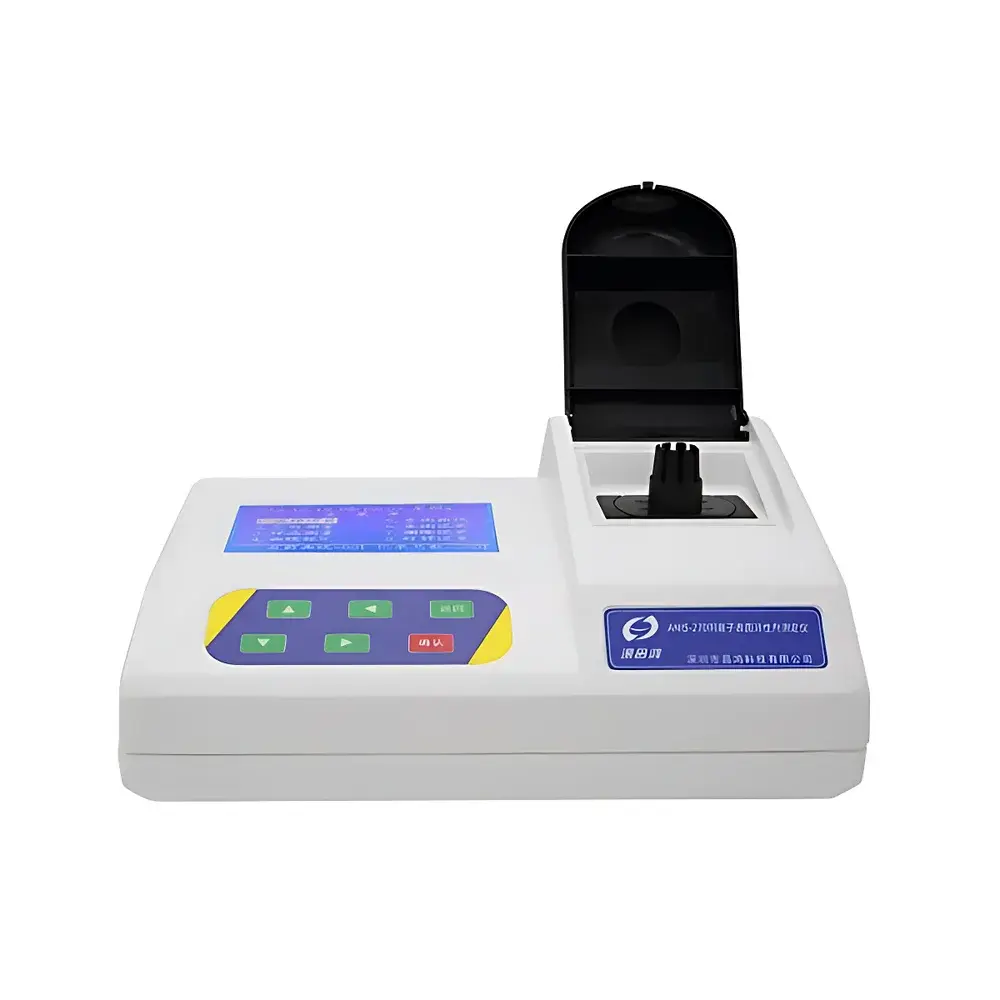
Shenchanghong ANIS-270 Anionic Surfactant Analyzer
| Brand | Shenchanghong |
|---|---|
| Model | ANIS-270 |
| Measurement Range | 0.01–1.00 mg/L (dilution applicable for higher concentrations) |
| Accuracy | ≤ ±5% FS |
| Repeatability | ≤ 3% |
| Optical Drift | < 0.002 A in 20 min |
| Dimensions | 266 × 200 × 130 mm |
| Weight | < 1 kg |
| Operating Temperature | 5–40 °C |
| Relative Humidity | ≤ 85% |
| Power Supply | AC 220 V ± 10%, 50 Hz |
| Compliance | Designed for ASTM D2330 / ISO 7875-1 equivalent methodology |
| Sample Type | Clear, non-turbid aqueous samples (drinking water, surface water, treated wastewater) |
Overview
The Shenchanghong ANIS-270 Anionic Surfactant Analyzer is a dedicated photometric instrument engineered for the quantitative determination of anionic surfactants—primarily linear alkylbenzene sulfonates (LAS) and related compounds—in environmental water matrices. It operates on the principle of methylene blue active substances (MBAS) spectrophotometry, a standardized colorimetric method widely adopted in regulatory water quality testing. The analyzer employs a stable cold-light monochromatic source centered at 650 nm, minimizing spectral interference from ambient light or sample turbidity. Its optical architecture ensures high baseline stability (< 0.002 A drift over 20 minutes), enabling reliable absorbance measurements critical for low-concentration detection down to 0.01 mg/L. Designed explicitly for routine compliance monitoring in municipal water laboratories, environmental testing centers, and wastewater treatment facilities, the ANIS-270 delivers reproducible results under field-deployable conditions without requiring climate-controlled instrumentation rooms.
Key Features
- Monochromatic cold-light source with narrow spectral bandwidth, eliminating photometric interference from ambient illumination and ensuring long-term optical stability.
- Integrated microprocessor-controlled photometer with V/F (voltage-to-frequency) signal conversion and embedded software redundancy algorithms to suppress electromagnetic noise and power-line fluctuations.
- Large backlit LCD display with full Chinese interface—enabling intuitive navigation for parameter setup, calibration curve generation, data recall, and real-time measurement visualization—all within a single operational environment.
- Non-volatile memory storage supporting up to 10 user-defined calibration curves and 199 measurement records, retained after power interruption per IEC 60730-1 Class B requirements.
- Chemically resistant ABS polymer housing rated for continuous operation in humid laboratory and field environments (IP20 ingress protection).
- Compact benchtop form factor (266 × 200 × 130 mm; <1 kg), optimized for space-constrained QC labs and mobile environmental testing units.
Sample Compatibility & Compliance
The ANIS-270 is validated for use with clarified aqueous samples meeting ISO 5667-3:2018 criteria for homogeneity and absence of suspended solids (>0.45 µm filtration recommended). It complies with the analytical principles outlined in ASTM D2330–16 (“Standard Test Method for Anionic Surfactants in Water”) and ISO 7875-1:1986 (“Water quality — Determination of anionic surfactants — Part 1: Methylene blue spectrophotometric method”). While not certified to GLP or ISO/IEC 17025 out-of-the-box, its traceable calibration protocol, audit-ready data logging, and repeatable performance support integration into laboratories maintaining GMP-aligned QA systems. All reagents supplied meet ACS-grade specifications for MBAS assay, and the included cuvettes are calibrated quartz-equivalent glass with matched optical path lengths (10 mm).
Software & Data Management
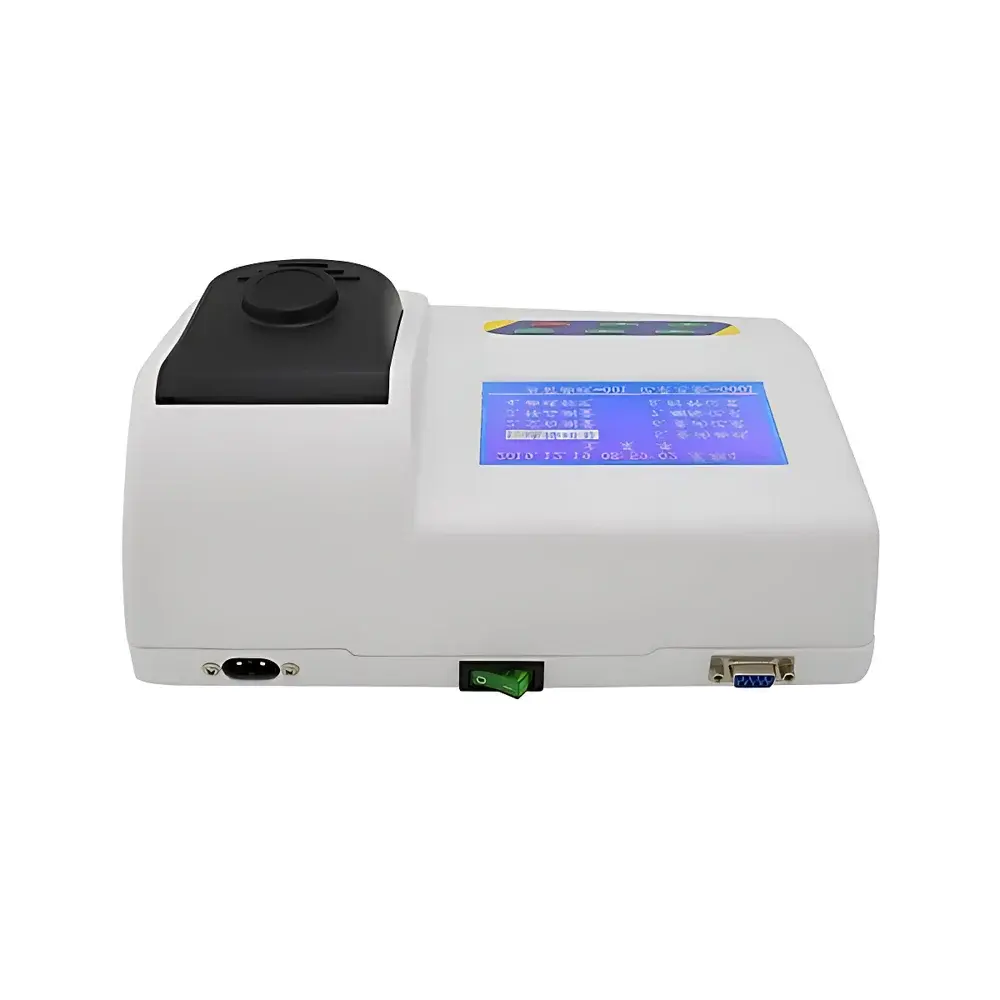
Data handling is implemented via embedded firmware—not external PC software—ensuring deterministic response and immunity to OS-level vulnerabilities. Each measurement record includes timestamp, operator ID (manually entered), calibration curve ID, raw absorbance value, calculated concentration (mg/L), and pass/fail flag relative to user-set action limits. Historical data export is supported via RS-232 serial interface (optional USB-to-serial adapter) for CSV-formatted transfer to LIMS or Excel. Firmware supports password-protected access levels for calibration modification (Level 2) and system configuration (Level 3), aligning with FDA 21 CFR Part 11 expectations for electronic records where local validation is performed.
Applications
- Routine monitoring of LAS levels in drinking water distribution systems per WHO Guidelines for Drinking-water Quality (4th ed., Annex 3).
- Effluent compliance verification for municipal and industrial wastewater treatment plants subject to national discharge permits (e.g., China’s GB 8978-1996, EU Urban Wastewater Treatment Directive 91/271/EEC).
- Source water assessment in lakes and rivers impacted by domestic sewage inflow or detergent manufacturing runoff.
- Validation of surfactant removal efficiency in advanced oxidation or membrane filtration pilot studies.
- Educational use in environmental engineering laboratories for teaching standardized wet-chemistry analytical methods.
FAQ
What sample pretreatment is required prior to analysis?
Samples must be filtered through a 0.45 µm membrane filter to remove particulates and centrifuged if emulsified oils are present. Chlorine residual should be quenched with sodium thiosulfate if >0.5 mg/L.
Can the ANIS-270 measure non-LAS anionic surfactants?
Yes—it responds to all methylene blue-active substances (MBAS), including alkyl sulfates, alkyl ether sulfates, and α-olefin sulfonates, though molar absorptivity varies; quantification assumes LAS equivalence unless compound-specific calibration is applied.
Is third-party certification available for this instrument?
The ANIS-270 is manufactured under ISO 9001:2015 quality management system certification; metrological verification reports per JJG 975–2013 (Chinese national standard for photometers) can be provided upon request.
How often must the calibration curve be renewed?
Daily calibration verification is recommended for regulated testing; full multi-point calibration every 24 hours or after reagent lot change, consistent with EPA Method 405.1 quality control requirements.
Does the instrument support automatic dilution?
No—manual dilution is required for samples exceeding 1.00 mg/L; however, the built-in calculation function allows direct entry of dilution factors for final concentration reporting.
Related Products







