
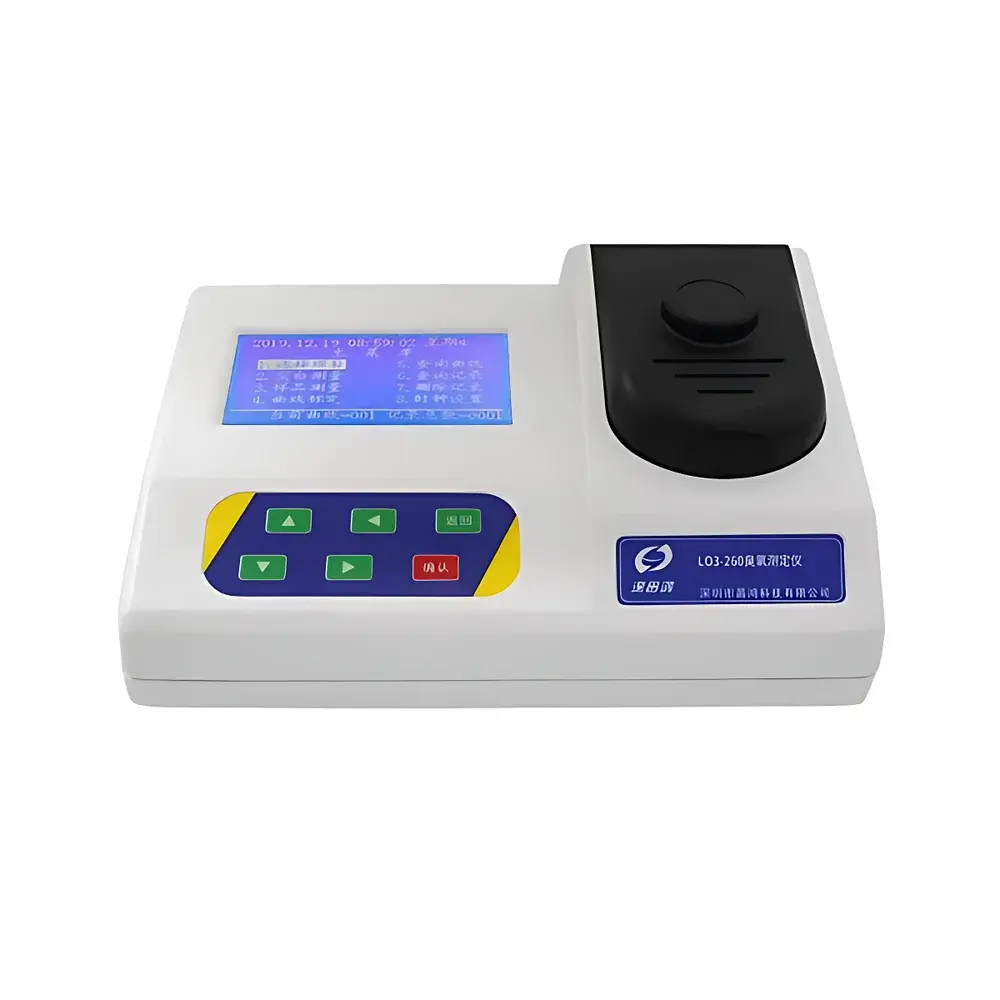
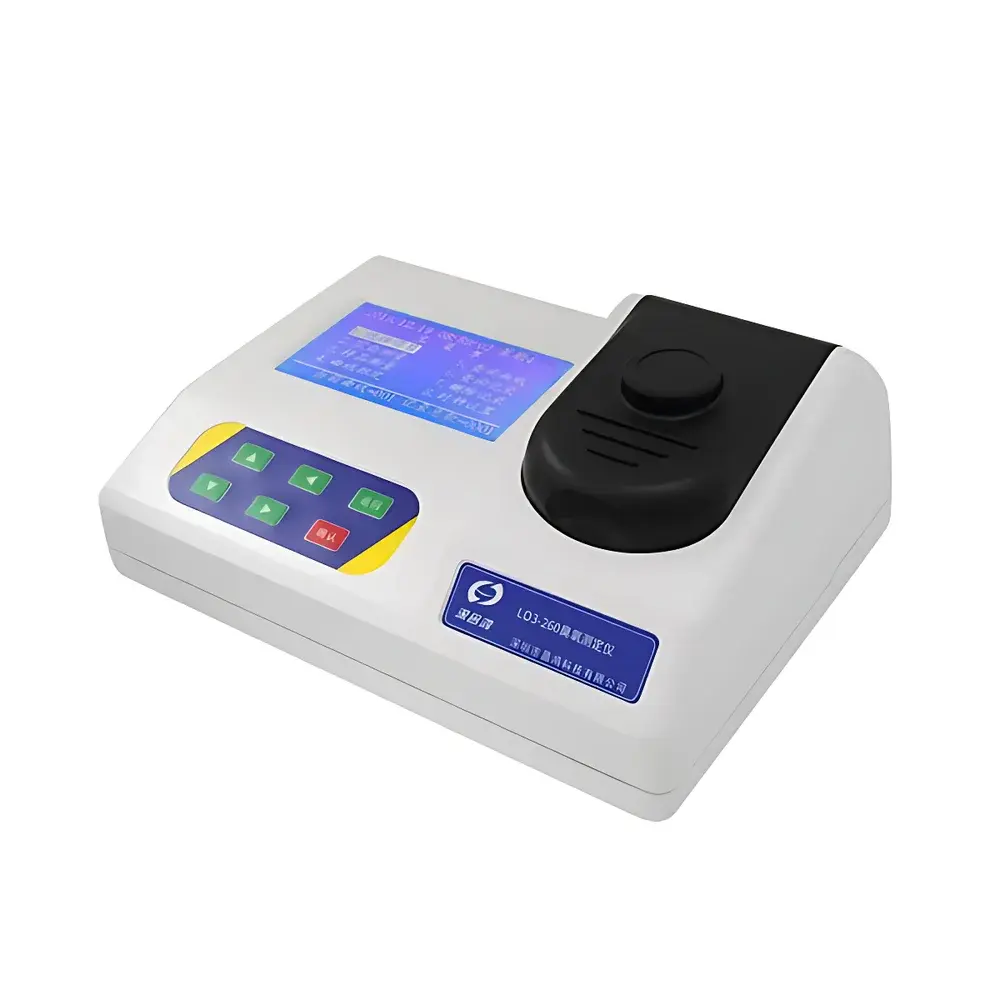
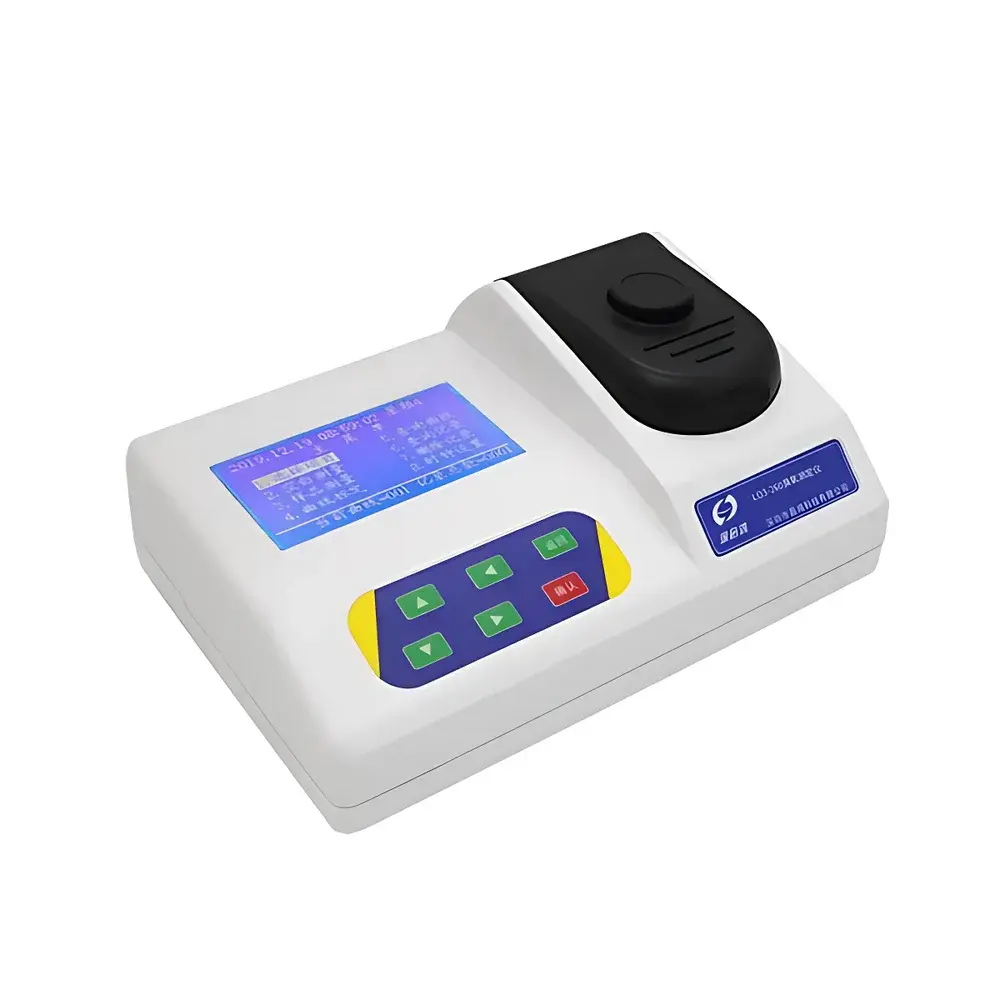
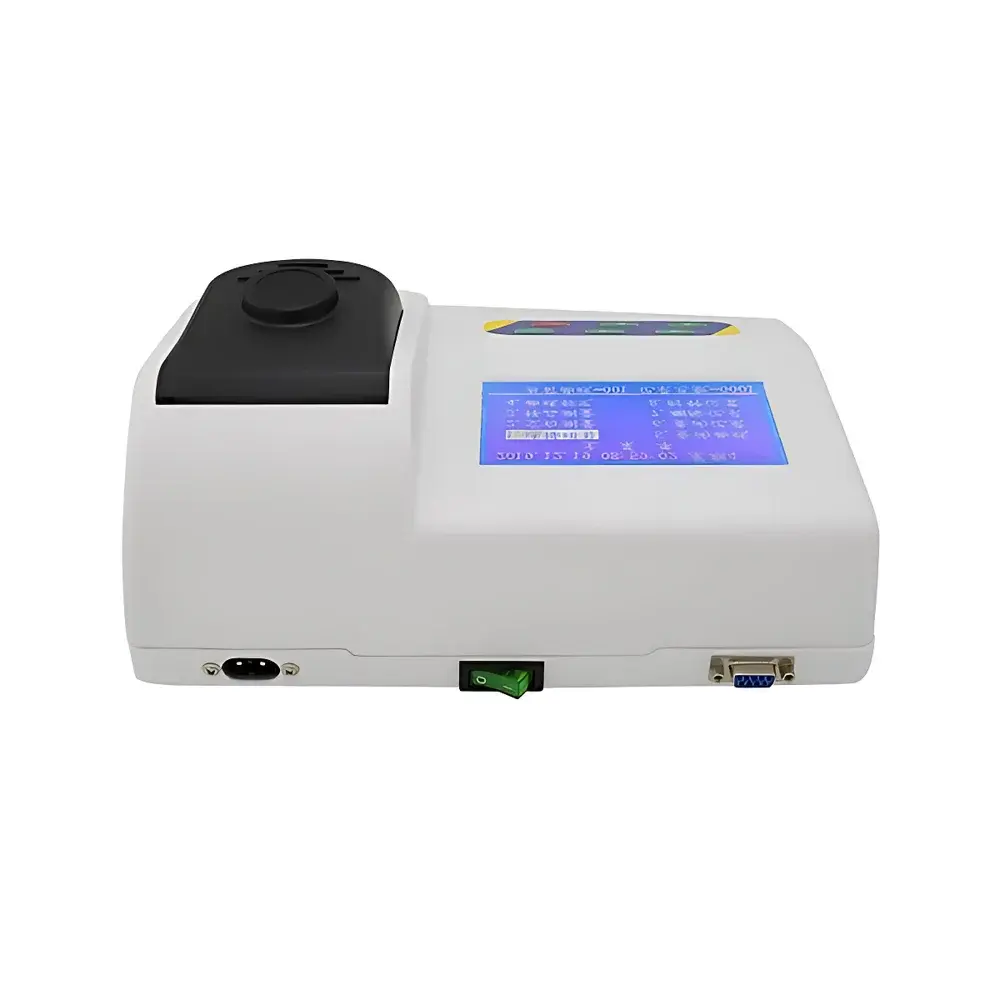
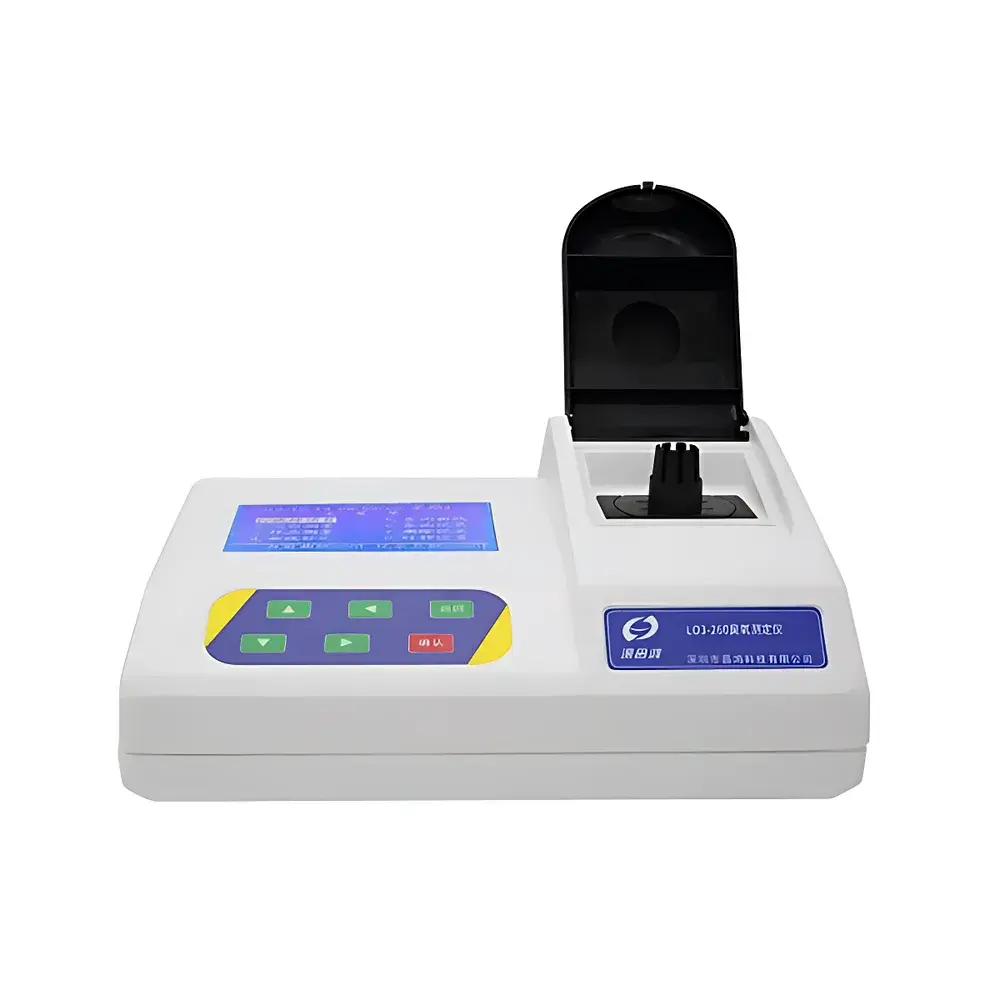
Shenchanghong LO3-260 Ozone Analyzer
| Brand | Shenchanghong |
|---|---|
| Origin | Guangdong, China |
| Manufacturer Type | Direct Manufacturer |
| Country of Origin | China |
| Model | LO3-260 |
| Quotation | Upon Request |
| Measurement Range | 0.01–2.5 mg/L |
| Accuracy (Relative Error) | ≤ ±5% |
| Repeatability (RSD) | ≤ 3% |
| Optical Stability | Absorbance Drift < 0.002 A within 20 min |
| Dimensions (H×W×D) | 266 × 200 × 130 mm |
| Weight | 1 kg |
| Operating Temperature | 5–40 °C |
| Relative Humidity | ≤ 85% |
| Power Supply | AC 220 V ± 10%, 50 Hz ± 0.5 Hz |
| Light Source | High-brightness, Long-life (100,000 h) Monochromatic Cold Light LED |
| Filter System | Narrow-band Interference Filter |
| Display | Backlit LCD with Chinese Menu Interface |
| Microcontroller | Low-power 16-bit MCU |
| Housing Material | Corrosion-resistant ABS Plastic |
| Data Storage | Internal Non-volatile Memory for Calibration Curves and Measurement History |
Overview
The Shenchanghong LO3-260 Ozone Analyzer is a dedicated photometric instrument engineered for the quantitative determination of dissolved ozone (O₃) in aqueous matrices using the indigo trisulfonate (or similar chromogenic) colorimetric method. It operates on the principle of absorbance measurement at a fixed wavelength—typically 610 nm—where ozone selectively decolorizes the indigo dye in proportion to its concentration. The analyzer employs a stable monochromatic cold-light LED source coupled with a precision narrow-band interference filter to minimize spectral stray light and ensure high optical fidelity. This design eliminates reliance on traditional tungsten-halogen lamps or complex optical path alignment, resulting in enhanced long-term photometric stability and reduced maintenance requirements. The system is calibrated against traceable NIST-traceable ozone standards and conforms to foundational principles outlined in Standard Methods for the Examination of Water and Wastewater (Method 4500-O₃ B) and ISO 7393-2:2018 (Water quality — Determination of free chlorine, combined chlorine and total chlorine — Part 2: Colorimetric method). Its compact benchtop form factor and low power consumption make it suitable for field-deployable labs, municipal water quality control stations, and industrial process monitoring environments.
Key Features
- High-stability monochromatic LED light source with rated lifetime exceeding 100,000 hours—eliminates lamp replacement cycles and thermal drift associated with incandescent sources
- Narrow-band optical filtering system ensures minimal spectral overlap and high specificity for the ozone–indigo reaction product
- Integrated 16-bit low-power microcontroller enables precise analog-to-digital conversion, real-time baseline correction, and embedded calibration algorithms
- Backlit LCD display with full Chinese-language menu navigation—designed for intuitive operation by technicians without advanced English proficiency
- Dual-curve storage capability: retains factory-default calibration curve plus up to two user-defined calibration sets for multi-matrix applications (e.g., drinking water vs. wastewater)
- Corrosion-resistant ABS housing meets IP54-level ingress protection for dust and splashing water resistance during routine handling
- Onboard non-volatile memory stores ≥500 measurement records with timestamp, operator ID (optional), and calibration metadata
Sample Compatibility & Compliance
The LO3-260 is validated for use with clarified, low-turbidity aqueous samples including potable water, surface water, groundwater, secondary effluent, and ozonated industrial process streams. Sample turbidity must remain below 1 NTU to prevent scattering-induced absorbance artifacts; optional pre-filtration via 0.45 µm membrane filters is recommended for raw or suspended-solid-rich matrices. The instrument complies with general functional requirements of ISO/IEC 17025:2017 for testing laboratories and supports documentation practices aligned with GLP (Good Laboratory Practice) frameworks. While not FDA 21 CFR Part 11–certified out-of-the-box, audit trails—including calibration history, date/time stamps, and operator entries—can be exported manually for internal QA review. It satisfies typical municipal and provincial environmental monitoring authority specifications across China (e.g., HJ 501–2009 for ozone in water) and serves as a cost-effective alternative to benchtop UV-Vis spectrophotometers for routine ozone verification.
Software & Data Management
Data acquisition and management are handled entirely onboard via firmware-resident logic—no external PC or proprietary software is required for basic operation. All measurements are automatically assigned a UTC-synchronized timestamp (via internal RTC) and stored with associated calibration ID and measurement mode (e.g., “Standard Curve” or “User Curve”). Export functionality is limited to manual transcription or optional RS-232 serial output (available upon request with adapter cable). Calibration curves are defined using minimum three-point linear or quadratic regression (0.01, 0.5, and 2.0 mg/L reference points recommended). The system supports zero-point auto-correction prior to each batch analysis and includes built-in diagnostics for LED intensity decay monitoring and dark-current drift compensation.
Applications
- Verification of ozone dosage consistency in municipal drinking water disinfection systems
- Monitoring residual ozone levels post-contact tank in advanced oxidation process (AOP) trains
- Quality assurance of ozone generator output during commissioning and preventive maintenance
- Field-based assessment of ozone decay kinetics in distribution networks and storage reservoirs
- Educational laboratory instruction for environmental chemistry and water treatment unit operations
- Supporting compliance reporting under China’s “Technical Specification for Drinking Water Quality” (GB 5749–2022), where ozone is listed as an approved primary disinfectant
FAQ
What is the detection principle used by the LO3-260?
It uses the standardized colorimetric method based on ozone-mediated decolorization of indigo trisulfonate dye, measured photometrically at 610 nm.
Can the instrument measure ozone in seawater or high-salinity samples?
Not directly—high chloride concentrations interfere with the indigo reaction; sample dilution or matrix-matched calibration is required, and results should be validated against iodometric titration for such applications.
Is regular recalibration necessary?
Yes—daily zero and span checks are recommended before critical measurements; full multi-point calibration every 7 days ensures traceability under routine use conditions.
Does the LO3-260 support data export to LIMS?
No native LIMS integration exists; however, ASCII-formatted measurement logs can be manually copied from the display or retrieved via optional RS-232 interface using terminal emulation software.
What maintenance does the optical system require?
Annual verification of LED output intensity and filter transmission using certified neutral density standards is advised; no user-serviceable optical alignment is provided.
Related Products







