
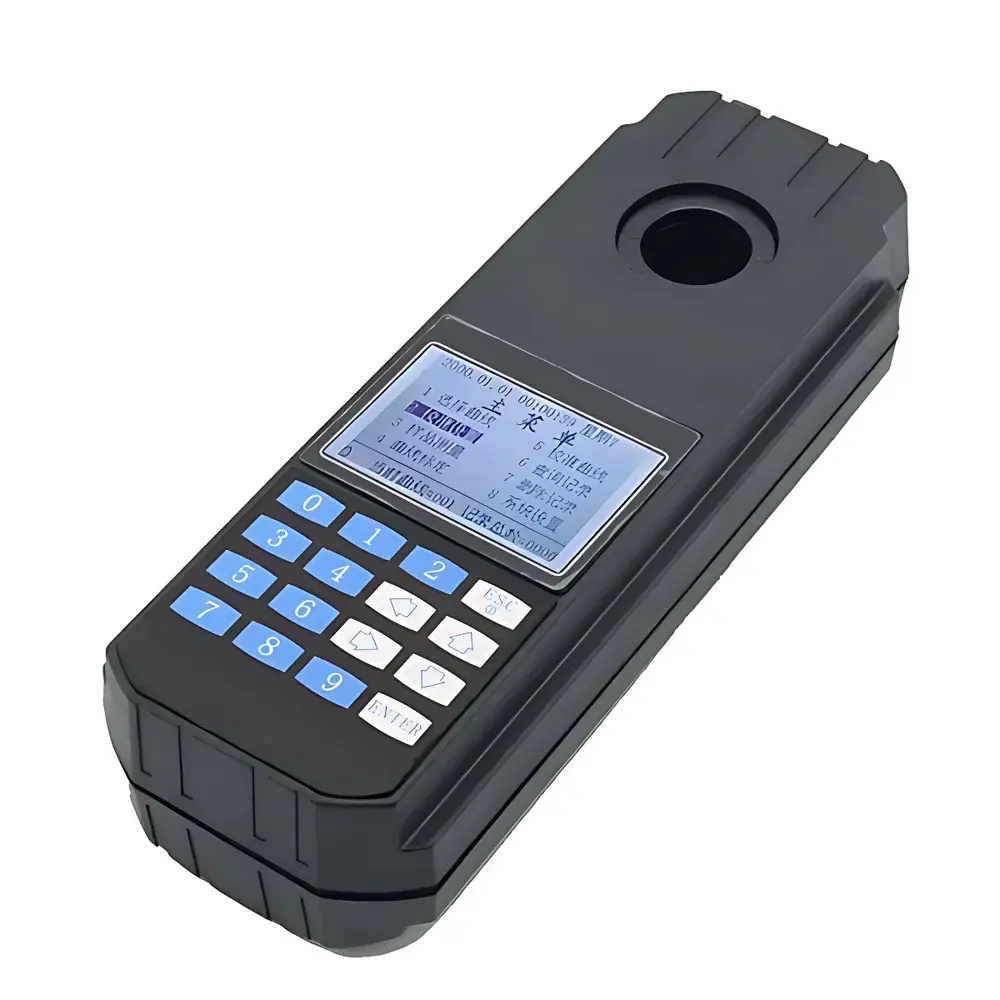
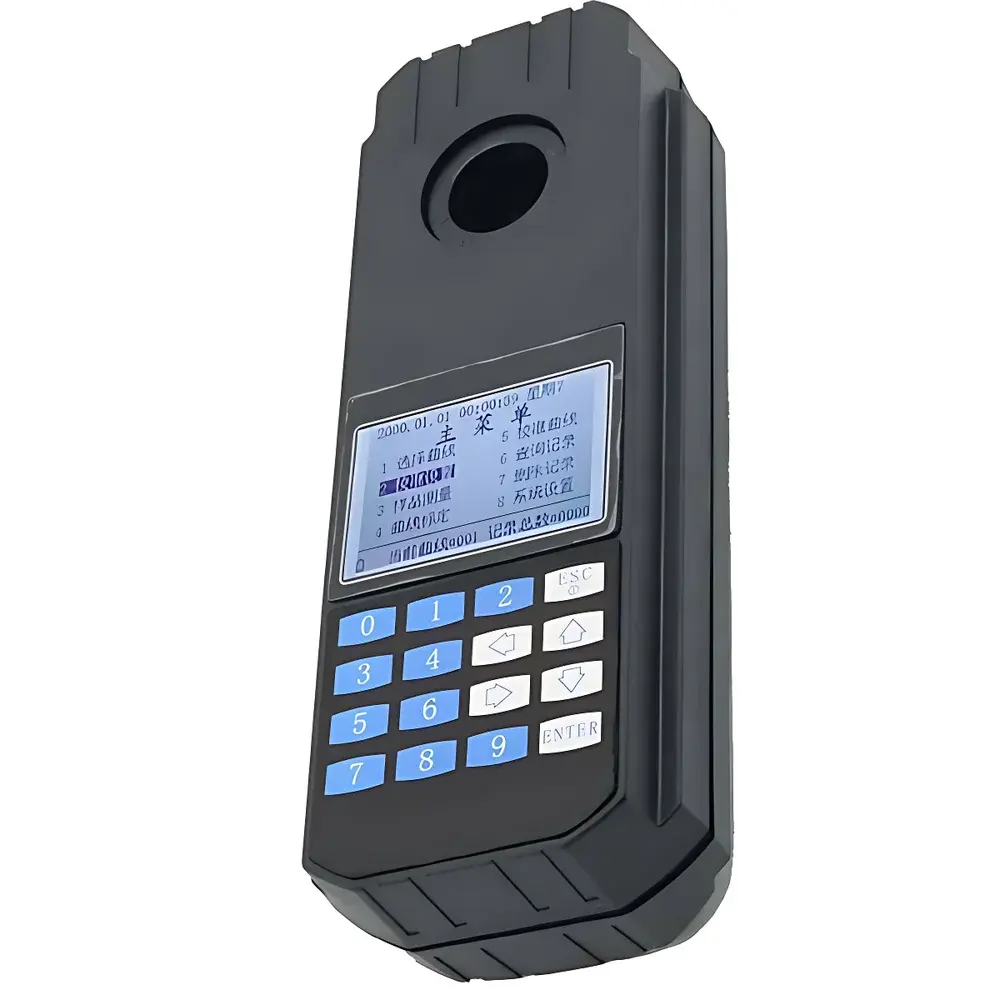
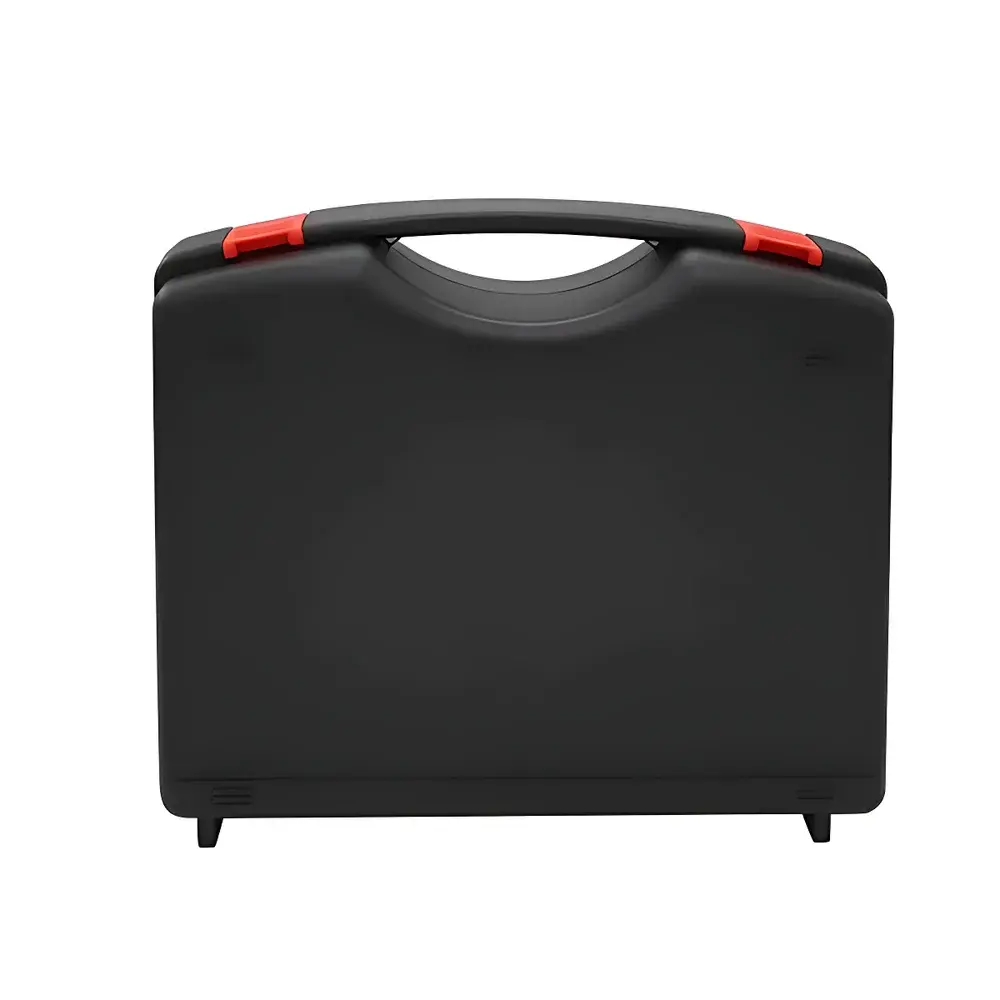
Shenchanghong PANIS-270 Anionic Surfactant Analyzer
| Brand | Shenchanghong |
|---|---|
| Origin | Guangdong, China |
| Manufacturer Type | Direct Manufacturer |
| Regional Classification | Domestic (China) |
| Model | PANIS-270 |
| Instrument Category | Multi-Ion Analyzer |
| Form Factor | Portable |
| Measurement Range | 0.01–1.00 mg/L (dilution applicable for higher concentrations) |
| Detection Limit | Not specified numerically in source documentation |
| Response Time | 20 minutes per sample |
| Accuracy | ≤ ±5% of Full Scale (F.S.) |
| Repeatability | ≤ 3% RSD |
| Optical Stability | Absorbance drift < 0.002 A within 20 min |
| Operating Temperature | 5–40 °C |
| Relative Humidity | ≤ 85% RH |
| Power Supply | AC 220 V ± 10%, 50 Hz ± 0.5 Hz |
| Dimensions (H×W×D) | 130 × 266 × 200 mm |
| Weight | < 1.0 kg |
Overview
The Shenchanghong PANIS-270 Anionic Surfactant Analyzer is a portable, spectrophotometric instrument engineered for the quantitative determination of anionic surfactants—primarily linear alkylbenzene sulfonates (LAS) and related compounds—in aqueous environmental samples. It operates on the principle of colorimetric analysis using the methylene blue active substances (MBAS) method, standardized in ISO 7875-1:1988 and ASTM D2330–16. Upon reaction with methylene blue dye under controlled pH and ionic strength, anionic surfactants form a blue-colored ion-pair extractable into chloroform. The absorbance of this organic phase is measured at 652 nm using a stable cold-light LED source and narrow-band optical filtering. This methodology ensures high selectivity for anionic species while minimizing interference from non-ionic or cationic surfactants, humic substances, and common inorganic ions when sample pretreatment protocols are followed.
Key Features
- Portable, battery-compatible design optimized for field deployment and mobile laboratory use—ideal for wastewater treatment plant audits, river basin monitoring, and regulatory compliance sampling.
- Cold-light LED source with single-wavelength (652 nm) optical path; eliminates thermal drift and ambient light interference, delivering absorbance stability < 0.002 A over 20 minutes.
- Integrated 128×64 dot-matrix LCD display with full Chinese menu interface—supports real-time parameter configuration, calibration curve management, and on-device data review without external software.
- Embedded firmware with V/F conversion circuitry, software redundancy, and watchdog timer architecture—ensures robust operation in electrically noisy environments (e.g., near pumps, motors, or variable-frequency drives).
- Onboard memory stores up to 10 user-defined calibration curves and 199 measurement records with timestamping; all data retained during power loss via non-volatile EEPROM.
- Housing constructed from post-molded ABS with enhanced chemical resistance—suitable for repeated exposure to chloroform, acidic buffers, and mild detergent solutions encountered in routine MBAS workflows.
Sample Compatibility & Compliance
The PANIS-270 is validated for transparent, low-turbidity water matrices including drinking water, surface water (rivers, lakes), treated effluent, and groundwater—provided suspended solids are removed by 0.45 µm membrane filtration prior to analysis. It complies with core methodological requirements of ISO 7875-1 (determination of anionic surfactants using methylene blue), and supports alignment with national regulatory frameworks referencing MBAS-based quantification—including China’s HJ 503–2009 standard for water quality analysis. While not inherently 21 CFR Part 11 compliant, its audit-ready data logging (with operator ID, date/time stamp, and curve version tracking) facilitates GLP-aligned documentation in environmental testing laboratories conducting internal QA/QC or third-party verification.
Software & Data Management
Data acquisition and calibration are fully self-contained within the instrument’s embedded system. No PC connection is required for routine operation; however, optional USB-to-serial adapter enables export of CSV-formatted measurement logs (including absorbance values, concentration results, curve coefficients, and QC flags) for traceability and LIMS integration. Calibration curves may be generated in situ using certified LAS reference standards (e.g., sodium dodecylbenzenesulfonate, SDBS), with linear or polynomial regression options. All curve parameters—including slope, intercept, correlation coefficient (R²), and residual error—are displayed and stored alongside each measurement session.
Applications
- Regulatory monitoring of LAS discharge limits in municipal and industrial wastewater effluents.
- Performance evaluation of surfactant removal efficiency in activated sludge, MBR, and advanced oxidation processes.
- Baseline assessment and trend analysis of anionic surfactant contamination in watersheds impacted by domestic sewage infiltration.
- Field validation of laboratory-based MBAS results during inter-laboratory comparison studies.
- Environmental impact assessments (EIA) for detergent manufacturing facilities and laundry service operations.
FAQ
What sample pretreatment is required before analysis?
Samples must be filtered through a 0.45 µm membrane filter to remove turbidity and particulates. Highly colored or humic-rich waters may require blank correction or hexane pre-extraction to minimize spectral interference.
Can the PANIS-270 measure other surfactant classes (e.g., nonionic or cationic)?
No—the MBAS methodology is selective for anionic surfactants only. Nonionic surfactants (e.g., alcohol ethoxylates) and cationic species (e.g., quaternary ammonium compounds) do not form the methylene blue ion-pair and will not generate measurable absorbance under standard protocol.
Is the instrument suitable for seawater or high-salinity samples?
Direct analysis of undiluted seawater is not recommended due to chloride-induced phase separation instability and potential dye precipitation. Samples with salinity > 5 g/L should be diluted with deionized water and matrix-matched calibration applied.
How often must the optical system be calibrated?
The LED light source and photodetector are factory-calibrated and require no routine recalibration. Users perform daily zero-point verification using chloroform blank and confirm linearity via two-point standard check before analytical runs.
Does the device support multi-point calibration with certified reference materials?
Yes—up to 10-point calibration curves can be built using NIST-traceable LAS standards. Curve fitting supports both linear and quadratic models, with automatic R² calculation and outlier detection during curve generation.
Related Products







