
Shenchanghong PCHYN-230 Nitrite Analyzer
| Brand | Shenchanghong |
|---|---|
| Origin | Shenzhen, China |
| Manufacturer Type | Direct Manufacturer |
| Country of Origin | China |
| Model | PCHYN-230 |
| Price | Upon Request |
| Measurement Range | 0.02–5.00 mg/L |
| Accuracy | ≤±5% FS |
| Repeatability | ≤3% RSD |
| Optical Drift | <0.002 A in 20 min |
| Dimensions | 80 mm × 230 mm × 55 mm |
| Weight | 500 g |
| Operating Temperature | 5–40 °C |
| Relative Humidity | ≤85% RH |
| Power Supply | 4 × AA batteries |
| IP Rating | IP65 |
| Data Storage | 20 calibration curves + 199 timestamped measurement records (including absorbance, transmittance, and nitrite concentration with yyyy-mm-dd hh:mm:ss) |
Overview
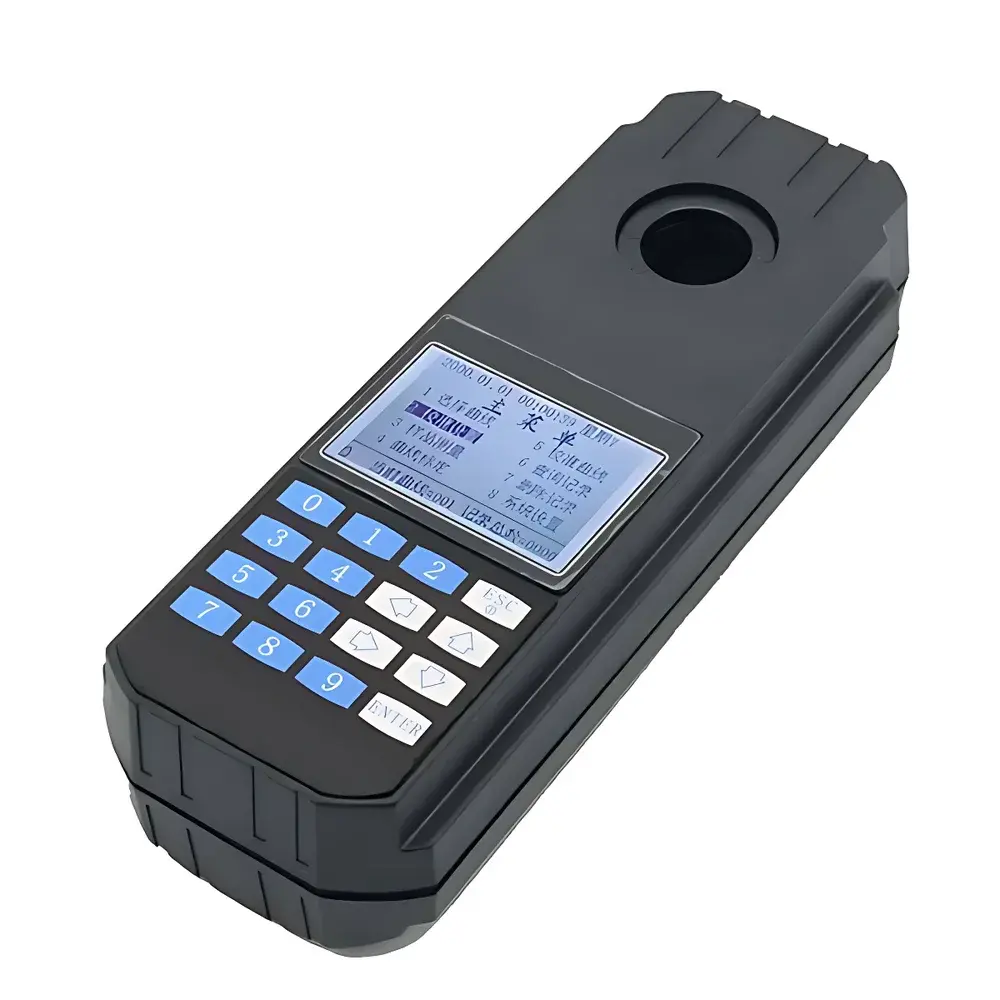
The Shenchanghong PCHYN-230 Nitrite Analyzer is a portable, microprocessor-controlled photometric instrument engineered for rapid, field-deployable quantification of nitrite (NO₂⁻) in aqueous matrices. It operates on the principle of spectrophotometric detection using the Griess reaction—where nitrite reacts under acidic conditions with sulfanilamide to form a diazonium salt, subsequently coupled with N-(1-naphthyl)ethylenediamine dihydrochloride (NED) to yield a stable pink-purple azo dye with maximum absorbance at ~540 nm. The analyzer employs a narrow-band cold LED light source centered at this wavelength, minimizing spectral interference and thermal drift. Its optical architecture is optimized for stability: absorbance drift remains below 0.002 A over 20 minutes, ensuring consistent baseline integrity during sequential or extended field measurements. Designed specifically for environmental water quality assessment, the PCHYN-230 delivers reliable, trace-level nitrite data across diverse sample types without requiring laboratory infrastructure.
Key Features
- Compact, handheld form factor (80 × 230 × 55 mm; 500 g) with ruggedized IP65-rated ABS housing—resistant to dust, water splashes, and corrosion in outdoor or industrial environments.
- Low-power 16-bit microcontroller architecture enabling up to 10,000+ measurements per set of four AA batteries, supporting multi-day field campaigns without recharging.
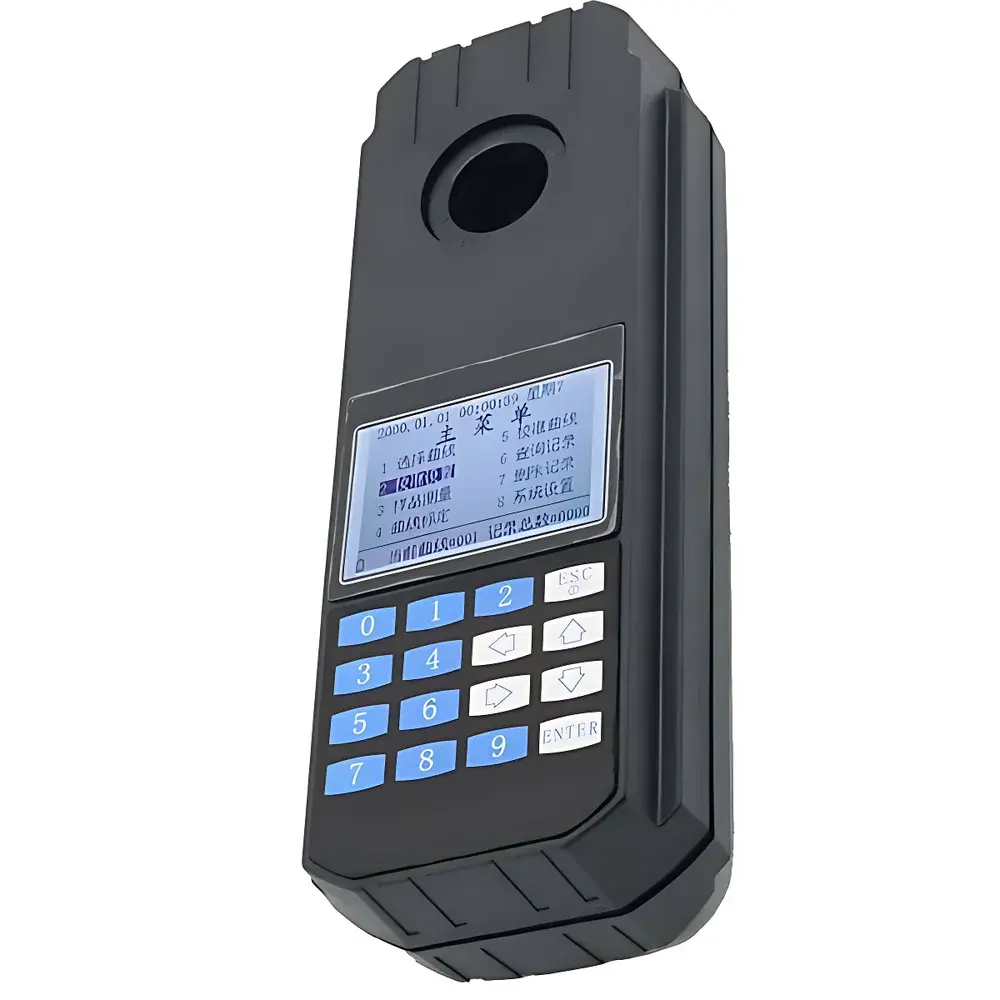
- Large backlit LCD display with intuitive menu navigation—shows real-time absorbance, transmittance, and calibrated nitrite concentration (mg/L) simultaneously.
- Integrated time-stamped data logging: stores 199 full measurement records—including date, time (yyyy-mm-dd hh:mm:ss), absorbance, %T, and calculated nitrite concentration—plus 20 user-defined calibration curves.
- Optical system features a precision narrow-band cold LED source and matched photodetector, eliminating warm-up delays and reducing photometric noise inherent in tungsten-halogen lamps.
- Automatic zeroing and blank compensation routines ensure measurement consistency across varying ambient lighting conditions and operator handling.
- Data retention is preserved during battery replacement via non-volatile memory with built-in power-fail protection.
Sample Compatibility & Compliance
The PCHYN-230 is validated for use with clarified, low-turbidity aqueous samples including potable water, surface water, groundwater, municipal wastewater, and industrial effluents. Sample pretreatment—such as filtration (0.45 µm membrane) or centrifugation—is recommended for turbid or particulate-laden matrices to avoid scattering artifacts. While not certified to ISO/IEC 17025, the instrument’s performance specifications align with common method validation criteria outlined in EPA Method 354.1 and Standard Methods for the Examination of Water and Wastewater (SM 4500-NO₂⁻ B). Its ±5% full-scale accuracy and ≤3% repeatability meet routine monitoring requirements under national drinking water standards (e.g., China’s GB 5749-2022, US EPA Maximum Contaminant Level of 1 mg/L NO₂⁻–N) and support GLP-aligned field data collection protocols.
Software & Data Management
Data export is performed manually via visual readout or handwritten transcription, as the PCHYN-230 does not feature USB, Bluetooth, or wireless connectivity. All stored records include embedded timestamps compliant with basic audit-trail expectations for environmental field logs. The device supports manual calibration using standard nitrite reference solutions (e.g., NaNO₂ in deionized water), and users may store up to 20 distinct calibration curves—each associated with specific reagent lots or matrix-matched conditions—to accommodate variable interferences (e.g., chloride, iron, or organic matter). No proprietary software is required; however, exported data can be imported into LIMS or spreadsheet platforms for trend analysis, QA/QC charting, or regulatory reporting.
Applications
- Routine surveillance of nitrite levels in municipal drinking water distribution systems and source water intakes.
- Field verification of denitrification efficiency in wastewater treatment plants and constructed wetlands.
- Monitoring aquaculture pond water quality to prevent nitrite toxicity in sensitive fish species (e.g., salmonids).
- Environmental site assessments following fertilizer runoff events or septic system failures.
- Educational laboratories conducting water chemistry experiments with emphasis on colorimetric methodology and analytical validation principles.
- Emergency response teams assessing post-flooding or industrial spill contamination where rapid nitrite screening informs immediate public health decisions.
FAQ
What is the detection principle used by the PCHYN-230?
It uses the diazotization-coupling (Griess) reaction followed by photometric quantification at 540 nm.
Can the instrument measure nitrite in seawater?
Direct measurement is not recommended due to high chloride interference; dilution or matrix-matched calibration is required.
Is the device compliant with FDA 21 CFR Part 11?
No—it lacks electronic signature capability, audit trail automation, or secure user authentication required for regulated pharmaceutical or clinical use.
How often should calibration be performed?
Calibration is advised before each sampling session or after every 10–15 measurements when high precision is critical.
Does the unit include reagents for the Griess reaction?
Yes—a complete reagent kit is supplied with the instrument, sufficient for approximately 100 tests under standard protocol conditions.
Related Products







