
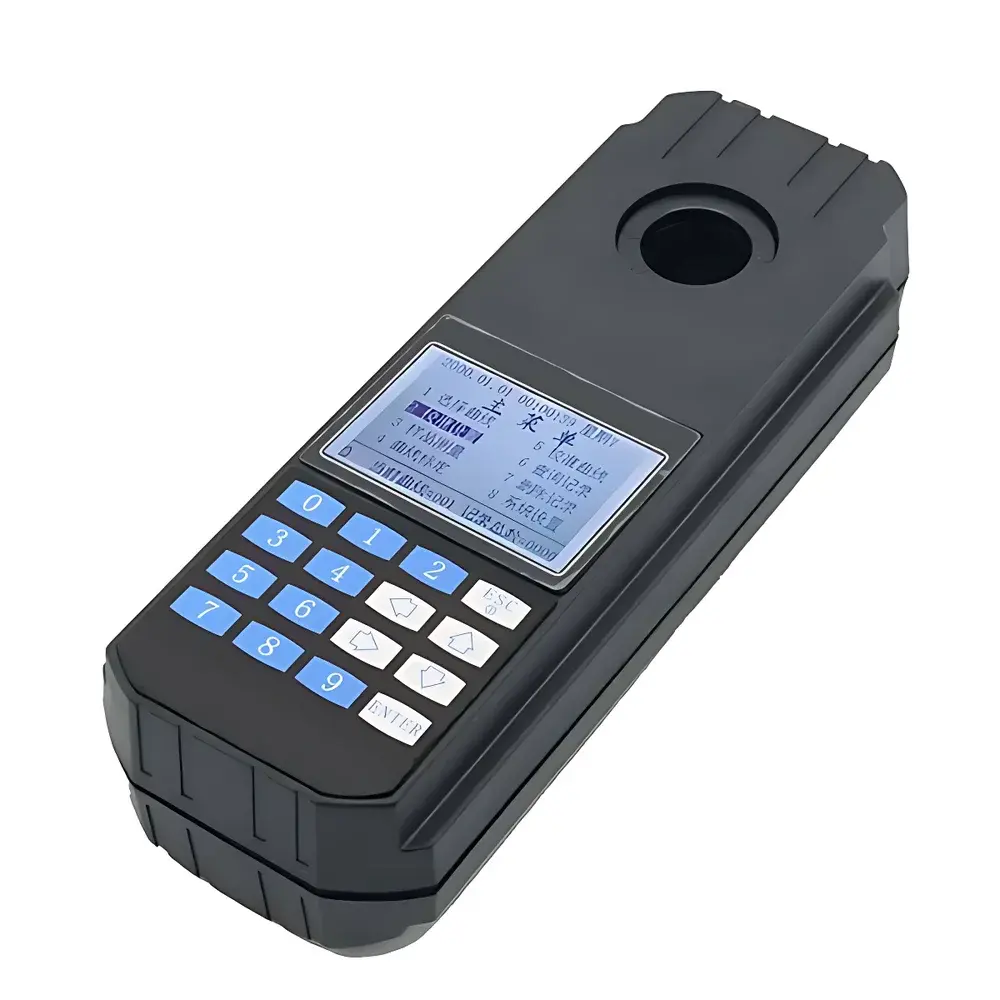
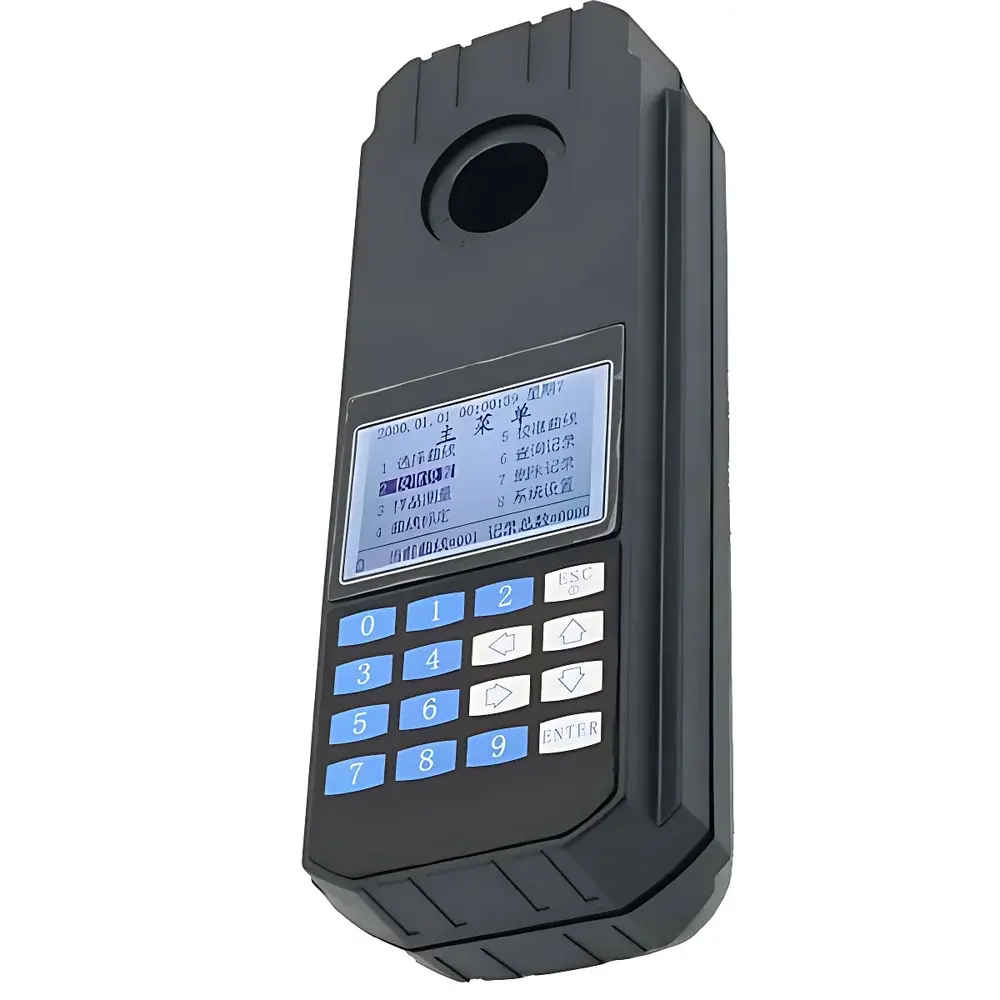
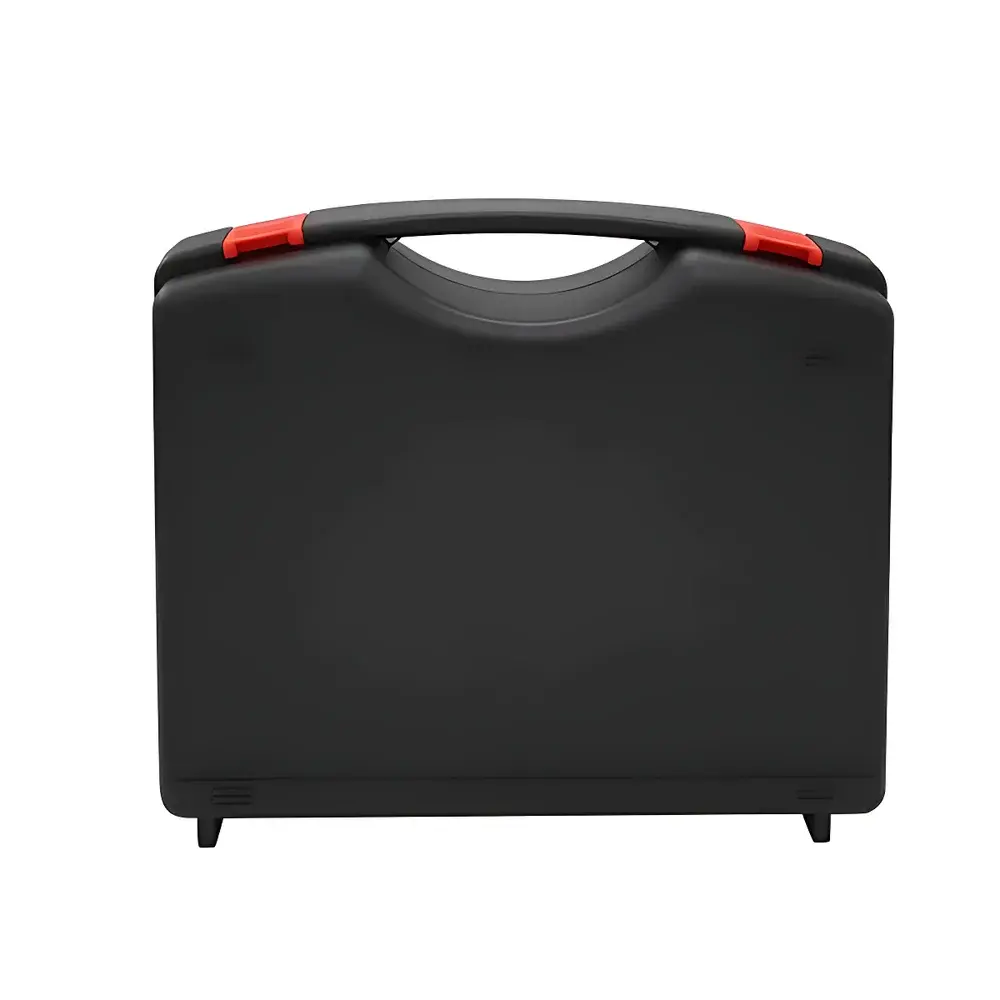
Shenchanghong PCHYP-250 Portable Phosphate Analyzer
| Brand | Shenchanghong |
|---|---|
| Origin | Shenzhen, China |
| Manufacturer Type | Direct Manufacturer |
| Country of Origin | China |
| Model | PCHYP-250 |
| Price | Upon Request |
| Measurement Range | 0.01–50.00 mg/L |
| Accuracy | ≤±5% FS |
| Repeatability | ≤3% RSD |
| Optical Drift | <0.002 A in 20 min |
| Dimensions | 80 × 230 × 55 mm |
| Weight | 500 g |
| Operating Temperature | 5–40 °C |
| Relative Humidity | ≤85% RH |
| Power Supply | 4 × AA batteries |
| IP Rating | IP65 |
| Data Storage | 199 timestamped measurements (YYYY-MM-DD hh:mm:ss) + 20 user-defined calibration curves |
Overview
The Shenchanghong PCHYP-250 Portable Phosphate Analyzer is a compact, field-deployable photometric instrument engineered for rapid, on-site quantification of orthophosphate (PO₄³⁻) in aqueous matrices. It operates on the principle of molybdenum blue colorimetry—where phosphate reacts with ammonium molybdate and potassium antimonyl tartrate under acidic conditions to form a phosphomolybdate complex, subsequently reduced by ascorbic acid to yield an intense blue chromophore measurable at 700 nm. The system employs a narrow-band interference filter and a stable cold LED light source to minimize spectral drift and thermal noise, ensuring consistent absorbance detection across variable ambient conditions. Designed for compliance with standard methods including ISO 6878:2004 and EPA Method 365.1, the PCHYP-250 delivers trace-level sensitivity (detection limit ≈ 0.01 mg/L PO₄–P) without requiring benchtop instrumentation or laboratory infrastructure.
Key Features
- Integrated 16-bit low-power microcontroller architecture enabling extended battery life (>10,000 measurements per set of AA batteries) and robust signal processing.
- Backlit LCD display with intuitive menu navigation and real-time graphical feedback for absorbance, transmittance, and concentration values.
- IP65-rated ABS polymer housing—resistant to dust ingress, water splashes, and mild chemical exposure—validated for outdoor and industrial site use.
- Cold LED optical system with fixed 700 nm interference filter; optical stability maintained at <0.002 A drift over 20 minutes, eliminating need for frequent zeroing.
- Non-volatile memory storing up to 20 user-programmable calibration curves and 199 full measurement records, each embedded with UTC timestamp (year/month/day/hour/minute/second), absorbance, transmittance, and calculated concentration.
- Automatic data retention during power interruption; no loss of calibration or historical records upon battery replacement.
Sample Compatibility & Compliance
The PCHYP-250 is validated for direct analysis of clarified, non-turbid liquid samples within pH 4–9. It accommodates raw and pretreated waters including potable water, surface water, groundwater, municipal wastewater effluents, and industrial process streams—provided suspended solids are removed via filtration (≤0.45 µm) and strong oxidants (e.g., chlorine residuals >0.5 mg/L) are quenched prior to analysis. The instrument meets functional requirements outlined in ISO/IEC 17025:2017 for field-portable analyzers used in environmental testing laboratories. While not certified to GLP or FDA 21 CFR Part 11 out-of-the-box, its audit-ready data logging (with immutable timestamps and operator-agnostic storage) supports traceability frameworks required under national water quality monitoring programs (e.g., China’s HJ/T 399–2007, US EPA Clean Water Act reporting protocols).
Software & Data Management
Data export is facilitated via manual transcription or optional IR/Bluetooth interface (accessory module sold separately). All stored measurements include full metrological metadata: date/time stamp, raw absorbance (A), %T, concentration (mg/L), and active calibration curve ID. Internal firmware supports linear and polynomial curve fitting (1st–3rd order), blank subtraction, and multi-point calibration validation (R² ≥ 0.999 typical). No proprietary desktop software is required for basic operation; however, CSV-compatible output enables integration with LIMS platforms or Excel-based QA/QC review workflows. Firmware updates are performed via micro-USB (adapter included in optional upgrade kit).
Applications
- Routine surveillance of phosphate discharge compliance at wastewater treatment plant outfalls.
- Field verification of nutrient removal efficiency in tertiary treatment units (e.g., FeCl₃ or Al₂(SO₄)₃ dosing systems).
- Ecological monitoring of eutrophication risk in lakes, reservoirs, and estuarine zones.
- Process control in boiler feedwater, cooling tower, and semiconductor rinse water systems where phosphate scaling must be minimized.
- Educational use in environmental science laboratories for method validation and student-led water quality projects.
FAQ
What reagents are required for operation?
The instrument uses standardized molybdate-ascorbic acid reagent kits (supplied with initial purchase); each kit contains pre-measured vials for 100+ tests. Reagent shelf life is 18 months unopened, 6 months after opening when refrigerated (2–8 °C).
Is sample digestion required for total phosphorus measurement?
No—the PCHYP-250 measures only orthophosphate (reactive phosphorus). For total phosphorus, samples must undergo persulfate or UV digestion prior to analysis using an external digestion block or autoclave.
Can the device be calibrated with NIST-traceable standards?
Yes—calibration is compatible with certified phosphate reference materials (e.g., NIST SRM 3189 or equivalent), and users may import custom calibration curves generated from gravimetrically prepared KH₂PO₄ solutions.
How is instrument performance verified in the field?
Built-in self-test includes dark current check, LED intensity verification, and zero-reference stability assessment. A dedicated “Check Standard” mode allows periodic validation using a sealed secondary standard solution (0.50 mg/L PO₄–P, supplied separately).
Related Products







