
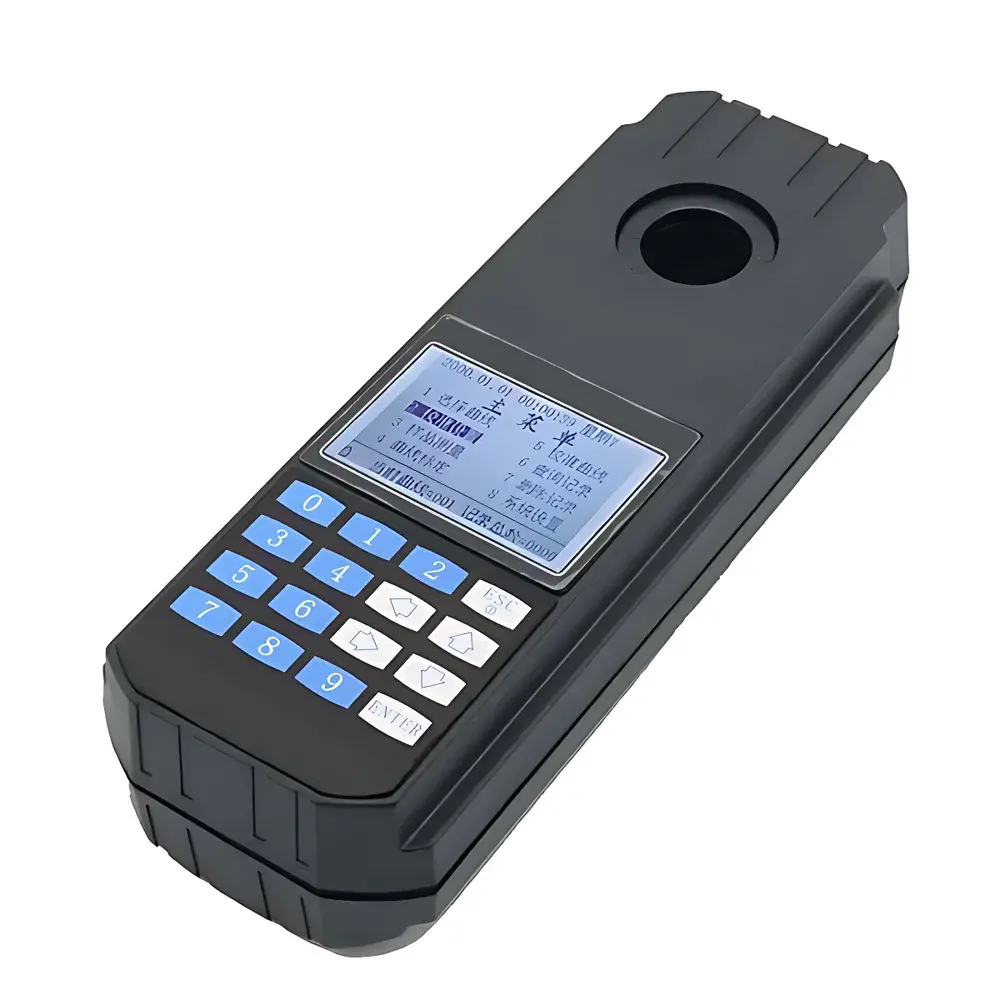
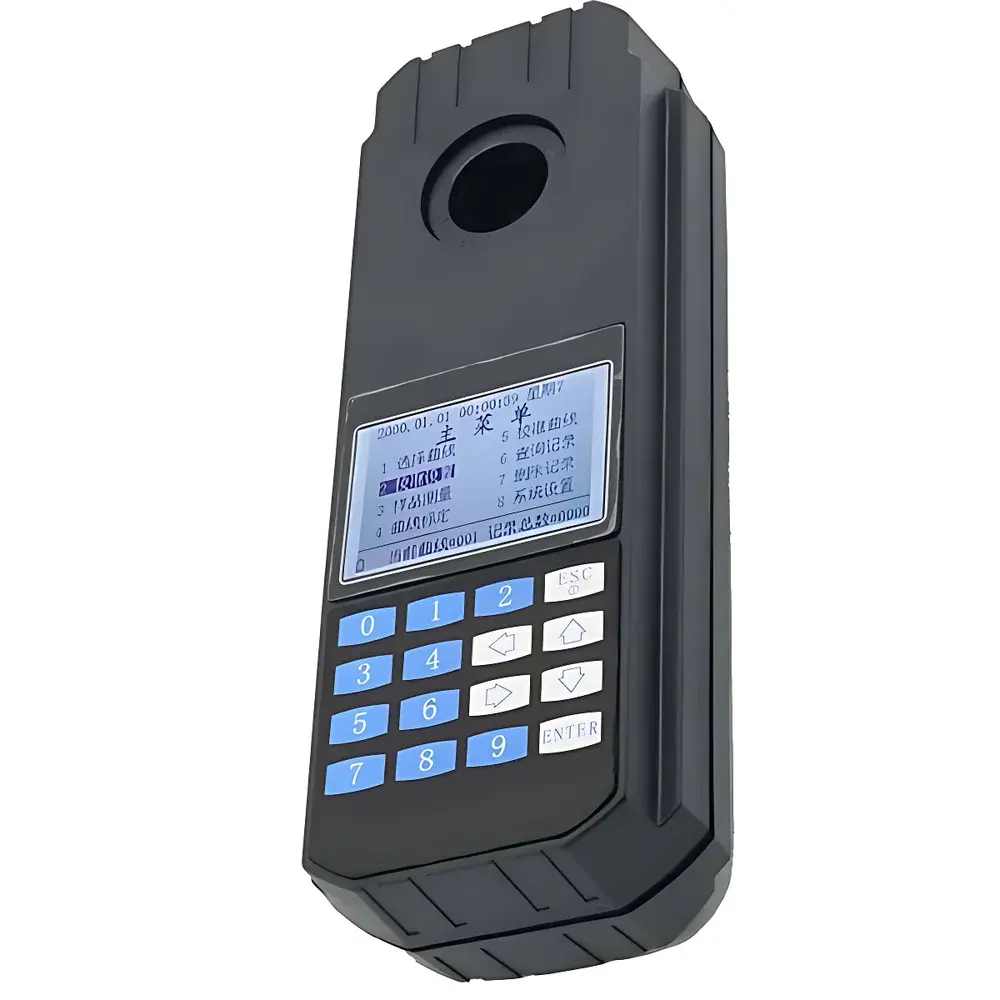
Shenchanghong PO3-260 Portable Ozone Analyzer
| Brand | Shenchanghong |
|---|---|
| Origin | Guangdong, China |
| Manufacturer Type | OEM/ODM Manufacturer |
| Country of Origin | China |
| Model | PO3-260 |
| Pricing | Upon Request |
| Measurement Range | 0.01–2.5 mg/L (dilution applicable beyond range) |
| Minimum Resolution | 0.01 mg/L |
| Accuracy | ≤5% FS |
| Repeatability | ≤3% RSD |
| Optical Stability | ≤0.002 A/20 min |
| Dimensions (H×W×D) | 266 × 200 × 130 mm |
| Power Consumption | 30 W |
| Weight | 500 g |
Overview
The Shenchanghong PO3-260 Portable Ozone Analyzer is a compact, field-deployable photometric instrument engineered for quantitative determination of dissolved ozone (O₃) in aqueous matrices using the indigo colorimetric method—standardized under ISO 7393-2 and widely adopted in water treatment validation, disinfection process monitoring, and regulatory compliance workflows. Unlike electrochemical or amperometric sensors, this analyzer employs stable optical detection: ozone selectively decolorizes the indigo trisulfonate dye at 600 nm, with absorbance loss directly proportional to ozone concentration. Its embedded 16-bit microcontroller architecture ensures deterministic real-time signal processing, while the narrow-band optical filter system (centered at 600 ± 2 nm) minimizes spectral interference from turbidity, residual chlorine, or organic chromophores—critical for reliable operation in municipal wastewater effluent, bottled water production lines, and hospital sterilization rinse water.
Key Features
- High-stability optical path: Imported long-life (≥100,000 h), high-luminance LED source coupled with precision interference filter (FWHM < 8 nm), delivering optical drift ≤0.002 A over 20 minutes—meeting ASTM D1253 requirements for photometric stability in field instruments.
- Intuitive human interface: Backlit LCD display with full Chinese menu navigation; no external PC required for calibration, measurement, or data review.
- Robust data integrity: Stores up to 10 user-defined calibration curves and 199 timestamped measurement records (YYYY-MM-DD hh:mm:ss), including absorbance (A), transmittance (%T), and calculated ozone concentration (mg/L); all retained during power loss per IEC 60730 Class B memory retention standards.
- Durability optimized for field use: Housing fabricated from post-molded ABS with enhanced chemical resistance to oxidants, humidity, and mechanical shock—validated per IP54 ingress protection rating.
- Low-power embedded platform: 16-bit RISC microcontroller enables consistent performance across ambient temperatures (5–40 °C) and battery-backed operation when integrated into portable power systems (e.g., 12 V DC input compatible).
Sample Compatibility & Compliance
The PO3-260 is validated for use with clarified potable water, filtered surface water, ozonated wastewater effluent, and pharmaceutical process water (PW). It complies with core principles of ISO/IEC 17025:2017 for testing laboratories, supporting documented calibration traceability to NIST-traceable ozone standards. While not certified to UL/CE for intrinsic safety, its design aligns with GLP documentation practices—each measurement record includes immutable timestamps and operator-assignable sample IDs. For regulated environments (e.g., USP , EU Annex 1 sterile water monitoring), users must implement supplementary procedural controls (e.g., reagent lot verification, daily system suitability checks) as part of their site-specific validation protocol.
Software & Data Management
Data export is performed via USB interface (no proprietary software required); measurement logs are saved in CSV format for direct import into LIMS, Excel, or statistical analysis platforms (e.g., JMP, Minitab). The instrument supports manual calibration using standard addition or multi-point curve fitting (linear regression, forced zero intercept). Audit trail functionality is implemented at firmware level: all calibration events, zero adjustments, and curve deletions are time-stamped and non-erasable—enabling partial compliance with FDA 21 CFR Part 11 requirements when deployed within a controlled IT environment with role-based access governance.
Applications
- Real-time verification of ozone contact chamber performance in drinking water treatment plants.
- Monitoring residual ozone in cooling tower systems to prevent microbial regrowth (ASHRAE Guideline 12-2020).
- Validation of ozone-based sterilization cycles for medical device reprocessing equipment.
- Quality control of ozone-treated aquaculture water to ensure safe dissolved O₃ levels (<0.1 mg/L for fish health per EPA Aquatic Life Criteria).
- Field assessment of ozone generator output stability during commissioning or preventive maintenance.
FAQ
What ozone measurement principle does the PO3-260 employ?
It uses the standardized indigo colorimetric method (ISO 7393-2), where ozone quantitatively bleaches indigo trisulfonate dye at 600 nm.
Can the instrument measure ozone in seawater or high-salinity samples?
Not without pretreatment: chloride interference requires sample dilution and/or masking agents (e.g., glycine); method validation per sample matrix is mandatory.
Is the PO3-260 compliant with US EPA methods?
It implements the chemistry of EPA Method 4500-O₃ B but is not EPA-listed; users must complete site-specific method verification per EPA SW-846 Chapter 1.
How often must the optical system be recalibrated?
Factory calibration is stable for ≥12 months under normal use; annual verification against a certified ozone standard is recommended.
Does the unit support external power supply for continuous benchtop operation?
Yes—accepts regulated 12 V DC input; internal battery is intended for portability, not extended unattended operation.
Related Products







