
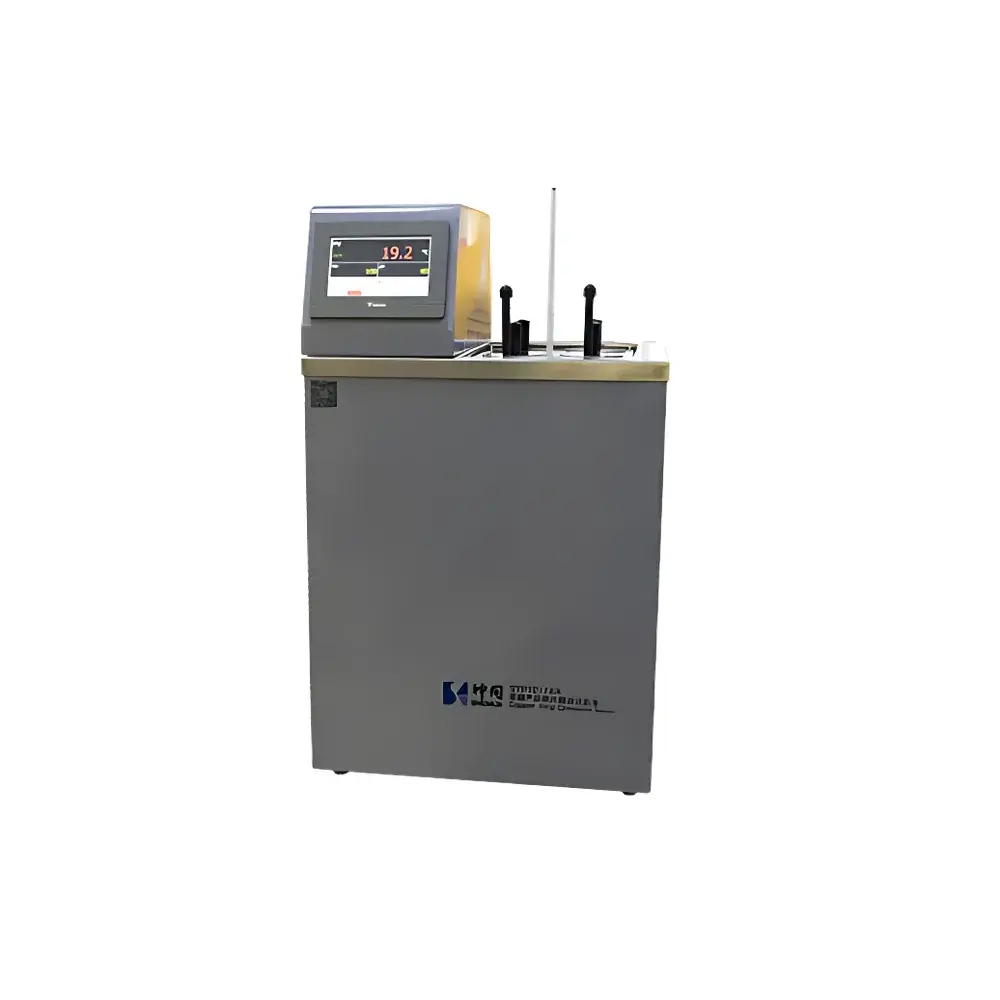
Shenkai SYP1017-IIA Copper Strip Corrosion Tester for Petroleum Products
| Brand | Shenkai |
|---|---|
| Origin | Shanghai, China |
| Model | SYP1017-IIA |
| Temperature Control Range | Ambient to 180 °C |
| Temperature Accuracy | ±0.5 °C |
| Bath Material | Stainless Steel |
| Maximum Sample Capacity | 18 test tubes or 8 pressure vessels (optional) |
| Pressure Rating of Vessels | 0.7 MPa |
| Heating Power | 2500 W |
| Power Supply | AC 220 V ±10%, 50 Hz |
| Dimensions (W×D×H) | 380 mm × 320 mm × 640 mm |
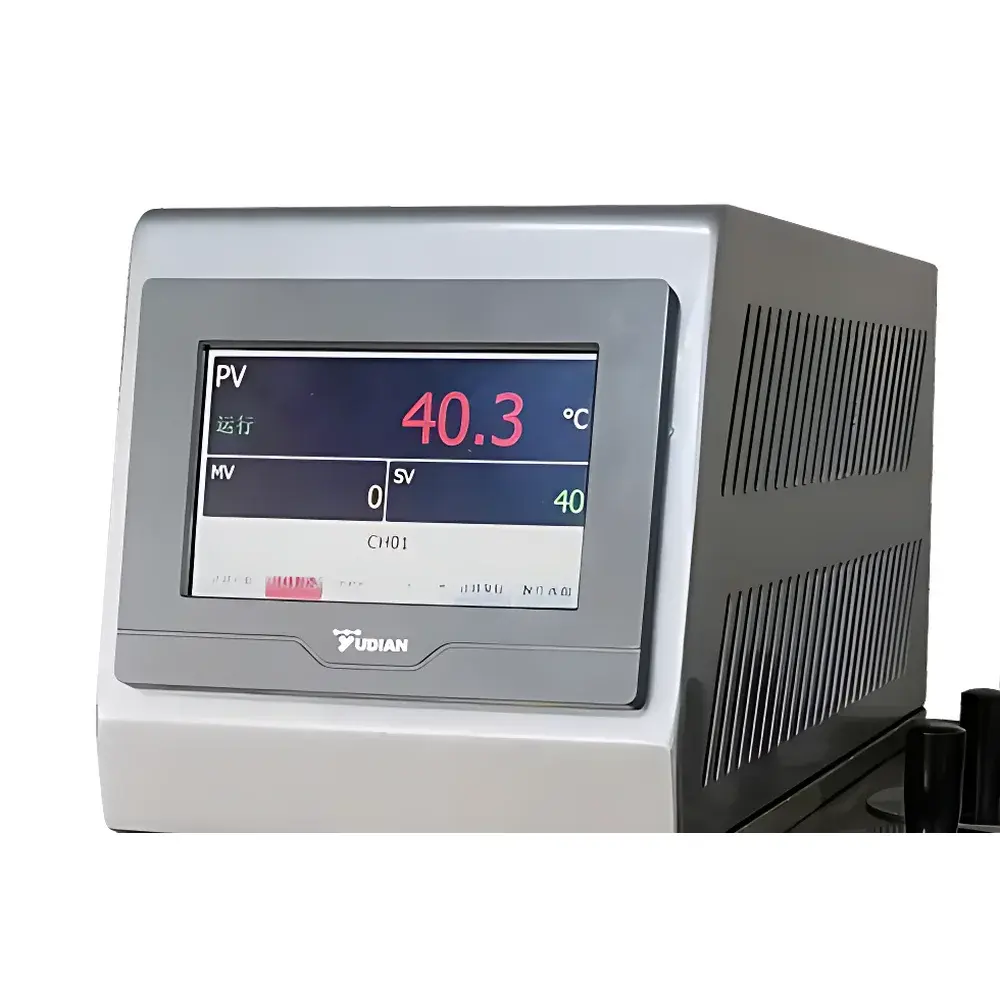
| Display | 5-inch color touchscreen |
| Compliance | GB/T 5096, ISO 2160, ASTM D130, IP 154 |
Overview
The Shenkai SYP1017-IIA Copper Strip Corrosion Tester is a precision-engineered instrument designed for quantitative evaluation of copper corrosion potential in petroleum-based hydrocarbon fuels and lubricants. It operates on the standardized copper strip immersion method—where polished copper specimens are immersed in the test sample under controlled temperature and time conditions, followed by visual comparison against ASTM- or ISO-defined corrosion rating scales. This principle is grounded in electrochemical surface interaction kinetics, where sulfur-containing compounds (e.g., mercaptans, sulfides), organic acids, and peroxides induce characteristic discoloration and tarnishing patterns on the copper surface. The instrument supports routine quality control and specification compliance testing for aviation gasoline, jet fuel, automotive gasoline, kerosene, diesel, distillate fuels, lubricating oils, and natural gasoline—provided the sample’s vapor pressure at 37.8 °C does not exceed 124 kPa, as stipulated in ASTM D130 and ISO 2160.
Key Features
- 5-inch full-color resistive touchscreen interface with intuitive navigation, real-time parameter display, and password-protected configuration access
- Intelligent PID-controlled heating system with dual-sensor feedback loop ensuring thermal stability within ±0.5 °C across the full operating range (ambient to 180 °C)
- Stainless steel multi-hole oil bath with integrated high-efficiency immersion heater (2500 W) and low-turbulence magnetic stirrer for uniform heat distribution
- Modular bath cover configuration: standard six-hole plate accommodates up to 18 glass test tubes; optional eight-hole plate enables concurrent testing of up to eight pressurized autoclave vessels (rated to 0.7 MPa)
- Embedded timer with programmable duration (up to 99 hours, 59 minutes) and audible/visual end-of-test alert
- Insert-type control module housing all electronics—including solid-state relays, microcontroller unit, and I/O interfaces—for rapid field serviceability without disassembly of the thermal bath
- Over-temperature cut-off and open-circuit detection safeguards integrated into firmware logic to prevent thermal runaway or heater failure hazards
Sample Compatibility & Compliance
The SYP1017-IIA is validated for use with volatile and non-volatile petroleum distillates meeting the physical property constraints defined in ASTM D130 Section 6.1. Its stainless steel construction resists degradation from acidic or sulfur-laden samples, while the sealed oil bath minimizes oxidation of the heat transfer medium during extended operation. The instrument fully complies with the procedural requirements of GB/T 5096–2017 (China), ISO 2160:2015 (Petroleum products — Corrosiveness to copper — Copper strip test), ASTM D130–22 (Standard Test Method for Corrosiveness to Copper from Petroleum Products by Copper Strip Test), and IP 154:2019 (Copper strip corrosion test for petroleum products). All operational parameters—including temperature ramp profiles, soak dwell times, and ambient humidity limits—are aligned with these standards’ metrological traceability frameworks. For laboratories operating under GLP or refinery QA/QC protocols, the device supports audit-ready documentation through manual logbook integration.
Software & Data Management
The SYP1017-IIA operates via embedded firmware with no external PC dependency. All test configurations—including setpoint temperature, duration, and user ID—are stored in non-volatile memory with timestamped event logging (start, pause, completion, fault). While the unit lacks native data export or network connectivity, its deterministic behavior and repeatable thermal response ensure high inter-laboratory reproducibility—a prerequisite for ISO/IEC 17025-accredited testing facilities. Users may integrate test records into LIMS or ELN systems via manual transcription or barcode-assisted entry using standardized reporting templates aligned with ASTM D130 Annex A1 (Corrosion Rating Guide). Firmware updates are performed via USB flash drive, requiring no proprietary software or vendor licensing.
Applications
- Routine screening of refinery feedstocks and finished fuels for active sulfur species prior to blending or shipment
- Verification of additive package stability in engine oils exposed to elevated thermal stress
- Investigation of storage-induced corrosion acceleration in diesel fuel aged under accelerated conditions (e.g., 50 °C for 72 h)
- Supporting root-cause analysis in field failures linked to copper-bearing fuel system components (injectors, pumps, heat exchangers)
- Training and method validation in petroleum testing laboratories seeking ISO/IEC 17025 accreditation
- Compliance verification for military fuel specifications (e.g., DEF STAN 91-86, MIL-DTL-83133E)
FAQ
What standards does the SYP1017-IIA fully support?
It meets the apparatus and procedural requirements of GB/T 5096, ISO 2160, ASTM D130, and IP 154 for copper strip corrosion testing.
Can the instrument be used for pressurized testing?
Yes—when equipped with the optional eight-hole cover plate and certified pressure vessels, it supports tests requiring controlled headspace pressure up to 0.7 MPa.
Is calibration traceable to national standards?
Temperature sensors are factory-calibrated against NIST-traceable references; users should perform periodic verification using certified RTD probes per ASTM E74 or ISO/IEC 17025 Clause 6.5.
What maintenance is required for long-term reliability?
Regular cleaning of the oil bath with fresh, high-flash-point mineral oil (e.g., silicone oil, flash point >250 °C) and inspection of heater terminals and stirrer coupling every 500 operational hours.
Does the unit comply with electrical safety directives for international deployment?
It conforms to IEC 61010-1:2010 for laboratory electrical equipment; CE marking requires local representative registration and EMC testing per EN 61326-1 in destination markets.





