
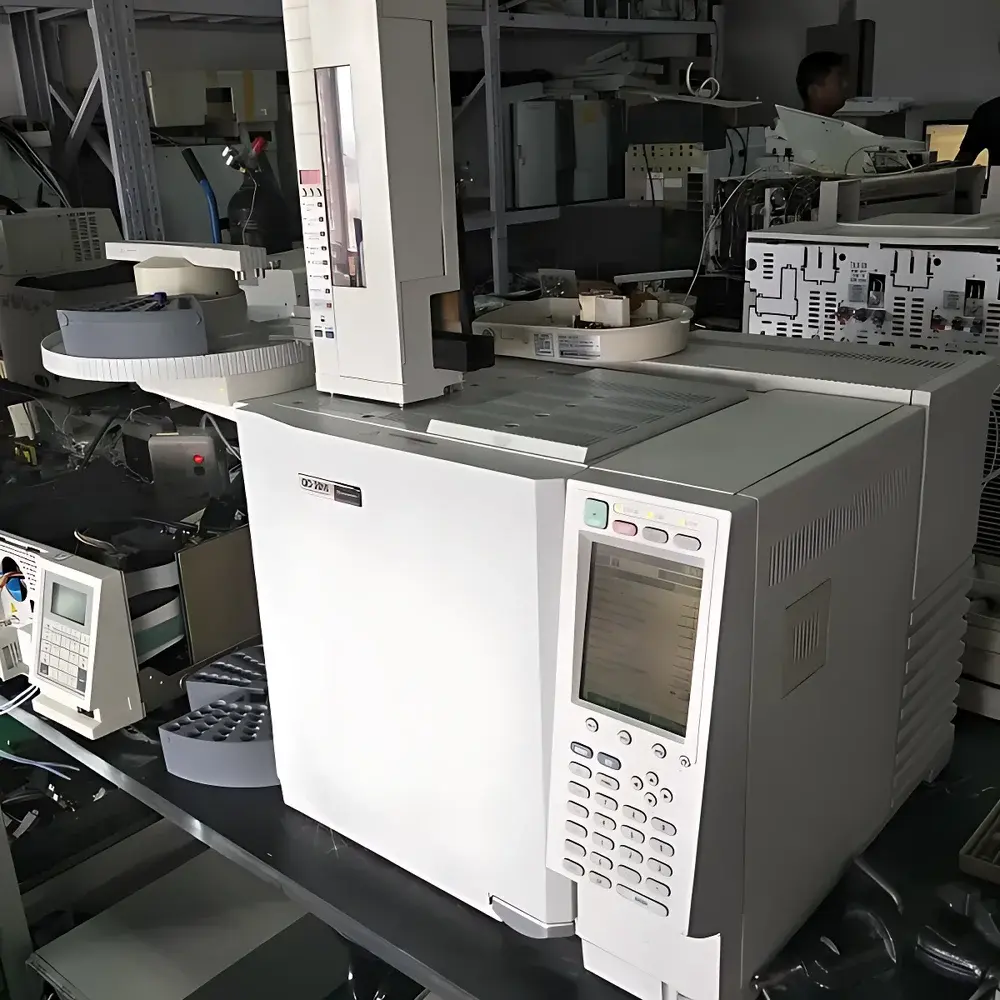
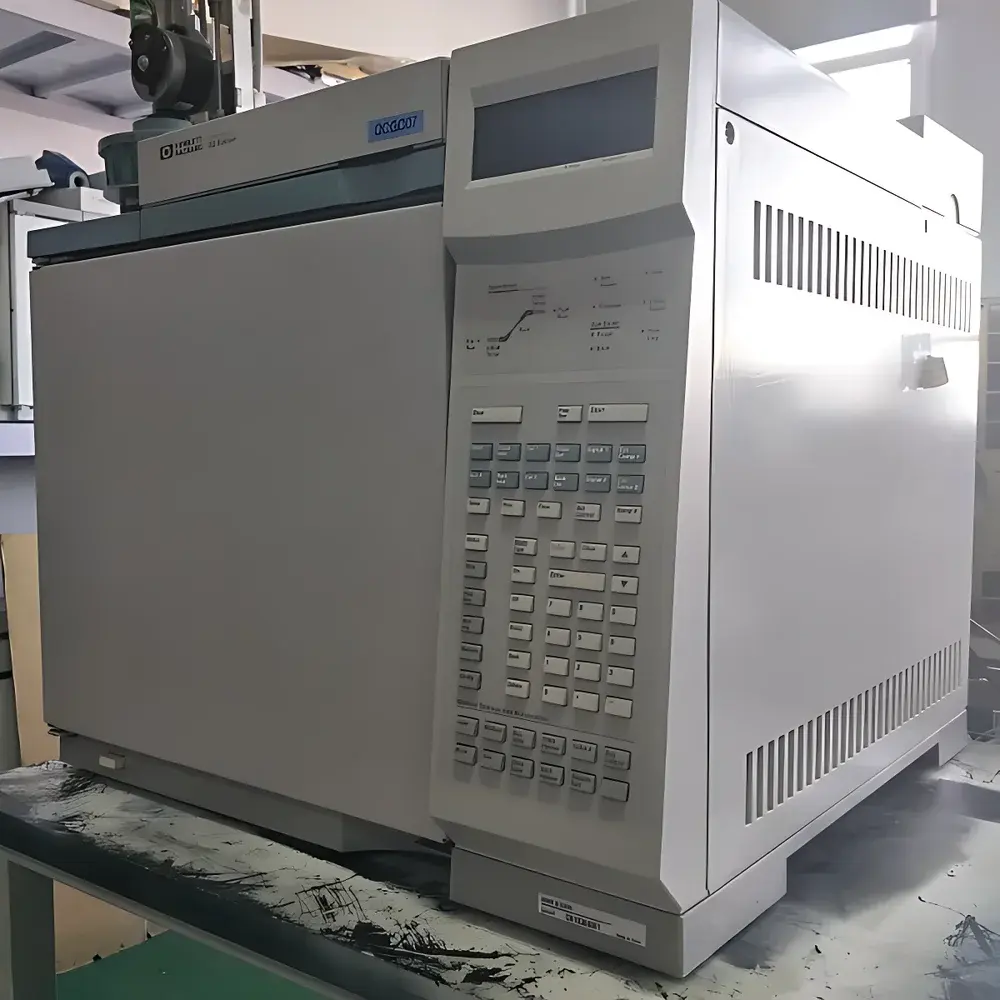
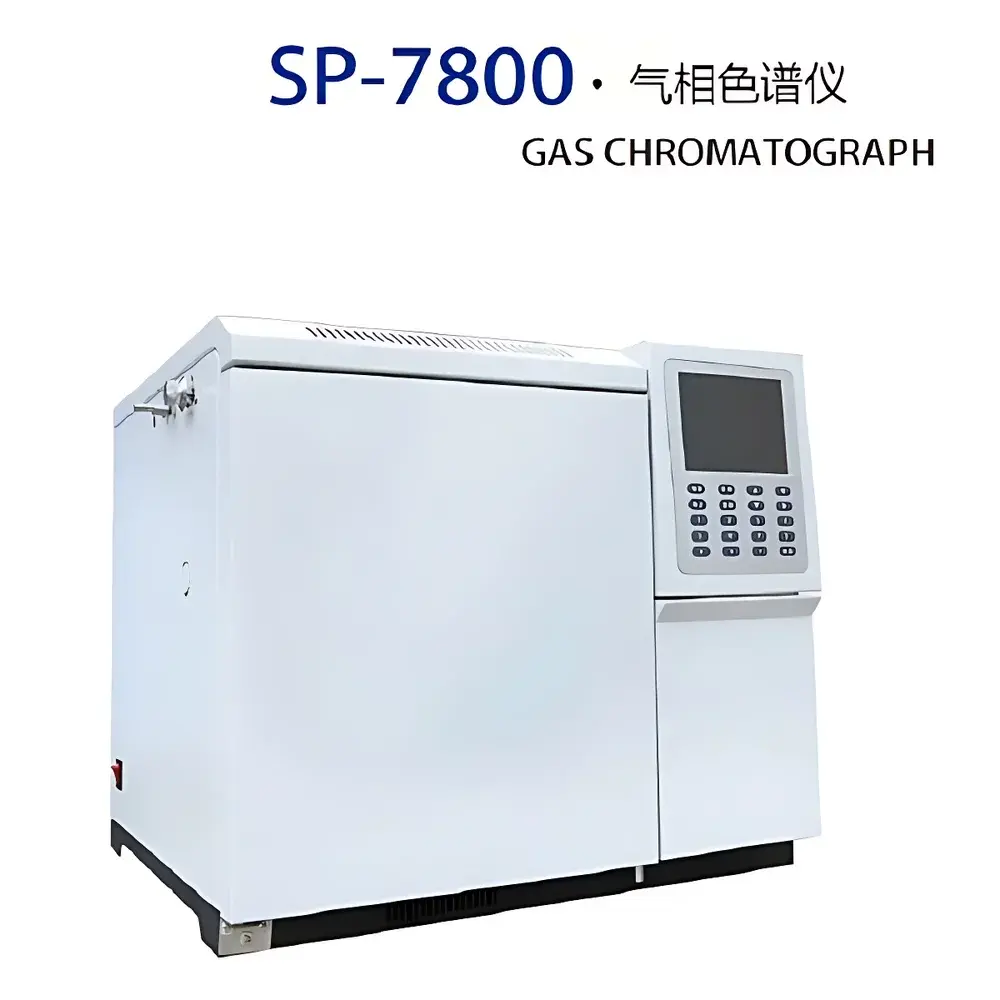
Shimadzu GC-2010 Gas Chromatograph for Fatty Acid Methyl Ester (FAME) Analysis in Oils and Fats
| Brand | Shimadzu |
|---|---|
| Origin | Japan |
| Instrument Type | Laboratory Gas Chromatograph |
| Model | GC-2010 |
| Carrier Gas Flow Range & Control | 0–1200 mL/min |
| Carrier Gas Pressure Range & Control | 0–970 kPa |
| Injector Maximum Temperature | 450 °C |
| Injector Pressure Setting Range | 0–970 kPa |
| Injector Total Flow Setting Range | 0–1200 mL/min |
Overview
The Shimadzu GC-2010 Gas Chromatograph is a high-performance, laboratory-grade analytical system engineered for precise separation and quantification of fatty acid methyl esters (FAMEs) in edible oils and lipid matrices. Designed around capillary gas chromatography with flame ionization detection (FID), the GC-2010 implements temperature-programmed elution on highly polar stationary phases—such as polyethylene glycol (e.g., SP-2560 or CP-Sil 88)—to resolve complex FAME profiles, including cis- and trans-isomers. Its architecture supports full compliance with Chinese national standards GB 5009.168–2016 (“Determination of Fatty Acids in Foods”) and GB 5009.257–2016 (“Determination of Trans Fatty Acids in Foods”), both of which mandate resolution of up to 37 standard FAMEs and 21 trans-FAMEs within an 80-minute runtime. The instrument’s core measurement principle relies on differential partitioning of volatile FAME derivatives between mobile (carrier gas) and stationary phases, with retention time serving as the primary identification parameter and peak area enabling quantitative calibration against certified reference standards.
Key Features
- Advanced Flow Control (AFC) system with real-time pressure and flow compensation, ensuring <0.02 psi / 0.14 kPa pressure stability and <0.1 mL/min flow precision across all operating conditions.
- High-thermal-stability oven with ±0.01 °C temperature uniformity and programmable ramp rates up to 120 °C/min (hardware-limited); column oven accommodates up to 2 m × 0.53 mm ID columns.
- Split/splitless injector with electronic pressure control (EPC), capable of handling sample volumes from 0.1–10 µL and supporting cold-on-column or programmed temperature vaporizing (PTV) injection modes when retrofitted.
- FID detector optimized for hydrocarbon response, featuring low-noise electronics, adjustable hydrogen/air ratios, and linear dynamic range exceeding 10⁷ (mass-based).
- Robust mechanical architecture with dual-column capability, optional backflush configuration, and integrated leak-check diagnostics for long-term method robustness in routine QC environments.
Sample Compatibility & Compliance
The GC-2010 is validated for direct analysis of FAME derivatives prepared from triglyceride-rich samples—including soybean oil, palm oil, sunflower oil, butterfat, and fish oil—following standardized transesterification (e.g., BF₃-methanol or NaOH-methanol protocols). Sample introduction requires derivatization to ensure volatility and thermal stability; underivatized free fatty acids are not compatible. The system meets essential regulatory expectations for food testing laboratories, including alignment with ISO/IEC 17025:2017 documentation requirements, traceability to NIST-traceable FAME reference materials (e.g., Supelco 37 Component FAME Mix), and compatibility with GLP-compliant audit trails when operated with Shimadzu LabSolutions software. While the GC-2010 itself does not embed FDA 21 CFR Part 11 controls natively, its data acquisition and reporting modules support electronic signature integration via validated third-party extensions.
Software & Data Management
Controlled via Shimadzu LabSolutions GC Workstation (v5.9x or later), the GC-2010 enables method development, sequence management, peak integration using valley-to-valley or tangent skim algorithms, and automated calibration curve generation (linear, quadratic, or weighted). Raw data files (.gcd) are stored in vendor-neutral formats compliant with ASTM E1947–21 for chromatographic data exchange. Audit trail functionality records user logins, method modifications, integration parameter changes, and report exports—meeting minimum ALCOA+ principles (Attributable, Legible, Contemporaneous, Original, Accurate). Data backups follow hierarchical retention policies: raw acquisitions retained ≥2 years, processed reports ≥5 years, consistent with GB/T 27404–2008 guidelines for food testing laboratories.
Applications
- Quantitative profiling of saturated (e.g., C14:0, C16:0), monounsaturated (e.g., C18:1n9), and polyunsaturated (e.g., C18:2n6, C22:6n3) FAMEs in refined and virgin vegetable oils.
- Detection and quantification of industrially generated trans-fatty acids (e.g., elaidic acid C18:1t9, linoelaidic acid C18:2t9,12) in margarines, shortenings, and fried snacks.
- Verification of labeling claims (e.g., “zero trans fat”, “high oleic”) per national nutrition labeling regulations.
- Stability monitoring of oils during accelerated oxidation studies (e.g., Rancimat coupling with post-incubation FAME analysis).
- Authenticity assessment of olive oil and specialty fats via FAME ratio fingerprints (e.g., C16:0/C18:1, C18:2/C18:3).
FAQ
Is this GC-2010 unit certified for use in accredited food testing laboratories?
Yes—when configured with validated methods, calibrated reference standards, and operated under documented SOPs, the GC-2010 satisfies technical requirements for ISO/IEC 17025 accreditation in FAME analysis.
What column dimensions and phase chemistry are recommended for full 37-FAME separation per GB 5009.168–2016?
A 100 m × 0.25 mm ID × 0.20 µm film thickness fused-silica capillary column coated with 100% cyanopropyl polysiloxane (e.g., SP-2560 or equivalent) is specified; oven programming must include at least seven temperature ramps.
Can the GC-2010 be upgraded to support electronic data interchange (EDI) with LIMS?
Yes—via LabSolutions’ OpenLab Connector or custom ODBC/JDBC drivers, enabling bidirectional transfer of sample IDs, results, and QC flags to major LIMS platforms including Thermo Fisher SampleManager and LabWare LIMS.
Does the system include hardware validation tools for IQ/OQ/PQ execution?
Shimadzu provides factory-installed performance verification kits (e.g., retention time test mix, sensitivity check mix) and IQ/OQ protocol templates aligned with USP and ASTM E2656–22 for chromatographic equipment qualification.
What maintenance intervals are recommended for routine FAME analysis?
Injector liner replacement every 200 injections; FID jet cleaning every 500 runs; column trimming (0.5–1 m) every 1000 injections; annual AFC sensor recalibration by authorized service engineer.
Related Products






