
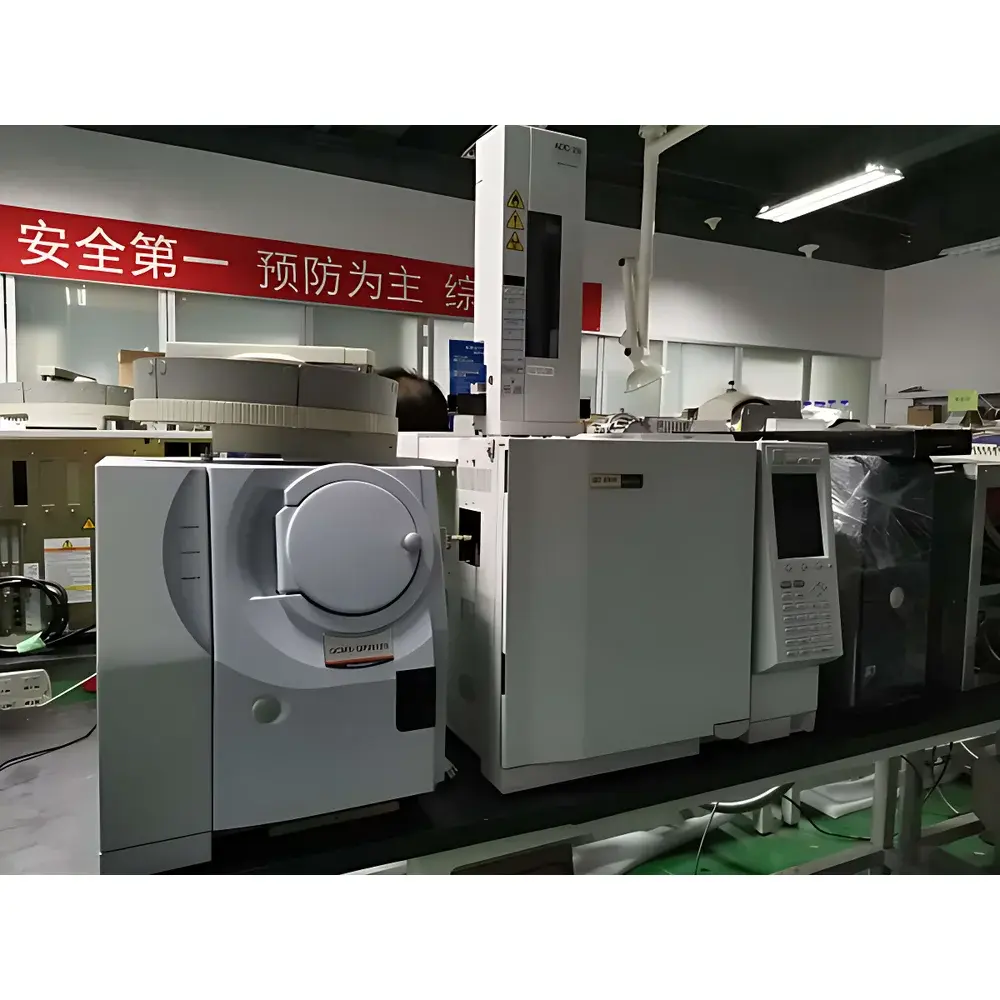
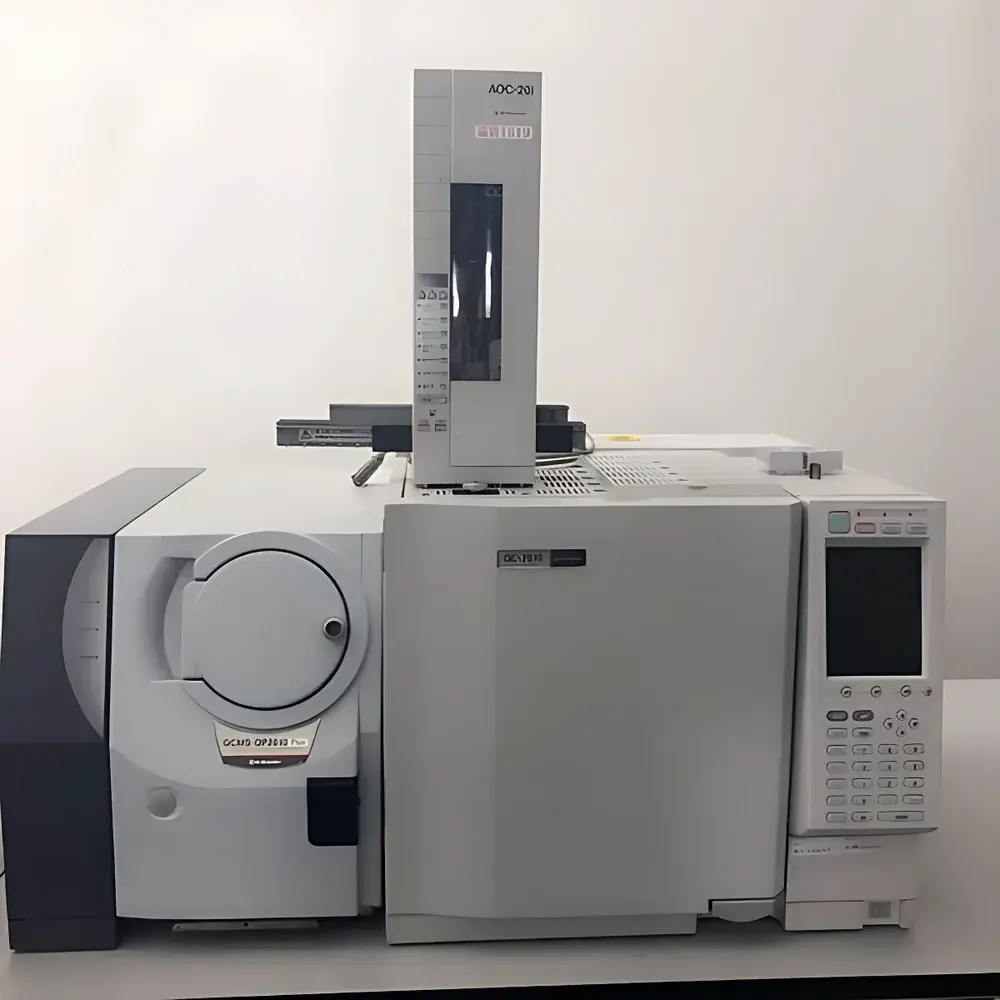
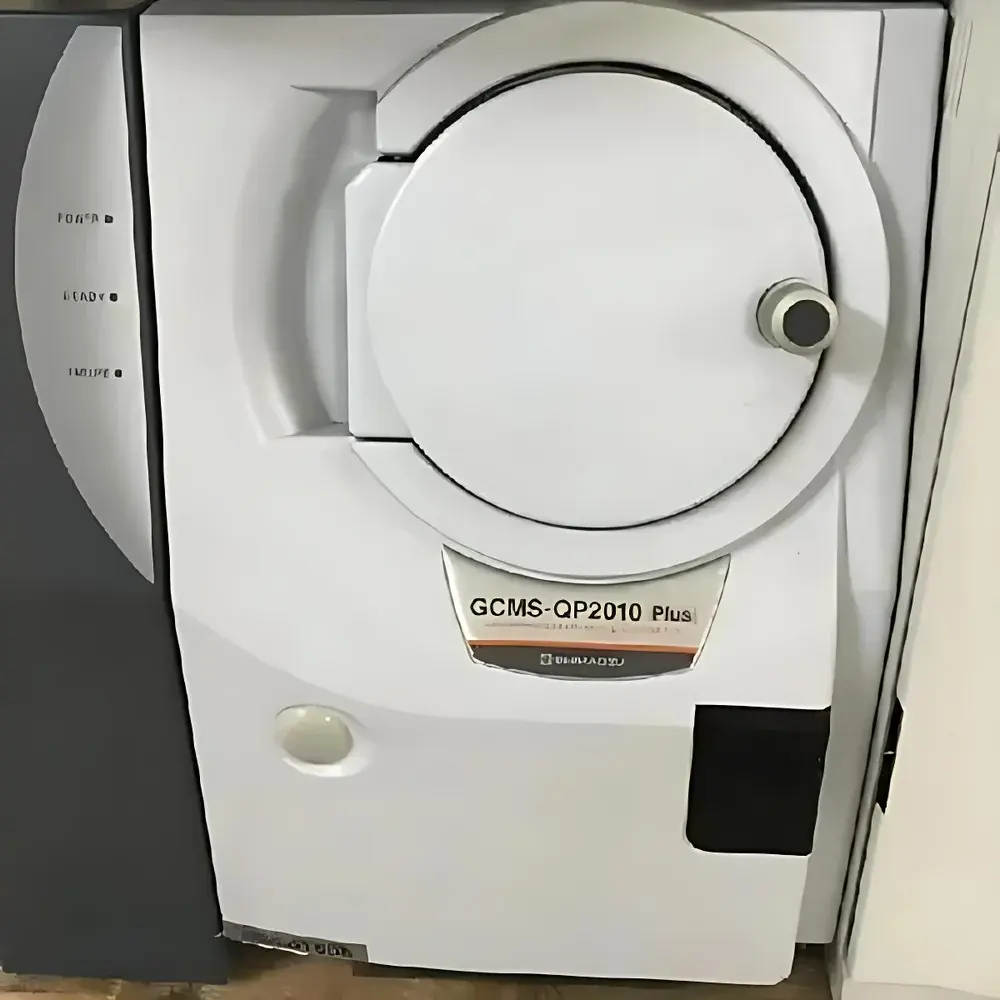
Shimadzu GCMS-QP2010 Plus Gas Chromatograph-Mass Spectrometer
| Brand | Shimadzu |
|---|---|
| Origin | Japan |
| Model | QP2010PLUS |
| Instrument Type | Laboratory Gas Chromatography-Mass Spectrometry (GC-MS) System |
| Application Field | Alcoholic Beverage Flavor Profiling |
| Injector Maximum Temperature | 450 °C |
| Injector Pressure Range | 0–970 kPa |
| Total Injector Flow Rate Range | 0–12,000 mL/min |
| Carrier Gas Flow Range | 0–12,000 mL/min |
| Carrier Gas Pressure Range | 0–970 kPa |
| Carrier Gases Supported | Helium, Nitrogen, Hydrogen |
Overview
The Shimadzu GCMS-QP2010 Plus is a high-performance benchtop gas chromatograph-mass spectrometer engineered for precise qualitative and semi-quantitative analysis of volatile and semi-volatile organic compounds. It operates on the fundamental principle of gas-phase separation followed by electron ionization (EI) mass spectrometric detection—where analytes are volatilized, separated in a capillary column under controlled temperature programming, ionized in a heated filament source, and resolved according to their mass-to-charge ratio (m/z) using a quadrupole mass analyzer. Designed for routine laboratory environments—including quality control laboratories in distilleries, food safety testing facilities, and academic research groups—the system delivers robust reproducibility, low detection limits, and compatibility with widely accepted regulatory workflows. Its architecture supports dual-carrier-gas operation (helium, nitrogen, or hydrogen), enabling method flexibility without compromising spectral fidelity—validated in peer-reviewed studies for ethanol congener profiling in baijiu and other distilled spirits.
Key Features
- High-sensitivity EI ion source with optimized electron emission geometry and extended filament lifetime
- Low-noise, high-dynamic-range electron multiplier detector ensuring signal-to-noise (S/N) ratios > 500:1 (for m/z 69, 1 pg octafluoronaphthalene)
- Quadrupole mass analyzer with mass range of m/z 1.5–1024, factory-calibrated for long-term stability
- Advanced carrier gas control via electronic pressure control (EPC) with real-time monitoring and closed-loop feedback
- Programmable temperature vaporizing (PTV) and split/splitless injector capable of operation up to 450 °C with pressure and flow precision ±0.01 kPa and ±0.1 mL/min
- Integrated GC oven with temperature range from –20 °C (with optional cryo-cooling) to 450 °C and programmable ramp rates up to 120 °C/min
- Comprehensive QA/QC suite including autotune, retention time locking (RTL), and automated calibration verification
Sample Compatibility & Compliance
The GCMS-QP2010 Plus is routinely applied to complex matrices requiring derivatization-free or minimal-prep analysis—including fermented and distilled alcoholic beverages, essential oils, environmental water extracts, and polymer leachates. For spirit analysis, it resolves co-eluting congeners such as ethanol, propanol, isobutanol, isoamyl alcohol, ethyl acetate, ethyl lactate, acetic acid, ethyl hexanoate, and furfural—enabling quantitative profiling per ISO 22310:2019 (alcoholic beverages — determination of volatile compounds by GC-MS). The system complies with GLP and GMP documentation requirements through built-in audit trail functionality, user-access controls, and electronic signature support aligned with FDA 21 CFR Part 11. All firmware and acquisition software meet IEC 61000-4 electromagnetic compatibility standards and are CE-marked for use in EU-regulated laboratories.
Software & Data Management
Data acquisition and processing are performed using Shimadzu’s GCMSsolution software (v2.8 or later), a validated platform supporting both Scan and SIM acquisition modes, spectral deconvolution (AIA/AMDIS integration), library search against NIST/EPA/NIH mass spectral databases, and customizable report generation. Raw data files (.qgd) are stored in vendor-neutral formats compatible with third-party chemometric tools (e.g., MATLAB, R, Python-based SciPy workflows). The software includes full traceability features: instrument method logs, sequence audit trails, calibration history, and user action timestamps—all exportable as PDF or CSV for internal review or regulatory submission. Remote monitoring and method sharing across networked instruments are supported via optional LabSolutions Link modules.
Applications
- Quantitative profiling of flavor-active congeners in baijiu, whiskey, rum, and brandy per Chinese National Standard GB/T 10345–2007 and AOAC Official Method 992.19
- Residual solvent analysis in pharmaceutical excipients (ICH Q3C-compliant)
- Environmental screening of VOCs in air and water samples (EPA Methods 8260D, 8270E)
- Fatty acid methyl ester (FAME) analysis in biodiesel feedstocks (EN 14103)
- Impurity identification and structural elucidation in synthetic intermediates using accurate mass libraries and retention index matching
FAQ
Can the QP2010 Plus operate with nitrogen as carrier gas without sacrificing sensitivity or spectral integrity?
Yes—method validation studies confirm that nitrogen provides equivalent peak shape, retention time stability, and library-match confidence (>90%) for target congeners when compared to helium, with no observable fragmentation pattern distortion in the m/z 30–350 range.
Is the system compliant with 21 CFR Part 11 for regulated laboratories?
Yes—GCMSsolution v2.8+ implements role-based access control, electronic signatures, and immutable audit trails meeting FDA requirements for electronic records and signatures.
What is the maximum operating temperature of the transfer line between GC and MS?
The interface temperature is independently programmable up to 350 °C, with standard configuration rated to 250 °C for routine spirit analysis.
Does the system support automated sample preparation integration?
It is compatible with Shimadzu AOC-20i and AOC-6000 autosamplers, as well as third-party SPME and headspace modules via TTL/RS-232 triggering protocols.
How frequently does the ion source require cleaning in high-throughput spirit analysis?
Under typical baijiu QC workloads (≤50 injections/day), source cleaning is recommended every 2–3 weeks; extended intervals are achievable with inlet liner replacement and septum maintenance per SOP.



