
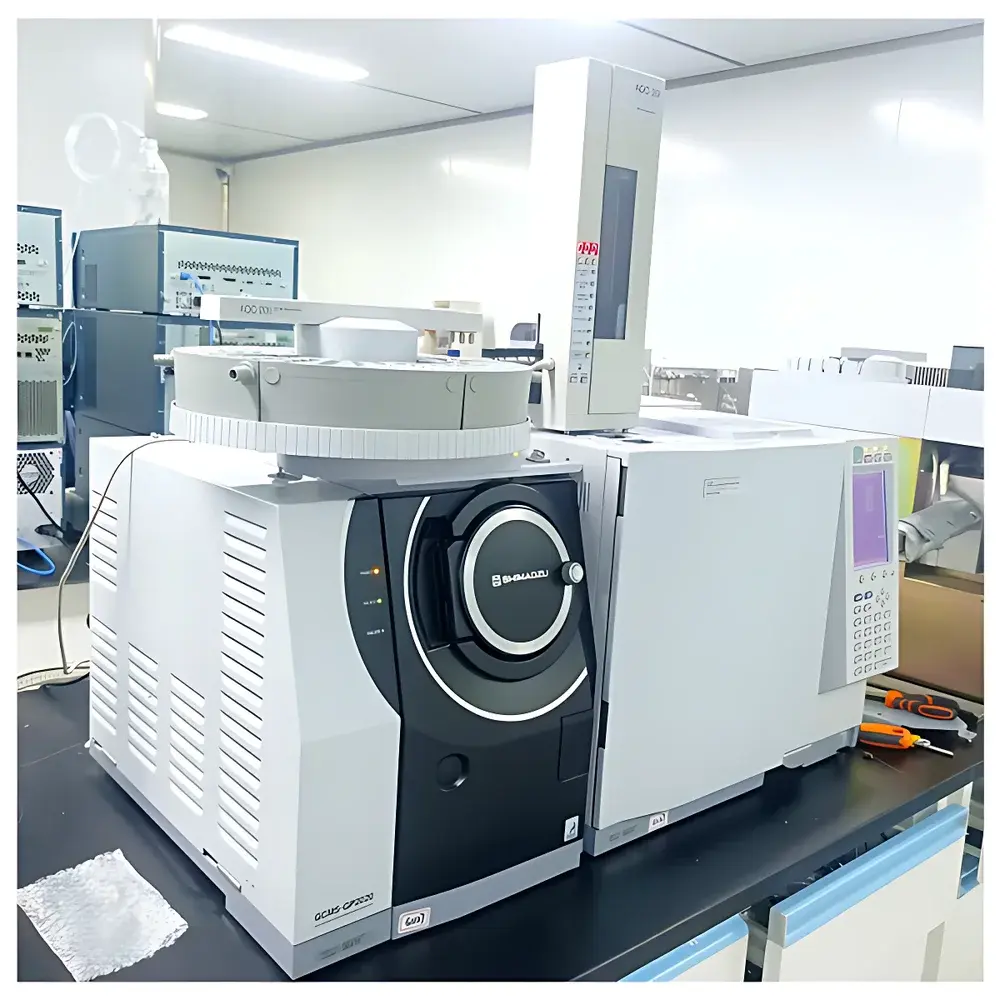
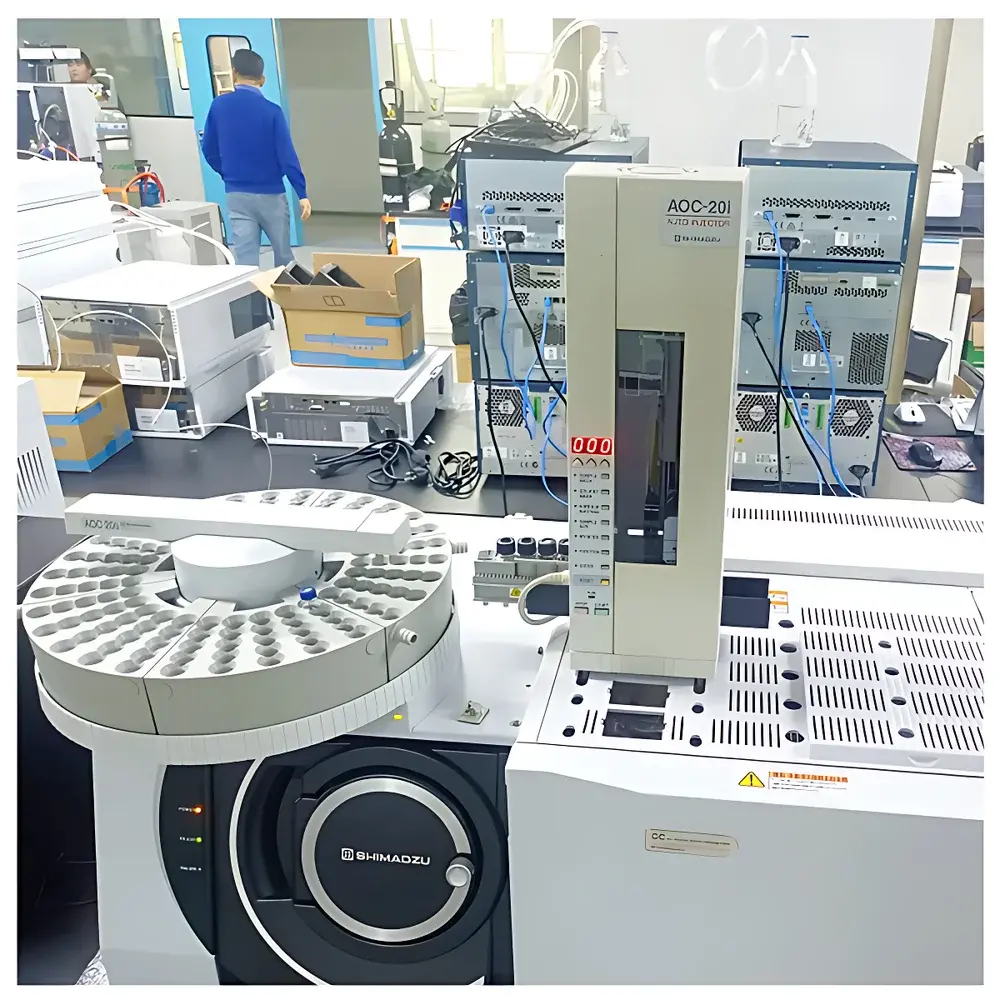
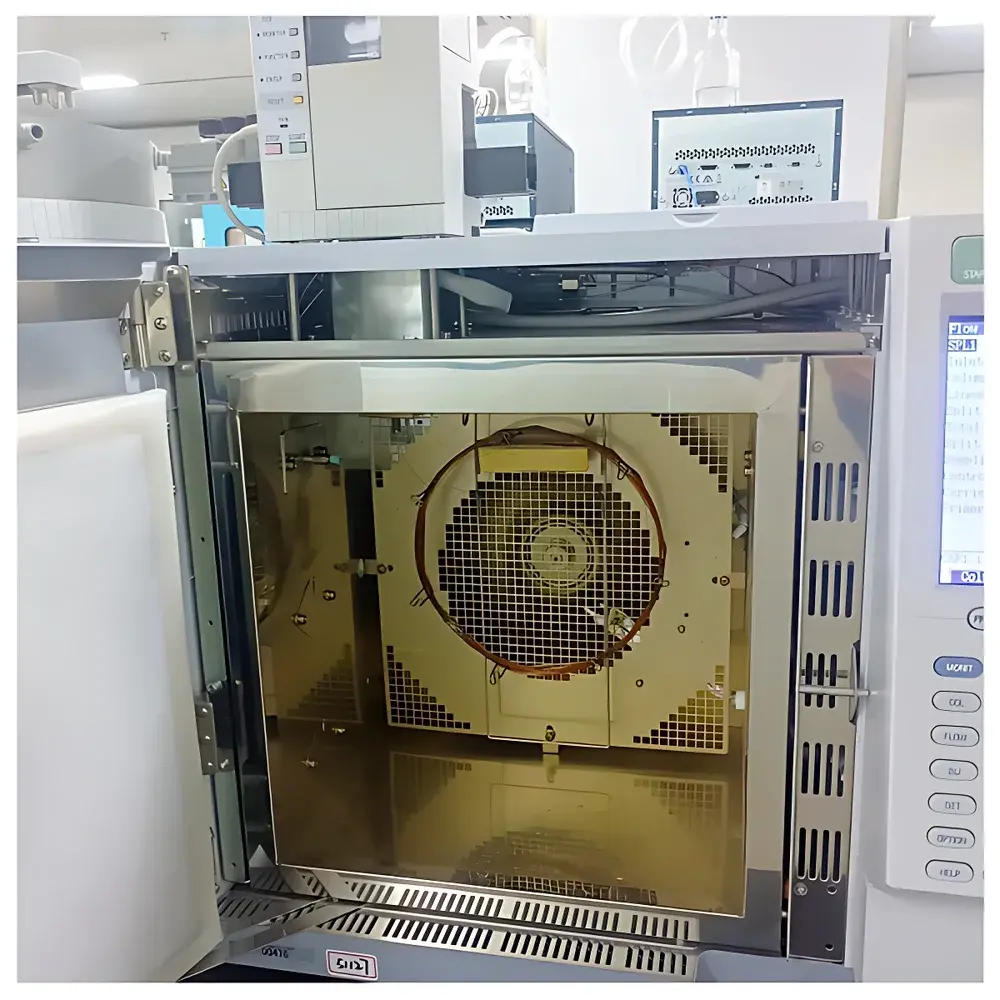
Shimadzu GCMS-QP2020 Single Quadrupole Gas Chromatography-Mass Spectrometer
| Brand | Shimadzu |
|---|---|
| Origin | Japan |
| Instrument Type | Single Quadrupole Mass Spectrometer |
| GC Configuration | Conventional GC-MS |
| Mass Range | 10–1000 u |
| Resolution | 1000 (at 5% valley, m/z 502) |
| Sensitivity | 300 fg OFN (octafluoronaphthalene), S/N ≥ 2000:1 (m/z 272) |
| Scan Speed | 20,000 u/sec (max) |
| Mass Accuracy | ±10 mmu (typical, after calibration) |
| Oven Ramp Rate | Up to 125 °C/min |
| Detector | Electron Multiplier (EM) with 10⁷ dynamic range |
| Pressure Control Precision | ±0.001 psi (via electronic pneumatic control) |
Overview
The Shimadzu GCMS-QP2020 is a high-performance single quadrupole gas chromatography-mass spectrometry (GC-MS) system engineered for precision, speed, and robustness in regulated and research-intensive laboratories. It operates on the principle of electron ionization (EI) coupled with quadrupole mass filtering, enabling selective detection and quantification of volatile and semi-volatile organic compounds following separation by capillary gas chromatography. Designed for routine and advanced applications—including trace-level residue screening, environmental monitoring, metabolomics profiling, and biomarker discovery—the QP2020 delivers exceptional analytical throughput without compromising data fidelity. Its architecture integrates hardware innovations—such as shielded ion optics, dual-turbopump vacuum infrastructure, and ASSP™ (Advanced Scanning Speed Protocol)—with software-controlled operational intelligence to ensure reproducible performance across wide concentration ranges (fg to µg levels) and complex matrix backgrounds.
Key Features
- Shielded High-Sensitivity Ion Source: Features an all-metal, fully inertized ion source with integrated shielding plate and off-axis deflection lens (OD lens) to minimize matrix-induced signal suppression and electronic noise—achieving S/N ≥ 2000:1 at 300 fg OFN (m/z 272).
- Dual-Turbopump Vacuum System: Employs two independent 200 L/sec turbomolecular pumps—one dedicated to the ion source and one to the quadrupole analyzer—enabling a total differential pumping capacity of 400 L/sec. This design supports stable high-vacuum operation (<1×10⁻⁵ Pa) under varied carrier gas conditions (He, H₂, N₂) and enables Twin Line MS dual-column configuration without sensitivity loss.
- Ultra-Fast Scanning with ASSP™ Technology: Delivers up to 20,000 u/sec scan speed while maintaining spectral integrity through optimized ion transmission dynamics. ASSP™ compensates for high-mass discrimination during rapid scanning, improving sensitivity >5× over conventional protocols—particularly critical for Fast-GC, FASST (Scan/SIM simultaneous acquisition), and comprehensive two-dimensional GC×GC/MS workflows.
- Wide Dynamic Range & Dual-Mode Operation: Tunable ion source parameters allow seamless transition between ultra-trace analysis (fg-level detection) and high-concentration sample quantitation—eliminating the need for hardware reconfiguration or dilution series.
- Rapid System Readiness: Achieves operational vacuum and thermal equilibrium within 30 minutes of startup, reducing instrument downtime and enhancing lab scheduling flexibility.
- Ecology Mode: Reduces standby power consumption by up to 36% (vs. prior-generation models) and lowers carrier gas usage during idle periods. Manufacturing CO₂ emissions are reduced to 30% of previous process baselines, aligning with Shimadzu’s “Sustainability Vision” and ISO 14001-compliant production standards.
Sample Compatibility & Compliance
The GCMS-QP2020 accommodates a broad spectrum of sample types—including aqueous extracts, organic solvent eluates, headspace volatiles, and thermally labile derivatized analytes—when paired with appropriate inlet systems (split/splitless, PTV, or direct insertion). Its maximum column flow capacity of 15 mL/min supports wide-bore (0.53 mm ID) capillary columns for large-volume injection (LVI) and purge-and-trap applications. The system complies with international regulatory frameworks including ISO/IEC 17025:2017 (for testing laboratories), USP (method validation), and EPA Methods 8270/1613/1668C. All hardware and firmware components are designed to meet electromagnetic compatibility (EMC) requirements per IEC 61326-1 and safety standards per IEC 61010-1.
Software & Data Management
GCMS Insight™ serves as the unified platform for method development, acquisition, processing, and reporting. It incorporates role-based user management, configurable audit trails, electronic signatures, and granular permission controls—fully compliant with FDA 21 CFR Part 11, EU Annex 11, and Japan MHLW Ordinance No. 149 (GXP-aligned data integrity requirements). The software includes application-specific databases (e.g., NIST, Wiley, Shimadzu Forensic, Environmental, and Metabolite libraries), automated peak deconvolution, retention index matching, and customizable report templates supporting GLP/GMP documentation workflows. Raw data files (.qgd) are stored in vendor-neutral formats compatible with third-party chemometric tools.
Applications
- Residue analysis in food and agricultural commodities (pesticides, mycotoxins, veterinary drugs)
- Environmental monitoring of POPs, PAHs, PCBs, and emerging contaminants in soil, water, and air matrices
- Metabolite identification and relative quantitation in untargeted and targeted metabolomics studies
- Impurity profiling and stability-indicating assays in pharmaceutical development (ICH Q2(R2))
- Biomarker discovery in clinical research using biofluids (urine, plasma, CSF)
- Polymer additive screening and degradation product characterization in advanced materials R&D
FAQ
Does the GCMS-QP2020 support both EI and CI ionization modes?
Yes—ion source hardware is field-upgradeable to chemical ionization (CI) without requiring vacuum break or major disassembly.
Can the Twin Line MS configuration be used with different column chemistries simultaneously?
Yes—two independently controlled columns (e.g., 5% phenyl / 95% dimethylpolysiloxane and polyethylene glycol) can be installed and switched via GCMS Insight software without venting the mass spectrometer.
What is the recommended maintenance interval for the ion source and detector?
Under typical usage (≤8 h/day, moderate sample load), cleaning is recommended every 3–6 months; detector replacement is typically required after 1–2 years of continuous operation.
Is method transfer possible from older Shimadzu GC-MS platforms?
Yes—GCMS Insight provides backward-compatible method import tools for QP2010, QP5050, and QP2010 Ultra systems, preserving retention time indexing and SIM parameter mapping.
How does Ecology Mode affect analytical performance during active runs?
Ecology Mode only activates during instrument standby; all performance specifications—including scan speed, sensitivity, and resolution—remain unchanged during acquisition mode.





