
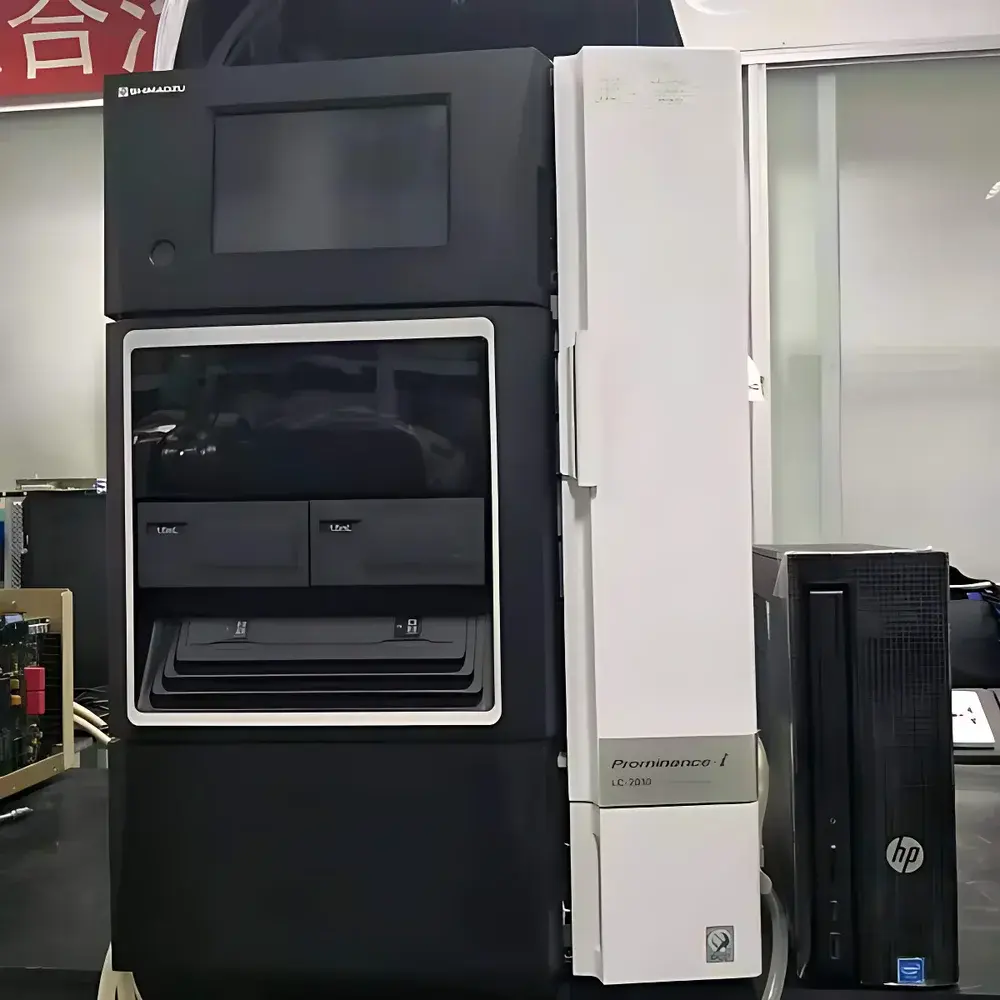
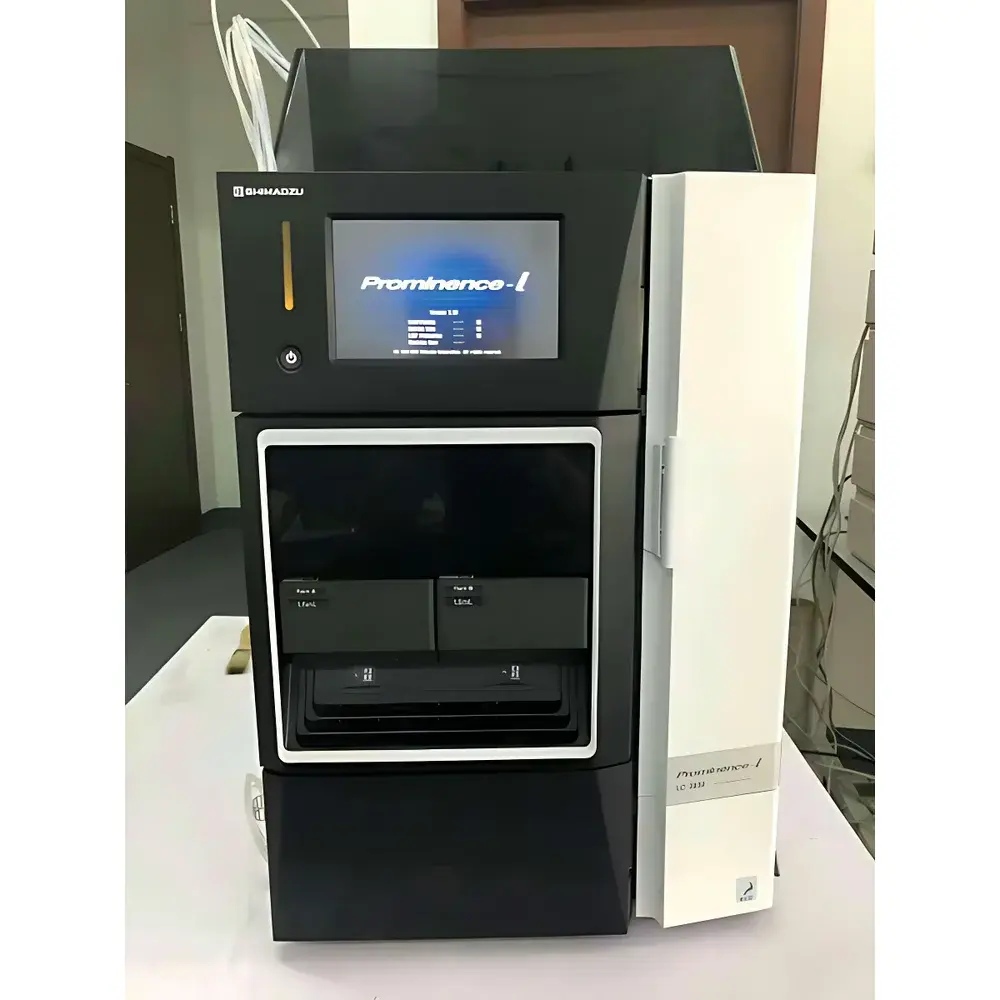
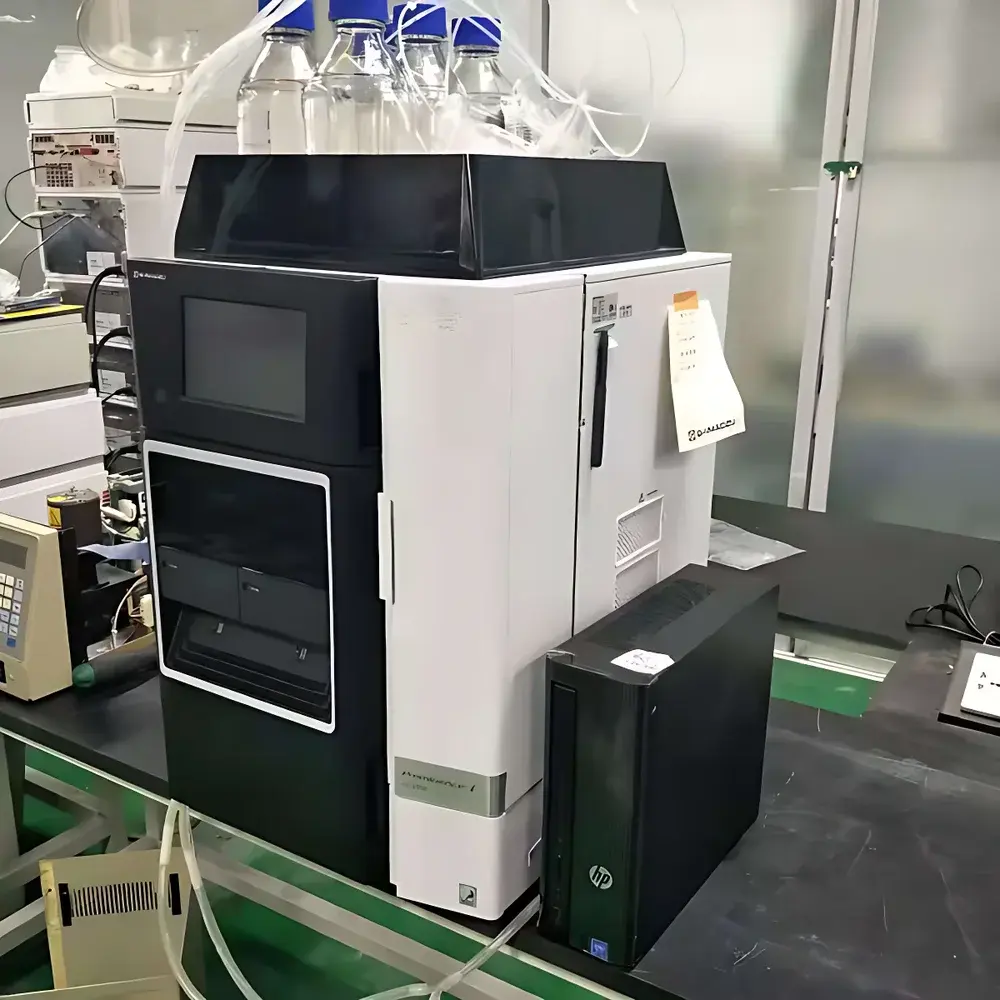
Shimadzu LC-2030 Integrated High-Performance Liquid Chromatograph
| Brand | Shimadzu |
|---|---|
| Origin | Japan |
| Model | LC-2030 |
| Instrument Type | Fast HPLC |
| Flow Rate Range | 0.001–10.000 mL/min |
| Maximum Pressure | 40 MPa |
| Autosampler Position Capacity | 1.5 trays (standard 100 × 2 mL vials per tray) |
| Injection Volume Range | 1–50 µL |
| Column Oven Temperature Control Range | +10 to +60 °C |
| UV-Vis Detection Wavelength Range | 190–700 nm |
| Data Acquisition Rate | 100 Hz |
Overview
The Shimadzu LC-2030 is an integrated high-performance liquid chromatograph engineered for robust, routine analysis of small-molecule analytes—including amino acids, organic acids, vitamins, and pharmaceutical actives—in complex biological and food matrices. Built on Shimadzu’s proven LC-20 series architecture, the LC-2030 integrates pump, autosampler, column oven, and UV-Vis photodiode array (PDA) detector into a single, space-efficient chassis with unified fluidic pathways and thermally stabilized optical components. Its operation relies on reversed-phase or ion-exchange chromatography coupled with pre-column derivatization (e.g., OPA/IBCF or ninhydrin), enabling sensitive, selective quantification of primary and secondary amines at sub-picomole levels. Designed for compliance-driven laboratories, the system supports method validation per ICH Q2(R2), meets essential requirements for GLP and GMP environments, and provides hardware-level traceability for audit readiness.
Key Features
- Integrated modular design with synchronized temperature control across pump head, autosampler chamber, and column oven—minimizing retention time drift (<0.02 min RSD over 24 h).
- High-precision quaternary gradient pump delivering flow accuracy ±0.1% and pulseless delivery across 0.001–10.000 mL/min, optimized for both narrow-bore (2.1 mm ID) and standard (4.6 mm ID) columns.
- Autosampler with dual-needle configuration and 1.5-tray capacity (up to 150 vials), supporting programmable needle wash, injection volume ramping, and temperature-controlled sample storage (4–40 °C optional).
- PDA detector with 190–700 nm spectral range, 100 Hz acquisition rate, and real-time peak purity assessment—critical for resolving co-eluting amino acid derivatives (e.g., GABA vs. tryptophan).
- Embedded web server enabling remote status monitoring, method transfer, and batch table execution via LabSolutions software without local PC dependency.
Sample Compatibility & Compliance
The LC-2030 is routinely deployed in food safety, nutraceutical QA/QC, and clinical research labs for quantitative amino acid profiling using standardized derivatization protocols (AOAC 999.12, ISO 13903). It accommodates diverse sample types—including hydrolysates (HCl or enzymatic), free-amino-acid extracts, and ultrafiltered biological fluids—following pretreatment steps such as 3 kDa molecular weight cutoff filtration and acidification with 10 mmol/L HCl to suppress matrix interference. System suitability testing complies with USP and EP 2.2.46 criteria. Full electronic records—including instrument logs, audit trails, and user authentication—are configurable to meet FDA 21 CFR Part 11 requirements when operated with LabSolutions CS v5.95 or later under validated IT infrastructure.
Software & Data Management
LabSolutions CS serves as the native chromatography data system (CDS), offering validated sequence management, peak integration algorithms compliant with ASTM E2689, and customizable reporting templates aligned with ISO/IEC 17025 documentation standards. Method migration from instrument front-panel to CDS preserves all gradient profiles, dwell volume compensation, and detector parameters—eliminating manual re-entry errors. Raw data (.lcd files) are stored with embedded metadata (user ID, timestamp, instrument serial, calibration history), and export formats include CSV, PDF/A-2, and XML for LIMS integration. Audit trail functionality records all critical events—including method edits, result overrides, and user logins—with immutable timestamps and operator identification.
Applications
- Quantitative analysis of 20 proteinogenic amino acids plus non-proteinogenic species (e.g., theanine, GABA) in food matrices (rice, soy, fish, eggs, dairy, botanicals) per AOAC Official Method 2005.03.
- Stability-indicating assays for amino acid-containing pharmaceuticals and dietary supplements, including forced degradation studies under acidic, thermal, and oxidative stress conditions.
- Quality control of fermentation broths and cell culture media, where rapid turnaround (<15 min/run) and reproducible retention times support high-throughput release testing.
- Research-grade profiling of amino acid metabolism in plasma, urine, or tissue homogenates—enabled by its low detection limits (LOD ~0.1 pmol on-column for OPA-derivatized glycine) and linear dynamic range (>3 orders of magnitude).
FAQ
Is the LC-2030 compatible with post-column derivatization systems?
Yes—the system features auxiliary solvent ports and pressure-rated fittings suitable for integration with commercial post-column reactors (e.g., for ninhydrin-based detection), though pre-column derivatization remains the recommended approach for amino acid analysis due to superior precision.
Does the LC-2030 support regulatory-compliant electronic signatures?
When deployed with LabSolutions CS under a validated environment and appropriate access controls, it supports role-based electronic signatures compliant with 21 CFR Part 11 Annex 11 and EU GMP Annex 11 requirements.
What column dimensions and chemistries are typically used for amino acid separation on this platform?
Standard applications employ 150 × 4.6 mm, 3 µm C18 or dedicated amino acid columns (e.g., Shim-pack VP-ODS, Waters AccQ-Tag Ultra), operated at 40 °C with phosphate-acetate buffers and gradient elution.
Can the system be upgraded to include mass spectrometric detection?
The LC-2030 is not designed for direct LC-MS coupling; however, its binary pump output and fraction collection capability make it suitable as a front-end preparative or analytical module feeding standalone MS systems via split-flow interfaces.
What maintenance intervals are recommended for routine amino acid analysis?
Pump seal replacement every 6 months, PDA lamp replacement every 2,000 hours, and quarterly system suitability verification using NIST-traceable amino acid standards are advised under continuous operation.





