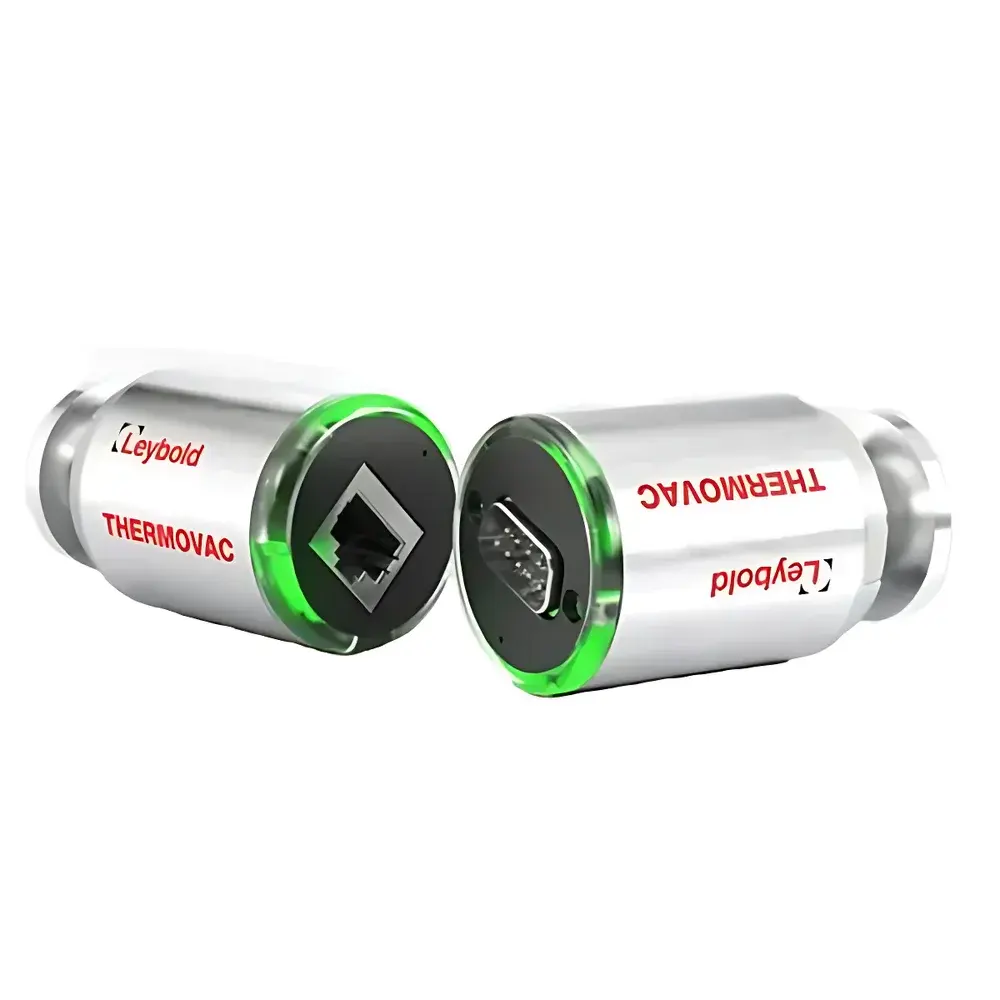
SmartGas H2 Hydrogen Gas Sensor by NTM Sensors
| Brand | SmartGas |
|---|---|
| Origin | USA |
| Manufacturer Type | Authorized Distributor |
| Origin Category | Imported |
| Model | H2 |
| Pricing | Available Upon Request |
| Detection Principle | Electrochemical (H₂-Specific) |
| Operating Temperature | -20°C to +80°C |
| Humidity Range | 5–95% RH (non-condensing) |
| H₂ Measurement Range | 0.2–4.0% vol in air |
| Supply Voltage | 12–24 VDC |
| Output Signal | 1–4.5 VDC (linear, 50 mA max load) |
| Fault Output | 0.0–0.75 VDC (low-fault) / 5.0 VDC (high-fault) |
| Power Consumption | 0.2–0.3 A |
| Response Time (T90) | ≤5 s |
| Recovery Time (T10) | ≤5 s |
| Cross-Sensitivity | Negligible to CO₂, CH₄, CO, and VOCs |
Overview
The SmartGas H2 Hydrogen Gas Sensor, manufactured by NTM Sensors (USA), is an electrochemical gas sensing module engineered exclusively for selective, real-time detection of molecular hydrogen (H₂) in ambient air. Unlike conventional catalytic bead or metal-oxide semiconductor (MOS) sensors—designed for broad-spectrum combustible gas detection—the NTM H2 sensor employs a proprietary electrochemical cell architecture that delivers true H₂ specificity. This selectivity arises from a catalytically tuned electrode surface and optimized electrolyte chemistry, enabling reliable discrimination against common interferents including carbon monoxide (CO), methane (CH₄), carbon dioxide (CO₂), and volatile organic compounds (VOCs). The sensor operates without baseline drift under variable humidity (5–95% RH) and elevated temperature conditions up to 80°C, making it suitable for demanding industrial environments such as hydrogen fueling stations, battery room ventilation monitoring, semiconductor fabrication tool exhaust lines, and PEM electrolyzer safety interlocks.
Key Features
- H₂-Specific Electrochemical Detection: Engineered to respond only to H₂ molecules via a diffusion-limited, amperometric reaction—eliminating false alarms from other combustible or inert gases.
- Environmental Robustness: Stable output across -20°C to +80°C operating range; insensitive to relative humidity fluctuations (5–95% RH, non-condensing).
- No Saturation at High Concentrations: Maintains linearity and recovery integrity even at H₂ concentrations approaching the upper explosive limit (UEL) of 4.0% vol in air.
- Fast Dynamic Response: T90 response time ≤5 seconds and T10 recovery time ≤5 seconds ensure timely detection for rapid leak mitigation and process control.
- Dual-Fault Signaling: Integrated diagnostic circuitry provides two discrete fault states: low-level fault (0.0–0.75 VDC) for sensor degradation or open-circuit conditions, and high-level fault (5.0 VDC) for power loss or internal short.
- Low-Power Analog Interface: 1–4.5 VDC linear output scalable to 0.2–4.0% H₂ range; compatible with standard PLC analog input modules and data acquisition systems compliant with IEC 61000-6-2/6-4 EMC standards.
Sample Compatibility & Compliance
The SmartGas H2 sensor is validated for continuous monitoring of hydrogen in clean, dry-to-humid ambient air matrices. It is not intended for use in corrosive, acidic, or solvent-saturated atmospheres, nor in oxygen-deficient or inert-gas-purged enclosures without prior calibration validation. The device complies with UL 2075 (Gas and Vapor Detectors and Sensors) for safety-related performance and meets CE marking requirements per Directive 2014/30/EU (EMC) and 2014/35/EU (LVD). While not intrinsically safe certified out-of-box, it may be integrated into Class I, Division 2 (CID2) or ATEX Zone 2 compliant systems when installed with appropriate barrier circuits and housing per IEC 60079-11. Calibration traceability follows NIST-traceable H₂ reference gas standards (ISO 6141, ISO 6145-7).
Software & Data Management
The sensor outputs a ratiometric analog voltage signal requiring no embedded firmware or host-side configuration. For system-level integration, users may interface the device with SCADA platforms (e.g., Ignition, Siemens Desigo, or Honeywell Experion) via 4–20 mA transmitters (optional external converter) or directly into programmable logic controllers supporting 0–5 VDC or 0–10 VDC inputs. When deployed in regulated environments—such as pharmaceutical hydrogen purge validation or fuel cell quality assurance—the sensor’s stable zero and span characteristics support GLP-compliant calibration logging. Though the sensor itself does not store data or generate audit trails, its deterministic analog behavior ensures full compatibility with FDA 21 CFR Part 11–compliant data historians when paired with validated acquisition hardware and electronic record workflows.
Applications
- Hydrogen refueling station leak detection and ventilation control (SAE J2601, ISO 14687-2)
- On-site monitoring in proton exchange membrane (PEM) water electrolysis systems
- Safety interlock for lithium-ion battery storage rooms (NFPA 855, UL 9540A)
- Process gas purity verification in semiconductor CVD and epitaxy tools
- Research-grade H₂ flux measurement in catalysis and materials science laboratories
- Backup sensing in redundant hydrogen safety architectures per IEC 61511 SIL-2 functional safety requirements
FAQ
Is this sensor certified for hazardous area installation?
No—the SmartGas H2 sensor is rated for general-purpose use in non-classified areas. Integration into hazardous locations requires third-party intrinsic safety certification of the complete assembly, including barriers, cabling, and enclosure.
Can it be calibrated with nitrogen zero gas?
Yes. Zero calibration is performed using certified dry nitrogen (≥99.999% purity); span calibration requires certified H₂-in-air standard gas (e.g., 2.0% vol H₂/N₂) traceable to NIST SRM 2620a.
Does humidity affect long-term stability?
Independent accelerated life testing (per ASTM E2912) confirms no measurable baseline shift after 6 months of continuous operation at 85% RH and 40°C.
What is the expected service life under typical industrial conditions?
Rated operational lifetime is ≥24 months in clean air environments; replacement is recommended after 30 months or following exposure to >10,000 ppm H₂ cumulative dose.
Is cross-sensitivity to siloxanes or sulfur compounds documented?
Testing per ISO 12032 shows no measurable response to hexamethyldisiloxane (HMDSO) up to 10 ppm or H₂S up to 5 ppm—however, prolonged exposure to >1 ppm H₂S is not recommended due to potential electrode poisoning.