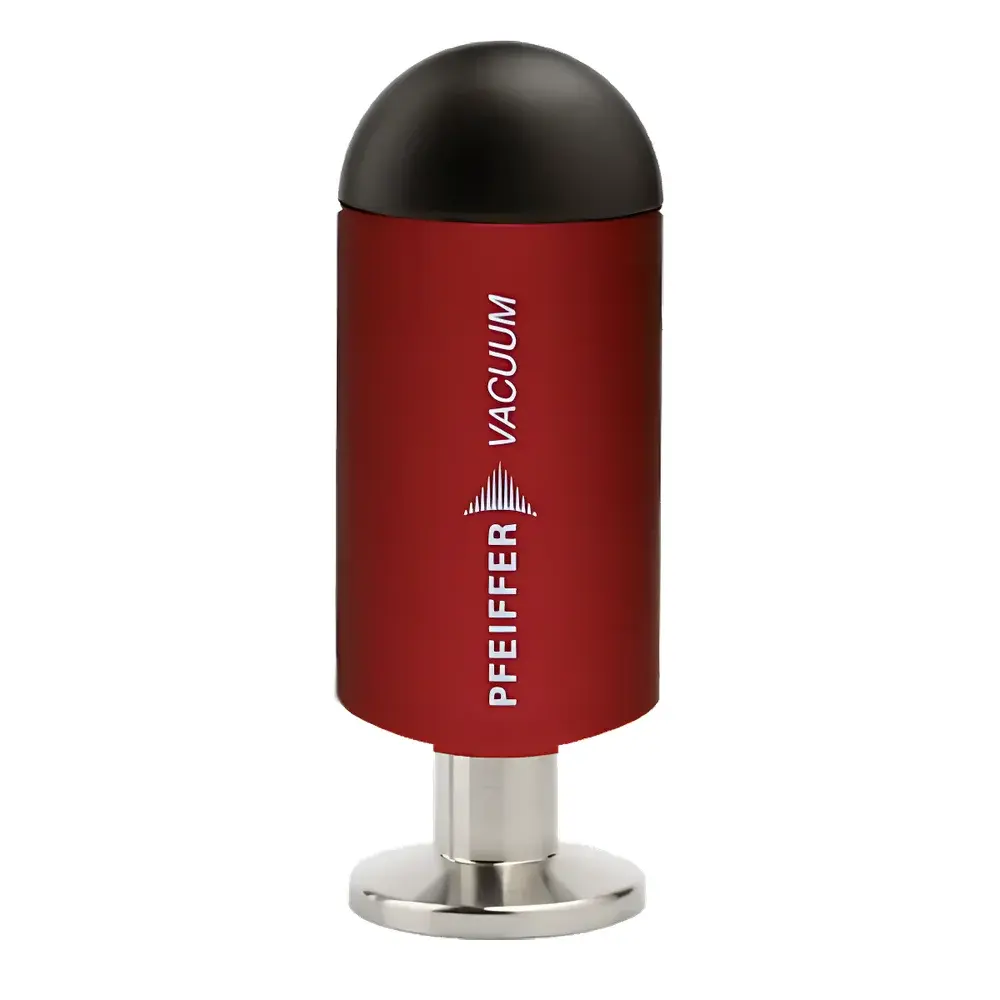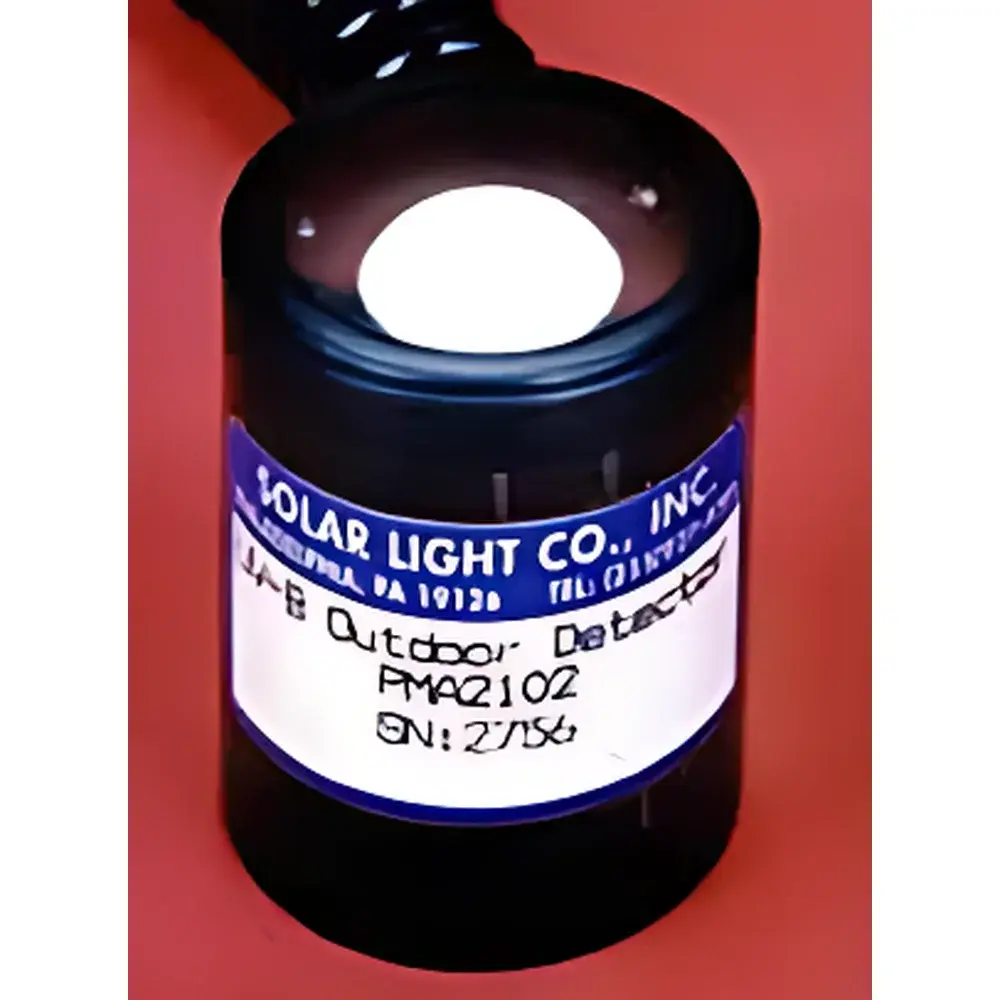
Solar Light PMA2102 Outdoor UVB Biologically Weighted Radiometer
| Brand | Solar Light |
|---|---|
| Origin | USA |
| Model | PMA2102 |
| Spectral Response | Matched to CIE Erythema Action Spectrum (ISO 17166:2019 / CIE S 007/E-1998) |
| Angular Response | ≤5% deviation from ideal cosine up to 60° |
| Measurement Range | 0–120 µW/cm² (0–1.2 W/m²), equivalent to 0–20 MED/hr |
| Resolution | 0.001 mW/cm² / 0.01 W/m² |
| Operating Temperature | −40 °C to +50 °C (−40 °F to +120 °F) |
| Temperature Coefficient | 1% / °C (numerically compensated via integrated thermistor and algorithm) |
| Diffuser | PTFE-based, Lambertian, effective field-of-view up to 50° |
| Cable Length | 15 m (50 ft) |
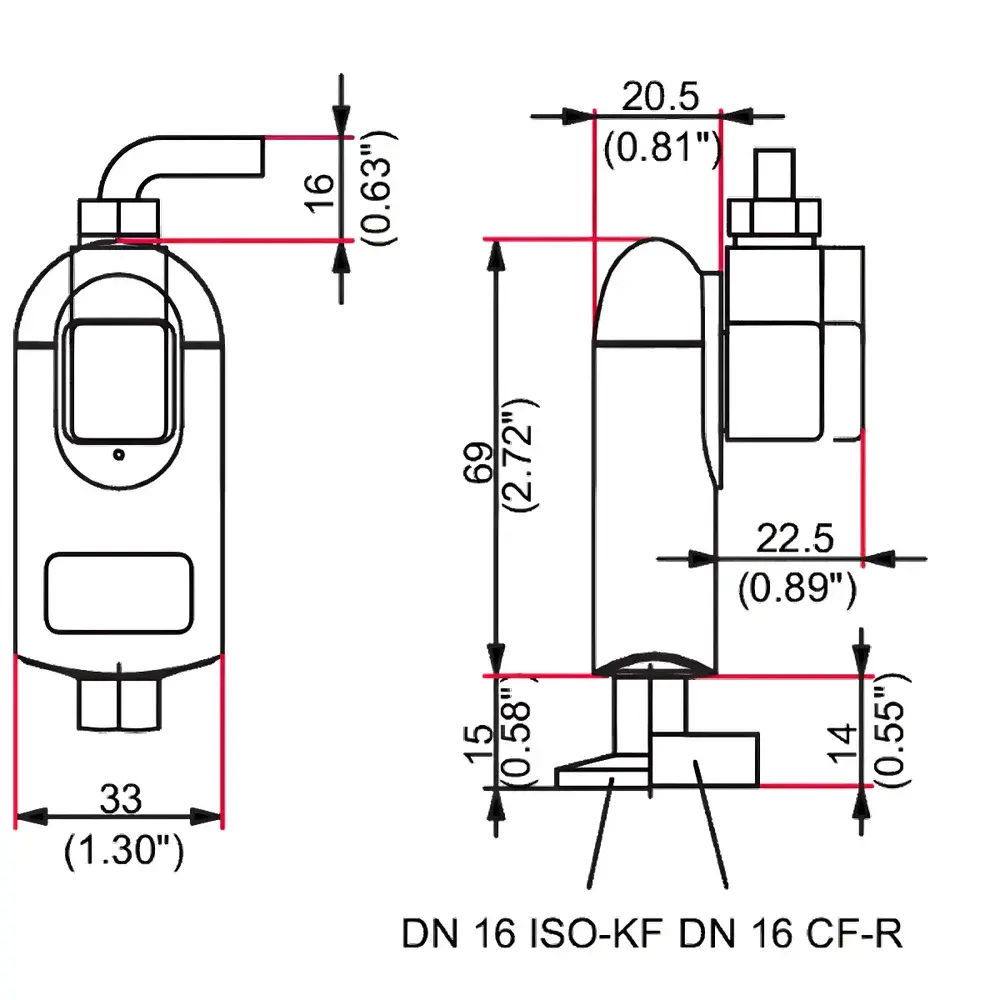
| Dimensions | Ø40.6 mm × H45.8 mm |
| Weight | 200 g |
| Calibration | NIST-traceable, erythemally weighted |
Overview
The Solar Light PMA2102 Outdoor UVB Biologically Weighted Radiometer is a precision field-deployable sensor engineered for quantitative measurement of solar and artificial ultraviolet radiation weighted according to the human skin erythema action spectrum. It operates on the principle of spectrally selective photodetection, where the detector’s spectral responsivity is rigorously matched to the CIE 1987 (reaffirmed 2019) erythemal reference function (ISO 17166:2019), enabling direct quantification of biologically effective UVB exposure in standardized units—microwatts per square centimeter (µW/cm²) or minimal erythemal dose per hour (MED/hr). Unlike broadband UV sensors, the PMA2102 integrates optical filtering, temperature-compensated silicon photodiode detection, and real-time algorithmic correction to deliver metrologically robust data under variable ambient conditions. Its ruggedized aluminum housing, IP65-rated environmental sealing, and wide operating temperature range (−40 °C to +50 °C) make it suitable for unattended outdoor deployment in climatological networks, ecological monitoring stations, and long-term environmental UV observatories.
Key Features
- Biologically relevant spectral weighting aligned with ISO 17166:2019 and CIE S 007/E-1998 erythema action spectrum
- PTFE diffuser delivering near-Lambertian angular response (≤5% deviation up to 60° incidence angle), optimized for diffuse sky radiation and global UV-B irradiance measurements
- Integrated thermistor and digital temperature compensation algorithm correcting for diode responsivity drift across the full operational temperature range
- Dynamic range exceeding 2 × 10⁵, supporting high-fidelity capture of both low-intensity overcast conditions and peak midday solar irradiance
- NIST-traceable calibration certificate provided with each unit; calibration maintained through documented uncertainty budgets compliant with ISO/IEC 17025 requirements
- Simultaneous dual-unit display capability: radiometric (µW/cm², W/m²) and biological (MED/hr), facilitating cross-domain interpretation by clinicians, photobiologists, and atmospheric scientists
- Long-term stability verified per IEC 61215-2 MQT 18 protocols; typical drift <±2% per year under continuous outdoor exposure
Sample Compatibility & Compliance
The PMA2102 is designed for direct exposure to natural sunlight and controlled UV-B sources including fluorescent lamps (e.g., TL20W/01), narrowband UVB emitters (311 nm), and xenon-arc solar simulators. It does not require sample preparation or optical coupling media. Its calibration is validated against standard reference lamps traceable to NIST SRM 2201 and maintained under ISO/IEC 17025-accredited laboratory conditions. The instrument complies with key regulatory and methodological frameworks: ASTM G177 (Standard Tables for Reference Solar Spectral Irradiances), ISO 17166 (Erythema reference action spectrum), and IEC 62471 (Photobiological safety of lamps and lamp systems). For GLP/GMP-aligned applications—including clinical phototherapy dosimetry and pharmaceutical photostability testing—the PMA2102 supports audit-ready documentation when paired with Solar Light’s compliant data loggers (e.g., PMA2100 series) featuring 21 CFR Part 11–compliant electronic signatures and immutable audit trails.
Software & Data Management
The PMA2102 interfaces seamlessly with Solar Light’s proprietary DataTrak™ software suite (Windows-based), enabling real-time visualization, time-series logging, spectral weighting verification, and automated MED/hr conversion. Raw voltage outputs are digitized at 16-bit resolution with programmable sampling intervals (1 s to 1 hr). All calibration coefficients—including temperature compensation parameters and spectral mismatch correction factors—are embedded in device firmware and auto-loaded upon connection. Export formats include CSV, Excel (.xlsx), and netCDF for integration into MATLAB, Python (NumPy/Pandas), or institutional climate databases (e.g., NOAA’s SURFRAD network architecture). Data integrity is preserved via hardware-level timestamping synchronized to GPS or NTP servers, satisfying ISO 14001 environmental monitoring record-keeping requirements.
Applications
- Meteorology & Atmospheric Science: Long-term UV index monitoring, ozone column validation, aerosol radiative forcing studies
- Clinical Photomedicine: Dose calibration of UVB phototherapy units (e.g., narrowband UVB for psoriasis treatment), protocol verification per AAD and British Photodermatology Group guidelines
- Environmental Health: Public UV exposure risk assessment, shade structure efficacy testing, urban UV mapping
- Agricultural Photobiology: Plant UV-B stress response quantification, canopy transmittance profiling, crop photomorphogenesis studies
- Materials Science: UV-B degradation kinetics of polymers, coatings, and packaging films per ASTM D4329 and ISO 4892-3 accelerated weathering standards
- Academic Research & Teaching: Undergraduate atmospheric physics labs, graduate-level photobiology instrumentation courses, field-based environmental science capstone projects
FAQ
Is the PMA2102 calibrated for both solar and artificial UV-B sources?
Yes—the erythemal spectral weighting function applies equivalently to natural sunlight and common artificial UV-B emitters whose output spectra overlap the 280–320 nm band. Calibration is verified using NIST-traceable standard lamps covering both spectral regimes.
Can the PMA2102 be used underwater or in high-humidity environments?
No—it is rated IP65 (dust-tight and protected against water jets), suitable for rain-exposed outdoor mounting, but not submersible or intended for condensing humidity environments without supplemental enclosure.
How frequently is recalibration recommended?
Annual recalibration is recommended for critical applications; biennial recalibration is acceptable for routine environmental monitoring when supported by in-field zero checks and reference lamp verification per ISO/IEC 17025 Clause 7.7.
Does the instrument support wireless data transmission?
The native interface is analog voltage output (0–2.5 V) or RS-232; wireless telemetry requires integration with third-party IoT gateways (e.g., Campbell Scientific CR1000X with RF430 module) or Solar Light’s optional PMA2100-LOG data logger with cellular/LTE option.