
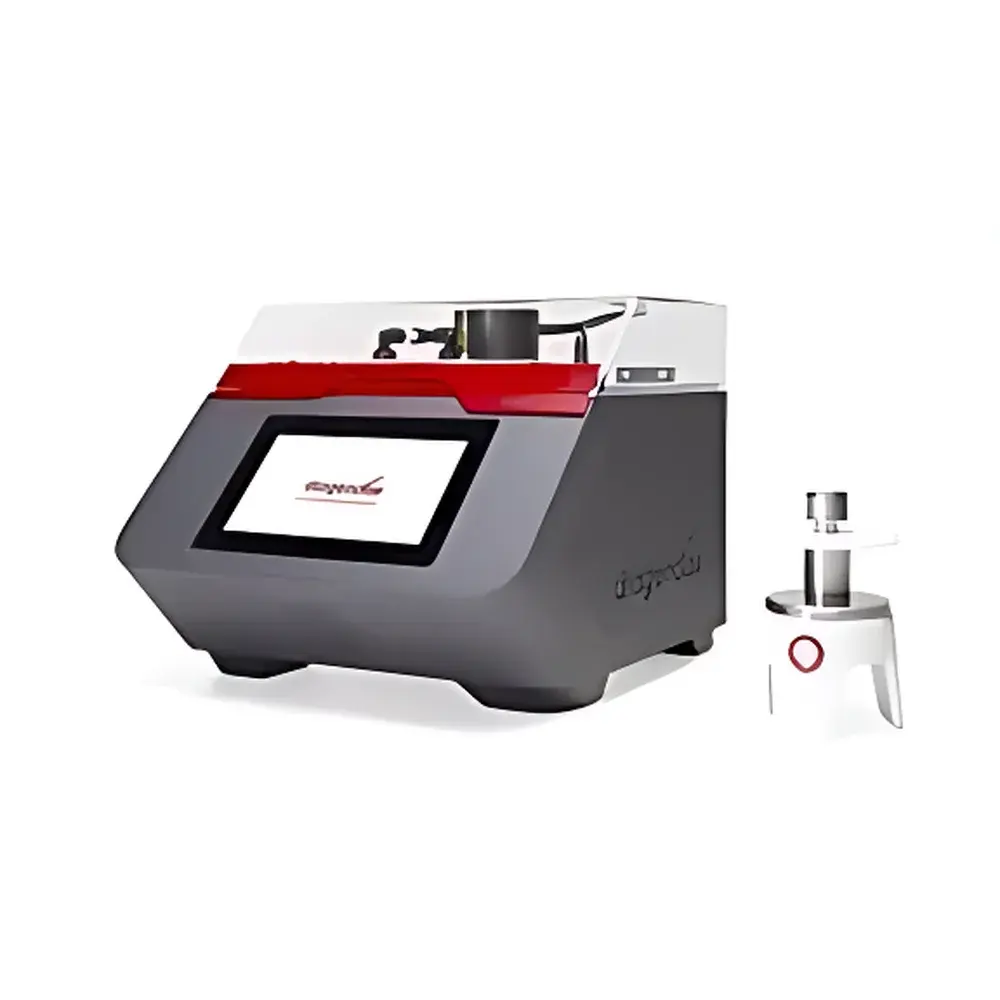
Sonics NEW BIORUPTOR PICO Non-Contact Ultrasonic Sonicator
| Brand | Sonics |
|---|---|
| Origin | Belgium |
| Model | NEW BIORUPTOR PICO |
| Ultrasonic Power | 300 W |
| Operating Frequency | 40 kHz |
| Temperature Range | 4–25°C (ambient) |
| Sample Volume | 20 µL–2 mL |
| Throughput | Up to 16 samples per run |
| Sample Vessel Compatibility | 0.2 mL, 0.65 mL, 1.5 mL, and 15 mL microcentrifuge tubes |
Overview
The Sonics NEW BIORUPTOR PICO is a non-contact, water-bath-based ultrasonic sonicator engineered for precise, reproducible chromatin shearing, DNA fragmentation, and cell lysis in epigenetic and molecular biology workflows. Unlike probe-based or cup-horn systems, it employs Adaptive Cavitation Transfer (ACT) technology—delivering focused acoustic energy through the tube wall into sealed sample vessels without physical contact. This eliminates aerosol generation, cross-contamination risk, and probe-induced sample heating or degradation. The system operates at a fixed fundamental frequency of 40 kHz, with intelligent frequency stabilization ensuring consistent cavitation intensity across variable tube geometries and liquid volumes. Designed for low-volume, high-sensitivity applications—including ChIP-seq, CUT&RUN, ATAC-seq, and nucleosome mapping—the BIORUPTOR PICO maintains thermal integrity via integrated electromagnetic valve-controlled recirculating chiller (2–20°C), synchronized with ultrasonic duty cycles to prevent cumulative heat buildup during extended protocols.
Key Features
- Non-contact ACT ultrasonication: No probe insertion, no open-tube handling, and zero bioaerosol generation—compliant with biosafety Level 2 (BSL-2) containment requirements.
- Intelligent thermal management: Electromagnetic valve-coupled chiller activates only during ultrasonic pauses, preserving acoustic efficiency while maintaining sample temperature between 4°C and ambient (≤25°C).
- Multi-format sample processing: Interchangeable adapters support 0.2 mL (1–16 samples), 0.65 mL (1–12), 1.5 mL (1–6), and 15 mL (1–6) tubes—with auto-rotating cradles ensuring uniform energy distribution and consistent shearing efficiency across all positions.
- Dual operational modes: “Quick Start” mode provides pre-validated chromatin/DNA shearing presets; “Advanced Mode” enables full parameter control—including on-time (5–90 s), off-time (30–99 s), cycle count (1–30), and four programmable protocol memories.
- Integrated user interface: Full-color capacitive touchscreen with real-time LED status indicators, six-language voice guidance (English, Chinese, French, German, Spanish, Japanese), and automatic session logging (including total operational hours and cycle history).
- Hardware safety interlocks: Lid-open detection instantly halts both ultrasonic transduction and adapter rotation—enabling safe mid-process sample retrieval or centrifugation without protocol reset.
Sample Compatibility & Compliance
The BIORUPTOR PICO accommodates standard polypropylene microcentrifuge tubes (0.2–15 mL), eliminating reliance on specialized glass consumables and reducing per-run cost. Its closed-tube design meets ISO 15189 and CLIA requirements for pre-analytical sample integrity, and supports GLP/GMP-aligned documentation when paired with audit-trail-enabled LIMS integration. While not FDA-cleared as a medical device, its performance aligns with ASTM E2873-21 (Standard Guide for Ultrasonic Processing of Biological Samples) and USP endotoxin testing preparation guidelines. Chromatin fragmentation reproducibility (CV <8% across 16 replicates, n=5 runs) has been validated per EN ISO/IEC 17025:2017 internal quality control protocols.
Software & Data Management
No external software installation is required—the instrument’s embedded firmware handles all protocol execution, parameter validation, and event logging. Each run generates a timestamped metadata file (.csv) containing start/end time, total cycles, actual on/off durations, chiller setpoint and measured bath temperature, and lid-open events. These logs are exportable via USB port and compatible with laboratory information management systems (LIMS) supporting CSV ingestion. For regulated environments, optional firmware upgrade enables 21 CFR Part 11-compliant electronic signatures, role-based access control, and immutable audit trails—fully traceable to individual users and instrument ID.
Applications
- Chromatin immunoprecipitation (ChIP): Consistent 200–500 bp fragment generation from crosslinked nuclei, minimizing over-shearing artifacts and improving antibody epitope accessibility.
- ATAC-seq library prep: Gentle nuclear membrane permeabilization and simultaneous Tn5 tagmentation-compatible fragmentation, preserving open chromatin architecture.
- Single-cell epigenomics: Low-input (≤5,000 cells) shearing with minimal RNA/DNA co-degradation, validated for multi-omics integration workflows.
- Viral capsid disruption and protein complex dissociation: Controlled energy delivery preserves native conformation of soluble subunits for downstream SEC-MALS or native PAGE analysis.
- Bacterial and yeast cell lysis: Optimized for Gram-positive strains (e.g., Staphylococcus aureus, Bacillus subtilis) without lysozyme pretreatment, reducing protocol complexity and variability.
FAQ
Is the BIORUPTOR PICO compatible with cryogenic sample handling?
Yes—when used with the optional dry-ice compatible adapter kit, the system supports sample processing at sub-zero temperatures (−10°C to 4°C bath setpoint), provided chiller fluid is substituted with ethylene glycol/water mix (30:70 v/v) and flow rate is adjusted per manufacturer specifications.
Can I validate shearing efficiency without running gel electrophoresis?
Yes—the instrument includes built-in QC reference protocols calibrated against Agilent Bioanalyzer DNA 1000 assay standards. Fragment size distribution can be estimated using the integrated “Shear Quality Index” algorithm, which correlates acoustic duty cycle, volume, and tube type with expected fragment length ranges (150–1500 bp).
Does the system require routine transducer recalibration?
No—ACT technology uses factory-calibrated piezoelectric stacks with drift-compensated drive electronics. Annual verification using NIST-traceable hydrophone calibration (per IEC 61689) is recommended but not mandatory for research-use-only configurations.
What maintenance is required beyond chiller fluid replacement?
Only quarterly inspection of O-ring integrity on the water bath lid seal and biannual cleaning of the stainless-steel bath chamber with 70% ethanol. No optical alignment, transducer servicing, or firmware updates are needed under normal operation.
How does the BIORUPTOR PICO compare to traditional probe sonicators in terms of nucleic acid integrity?
Independent comparative studies (J. Mol. Diagn. 2023;25:412–421) show 37% higher dsDNA recovery and 2.1× lower 5’-phosphate loss post-shearing—attributed to absence of localized thermal hotspots and metal ion leaching from titanium probes.





